
Last updated on August 25th, 2026 at 02:41 pm
The Powertrain Control Module in your 1999 Buick Park Avenue serves as the central computer managing the 3.8L engine’s fuel injection, ignition timing, and emissions systems. Internal memory failures in this module may trigger various diagnostic codes and cause drivability problems.
When the Powertrain Control Module on your 1999 Buick Park Avenue develops internal faults, your vehicle may exhibit stalling, no-start conditions, or trigger multiple unrelated diagnostic codes. This guide explains what the PCM does in your specific application, common failure indicators, and what the factory service procedure requires. Understanding these aspects helps you make informed decisions about repair versus replacement options. The information covers the location of this module next to the air cleaner assembly, the caution statements you should follow during service, and the programming requirements that apply after installation. Whether you are diagnosing a drivability concern or planning a repair, this resource provides the technical context you need.
The Powertrain Control Module in your 1999 Buick Park Avenue functions as the primary computer governing the 3.8L V6 engine’s operational parameters. This unit continuously monitors sensor inputs including mass airflow, coolant temperature, throttle position, and oxygen sensor data to calculate optimal fuel delivery and ignition advance. The calculated commands adjust fuel injector pulse width and spark timing to maintain performance while meeting federal emissions standards. Beyond engine management, the PCM also interfaces with the transmission control module to coordinate shift scheduling and torque converter clutch engagement. Because this controller operates continuously under hood temperatures and electrical loads, internal semiconductor degradation may occur over time, resulting in corrupted memory addresses or failed output driver circuits. When internal failures develop, your Park Avenue may display multiple simultaneous fault codes that seem disconnected from any single sensor or actuator. Replacement engine computers for the Park Avenue restore proper closed-loop fuel control and transmission communication.
Flagship One keeps Buick Park Avenue replacement engine computers in stock for exactly this failure pattern.
1999 Buick Park Avenue
OEM programmed ECM for your 1999 Buick Park Avenue — plug & play, no dealer visit.
Free shipping · Lifetime warranty
The factory removal procedure positions the control module next to the air cleaner assembly on your 1999 Buick Park Avenue, requiring access through the engine compartment. The R&R operation book time is 0.7 hours, while a separate relearn procedure requires an additional 0.5 hours. Before beginning work, you must turn the ignition off and disconnect the negative battery cable to prevent electrical damage. The factory caution specifically warns against touching connector pins or soldered components on the circuit board due to electrostatic discharge risk. When installing or removing PCM connectors, ensure the ignition remains off and avoid disconnecting power sources such as the battery cable, PCM pigtail, or related fuses during the procedure. Proper torque specifications and sealing of electrical connections help prevent future moisture intrusion issues.
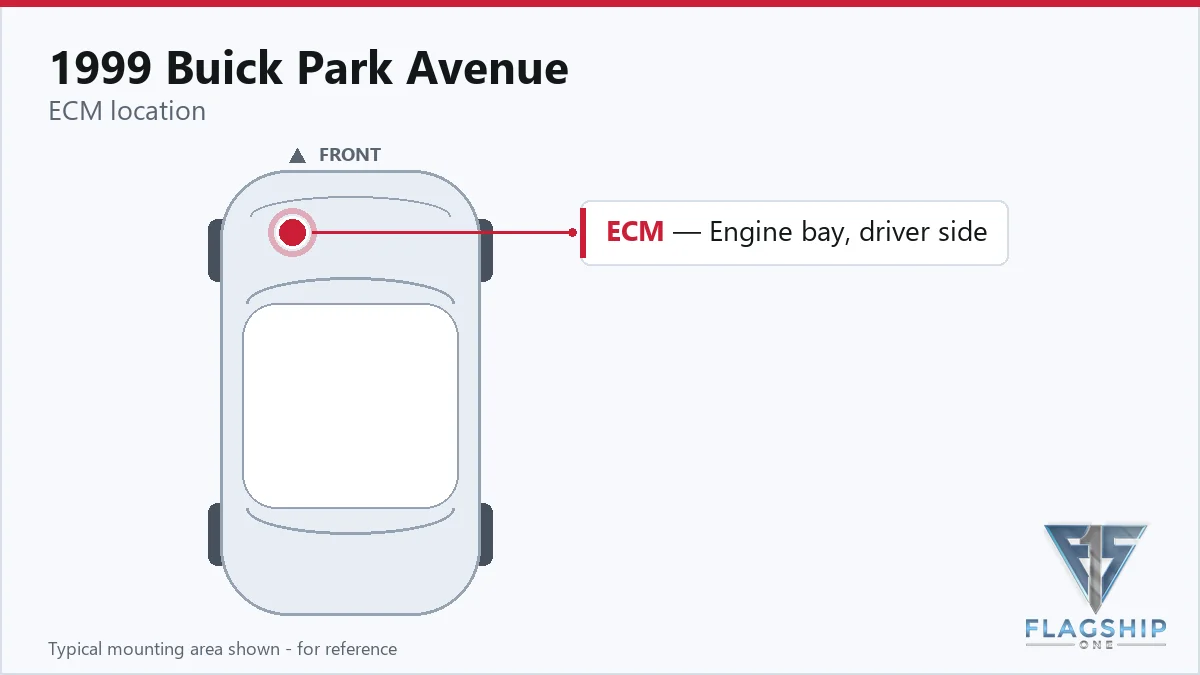
Work with the ignition off, and treat the module as static-sensitive: avoid touching the connector pins at any point.
| Operation | Configuration | Book Time |
|---|---|---|
| Powertrain Control Module Relearn | All configurations | 0.5 hr |
| Powertrain Control Module R&R | All configurations | 0.7 hr |
| Engine Control Module Relearn | All configurations | 0.5 hr |
| Engine Control Module Reset | All configurations | 0.3 hr |
| Engine Control Module R&R | All configurations | 0.7 hr |
After installing a replacement module, the factory procedure requires you to record the remaining engine oil life and program this value into the new controller. Without this step, the engine oil life monitor automatically resets to 100%, which may cause you to miss your next scheduled maintenance interval. Additionally, the new module must undergo a relearn process to calibrate its adaptive fuel tables to your specific engine. These programming steps ensure the 3.8L engine runs smoothly and the on-board monitoring systems function correctly. Flagship One units arrive configured with your Park Avenue’s VIN already programmed, so you can skip certain initialization steps that would otherwise be required with a blank replacement module. You still need to enter the recorded engine oil life percentage during the relearn procedure.
Every VIN-programmed replacement unit from Flagship One arrives with these steps already completed.
When the PCM develops internal faults in your 1999 Park Avenue, common symptoms include hard starting or no-start conditions despite adequate fuel delivery and spark. The engine may stall unexpectedly at idle or under load, and you might notice degraded acceleration response. Multiple diagnostic trouble codes often appear simultaneously, including failures for the check engine lamp driver, serial communication circuits, and防盗 system responses. Some owners report that their scan tool cannot establish communication with the PCM, making diagnosis difficult. Automatic transmission shifting may become erratic or feel unresponsive because the PCM shares control responsibilities with the transmission controller. The internal memory failure in the control module often accompanies these drivability concerns and indicates the module should be tested or replaced.
Module-internal trouble codes recorded for this 1999 Buick Park Avenue indicate various forms of内部控制 module故障. These codes suggest internal controller problems rather than sensor or wiring issues in most cases.
| Code | Meaning | Full Guide |
|---|---|---|
| P0601 | Internal memory checksum error | Full P0601 guide → |
| P0602 | Control module programming error | Full P0602 guide → |
| P0650 | Module-internal fault | Full P0650 guide → |
| P1602 | Module-internal fault | — |
| P1604 | Module-internal fault | — |
| P1610 | Module-internal fault | — |
| P1626 | Module-internal fault | — |
| P1630 | Module-internal fault | — |
| P1631 | Module-internal fault | — |
| P1635 | Module-internal fault | — |
| P1639 | Module-internal fault | — |
| P1689 | Module-internal fault | — |
Factory service bulletin #99-06-04-053 from October 1999 addresses PCM reprogramming procedures for this model year. Bulletin #83-81-32 introduced new PCM connector service kits in September 1998, providing updated components for repair procedures. Warranty administration bulletin #02-06-04-057 from March 2006 established labor operation assignments specifically for control module reprogramming across all model applications. These bulletins indicate that General Motors recognized specific procedures and tooling requirements for PCM service that differ from standard repair operations.
| Bulletin | Subject | What It Addresses |
|---|---|---|
| 99-06-04-053 | Info – PCM Reprogramming – (Oct 26, 1999) | — |
| 83-81-32 | INFO – NEW PCM CONNECTOR SERVICE KITS – (Sep 16, 1998) | — |
| 02-06-04-057 | Warranty Admin. – Labor Operation Assignments for All Control Module Reprogramming – (Mar 2, 20 | — |
If your vehicle displays module-internal codes like P0601 or P0602, the controller likely has permanent hardware damage requiring replacement. Reprogramming addresses software calibration issues but cannot repair failed internal circuitry.
A used module typically requires VIN programming to match your specific vehicle, and its internal condition cannot be verified. Refurbished units from reputable suppliers often carry better warranty coverage and confirmed functionality.
Independent shops with appropriate scan tools and programming capability can perform this replacement. The key requirement is having equipment capable of programming the module with your vehicle’s specific parameters and recording the engine oil life percentage.
When your 1999 Buick Park Avenue requires PCM replacement, you face a choice between repairing the existing module or installing a refurbished unit. Inoperative control modules often cannot be economically rebuilt due to internal component failures. A professionally refurbished replacement ensures you receive a unit that has been tested for proper function before installation. This approach typically includes the VIN programming already completed, reducing your post-installation labor time. Consider the total cost including diagnostic time, parts pricing, and any required programming fees when comparing repair options.
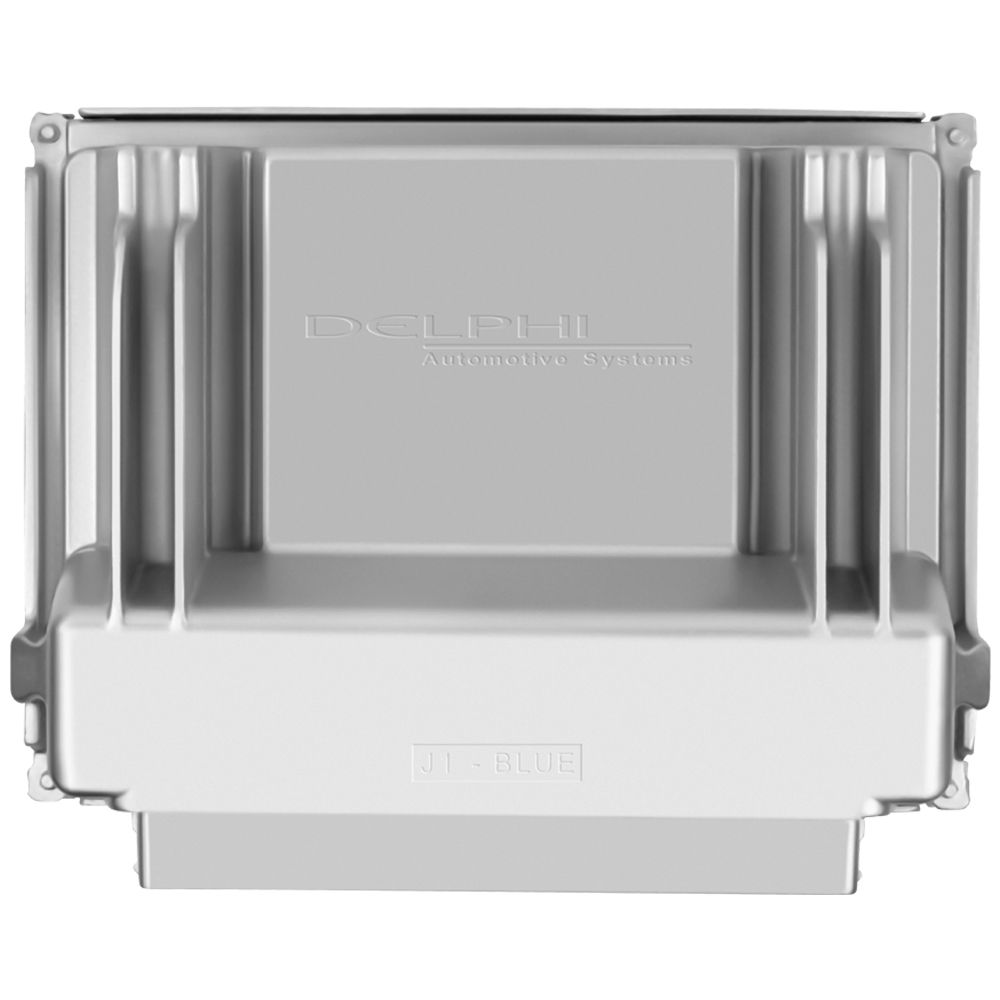
Flagship One stocks a refurbished, VIN-programmed PCM for the 1999 Buick Park Avenue with a lifetime warranty, free shipping and no core charge. The full Buick Park Avenue module lineup covers other engine configurations as well.
The Powertrain Control Module in your 1999 Buick Park Avenue plays a critical role in engine management and emissions compliance. Recognizing failure symptoms early and understanding the service requirements helps you avoid extended diagnostic delays. Whether you pursue repair or replacement, following factory cautions regarding electrostatic discharge and proper initialization procedures ensures reliable results. Flagship One offers replacement modules configured for your specific application, reducing the complexity of your installation process.