
Last updated on August 25th, 2026 at 02:33 pm
The Engine Control Module (ECM) in your 2017 Cadillac CTS-V manages fuel delivery, ignition timing, and emissions systems for the 6.2L V8. Failures may cause drivability issues, poor performance, or complete engine shutdown.
If your 2017 Cadillac CTS-V hesitates, stalls, or refuses to start, the Engine Control Module (ECM) may be the culprit. This small but critical computer governs how your 6.2L V8 runs, from fuel injection to spark timing. When it fails, symptoms can range from subtle performance glitches to complete engine shutdown. Understanding what the ECM does, where it’s located, and what replacement involves helps you make informed decisions about repairs. You’ll also learn how to recognize failure symptoms early and what steps to take after a replacement to get your CTS-V running reliably again.
The ECM in your 2017 Cadillac CTS-V acts as the brain of the engine, continuously adjusting fuel delivery, ignition timing, and emissions controls based on sensor inputs. This ensures optimal performance, fuel efficiency, and compliance with emissions standards. A malfunctioning ECM may disrupt these processes, leading to poor drivability or even preventing the engine from starting. Replacing it involves installing replacement engine computers for the CTS-V, which must be programmed to match your vehicle’s specific configuration. Without proper calibration, the engine may run poorly or fail to start at all.
In the 2017 Cadillac CTS-V, the ECM is mounted near the engine bay, typically behind a protective cover. Replacing it is relatively straightforward, with labor times listed at 0.6 hours for the 6.2L model. The process involves disconnecting the battery, removing the cover, and carefully unplugging the wiring harness connectors. Factory guidelines emphasize turning the ignition off before handling the connectors to avoid damaging sensitive components. Once the old module is removed, the new one is installed in the same location and reconnected. No additional hardware is required, but proper torque on fasteners ensures secure mounting.
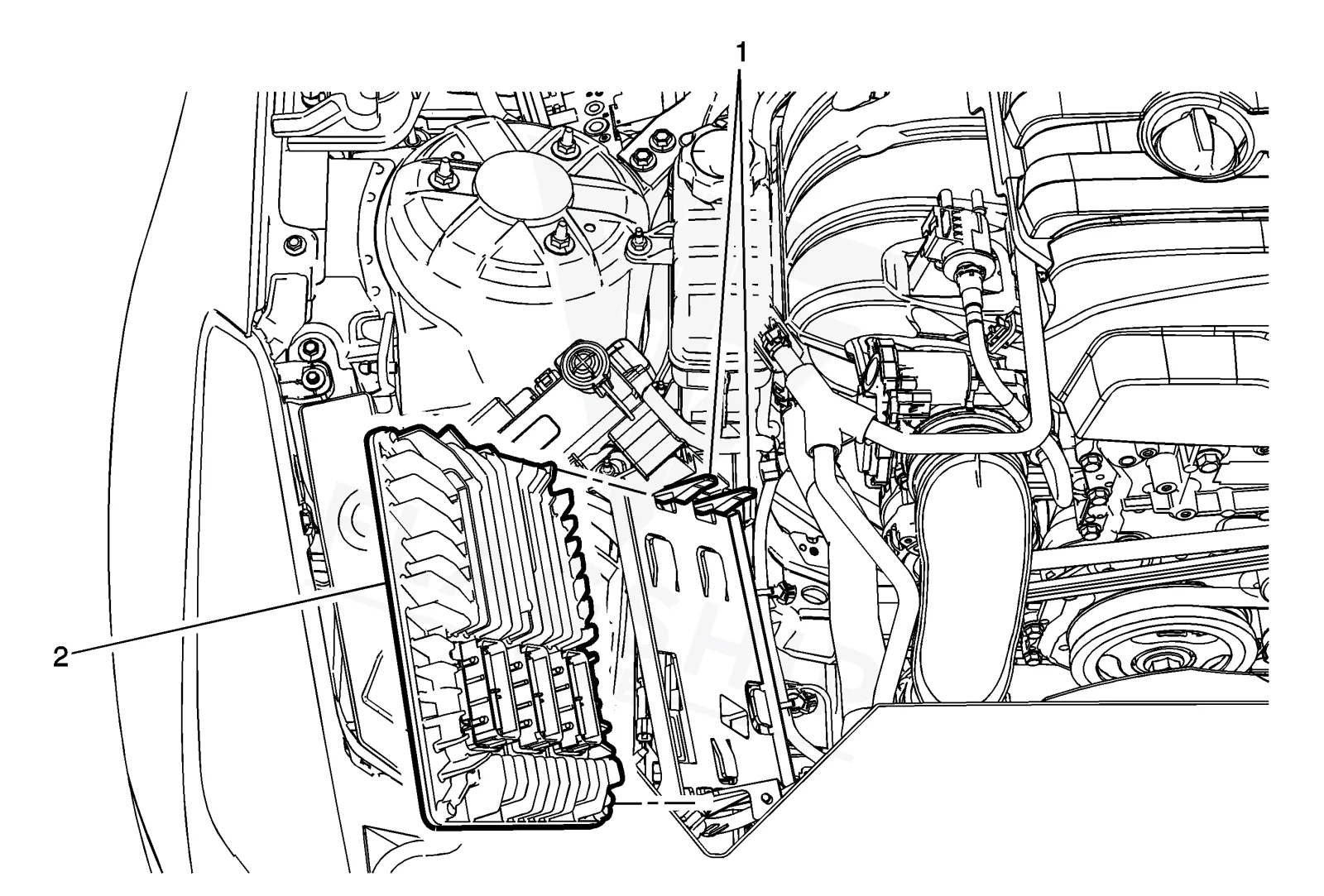
Work with the ignition off, and treat the module as static-sensitive: avoid touching the connector pins at any point.
| Operation | Configuration | Book Time |
|---|---|---|
| Engine Control Module R&R | 3.6L | 1.5 hr |
| Engine Control Module R&R | 6.2L | 0.6 hr |
| Engine Control Module R&R | 2.0L | 0.6 hr |
| Engine Control Module Relearn | All configurations | 0.5 hr |
| Engine Control Module Reset | All configurations | 0.3 hr |
| Powertrain Control Module R&R | 3.6L | 1.5 hr |
| Powertrain Control Module R&R | 2.0L | 0.6 hr |
| Powertrain Control Module R&R | 6.2L | 0.6 hr |
2017 Cadillac CTS-V
OEM programmed ECM for your 2017 Cadillac CTS-V — plug & play, no dealer visit.
Free shipping · Lifetime warranty
After installing a new ECM in your 2017 Cadillac CTS-V, the factory requires a relearn procedure, which typically takes 0.5 hours. This step ensures the module synchronizes with the engine and other vehicle systems. However, if you install a VIN-programmed replacement unit, these steps are already completed, saving you time and potential hassle. The factory also notes that programming other modules may inadvertently clear the ECM’s memory, so it’s important to verify all systems afterward.
A failing ECM in your 2017 Cadillac CTS-V may cause a range of symptoms, from intermittent stalling to a complete no-start condition. You might notice rough idling, poor acceleration, or the check engine light illuminating. In some cases, the vehicle may enter a reduced-power mode to protect the engine. Common trouble codes associated with ECM failures include internal control module memory checksum error, which indicates a problem with the module’s internal memory. Other symptoms may include erratic shifting or communication issues with a scan tool. If you experience these issues, prompt diagnosis is recommended to avoid further drivability problems.
The 2017 Cadillac CTS-V may store specific trouble codes when the ECM fails. These codes help pinpoint the issue and guide repairs. Below are the module-internal codes documented for this vehicle.
Factory service bulletin #18095 addresses an issue where programming other modules in the 2017 Cadillac CTS-V may inadvertently clear the ECM’s OBD memory. This can lead to drivability issues or stored trouble codes that don’t reflect an actual problem. If you’ve recently had other modules updated, it’s worth checking whether the ECM’s memory was affected, as this may require a reset or relearn procedure to restore proper function.
| Bulletin | Subject | What It Addresses |
|---|---|---|
| — | Service Update – ECM OBD Memory Cleared After Programming of Other Modules – (Jun 11, 2018) | — |
Intermittent stalling in your CTS-V may stem from a failing ECM, especially if accompanied by trouble codes like P0601. The module controls critical engine functions, and disruptions can lead to sudden shutdowns. A diagnostic scan can confirm whether the ECM is the root cause.
If your CTS-V exhibits persistent drivability issues—such as no-start conditions, repeated stalling, or stored module-internal codes—a reset may not resolve the problem. Replacement is often necessary when the ECM’s internal memory or circuitry is compromised.
A reset clears temporary data and may resolve minor glitches, typically taking 0.3 hours. A relearn, which takes 0.5 hours, recalibrates the ECM to synchronize with the engine and other systems, ensuring proper operation after replacement.
When your 2017 Cadillac CTS-V’s ECM fails, you have options. A dealership may recommend a new unit, but a refurbished replacement can offer the same reliability at a lower cost. Since labor time is minimal for the 6.2L model, choosing the right module ensures a quick and effective repair. Consider your vehicle’s needs and budget when deciding between repair and replacement.
Flagship One stocks a refurbished, VIN-programmed PCM for the 2017 Cadillac CTS-V with a lifetime warranty, free shipping and no core charge. The full Cadillac CTS-V module lineup covers other engine configurations as well.
The 2017 Cadillac CTS-V relies on its ECM to deliver smooth, reliable performance. If you’re experiencing drivability issues or stored trouble codes, addressing the ECM promptly can restore your vehicle’s operation. Whether you opt for a reset, relearn, or replacement, understanding the process helps you make the best choice for your CTS-V.