
Last updated on August 25th, 2026 at 01:44 pm
The Powertrain Control Module (PCM) in your 2016 Nissan Quest manages engine and transmission functions. Failure may cause erratic performance, stalling, or a complete no-start condition due to corrupted memory or electrical faults.
If your 2016 Nissan Quest suddenly stalls at stoplights, refuses to start, or throws cryptic check-engine lights, the Powertrain Control Module (PCM) may be the culprit. This compact computer sits at the heart of your vehicle’s operations, coordinating everything from fuel injection to transmission shifts. When it fails, symptoms can range from subtle drivability quirks to complete immobilization. Replacing the PCM isn’t just about swapping a box—it requires precise programming to match your vehicle’s VIN, a step that often adds time and cost at the dealership. Understanding the role of the PCM, the labor involved, and the symptoms of failure can help you make informed decisions. Whether you’re diagnosing an existing issue or planning ahead, this guide covers what you need to know about PCM replacement, programming, and maintenance for your 2016 Nissan Quest.
The Powertrain Control Module (PCM) in your 2016 Nissan Quest acts as the brain of the engine and transmission systems. It continuously monitors sensors for data like air intake, throttle position, and engine temperature, then adjusts fuel delivery, ignition timing, and shift points in real time. This ensures optimal performance, fuel efficiency, and emissions compliance. Without a functioning PCM, your vehicle may struggle to start, run roughly, or even enter a fail-safe mode that limits speed and power. The module also stores diagnostic trouble codes when it detects anomalies, which mechanics use to pinpoint issues. In the 2016 Quest, the PCM is particularly critical because it integrates both engine and transmission control into a single unit, reducing complexity but increasing the stakes if it fails. If replacement becomes necessary, you’ll need replacement engine computers for the Nissan Quest that are pre-programmed to avoid additional dealer visits for VIN matching and relearn procedures.
2016 Nissan Quest
OEM programmed ECM for your 2016 Nissan Quest — plug & play, no dealer visit.
Free shipping · Lifetime warranty
In the 2016 Nissan Quest, the PCM is located in the engine bay, typically mounted near the firewall or under a plastic cover. Accessing it involves removing a few bolts or clips to expose the module, then disconnecting the wiring harness. The replacement process is straightforward but requires care to avoid damaging connectors or the new unit. According to labor guides, removing and reinstalling the PCM takes about 1.8 hours. There are no special torque specifications provided for this vehicle, but it’s important to ensure all connections are secure and free of corrosion. After installation, the module must undergo a relearn procedure, which adds another 0.5 hours of labor if done manually. This step synchronizes the PCM with the vehicle’s sensors and systems, ensuring proper operation.
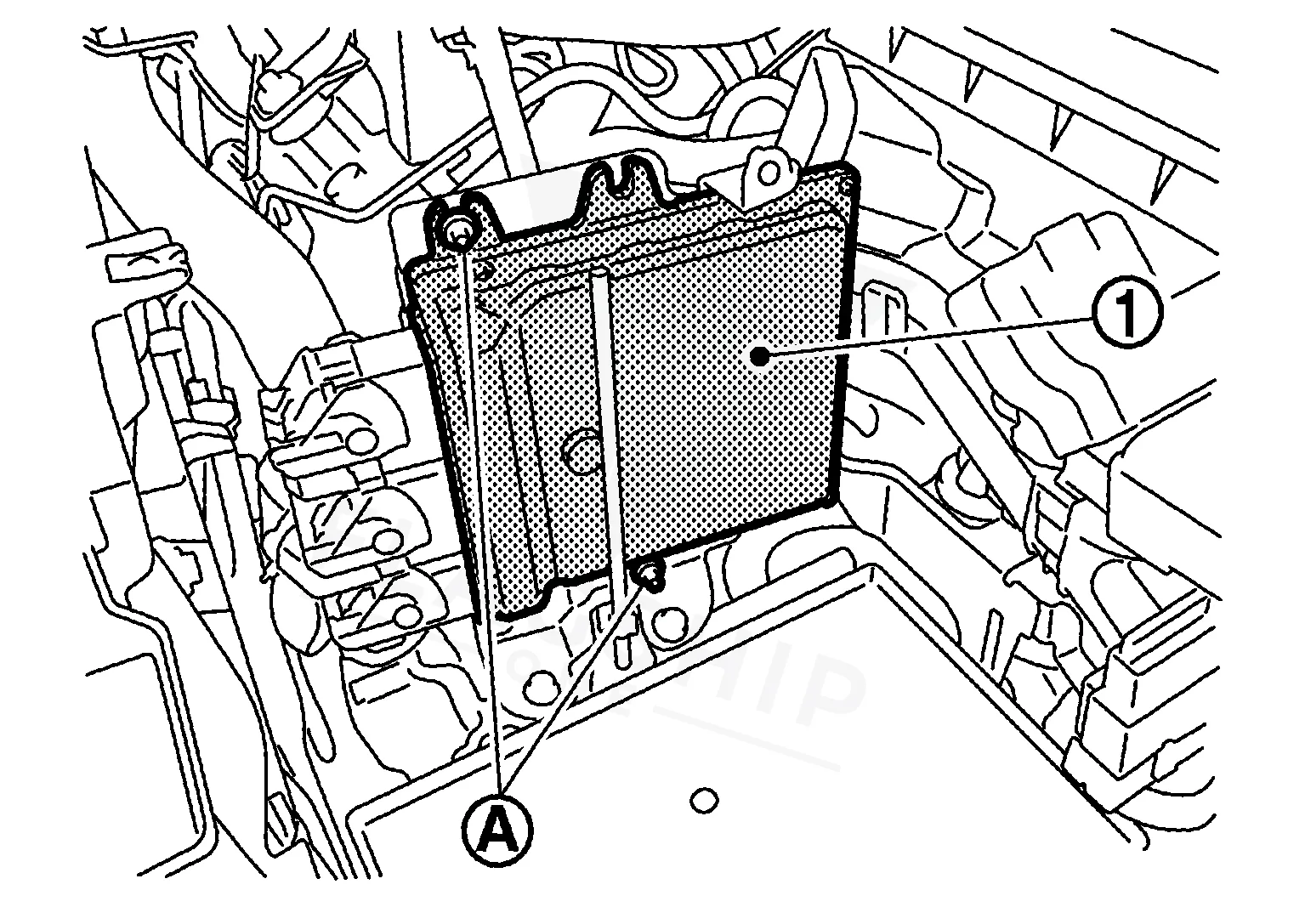
Work with the ignition off, and treat the module as static-sensitive: avoid touching the connector pins at any point.
| Operation | Configuration | Book Time |
|---|---|---|
| Powertrain Control Module R&R | All configurations | 1.8 hr |
| Engine Control Module R&R | All configurations | 1.8 hr |
| Engine Control Module Relearn | All configurations | 0.5 hr |
After replacing the PCM in your 2016 Nissan Quest, the factory procedure requires a VIN-specific programming step to ensure the module communicates correctly with the vehicle’s systems. This typically involves using a dealer-level scan tool to input your VIN and perform a relearn procedure, which can take up to 0.5 hours. However, a VIN-programmed replacement unit from Flagship One arrives pre-configured with your vehicle’s data, eliminating the need for this step. This not only saves time but also reduces the risk of programming errors that could lead to further issues. Once installed, the new PCM should immediately recognize the vehicle’s sensors and resume normal operation without additional dealer intervention.
A failing PCM in your 2016 Nissan Quest may cause a variety of symptoms, often starting subtly before worsening over time. Common signs include intermittent stalling, especially at idle or low speeds, and difficulty starting the engine. You might also notice the transmission shifting erratically or the vehicle entering a limp-home mode, which limits speed and power to prevent damage. Other symptoms include poor fuel economy, rough idling, or the check engine light illuminating with codes unrelated to mechanical failures. In some cases, the vehicle may fail to communicate with a scan tool, making diagnosis more challenging. One specific trouble code associated with PCM failure in the 2016 Quest is internal control module read-only memory error, which indicates a problem with the module’s memory or processing capabilities. If you experience any of these issues, it’s important to address them promptly, as a faulty PCM can lead to more severe drivability problems or even leave you stranded.
The 2016 Nissan Quest’s PCM may store specific trouble codes when internal faults occur. These codes help technicians diagnose issues and determine whether the module needs replacement or reprogramming. Below is the documented code for this vehicle.
| Code | Meaning | Full Guide |
|---|---|---|
| P0605 | Internal ROM error | Full P0605 guide → |
Symptoms of a failing PCM include stalling, no-start conditions, erratic transmission shifts, and the check engine light illuminating with codes like P0605. If your vehicle struggles to communicate with a scan tool, the PCM may also be at fault. A professional diagnosis is recommended to confirm the issue.
While the physical replacement of the PCM is straightforward, programming it to match your vehicle’s VIN requires specialized tools and software. Without pre-programming, you’ll need to visit a dealer or shop equipped to perform the relearn procedure, which adds time and cost.
If the PCM isn’t programmed to your vehicle’s VIN, it may not communicate properly with the engine and transmission systems. This can result in poor performance, stalling, or even a no-start condition. The relearn procedure ensures all sensors and systems are synchronized.
PCM failure can occur due to electrical issues like voltage spikes, moisture intrusion, or internal component degradation. Poor battery health, corroded connections, or improper jump-starting are common contributors. Over time, the module’s memory or processing capabilities may also degrade.
Driving with a failing PCM can be risky, as it may cause sudden stalling, loss of power, or transmission issues. In some cases, the vehicle may enter a limp-home mode, limiting speed and performance. If you suspect PCM failure, it’s best to address it promptly to avoid further complications.
If your 2016 Nissan Quest is experiencing PCM-related issues, you have options beyond a costly dealer replacement. A refurbished or remanufactured PCM can provide the same functionality at a lower price, especially if it arrives pre-programmed to your VIN. This eliminates the need for additional dealer visits and reduces downtime. Whether you choose a new or refurbished unit, ensure it’s designed specifically for the 2016 Quest to avoid compatibility issues.
Flagship One stocks a refurbished, VIN-programmed PCM for the 2016 Nissan Quest with a lifetime warranty, free shipping and no core charge. The full Nissan Quest module lineup covers other engine configurations as well.
The PCM in your 2016 Nissan Quest plays a critical role in engine and transmission performance, and its failure can lead to frustrating drivability issues. Understanding the symptoms, replacement process, and programming requirements can help you make informed decisions if problems arise. Whether you opt for a dealer repair or a pre-programmed replacement unit, addressing PCM issues promptly will keep your vehicle running smoothly. Regular maintenance and attention to electrical health can also help prevent future failures.