
Last updated on August 25th, 2026 at 01:45 pm
The Powertrain Control Module and Engine Control Module in the 2015 Nissan Quest serve as the primary computer that manages engine operation, transmission shifting, and emissions systems. When this module fails, the vehicle may experience drivability issues or no-start conditions.
If your 2015 Nissan Quest has developed starting issues, running problems, or is throwing electrical fault codes, you may be dealing with a failed Powertrain Control Module or Engine Control Module. These two closely related computers manage virtually every aspect of your vehicle’s powertrain operation, from fuel injection timing to transmission shift points to emissions control devices. When either module malfunctions, the result can range from intermittent drivability complaints to a complete no-start condition. Many owners facing this scenario wonder whether they need to visit a dealer or if a qualified independent shop can handle the repair. The good news is that replacement modules are available, and the labor involved is straightforward for a professional technician. This guide walks you through what these modules do in your specific vehicle, the symptoms that suggest failure, what the replacement process involves, and why programming the new unit correctly matters for getting back on the road. Whether you are diagnosing a current problem or preparing for a repair, understanding the role of these critical control modules helps you make informed decisions about your vehicle’s care.
The 2015 Nissan Quest relies on two primary control modules that work in concert to manage powertrain operation. The Engine Control Module, often called the ECM, focuses specifically on engine-related functions including fuel delivery, ignition timing, variable valve timing, idle speed control, and the operation of emissions components such as the evaporative emissions system and oxygen sensors. The Powertrain Control Module, or PCM, handles additional responsibilities including transmission control, torque converter clutch engagement, and integration with other vehicle systems through the Controller Area Network bus.
In practical terms, your vehicle cannot run properly without both modules communicating effectively. The ECM receives signals from dozens of sensors throughout the engine bay—mass airflow sensors, coolant temperature sensors, throttle position sensors, and more—and uses this information to calculate the optimal fuel and timing commands for current operating conditions. The PCM takes this engine data and adds transmission shift logic, then coordinates with the anti-lock brake system, stability control, and other modules throughout the vehicle.
When either module experiences an internal failure, the consequences can be severe. Unlike sensor failures which often trigger a single diagnostic trouble code, module internal faults can cause multiple seemingly unrelated codes to appear simultaneously. The vehicle may run poorly, stall unexpectedly, refuse to start, or exhibit transmission problems that seem mechanical but actually stem from incorrect control signals. Replacement engine computers for the Quest must be programmed with the correct vehicle identification number and calibration data to restore proper operation.
Flagship One keeps Nissan Quest replacement engine computers in stock for exactly this failure pattern.
2015 Nissan Quest
OEM programmed ECM for your 2015 Nissan Quest — plug & play, no dealer visit.
Free shipping · Lifetime warranty
Locating the control module in your 2015 Nissan Quest requires accessing the engine compartment. The ECM and PCM are typically mounted in a protected location, often in a fuse/relay box assembly or secured to the firewall area. Access involves removing the engine cover and possibly interior trim panels depending on the exact mounting location.
The replacement procedure begins with disconnecting the battery negative terminal to prevent electrical damage. Technician then document the positions of all electrical connectors before disconnecting them from the module. The old unit is unbolted and removed. Installation reverses these steps with the new module, using the original mounting hardware.
According to factory labor guidelines, the Powertrain Control Module removal and replacement requires 1.8 hours of labor. The Engine Control Module removal and replacement also requires 1.8 hours of labor. If both modules require replacement, some overlapped time may be captured, but each should be treated as a separate repair for warranty and diagnostic purposes. After installation, the vehicle requires a relearn procedure to allow the new module to adapt to your specific engine’s characteristics—this step alone requires 0.5 additional hours. All electrical connections should be torqued to specification, and the battery should be reconnected only after the module is fully secured.
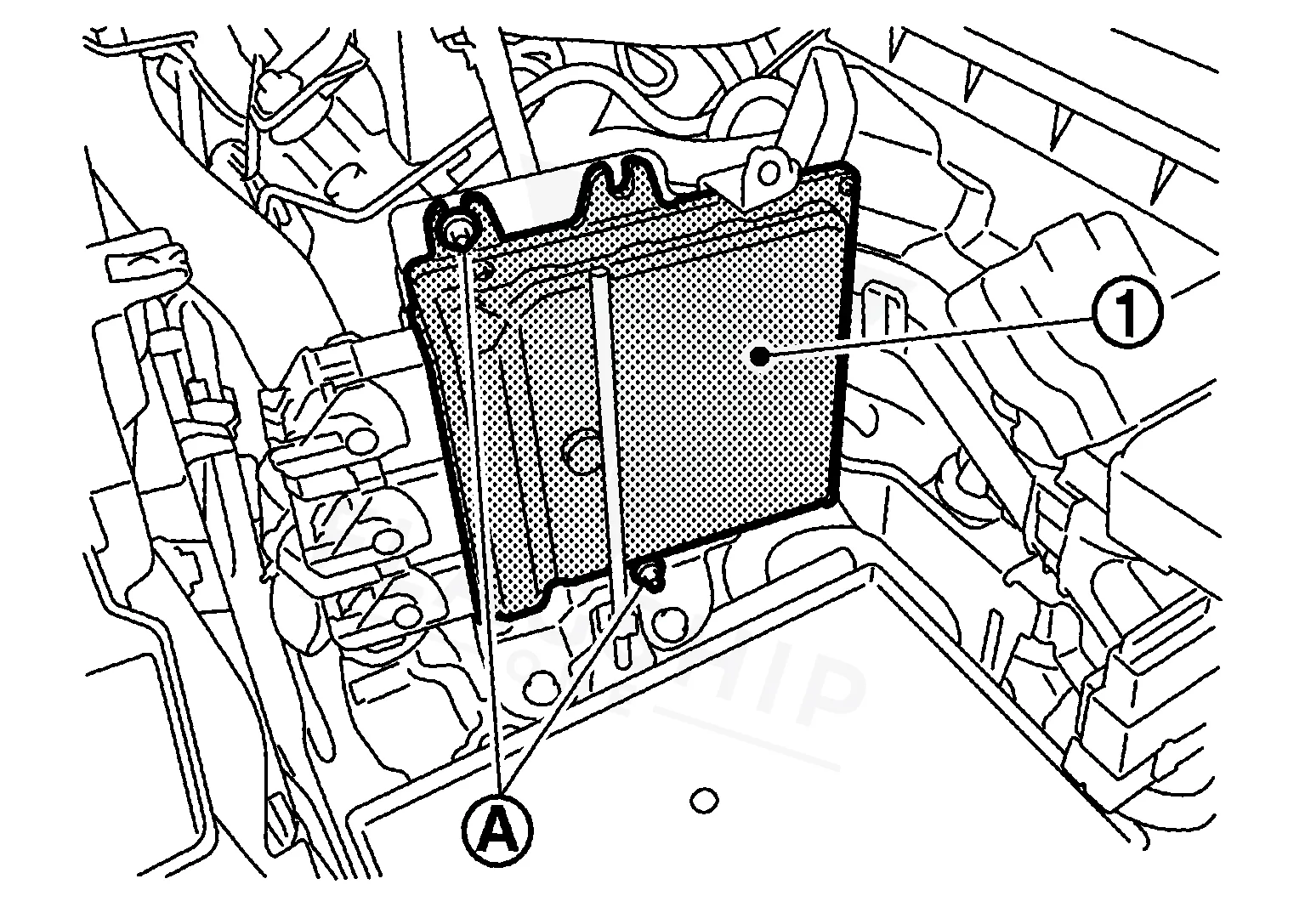
Work with the ignition off, and treat the module as static-sensitive: avoid touching the connector pins at any point.
| Operation | Configuration | Book Time |
|---|---|---|
| Powertrain Control Module R&R | All configurations | 1.8 hr |
| Engine Control Module R&R | All configurations | 1.8 hr |
| Engine Control Module Relearn | All configurations | 0.5 hr |
After installing a replacement control module in your 2015 Nissan Quest, the module must be programmed with vehicle-specific data before the engine will run properly. The factory procedure involves connecting a scan tool to the vehicle’s diagnostic port and initiating a reprogramming session that downloads the correct calibration file for your specific vehicle identification number. This calibration includes information about your engine’s displacement, transmission gearing, final drive ratio, and emissions equipment—all of which must match exactly for proper operation.
Once the programming is complete, the relearn procedure allows the new module to gather idle learning values, fuel trims, and other adaptive data specific to your engine. This process enables the module to optimize fuel delivery and timing for your specific powertrain. Without this step, the vehicle may run roughly, stall, or trigger additional fault codes.
Flagship One addresses this requirement by shipping a VIN-programmed replacement unit with the correct calibration pre-loaded. This means the module arrives ready to install, and many of the dealer programming steps are already completed before the unit ever reaches your shop. Your technician still needs to perform the post-install relearn procedure to establish the idle learning values, but the time-consuming calibration download step is eliminated. This saves you from the inconvenience of scheduling dealer appointments or paying premium programming fees.
Every VIN-programmed replacement unit from Flagship One arrives with these steps already completed.
Recognizing the signs of control module failure in your 2015 Nissan Quest helps you distinguish between this problem and other potential causes of drivability symptoms. The most obvious indication is a no-start condition—the engine cranks normally but receives no fuel or spark because the module fails to generate the necessary commands. In other cases, the vehicle may start but run extremely rough, idle inconsistently, or stall shortly after starting.
Transmission symptoms frequently accompany engine control problems. You might experience harsh shifting, delayed gear engagement, the transmission failing to shift out of gear, or the vehicle becoming stuck in limp-in mode. These issues often lead owners to suspect transmission mechanical problems when the root cause actually lies in the module sending incorrect signals to the transmission control system.
Multiple diagnostic trouble codes often appear simultaneously when the module itself has failed. Common codes include random misfire codes, sensor circuit faults that do not correspond to actual sensor failures, and communication errors between modules. The P0605 code specifically indicates an internal memory fault within the control module, suggesting the processor has detected a problem with its internal programming or data storage area. This internal memory fault can trigger a cascade of additional codes as the module’s ability to process sensor data becomes compromised. If your scan tool shows this code along with multiple others, particularly if clearing the codes results in their immediate return, module replacement becomes the most likely solution.
The 2015 Nissan Quest may store module-internal diagnostic trouble codes when the control module detects internal faults. These codes differ from typical sensor or circuit codes because they indicate problems within the module hardware itself rather than faults in external components. The following code has been documented for this vehicle:
| Code | Meaning | Full Guide |
|---|---|---|
| P0605 | Internal ROM error | Full P0605 guide → |
No. The replacement module must be compatible with your specific vehicle identification number. Modules are programmed with calibration data that matches your engine size, transmission, and emissions equipment. Using an incorrect module can cause the vehicle to run poorly or not run at all. Always verify that the replacement unit is programmed for your exact vehicle.
The physical replacement is straightforward for someone with moderate automotive DIY experience, but programming the new module typically requires dealer-grade equipment. Flagship One modules arrive VIN-programmed, which eliminates the need for dealer programming in most cases. However, you will still need a scan tool to perform the relearn procedure after installation.
The relearn procedure allows the new control module to adapt to your specific engine’s characteristics. Each engine has slight variations in airflow, fuel delivery, and sensor outputs. The module learns these values by monitoring the engine under various operating conditions, enabling it to optimize fuel delivery and timing for your specific powertrain.
For a 2015 Nissan Quest with module failure, replacement is often the most cost-effective solution. The labor and parts cost is typically a fraction of the value of the vehicle. A properly programmed replacement module can restore full functionality, making this a sensible repair rather than a reason to replace the entire vehicle.
Driving with a failed control module is generally not practical. The vehicle may not start, may stall unexpectedly while driving, or may run so poorly that it becomes unsafe to operate. Additionally, the check engine light will remain on, and you will fail emissions testing in states that require it. The problem will not resolve on its own.
When your 2015 Nissan Quest requires a replacement control module, you have two primary options: a new unit from the dealer at significantly higher cost, or a quality replacement from Flagship One that arrives VIN-programmed and ready to install. The Flagship One unit provides the same functionality as a new module at a more accessible price point, saving you the expense and delay of dealer programming. Given the straightforward labor involved—1.8 hours for removal and installation plus 0.5 hours for relearn—many independent shops can complete this repair efficiently. Consider your budget, timeline, and trusted repair provider when deciding which path makes sense for your situation.
Flagship One stocks a refurbished, VIN-programmed PCM for the 2015 Nissan Quest with a lifetime warranty, free shipping and no core charge. The full Nissan Quest module lineup covers other engine configurations as well.
The Powertrain Control Module and Engine Control Module in your 2015 Nissan Quest are essential components that manage engine and transmission operation. When failure occurs, recognizing the symptoms and understanding the replacement process helps you approach the repair with confidence. With quality replacement units available and the elimination of dealer programming steps through VIN-programming, restoring your vehicle to proper operation is a manageable repair. Whether you handle it yourself or trust a professional, addressing module failure promptly gets your Quest back on the road reliably.