
Last updated on August 25th, 2026 at 01:31 pm
The Powertrain Control Module (PCM) in your 2016 Ford Fiesta manages engine and transmission functions. Failures may cause erratic performance, stalling, or communication errors with other vehicle systems, often triggered by electrical issues or internal faults.
If your 2016 Ford Fiesta is experiencing unexplained stalling, rough idling, or transmission shifting issues, the Powertrain Control Module (PCM) may be at fault. This critical component oversees engine and transmission functions, ensuring smooth operation. When it fails, symptoms can range from minor annoyances to complete vehicle disablement. Understanding the role of the PCM, recognizing failure signs, and knowing replacement steps can help you address issues efficiently. This guide covers what the PCM does, where it’s located, and what to expect during replacement and relearn procedures.
The Powertrain Control Module (PCM) in your 2016 Ford Fiesta acts as the brain for both engine and transmission systems. It processes data from sensors to optimize fuel delivery, ignition timing, and gear shifts, ensuring efficient performance. A malfunctioning PCM may disrupt these functions, leading to poor drivability or even a no-start condition. If replacement becomes necessary, you’ll need to consider replacement engine computers for the Ford Fiesta, which are designed to restore proper vehicle operation. The PCM’s role is critical, as it directly influences fuel economy, emissions, and overall reliability.
2016 Ford Fiesta
OEM programmed ECM for your 2016 Ford Fiesta — plug & play, no dealer visit.
Free shipping · Lifetime warranty
In the 2016 Ford Fiesta, the PCM is located next to the air cleaner assembly, making it relatively accessible for replacement. The factory procedure involves removing the module, which typically requires disconnecting the battery and unbolting the unit from its mount. Labor time for removal and reinstallation is estimated at 0.6 hours. Once the old module is out, the new one can be installed in the same location. Proper torque on mounting bolts is essential to avoid vibration or connection issues, though specific torque values are not always provided in standard repair manuals.
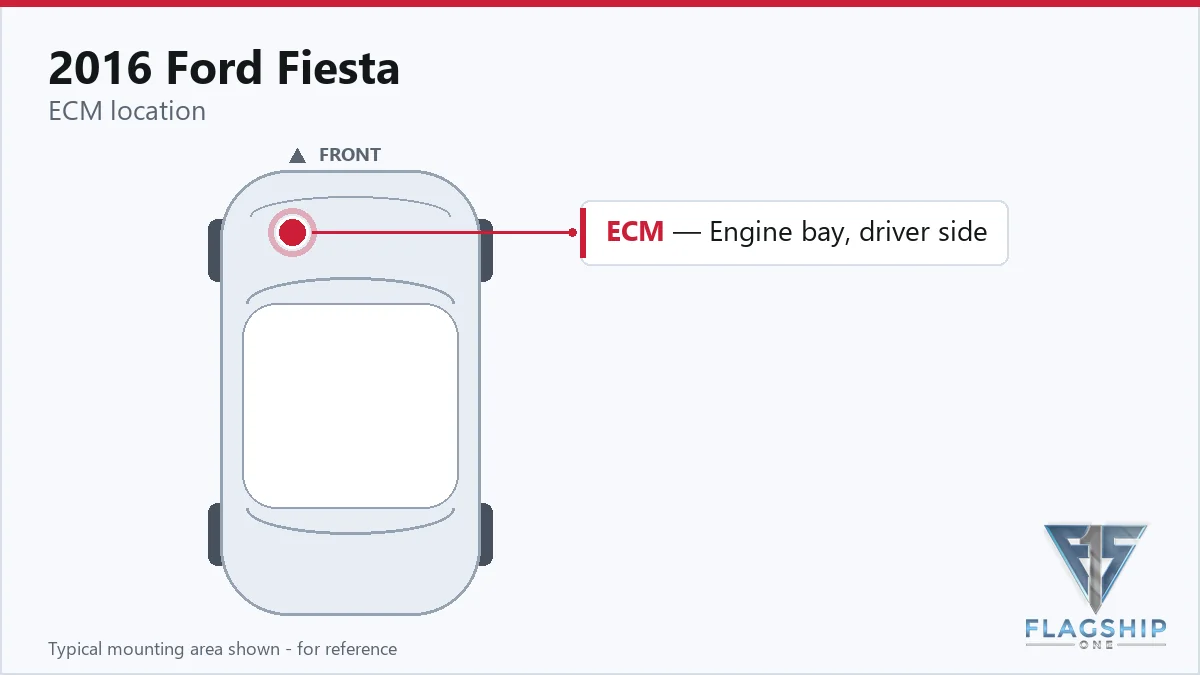
Work with the ignition off, and treat the module as static-sensitive: avoid touching the connector pins at any point.
| Operation | Configuration | Book Time |
|---|---|---|
| Powertrain Control Module R&R | All configurations | 0.6 hr |
| Powertrain Control Module Relearn | All configurations | 0.5 hr |
| Engine Control Module Relearn | All configurations | 0.5 hr |
| Engine Control Module R&R | All configurations | 0.6 hr |
After replacing the PCM in your 2016 Ford Fiesta, the factory procedure requires a relearn process to synchronize the module with the vehicle’s systems. This step, which takes approximately 0.5 hours, ensures proper communication between the PCM and other components. However, if you install a VIN-programmed replacement unit, this relearn step is already completed, saving you time and potential hassle. The pre-programmed module is configured to match your vehicle’s specifications, allowing for immediate operation without additional setup.
A failing PCM in your 2016 Ford Fiesta may cause a variety of symptoms, including intermittent stalling, rough idling, or a no-start condition. You might also notice transmission shifting issues, such as delayed or harsh gear changes. Onboard diagnostics may trigger module-related trouble codes, such as an internal processor fault, which indicates a potential failure within the PCM itself. Other signs include poor fuel economy, erratic engine behavior, or a complete loss of communication with a scan tool. Addressing these symptoms promptly can prevent further drivability problems.
The 2016 Ford Fiesta may log specific trouble codes when the PCM experiences internal faults. These codes help diagnose issues and guide repair decisions. Below are the documented module-internal trouble codes for this vehicle.
| Code | Meaning | Full Guide |
|---|---|---|
| P0606 | Module processor failure | Full P0606 guide → |
| U0100 | Module-internal fault | Full U0100 guide → |
| U0101 | Module-internal fault | Full U0101 guide → |
Common signs include stalling, rough idling, or a no-start condition. You may also see transmission shifting issues or module-related trouble codes like P0606. A scan tool can help confirm PCM communication errors.
Replacement is possible if you’re comfortable with basic mechanical work. The PCM is located near the air cleaner assembly, and the process involves disconnecting the battery and unbolting the module. However, a relearn procedure is required afterward.
The relearn process synchronizes the new PCM with the vehicle’s systems, ensuring proper communication. Without it, the vehicle may not start or could experience drivability issues. Pre-programmed units eliminate this step.
If your 2016 Ford Fiesta is exhibiting PCM-related symptoms, you have options for repair or replacement. While a dealership may offer a new module, a refurbished or pre-programmed unit can provide a cost-effective alternative. Given the labor involved in replacement and relearn, choosing a unit that’s ready to install can save time and reduce downtime.
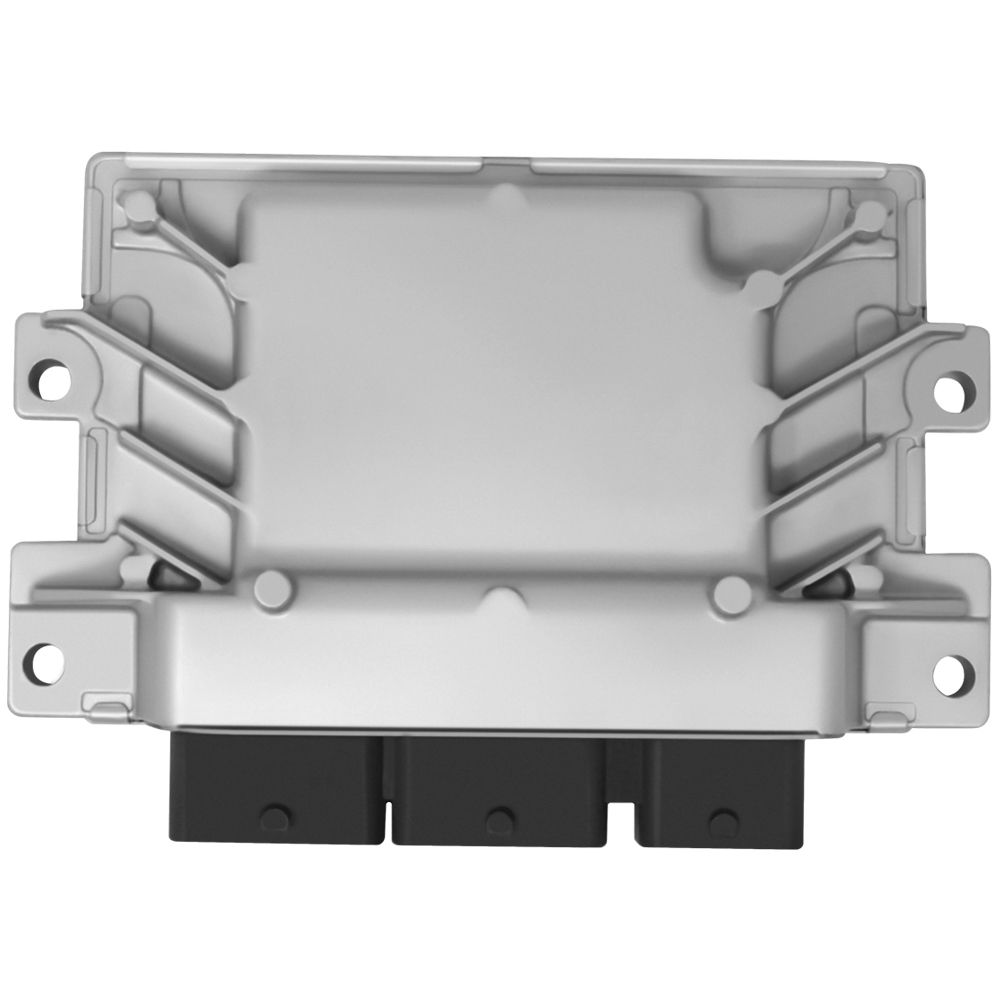
Flagship One stocks a refurbished, VIN-programmed PCM for the 2016 Ford Fiesta with a lifetime warranty, free shipping and no core charge. The full Ford Fiesta module lineup covers other engine configurations as well.
The 2016 Ford Fiesta relies on its PCM for smooth engine and transmission operation. If you’re experiencing stalling, no-start conditions, or shifting issues, the PCM may be the culprit. Replacing it with a pre-programmed unit can restore functionality without the need for additional relearn steps. Addressing PCM issues promptly ensures your vehicle remains reliable and drivable.