
Last updated on August 25th, 2026 at 01:39 pm
The powertrain control module (PCM) in your 1996 Ford Bronco acts as the brain for engine and transmission functions. When it fails, you may experience erratic performance, failure to start, or warning lights without obvious mechanical issues.
If your 1996 Ford Bronco has been acting unpredictably—stalling at stops, refusing to start, or throwing warning lights without clear cause—the powertrain control module (PCM) may be the culprit. This critical component oversees everything from fuel injection to transmission shifts, and when it malfunctions, the symptoms can mimic a host of other issues. Replacing it isn’t just about swapping a part; it involves precise labor steps and, in some cases, a relearn procedure to ensure your Bronco runs as intended. Understanding the process helps you avoid unnecessary diagnostics and ensures a smoother repair. Whether you’re dealing with a sudden no-start situation or intermittent driveability problems, knowing how the PCM functions and what to expect during replacement can save you time and frustration. This guide covers the essentials: what the module does, where it’s located, how to replace it, and what symptoms signal its failure—so you can make informed decisions about your vehicle’s care.
In your 1996 Ford Bronco with the 5.8L engine, the powertrain control module (PCM) serves as the central command center for both engine and transmission operations. It continuously monitors inputs from sensors—like the throttle position, oxygen levels, and crankshaft position—to adjust fuel delivery, ignition timing, and shift points in real time. Without a properly functioning PCM, your Bronco may struggle to start, idle roughly, or shift erratically, even if the mechanical components are in good condition. The module also plays a key role in emissions control, ensuring the vehicle meets factory specifications. When it fails, you might notice symptoms that seem unrelated, such as poor fuel economy or transmission slippage, because the PCM’s decisions affect multiple systems simultaneously. If replacement becomes necessary, opting for replacement engine computers for the Bronco ensures compatibility and restores the precise calibration your vehicle was designed to use. The PCM’s integration with the EEC-V system in this model means it’s not just a standalone part but a critical link in the Bronco’s overall performance and drivability.
Engine computer (ECM/PCM)
OEM programmed replacements — plug & play, no dealer visit.
Find yours by year, make & model →
Free shipping · Lifetime warranty
The powertrain control module (PCM) in your 1996 Ford Bronco is located inside the passenger compartment, typically mounted behind the kick panel on the right side. Accessing it requires removing the lower dashboard panel or glove box, depending on the exact configuration. The replacement process involves disconnecting the battery, unplugging the wiring harness connectors, and removing the module’s mounting bolts. Labor time for removing and reinstalling the PCM is typically 1.0 hour, according to factory estimates. After installation, a relearn procedure of 0.5 hours is often required to synchronize the module with the vehicle’s sensors and systems. The engine control module (ECM), if separate, may take 1.5 hours to replace due to its location and additional connections. Always ensure the connectors are clean and securely fastened to prevent future electrical issues.
Work with the ignition off, and treat the module as static-sensitive: avoid touching the connector pins at any point.
| Operation | Configuration | Book Time |
|---|---|---|
| Powertrain Control Module R&R | All configurations | 1.0 hr |
| Powertrain Control Module Relearn | All configurations | 0.5 hr |
| Engine Control Module Relearn | All configurations | 0.5 hr |
| Engine Control Module R&R | All configurations | 1.5 hr |
After replacing the powertrain control module (PCM) in your 1996 Ford Bronco, the factory procedure typically requires a relearn process to ensure the module communicates correctly with the vehicle’s sensors and systems. This step, which takes about 0.5 hours, involves resetting the module and allowing it to recalibrate with the engine and transmission. However, if you install a VIN-programmed replacement unit, this step is already completed before the module arrives, saving you time and potential hassle. The relearn process may include driving the vehicle under specific conditions to allow the PCM to adapt to your Bronco’s unique operating parameters. Without this step, you might experience driveability issues like rough idling or poor shifting. Using a pre-programmed unit eliminates the need for additional software updates or dealer visits, ensuring your Bronco is ready to drive as soon as the installation is complete.
When the powertrain control module (PCM) in your 1996 Ford Bronco begins to fail, the symptoms can be frustratingly inconsistent. You might experience a no-start condition, where the engine cranks but refuses to fire, or intermittent stalling at idle or while driving. The malfunction indicator lamp (MIL) may illuminate on the dashboard, often accompanied by generic or specific trouble codes like catalyst system efficiency below threshold, even if there’s no obvious issue with the catalytic converter. Other common signs include rough idling, poor acceleration, or transmission shifting problems, such as delayed or harsh gear changes. In some cases, the vehicle may enter a “limp mode,” limiting engine power to prevent further damage. Scan tool communication issues can also arise, where the PCM fails to respond to diagnostic requests, making troubleshooting more difficult. Because the PCM controls multiple systems, symptoms may overlap with other problems, such as fuel pump failure or transmission issues. If you notice any of these signs, it’s worth checking the PCM’s health, especially if no other mechanical faults are found.
Ford issued several service bulletins addressing powertrain control module (PCM) concerns for the 1996 Bronco. TSB 97-09-08 outlines procedures for reprogramming the PCM to resolve driveability issues or software-related faults. Another bulletin, 96-15-13, specifically targets vehicles with the 5.0L engine (though your 5.8L model may share similar calibration concerns) and addresses Diagnostic Trouble Code (DTC) P0420, often related to the malfunction indicator lamp (MIL) illuminating without noticeable driveability problems. The bulletin recommends reprogramming or replacing the PCM for affected calibrations. TSB 99-04-03 focuses on out-of-vehicle reprogramming procedures for EEC-V vehicles, which includes your Bronco. These bulletins highlight the importance of keeping the PCM’s software up to date to avoid unnecessary repairs or performance issues.
| Bulletin | Subject | What It Addresses |
|---|---|---|
| 97-09-08 | POWERTRAIN CONTROL MODULE – REPROGRAM POWERTRAIN CONTROL MODULE (PCM) – SERVICE PROCEDURES – SE | — |
| 96-15-13 | AFFECTED CALIBRATIONS: 6-54K-R06, 6-54E-R10, 6-54J-R11, 6-54M-R11, 6-53F-R10, 6-53E-R10, 6-53G- | — |
| 99-04-03 | EEC V VEHICLES ONLY – OUT-OF-VEHICLE – REPROGRAMMING POWERTRAIN CONTROL MODULES (PCMS) | — |
Stalling at idle in your Bronco may indicate a failing powertrain control module (PCM), especially if no other mechanical issues are present. The PCM controls fuel delivery and ignition timing, and if it’s malfunctioning, it can cause the engine to cut out unexpectedly. A scan tool can help confirm if the PCM is the root cause by checking for communication errors or related trouble codes.
Yes, the PCM in your Bronco manages both engine and transmission functions, so a faulty module can lead to rough or delayed shifting. The PCM uses sensor data to determine the optimal shift points, and if it’s not functioning correctly, the transmission may not respond as intended. This issue often accompanies other symptoms like poor acceleration or erratic idling.
If your Bronco is experiencing symptoms like stalling, no-start conditions, or MIL illumination, the PCM may need either replacement or reprogramming. A diagnostic scan can reveal if the module is communicating properly. Factory service bulletins, such as TSB 97-09-08, often recommend reprogramming as a first step before considering replacement, especially if no physical damage is present.
Skipping the PCM relearn procedure after replacement can lead to driveability issues in your Bronco, such as rough idling, poor acceleration, or transmission shifting problems. The relearn process allows the module to synchronize with the vehicle’s sensors and adapt to its specific operating conditions. Without it, the PCM may not function optimally, even if the replacement unit is new.
Driving with a failing PCM can be risky, as it may cause unpredictable behavior like stalling, loss of power, or transmission issues. In some cases, the vehicle may enter a “limp mode” to prevent further damage, but this limits performance and can leave you stranded. If you suspect PCM failure, it’s best to address it promptly to avoid potential safety hazards or further damage to other systems.
If your 1996 Ford Bronco is showing signs of PCM failure, you have options beyond costly dealer repairs. A refurbished or remanufactured replacement unit can restore your vehicle’s performance without the hassle of programming or relearn procedures. Given the labor involved in accessing and replacing the module, choosing a VIN-programmed unit ensures a seamless installation. Whether you’re dealing with a no-start condition or intermittent driveability issues, addressing the PCM promptly can save you time and prevent further complications down the road.
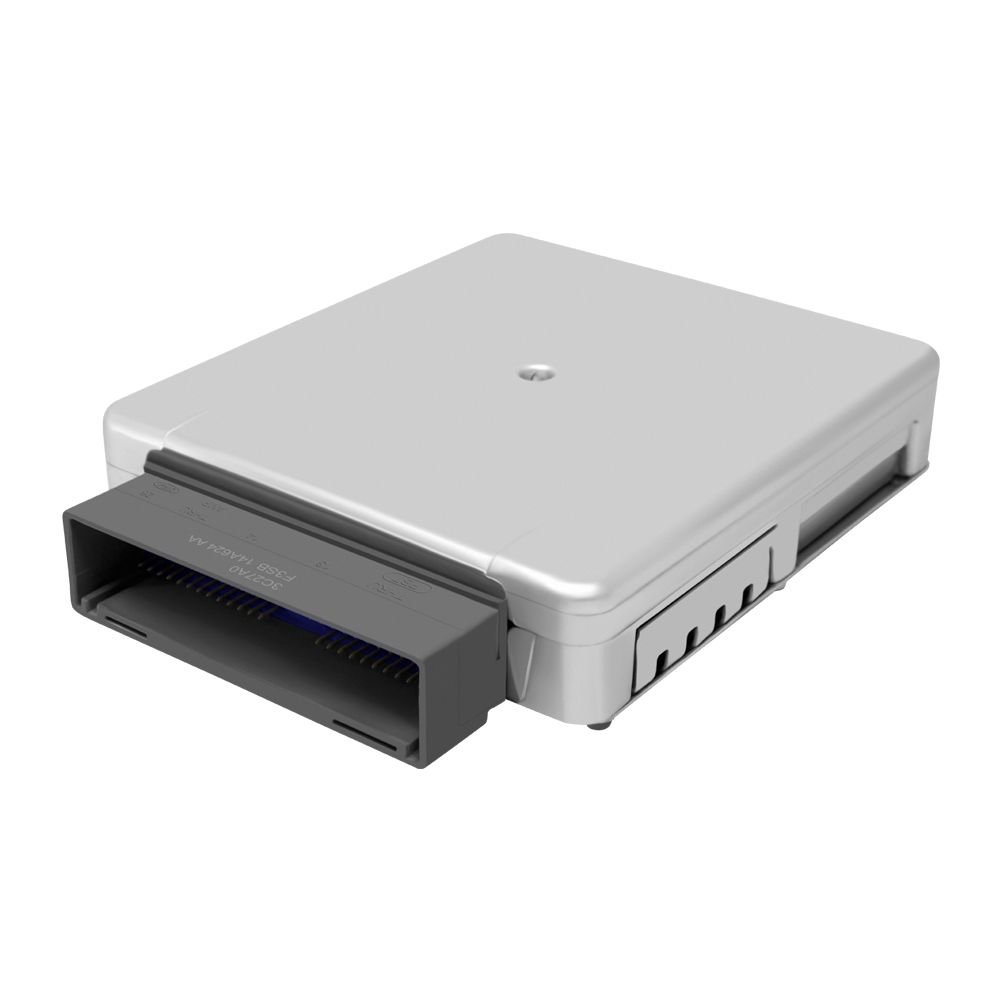
Flagship One stocks a refurbished, VIN-programmed PCM for the 1996 Ford Bronco with a lifetime warranty, free shipping and no core charge. The full Ford Bronco module lineup covers other engine configurations as well.
The powertrain control module in your 1996 Ford Bronco plays a critical role in keeping your vehicle running smoothly. When it fails, the symptoms can range from subtle driveability quirks to complete no-start conditions. Understanding the replacement process, from labor times to relearn procedures, helps you make informed decisions about repairs. Whether you opt for a dealer visit or a pre-programmed replacement unit, addressing PCM issues promptly ensures your Bronco remains reliable for years to come. If you’re experiencing any of the symptoms discussed, consider having your module checked to keep your Bronco on the road and performing at its best.