
Last updated on August 25th, 2026 at 01:32 pm
The Powertrain Control Module (PCM) in your 2013 Ford Fiesta manages engine and transmission functions. Failure may cause stalling, no-start conditions, or communication errors with other vehicle systems, often indicated by specific trouble codes.
If your 2013 Ford Fiesta suddenly refuses to start or stalls unexpectedly, the Powertrain Control Module (PCM) may be the culprit. This compact computer sits at the heart of your vehicle’s operations, managing everything from fuel delivery to transmission shifts. When it fails, symptoms can range from frustrating no-crank conditions to erratic engine behavior. Replacing the PCM isn’t just about swapping a part—it involves precise programming to ensure your Fiesta’s security system and engine controls communicate properly. Understanding the process helps you avoid unnecessary dealer markups and ensures your vehicle returns to reliable operation. This guide covers what the PCM does, where it’s located, the symptoms of failure, and the steps required to replace it correctly. You’ll also learn how to protect your new module and what to expect during the repair process.
The Powertrain Control Module in your 2013 Ford Fiesta acts as the brain for both the engine and transmission. It continuously monitors sensors to adjust fuel injection, ignition timing, and shift points, ensuring optimal performance and efficiency. Without a functioning PCM, your Fiesta may struggle to start, run poorly, or even enter a fail-safe mode that limits speed and power. The module also integrates with the Passive Anti-Theft System (PATS), which means a replacement unit must be programmed to recognize your vehicle’s unique key fob. This dual role—engine management and security—makes the PCM one of the most critical components in your Fiesta. When shopping for a replacement, you’ll want to focus on replacement engine computers for the Fiesta that are pre-configured for your vehicle’s VIN to avoid additional programming headaches. A faulty PCM can disrupt communication with other control modules, leading to a cascade of issues that may leave you stranded.
2013 Ford Fiesta
OEM programmed replacements — plug & play, no dealer visit.
Find yours by year, make & model →
Free shipping · Lifetime warranty
The PCM in your 2013 Ford Fiesta is located inside the engine compartment, typically mounted near the firewall on the passenger side. Accessing it requires removing a protective cover, which may involve unbolting a few fasteners. Once exposed, the module is secured with a single connector that must be carefully disconnected to avoid damaging the pins. The factory labor time for removal and replacement is 0.6 hours, which includes handling the module and reattaching the connector. After installation, the PCM must be relearned to the vehicle’s systems, a process that adds another 0.5 hours of shop time. While the physical replacement is straightforward, the programming steps are critical—skipping them will leave your Fiesta unable to start or run properly. Always ensure the replacement unit is compatible with your vehicle’s configuration to avoid compatibility issues.
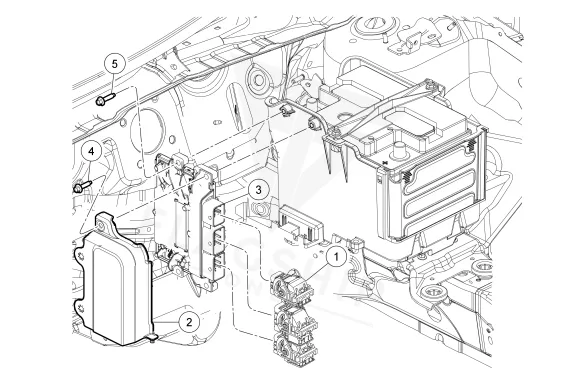
Work with the ignition off, and treat the module as static-sensitive: avoid touching the connector pins at any point.
| Operation | Configuration | Book Time |
|---|---|---|
| Powertrain Control Module R&R | All configurations | 0.6 hr |
| Powertrain Control Module Relearn | All configurations | 0.5 hr |
| Engine Control Module Relearn | All configurations | 0.5 hr |
| Engine Control Module R&R | All configurations | 0.6 hr |
After replacing the PCM in your 2013 Ford Fiesta, the factory procedure requires reprogramming the Passive Anti-Theft System (PATS) and updating the module’s memory with your vehicle’s specific data. This involves flashing the Electrically Erasable Programmable Read Only Memory (EEPROM) and programming the Vehicle Identification (VID) block to match your Fiesta’s VIN. These steps are essential to ensure the engine starts and runs correctly, as well as to prevent security-related issues. However, if you opt for a VIN-programmed replacement unit, these procedures are already completed, saving you the 0.5 hours of shop time typically required for relearning. This not only reduces labor costs but also eliminates the risk of programming errors that could leave your vehicle inoperable. Always confirm that the replacement PCM is fully programmed for your Fiesta’s configuration to avoid unnecessary complications.
A failing PCM in your 2013 Ford Fiesta may produce a variety of symptoms, often starting with intermittent issues that worsen over time. You might notice the engine stalling unexpectedly, especially at idle or during deceleration, or the vehicle may refuse to start altogether. Poor acceleration, rough idling, or sudden drops in fuel efficiency can also indicate PCM problems. In some cases, the transmission may shift erratically or fail to engage gears properly. Onboard diagnostics may reveal communication errors, such as the vehicle’s inability to communicate with a scan tool, or specific trouble codes like an internal processor fault. Other common codes include U0100 and U0101, which signal lost communication with the transmission or other control modules. If your Fiesta exhibits these symptoms, it’s important to address them promptly, as a failing PCM can lead to further damage or leave you stranded. Regularly scanning for codes can help catch issues early before they escalate.
The 2013 Ford Fiesta’s PCM may generate specific trouble codes when internal faults or communication issues arise. These codes help pinpoint the source of the problem, whether it’s a processor failure, a lost connection with another module, or a security system malfunction. Understanding these codes can guide your diagnosis and repair process.
| Code | Meaning | Full Guide |
|---|---|---|
| P0606 | Module processor failure | Full P0606 guide → |
| U0100 | Module-internal fault | Full U0100 guide → |
| U0101 | Module-internal fault | Full U0101 guide → |
The Passive Anti-Theft System (PATS) in your Fiesta is tied to the PCM to prevent unauthorized starts. When you replace the PCM, the new module doesn’t recognize your key fob until it’s reprogrammed. This step ensures the security system functions correctly and allows the engine to start. Skipping it will leave your vehicle inoperable.
While the physical replacement of the PCM is straightforward, the programming requirements make it a job best left to professionals. The factory procedure involves flashing the EEPROM and reprogramming the PATS, which requires specialized tools and software. A pre-programmed unit simplifies the process but still requires careful handling to avoid connector damage.
In your Fiesta, the terms PCM (Powertrain Control Module) and ECM (Engine Control Module) are often used interchangeably, but the PCM is the more accurate term. Unlike some vehicles that separate engine and transmission control, your Fiesta’s PCM handles both functions, making it a single, integrated unit responsible for engine and transmission management.
PCM failure often produces a combination of symptoms, such as stalling, no-start conditions, and communication errors with a scan tool. If you’re seeing codes like P0606, U0100, or U0101, the PCM is a likely culprit. However, similar symptoms can also stem from wiring issues, sensor failures, or battery problems, so a thorough diagnosis is essential.
A used PCM may physically fit, but it won’t work unless it’s reprogrammed to match your Fiesta’s VIN and security system. Even then, used modules carry risks, such as hidden faults or outdated software. A new or remanufactured unit, pre-programmed for your vehicle, is the safer and more reliable choice.
When your 2013 Ford Fiesta’s PCM fails, you have two main options: repair or replace. Repairing the module may be possible in some cases, but it often involves diagnosing and fixing internal faults, which can be time-consuming and costly. Replacement, on the other hand, offers a faster and more reliable solution, especially when using a pre-programmed unit. This eliminates the need for additional shop time and ensures your Fiesta’s security and engine systems are fully functional. Whether you choose a new or remanufactured PCM, confirm it’s designed for your Fiesta’s specific configuration to avoid compatibility issues.
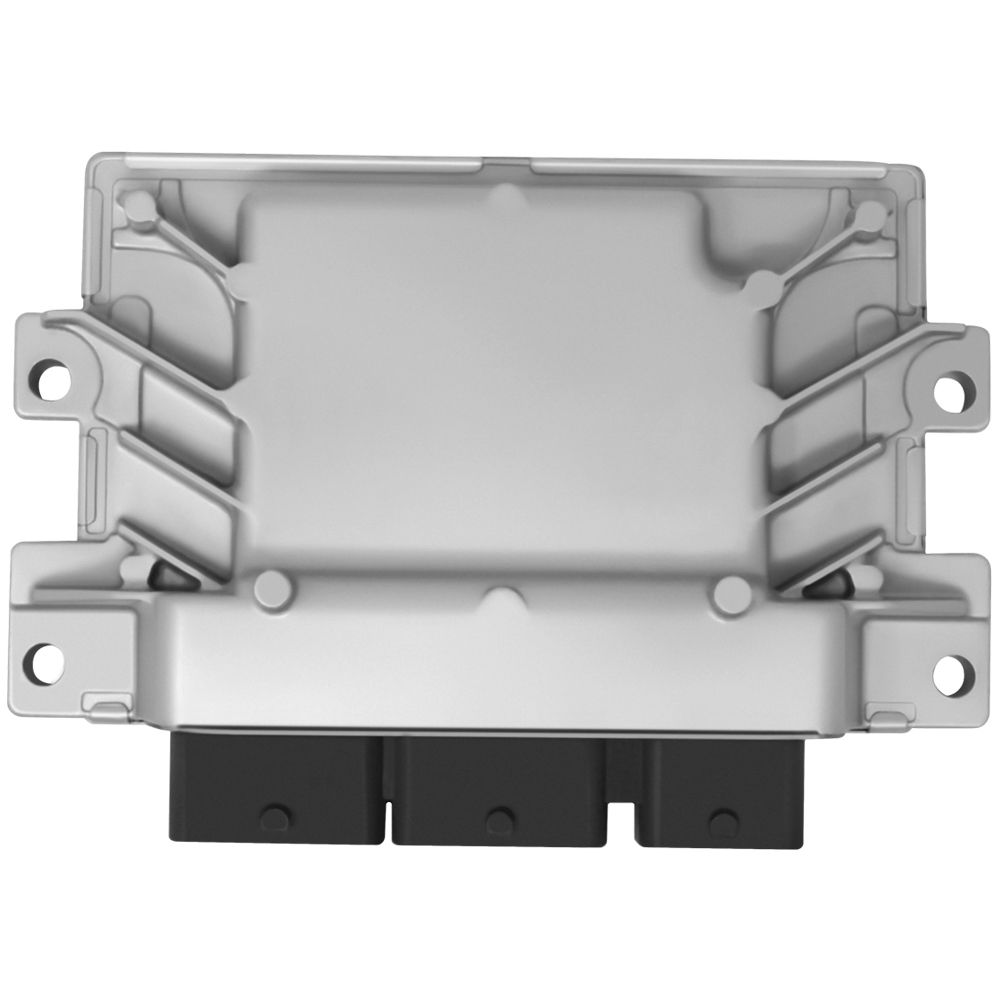
Flagship One stocks a refurbished, VIN-programmed PCM for the 2013 Ford Fiesta with a lifetime warranty, free shipping and no core charge. The full Ford Fiesta module lineup covers other engine configurations as well.
The PCM in your 2013 Ford Fiesta plays a critical role in keeping your vehicle running smoothly. When it fails, the symptoms can range from frustrating stalls to complete no-start conditions. Replacing the module involves more than just swapping parts—it requires precise programming to ensure compatibility with your Fiesta’s security and engine systems. By understanding the process and opting for a pre-programmed replacement, you can save time and avoid unnecessary dealer trips. If you’re experiencing PCM-related issues, addressing them promptly will help keep your Fiesta reliable for miles to come.