
Last updated on August 25th, 2026 at 01:32 pm
The Powertrain Control Module on your 2013 Ford Transit Connect is the central computer managing engine timing, fuel delivery, and emissions systems. When this module fails, your vehicle may not start or run properly.
If your 2013 Ford Transit Connect has stopped running or is displaying drivability issues, the Powertrain Control Module may be the culprit. This guide explains what the PCM does in your specific vehicle, common failure symptoms, and what the replacement process involves. Whether you are a technician or a vehicle owner understanding repair options, you will learn the factory-specified procedures and how replacement modules from Flagship One arrive pre-programmed to simplify installation.
The Powertrain Control Module in your 2013 Ford Transit Connect serves as the brain of your vehicle’s engine management system. This computer processes inputs from numerous sensors throughout the 2.0L engine and controls fuel injection, ignition timing, emission controls, and transmission shifting. Replacement engine computers for the Transit Connect must be programmed with your vehicle’s specific VIN and anti-theft data to function properly. Without a properly functioning PCM, your engine may not start, run erratically, or fail to meet emissions standards. The module also monitors itself for internal faults, storing trouble codes like P0606 when its internal processor detects errors.
Flagship One keeps Ford Transit Connect replacement engine computers in stock for exactly this failure pattern.
2013 Ford Transit Connect
OEM programmed ECM for your 2013 Ford Transit Connect — plug & play, no dealer visit.
Free shipping · Lifetime warranty
The factory removal procedure requires accessing the control module next to the air cleaner assembly on your 2013 Ford Transit Connect. This location allows technicians to reach the PCM without extensive disassembly of engine components. According to labor guides, the Powertrain Control Module R&R book time is 0.6 hours, with an additional 0.5 hours allocated for the Powertrain Control Module Relearn procedure. The Engine Control Module R&R is also 0.6 hours with a separate 0.5-hour relearn time. These times cover the physical replacement and initial module initialization, though additional programming may be required depending on the replacement unit source.
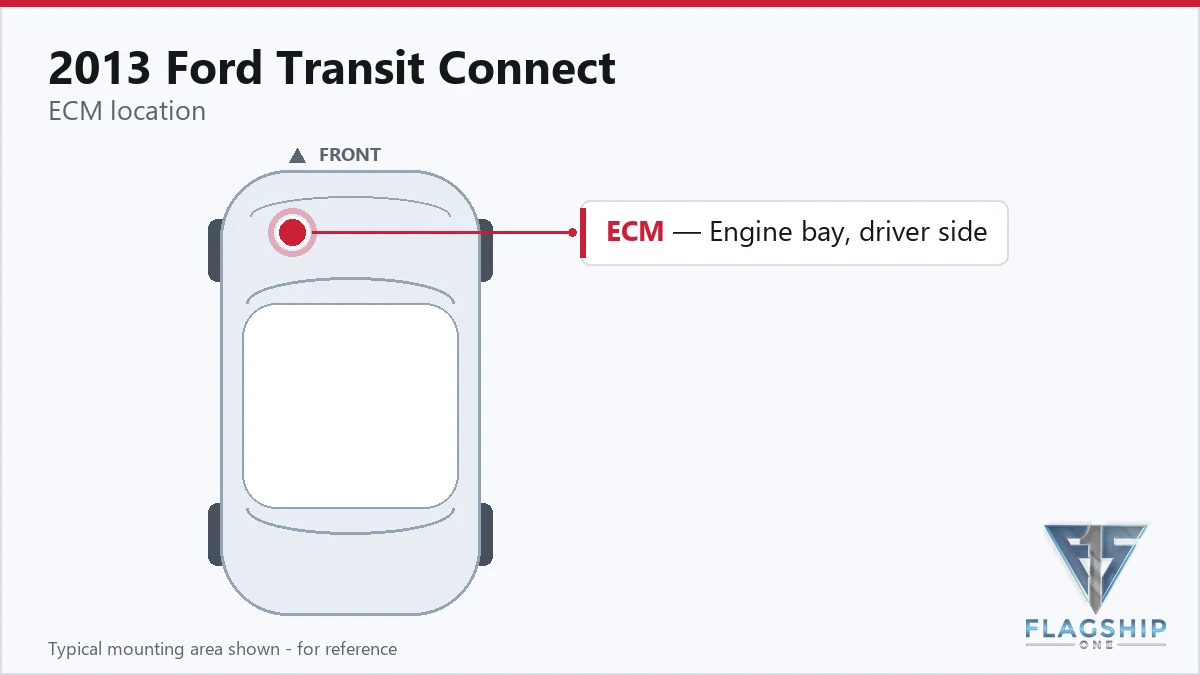
Work with the ignition off, and treat the module as static-sensitive: avoid touching the connector pins at any point.
| Operation | Configuration | Book Time |
|---|---|---|
| Powertrain Control Module R&R | All configurations | 0.6 hr |
| Powertrain Control Module Relearn | All configurations | 0.5 hr |
| Engine Control Module Relearn | All configurations | 0.5 hr |
| Engine Control Module R&R | All configurations | 0.6 hr |
After replacing the PCM on your 2013 Ford Transit Connect, the factory procedure requires reprogramming the PATS (Passive Anti-Theft System) to recognize the new module. Technicians must also refer to Section 2 of the factory service manual for flashing the EEPROM and programming the VID block for a replacement PCM. However, when you install a VIN-programmed replacement unit from Flagship One, these programming steps are already completed at the factory. Your replacement module arrives configured to your specific vehicle, eliminating the need for time-consuming post-install programming procedures.
Every VIN-programmed replacement unit from Flagship One arrives with these steps already completed.
When the PCM fails on a 2013 Ford Transit Connect, you may experience a no-start condition where the engine cranks but will not run. The vehicle might stall unexpectedly or display multiple misfire codes across cylinders. In some cases, scan tools cannot communicate with the module, or transmission shifting becomes erratic. The P0606 processor fault often accompanies these symptoms, indicating the PCM has detected an internal error that compromises its ability to control engine functions. These issues typically appear suddenly rather than gradually, as the module fails catastrophically rather than degrades over time.
The module-internal trouble code documented for this vehicle is P0606, which indicates a processor fault within the Powertrain Control Module itself. This code is not caused by external sensor failures or wiring issues but by the PCM detecting an internal malfunction. When this code is present along with drivability symptoms, replacement of the PCM is typically required rather than repair.
| Code | Meaning | Full Guide |
|---|---|---|
| P0606 | Module processor failure | Full P0606 guide → |
A used PCM may work, but it will require programming with your VIN and the PATS relearn procedure. Additionally, you have no way to verify the internal condition of a used module, and it may fail soon after installation.
A dealer PCM arrives blank and requires programming with factory equipment. This adds significant cost and time to the repair, as the dealership must program your specific VIN and security data into the module.
If the replacement PCM was not programmed with the correct PATS data, the anti-theft system will prevent the engine from starting. Ensure your replacement unit is configured for your specific vehicle before installation.
When your 2013 Ford Transit Connect requires a PCM replacement, you have two primary options: repair the existing module or install a refurbished replacement. Repair is not typically feasible for internal processor faults, making replacement the standard solution. Flagship One offers modules pre-programmed to your VIN, eliminating the complex factory programming steps. Consider your timeline and budget when choosing between dealer parts with added programming fees or a turnkey replacement unit.
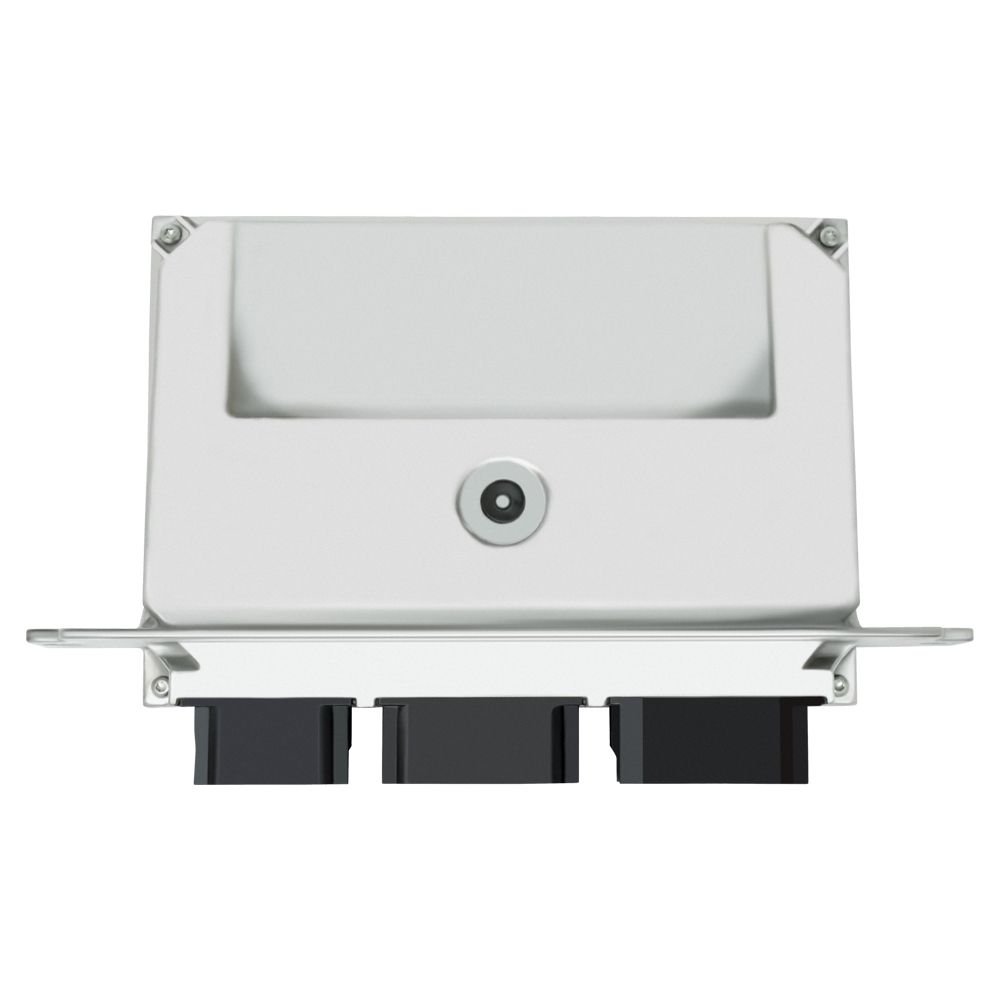
Flagship One stocks a refurbished, VIN-programmed PCM for the 2013 Ford Transit Connect with a lifetime warranty, free shipping and no core charge. The full Ford Transit Connect module lineup covers other engine configurations as well.
The 2013 Ford Transit Connect relies on its Powertrain Control Module for proper engine operation, and failure of this component requires replacement. Understanding the factory procedure and programming requirements helps you make informed repair decisions. Whether you handle the installation yourself or trust a professional, knowing what the process involves ensures your Transit Connect returns to reliable operation.