
Last updated on August 25th, 2026 at 01:32 pm
The powertrain control module (PCM) serves as the central computer for the 2012 Ford Transit Connect’s 2.0L engine, managing fuel delivery, ignition timing, and transmission shifting. Internal processor failures can cause complete communication loss with the vehicle’s diagnostic system.
When your 2012 Ford Transit Connect won’t start or runs poorly, the powertrain control module is often the culprit. This guide explains what the PCM does, common failure symptoms, and what replacement involves. You’ll learn the factory-recommended procedures and how pre-programmed replacement units simplify the process. Whether you’re diagnosing a no-start condition or planning a repair, this information helps you understand the scope of work and make informed decisions about your vehicle’s repair.
The powertrain control module in your 2012 Ford Transit Connect is the primary computer managing the 2.0L engine and automatic transmission. It processes inputs from dozens of sensors and commands fuel injectors, ignition coils, and shift solenoids to maintain smooth operation. Unlike simpler vehicles with separate engine and transmission computers, this model uses an integrated PCM handling both functions. When the internal processor develops a fault, the module may lose the ability to communicate with scan tools or properly control engine functions. Replacement engine computers for the Transit Connect must be programmed with vehicle-specific data to resume proper operation. Without correct programming, the engine may run poorly or not start at all.
Flagship One keeps Ford Transit Connect replacement engine computers in stock for exactly this failure pattern.
2012 Ford Transit Connect
OEM programmed ECM for your 2012 Ford Transit Connect — plug & play, no dealer visit.
Free shipping · Lifetime warranty
The factory removal procedure requires accessing the control module next to the air cleaner assembly. According to labor guides, powertrain control module R&R takes 0.6 hours, with additional time needed for relearn procedures. The engine control module R&R also requires 0.6 hours, and each relearn procedure takes 0.5 hours. The total book time reflects separate operations for PCM removal, installation, and the required post-install relearn steps. Technicians must follow factory procedures for connector handling and module securement to ensure reliable long-term operation.
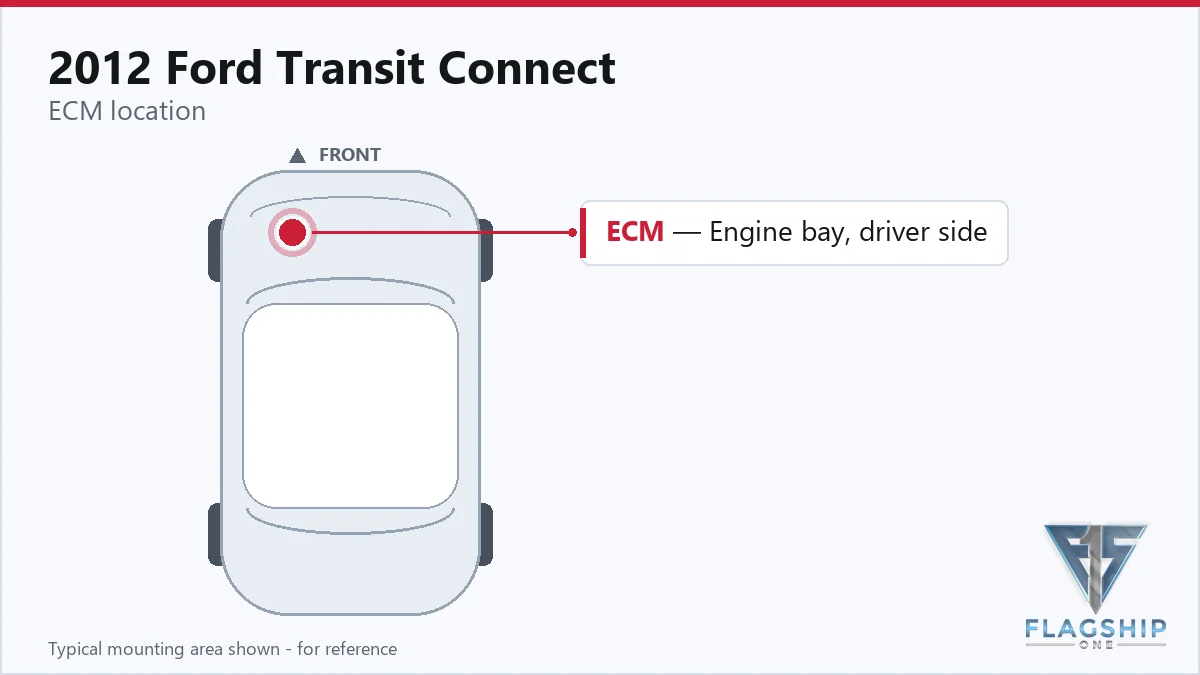
Work with the ignition off, and treat the module as static-sensitive: avoid touching the connector pins at any point.
| Operation | Configuration | Book Time |
|---|---|---|
| Powertrain Control Module R&R | All configurations | 0.6 hr |
| Powertrain Control Module Relearn | All configurations | 0.5 hr |
| Engine Control Module Relearn | All configurations | 0.5 hr |
| Engine Control Module R&R | All configurations | 0.6 hr |
After replacing the PCM on your Transit Connect, the factory procedure requires reprogramming the PATS (Passive Anti-Theft System) and re-programming the VID block using the flash EEPROM procedure outlined in Section 2 for replacement PCM configuration. These steps configure the module to accept your vehicle’s unique security and vehicle identification data. Flagship One units arrive as a VIN-programmed replacement unit, meaning the programming steps are already completed before the module ships. This reduces post-install labor and gets your vehicle back on the road faster.
A failing PCM in the 2012 Ford Transit Connect typically manifests as a no-start condition or intermittent stalling while driving. The vehicle may run roughly, hesitate under acceleration, or display a flashing check engine light. Scan tool communication often fails entirely because the internal processor cannot respond to requests. In some cases, the transmission may refuse to shift properly or the engine may stall immediately after starting. These symptoms closely mimic other failures, but processor fault indicates the problem originates within the control module itself rather than external sensors or wiring.
The 2012 Ford Transit Connect may store internal module codes that indicate processor or memory failures within the control unit itself. These codes differ from standard OBD-II diagnostic trouble codes because they reflect faults in the module’s internal circuitry rather than conditions detected by external sensors.
| Code | Meaning | Full Guide |
|---|---|---|
| P0606 | Module processor failure | Full P0606 guide → |
Factory TSB 12-09-05 addresses 2012 Ford Transit Connect models built on or before January 30, 2012 experiencing DTC P0351 or P0354. Vehicles may exhibit MIL illumination, rough running, loss of power, and hesitation or stumble during operation. The bulletin provides specific diagnostic and repair procedures for these ignition-related diagnostic trouble codes.
| Bulletin | Subject | What It Addresses |
|---|---|---|
| 12-09-05 | BUILT ON OR BEFORE 1/30/2012 – DTC P0351 OR P0354 – MIL ON – RUNS ROUGH, LOSS/LACK OF POWER, HE | — |
No. The replacement module must be programmed with your specific vehicle identification number and the PATS security data. An unprogrammed unit will not allow the engine to start and may trigger immobilizer faults.
Module removal is straightforward for mechanically inclined DIYers, but post-install programming requires dealer-level scan tools. Purchasing a pre-programmed unit from Flagship One eliminates this step.
If scan tools cannot communicate with the vehicle or if code P0606 is present, the internal module is likely faulty. A professional diagnosis confirms whether replacement is needed.
Repairing a failed PCM often costs more than replacement with a refurbished unit. Flagship One offers professionally rebuilt modules programmed for your specific vehicle, eliminating dealer programming fees. Consider your budget, timeline, and warranty preferences when choosing between repair options for your Transit Connect.
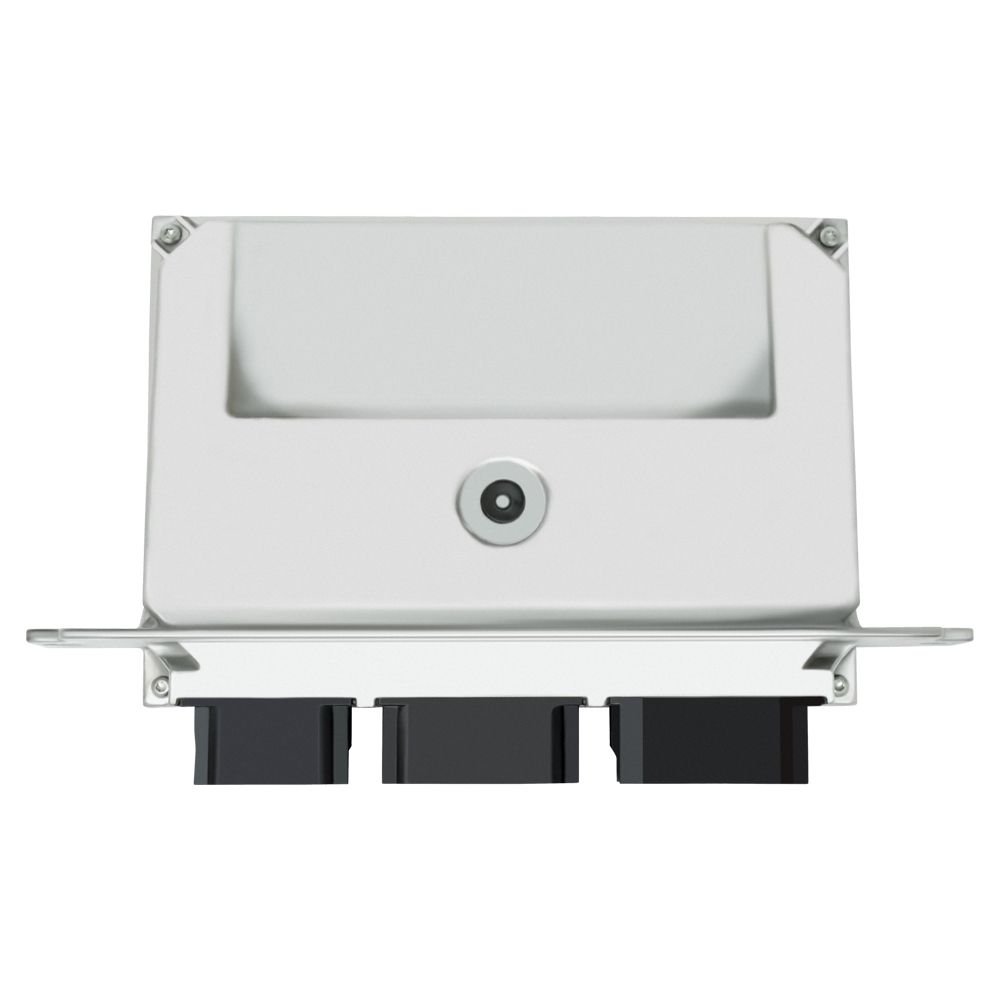
Flagship One stocks a refurbished, VIN-programmed PCM for the 2012 Ford Transit Connect with a lifetime warranty, free shipping and no core charge. The full Ford Transit Connect module lineup covers other engine configurations as well.
The 2012 Ford Transit Connect relies on its powertrain control module for reliable operation. If you’re experiencing no-start, stalling, or poor running conditions, the PCM may be the cause. A pre-programmed replacement unit gets your vehicle back on the road without the hassle of dealer programming appointments.