
Last updated on August 25th, 2026 at 02:23 pm
The Engine Control Module (ECM) in the 2012 Chevrolet Captiva Sport is the central computer managing the 2.4L engine’s fuel injection, ignition timing, emissions, and sensor inputs. Internal memory failures from voltage spikes or heat damage often trigger specific fault codes.
If your 2012 Chevrolet Captiva Sport won’t start, runs poorly, or displays multiple check engine lights, the Engine Control Module may be the culprit. This vehicle uses an ECM that serves as the brain of the 2.4L four-cylinder engine, managing everything from fuel delivery to emissions control. Unlike simple sensor failures, ECM problems often stem from internal processor or memory issues that cannot be repaired with part swaps. This guide explains what the ECM does in your Captiva Sport, common failure symptoms, the factory replacement procedure, and what you need to know whether you pursue dealer service or a quality replacement unit. Understanding the module’s role and the required programming steps helps you make informed repair decisions and avoid common pitfalls that can leave your vehicle stranded.
The Engine Control Module in your 2012 Chevrolet Captiva Sport is the primary computer responsible for controlling the 2.4L four-cylinder engine’s operation. This module continuously monitors input signals from dozens of sensors throughout the engine bay, including the mass airflow sensor, coolant temperature sensor, throttle position sensor, and oxygen sensors. Based on these inputs, the ECM calculates the optimal fuel injection pulse width and ignition timing to deliver smooth power while meeting emissions requirements. The module also controls the idle air control system, evaporative emissions purge valves, and fuel pump relay activation. In practical terms, the ECM determines how your engine runs under every driving condition—from cold starts to highway cruising to heavy acceleration. When the internal processor or memory corrupts, the module may lose its programming, generate fault codes that don’t correspond to actual sensor failures, or fail to communicate with diagnostic tools. The ECM in this vehicle is a replacement engine computer for the Captiva Sport that must be matched to the specific engine and transmission control strategies originally installed. Without proper communication between the ECM and the transmission control module, the vehicle may exhibit harsh shifting or fail to move despite having a running engine.
Flagship One keeps Chevrolet Captiva Sport replacement engine computers in stock for exactly this failure pattern.
2012 Chevrolet Captiva Sport
OEM programmed ECM for your 2012 Chevrolet Captiva Sport — plug & play, no dealer visit.
Free shipping · Lifetime warranty
The Engine Control Module on the 2012 Chevrolet Captiva Sport is typically located in the engine compartment, often mounted to the firewall or near the battery tray area. Access requires opening the hood and removing any protective covers or air intake components that may obstruct the module’s location. The factory labor time for ECM R&R is 0.8 hours according to published book times, with an additional 0.5 hours for the relearn procedure after installation. To replace the module, a technician must first disconnect the negative battery cable—this is a critical safety step that prevents electrostatic discharge damage to the sensitive electronics inside the ECM. The old module is unbolted, its electrical connector is carefully disconnected without touching the pins, and the new unit is installed in reverse order. After installation, the technician reconnects the battery and performs the required relearn procedure using a scan tool to allow the new ECM to adapt to your specific engine’s characteristics. All electrical connections should be inspected for corrosion or damage, and any disturbed vacuum lines or sensor connectors must be properly reseated.
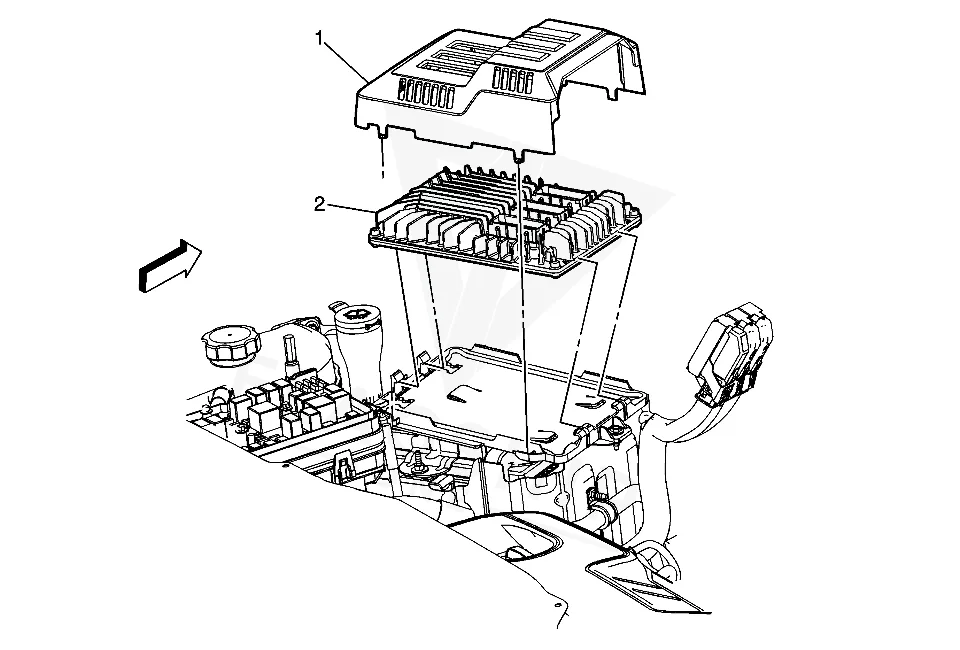
Work with the ignition off, and treat the module as static-sensitive: avoid touching the connector pins at any point.
| Operation | Configuration | Book Time |
|---|---|---|
| Powertrain Control Module R&R | All configurations | 0.8 hr |
| Engine Control Module R&R | All configurations | 0.8 hr |
| Engine Control Module Relearn | All configurations | 0.5 hr |
The factory procedure for your 2012 Chevrolet Captiva Sport requires that the ECM be reprogrammed after replacement. Before removing the old module, the technician should use a scan tool to capture the existing ECM data—this preserves important vehicle-specific information that may be needed for reference. The reprogramming process requires special equipment, the correct program file, and the appropriate calibration data specifically written for your vehicle’s VIN and engine combination. This ensures the new module knows your Captiva Sport’s specific parameters, including transmission gearing, axle ratio, and emission control calibrations. Without proper reprogramming, the vehicle may run poorly, generate multiple fault codes, or fail emissions testing. Flagship One units arrive as a VIN-programmed replacement unit, meaning the module is pre-loaded with your specific vehicle’s identification and calibration data before it ships. This eliminates the need for you to arrange programming services separately and ensures the module will communicate with your vehicle’s systems immediately upon installation.
Every VIN-programmed replacement unit from Flagship One arrives with these steps already completed.
When the Engine Control Module fails on a 2012 Chevrolet Captiva Sport, symptoms often appear suddenly and may include a no-start condition where the engine cranking motor engages but the engine never fires. The vehicle may start and then stall repeatedly, or run roughly with a noticeable lack of power, especially under acceleration. Many drivers report that the check engine light illuminates and remains on, and when scanned with a diagnostic tool, the module may not respond at all or return multiple internal memory check sum error codes that point to internal ECM problems rather than external sensors. The scan tool may show no communication with the ECM, or it may display codes indicating processor or memory failures. In some cases, the vehicle runs well enough to drive but exhibits intermittent stalling, hesitation, or poor fuel economy. Transmission shifting problems can also occur because the ECM and transmission control module must communicate properly—if the ECM fails internally, gear selection may become erratic or the vehicle may refuse to shift out of park. These symptoms typically worsen over time as the internal corruption progresses, eventually leaving the vehicle inoperable.
The 2012 Chevrolet Captiva Sport is documented to set specific module-internal trouble codes when the ECM experiences internal failures. These codes indicate problems within the control module itself rather than faults in external sensors or wiring. The documented codes for this vehicle include P0601 through P0606, P060A, P062F, and P1621—each representing different types of internal memory, processor, or calibration failures within the Engine Control Module.
The ECM must be compatible with your specific engine and transmission combination. Using a module from a different vehicle or engine variant can cause communication issues and improper operation. Flagship One provides units programmed with your exact VIN to ensure plug-and-play compatibility.
While the physical removal and installation can be done by a competent DIY mechanic with basic tools, the programming requirement typically necessitates dealer-level equipment or a professional tuning service. If you purchase a pre-programmed unit from Flagship One, the physical replacement becomes more accessible.
Poor running after ECM replacement usually indicates the new module wasn’t properly programmed for your vehicle, there are wiring or connector issues affecting communication, or there are underlying problems in sensors or grounds that caused the original failure. A thorough diagnostic by a qualified technician can identify these issues.
The P0601 code indicates an internal memory checksum error within the Engine Control Module. While this code does point to ECM internal failure in most cases, it’s worth verifying that the battery voltage was stable when the code set, as severe voltage spikes can trigger this code without permanently damaging the module.
ECM lifespan varies significantly based on operating conditions, electrical system health, and environmental factors. Most units last the life of the vehicle, but heat exposure, moisture intrusion, and voltage events from charging system failures can shorten service life considerably.
When your 2012 Chevrolet Captiva Sport’s ECM fails, you face a choice between dealer replacement with new modules at premium pricing or a quality refurbished replacement unit. A remanufactured ECM from a reputable supplier like Flagship One offers significant cost savings while providing a unit that has been tested and programmed with your vehicle’s specific VIN. This approach eliminates the programming delay and expense often associated with dealer service, getting your Captiva Sport back on the road faster. Consider your budget, timeline, and warranty preferences when making this decision.
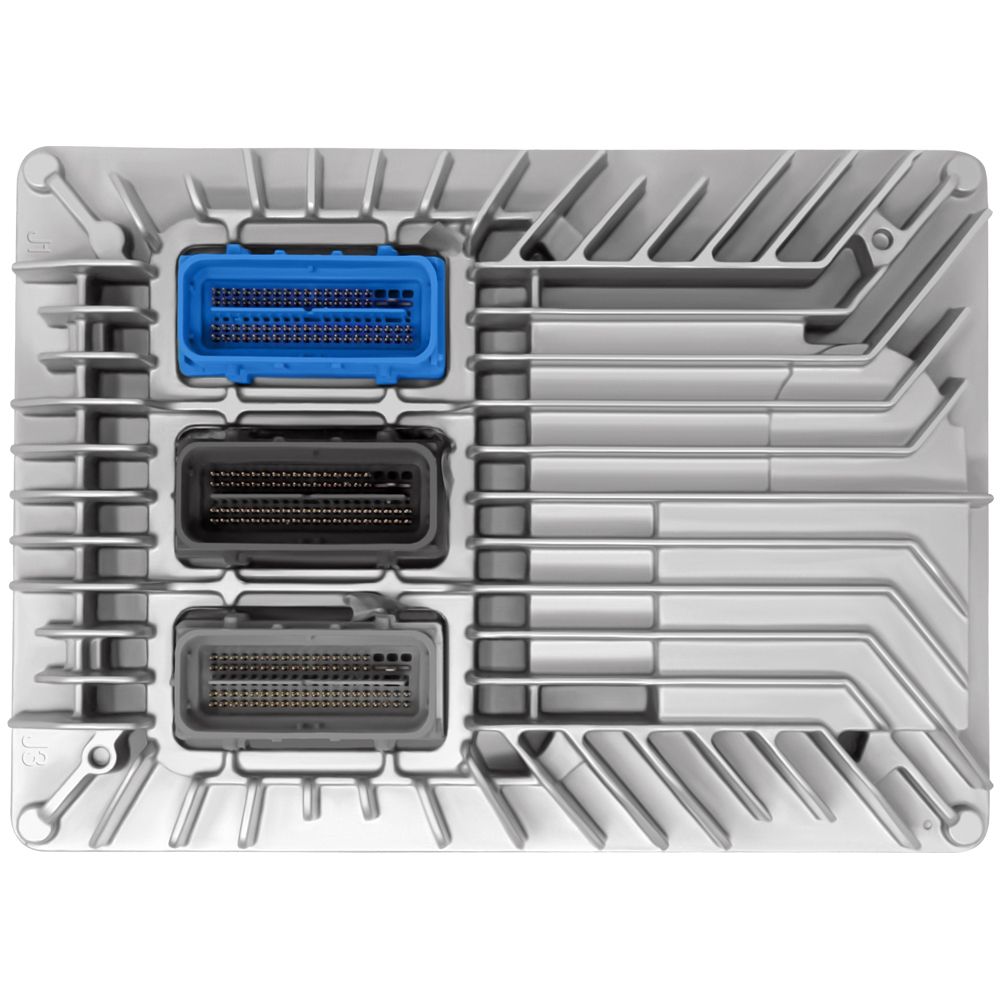
Flagship One stocks a refurbished, VIN-programmed PCM for the 2012 Chevrolet Captiva Sport with a lifetime warranty, free shipping and no core charge. The full Chevrolet Captiva Sport module lineup covers other engine configurations as well.
The Engine Control Module in your 2012 Chevrolet Captiva Sport is a critical component that manages your 2.4L engine’s operation. When internal failures occur, the symptoms can range from inconvenient to completely disabling. Understanding the replacement process, programming requirements, and available options helps you make informed repair decisions. Whether you choose dealer service or a quality pre-programmed replacement, addressing ECM issues promptly restores your vehicle’s reliability and gets you back on the road with confidence in your Captiva Sport’s performance.