
Last updated on August 25th, 2026 at 12:02 pm
The engine control module in your 2007 Toyota 4Runner serves as the central processor for fuel delivery, ignition timing, and emissions management. When this module fails, your vehicle may experience hard starting, erratic idle, or complete refusal to start. The ECM communicates with sensors throughout the powertrain to maintain optimal engine performance.
When your 2007 Toyota 4Runner begins exhibiting unusual drivability issues, the engine control module often becomes a suspect worth investigating. This critical component governs how your 4.0L engine manages air, fuel, and spark, making it central to everyday performance and reliability. Understanding what this module does, where it lives in your vehicle, and what happens when it begins to fail can help you make informed decisions about diagnosis and repair. Many owners first notice module-related problems through symptoms that mimic other issues, such as rough running or intermittent stalling. Because these signs overlap with common sensor failures, properly identifying a faulty engine computer requires careful testing rather than guesswork. The factory service information for your vehicle provides specific procedures for module replacement and relearn, along with important cautions about VIN programming when certain fault codes are present. This guide walks through what the engine control module does in your 4Runner, how replacement is performed according to published labor times, and what programming steps the factory requires after installation. You will also find information on related service bulletins, common symptoms, and practical steps to help protect the module from premature failure over the life of your vehicle.
2007 Toyota 4Runner
OEM programmed replacements — plug & play, no dealer visit.
Find yours by year, make & model →
Free shipping · Lifetime warranty
The engine control module in your 2007 Toyota 4Runner functions as the brain of the powertrain system, continuously processing inputs from dozens of sensors to regulate fuel injection, ignition timing, idle speed, and emissions controls. Your 4.0L V6 relies on this module to interpret data from the mass airflow sensor, oxygen sensors, throttle position sensor, crankshaft and camshaft position sensors, and coolant temperature sender, among others. The module uses this information to calculate precise injector pulse widths and spark advance for every operating condition. When you consider replacement engine computers for the 4Runner, it helps to understand that the ECM does far more than simply store fault codes. It actively manages transient fuel enrichment during acceleration, deceleration fuel cut, evaporative emission system purge timing, and electronic throttle control. The module also communicates with the transmission control system to coordinate shift timing based on engine load and driver input. A healthy ECM maintains closed-loop fuel control, constantly adjusting injector pulse width based on oxygen sensor feedback to keep the air-fuel ratio near stoichiometric. When the module begins to fail internally, it may lose the ability to maintain this closed-loop operation, leading to rich or lean running conditions that no amount of sensor replacement will correct. Internal memory corruption, failed driver circuits for injectors or coils, and degraded solder connections on the circuit board are among the most common internal failure modes. Because the module stores the vehicle identification number and learned adaptive fuel trim values, replacing it requires proper programming to ensure the replacement unit functions correctly within your specific vehicle configuration.
The published labor time for engine control module removal and replacement on your 2007 Toyota 4Runner is 0.5 hours, reflecting straightforward access to the unit. A separate 0.5 hours is allotted for the relearn procedure that follows installation. The same book times apply to powertrain control module removal and replacement at 0.5 hours, with an additional 0.5 hours for the corresponding relearn process. These labor figures indicate that the module is reasonably accessible without requiring extensive disassembly of the dashboard or engine compartment. The half-hour replacement time suggests the unit can be unbolted, disconnected, and swapped without removing major surrounding components. The equal relearn time underscores that post-installation programming is a necessary part of the job rather than an optional step. Any repair facility quoting significantly more time may be including diagnostic work or additional repairs beyond the module itself.
| Operation | Configuration | Book Time |
|---|---|---|
| Engine Control Module Relearn | All configurations | 0.5 hr |
| Engine Control Module R&R | All configurations | 0.5 hr |
| Powertrain Control Module R&R | All configurations | 0.5 hr |
| Powertrain Control Module Relearn | All configurations | 0.5 hr |
After installing a replacement engine control module in your 2007 Toyota 4Runner, the factory procedure requires specific programming steps to ensure proper operation. The relearn process, which carries a published labor time of 0.5 hours, involves using Toyota’s intelligent tester to initialize the module and teach it the parameters needed for your specific vehicle. If fault code P0630 is present, the factory cautions that the vehicle identification number must be programmed into the module through the intelligent tester. Importantly, all stored diagnostic trouble codes clear automatically once the identification number is entered, so technicians should record existing codes before performing this step. When you choose a VIN-programmed replacement unit from Flagship One, the vehicle identification number and necessary learned parameters are already loaded at the factory, meaning the relearn and VIN input procedures are already completed. This eliminates the need for a separate programming session with the intelligent tester in most cases, allowing your installer to focus on the physical swap and basic verification.
A failing engine control module in your 2007 Toyota 4Runner can produce a wide range of symptoms that often mimic other drivability problems, making diagnosis challenging without proper testing. One of the most common indicators is a no-start condition where the engine cranks but fails to fire, or in some cases does not crank at all due to the module failing to authorize the fuel and ignition systems. Intermittent stalling while driving is another frequent complaint, particularly when the module loses internal communication or experiences thermal-related failures that come and go as the component heats and cools. Misfire codes may appear even when the spark plugs, ignition coils, and fuel injectors test within specification, because the module’s internal driver circuits can degrade and fail to properly command these components. You may also notice rough idle, hesitation during acceleration, or a noticeable drop in fuel economy as the module struggles to maintain proper fuel trim adjustments. In some cases, the check engine light may illuminate with communication-related codes, and a scan tool may fail to establish dialogue with the module entirely. When the module loses its stored identification information, fault code the P0630 VIN not learned fault may set, requiring the identification number to be re-entered through the factory tester. Transmission shifting irregularities can also surface since the engine and transmission control systems share critical load and throttle data. Because these symptoms overlap with sensor and wiring failures, confirming an internal module problem typically requires ruling out external causes through systematic electrical testing before condemning the unit.
Toyota has released service bulletins relevant to ECU reprogramming for your vehicle. Bulletin T-TCI-2758 covers the Techstream ECU flash reprogramming procedure for 2001 through 2008 applicable Toyota models in the Canadian market. This document outlines the steps technicians follow when updating module software using the Techstream diagnostic system. A second bulletin, T-SB-0064-10, addresses the Techstream ECU flash reprogramming procedure for 2001 through 2011 applicable Toyota models, providing broader coverage of the reprogramming process. Both bulletins are relevant when a module requires software updates or when a replacement unit needs to be flashed with the latest calibration. Your repair facility can reference these documents to ensure the correct procedure is followed during module service.
| Bulletin | Subject | What It Addresses |
|---|---|---|
| T-TCI-2758 | ’01-’08 All Applicable Toyota Models: Techstream ECU Flash Reprogramming Procedure (Canada) | — |
| T-SB-0064-10 | 01-11 Applicable Toyota Models: Techstream ECU Flash Reprogramming Procedure | — |
The factory book time for engine control module removal and replacement is 0.5 hours. An additional 0.5 hours is allotted for the relearn procedure that follows installation. These times reflect straightforward access and standard programming requirements.
The factory cautions that when P0630 is set, the vehicle identification number must be programmed into the ECM using Toyota’s intelligent tester. All stored diagnostic trouble codes clear automatically once the identification number is entered, so existing codes should be documented beforehand.
Flagship One units arrive with the VIN and necessary learned parameters already programmed, which typically eliminates the need for the relearn and VIN input procedures. Your installer can focus on the physical replacement and basic operational verification.
Two relevant bulletins exist: T-TCI-2758 covers Techstream flash reprogramming for 2001 through 2008 Toyota models in Canada, and T-SB-0064-10 addresses the same procedure for 2001 through 2011 applicable models. Your technician can reference these for proper reprogramming steps.
Common signs include no-start conditions, intermittent stalling, misfire codes that persist despite good ignition components, rough idle, poor fuel economy, and loss of scan tool communication. Because these symptoms overlap with sensor failures, systematic diagnosis is recommended before replacing the module.
When your 2007 Toyota 4Runner needs an engine control module, you can choose between a factory repair and a pre-programmed refurbished replacement. Repairing the original unit may take time and requires finding a specialist, while a Flagship One replacement arrives ready to install with your VIN already loaded. For a vehicle with the 4.0L engine, having a unit that skips the relearn step can simplify the process and get your 4Runner back on the road sooner.
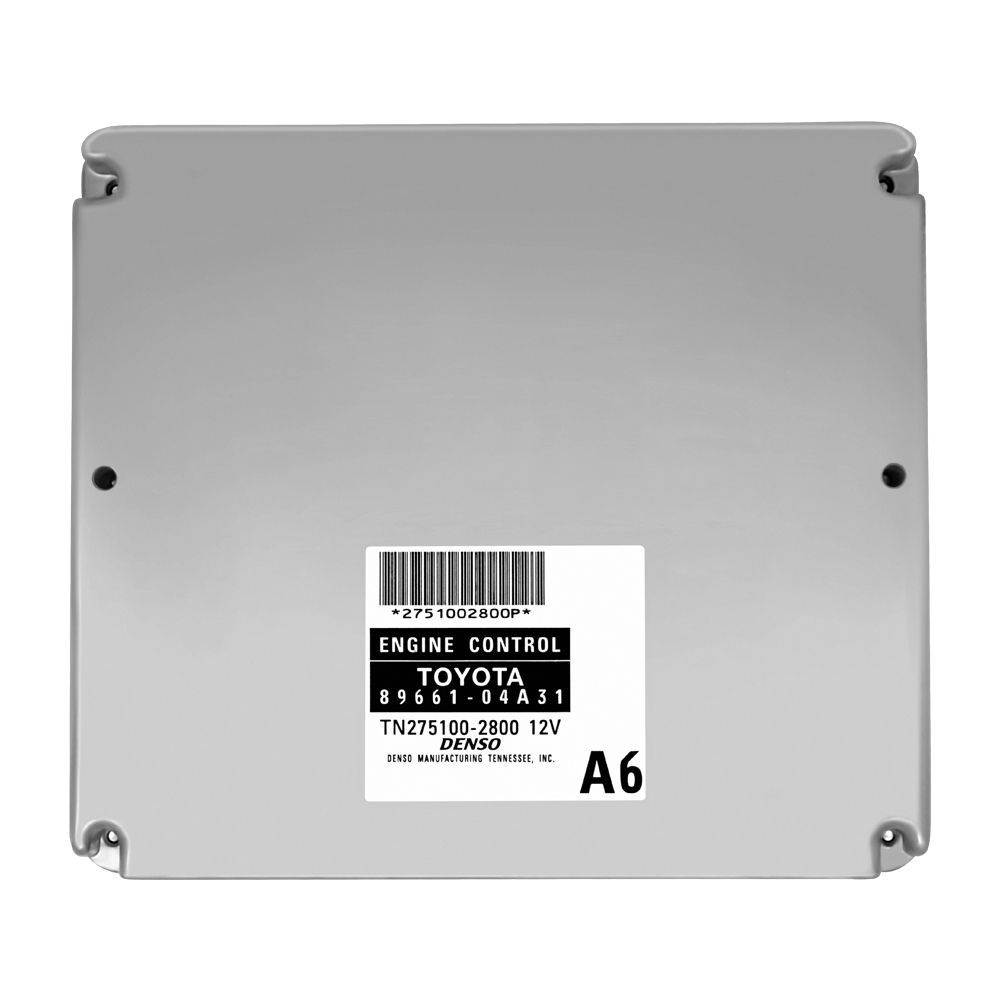
Flagship One stocks a refurbished, VIN-programmed PCM for the 2007 Toyota 4Runner with a lifetime warranty, free shipping and no core charge. The full Toyota 4Runner module lineup covers other engine configurations as well.
Your 2007 Toyota 4Runner depends on a healthy engine control module to manage fuel, ignition, and emissions functions reliably. Understanding the replacement process, programming requirements, and common symptoms helps you make confident repair decisions. A pre-programmed replacement from Flagship One can eliminate the VIN relearn step and simplify installation. Explore available options to find the right module for your vehicle.