
Last updated on August 25th, 2026 at 12:02 pm
The engine control module in your 2006 Toyota 4Runner manages fuel delivery, ignition timing, and emissions functions. When it fails, you may experience stalling, no-start conditions, or scan-tool communication loss. Internal fault codes such as P0604, P0606, P0607, and P0657 often indicate the module itself has malfunctioned and may need replacement.
When your 2006 Toyota 4Runner begins stalling, refusing to start, or throwing internal control module codes, the engine computer itself may be at fault. The powertrain control module sits behind the glove compartment area and governs critical engine and transmission operations. Replacing it involves more than swapping parts; the new unit must be programmed with your vehicle identification number to pass emissions inspections in many states. Understanding what the module does, where it lives, and what programming steps the factory requires helps you make an informed repair decision. Whether you are diagnosing a P0606 code or planning a proactive replacement, knowing the book labor times and access path gives you a clearer picture of what the job entails. This guide walks through the module role, location, programming requirements, and the specific trouble codes documented for your vehicle so you can approach the repair with confidence.
The powertrain control module in your 2006 Toyota 4Runner serves as the central processor for engine management. It reads input from dozens of sensors including mass airflow, oxygen, throttle position, and coolant temperature, then adjusts fuel injection, ignition timing, and idle speed accordingly. The module also monitors emissions systems and communicates with other vehicle computers over the network. When you explore 2006 4Runner engine computers as replacement options, you are addressing the component that directly controls drivability and emissions compliance. A failing module may cause erratic idle, harsh shifting, or a complete no-start condition. Internal fault codes such as P0604, P0606, P0607, and P0657 point specifically to processor or memory problems within the module rather than sensor or wiring failures elsewhere. These codes typically mean the internal circuitry has degraded or failed. Because the module stores your vehicle identification number and calibration data, a replacement must be configured correctly to maintain proper operation and emissions readiness.
2006 Toyota 4Runner 4.0L
OEM programmed ECM for your 2006 Toyota 4Runner 4.0L — plug & play, no dealer visit.
Free shipping · Lifetime warranty
The engine control module in your 2006 Toyota 4Runner is located behind the passenger side instrument panel. To reach it, the technician removes the instrument panel under cover, the glove compartment door sub-assembly, and the instrument panel finish panel. Factory book time for removal and installation of the engine control module is 0.5 hours, and the relearn procedure carries an additional 0.5 hours of labor. The same book times apply to the powertrain control module, with 0.5 hours for removal and installation plus 0.5 hours for the relearn. These times reflect a straightforward access path through the glove box area without requiring full dashboard removal. The module sits in a protected location, which shields it from most engine bay heat and moisture, but also means the glove compartment must be opened or partially disassembled during service. Plan for both the physical swap and the relearn when budgeting labor.
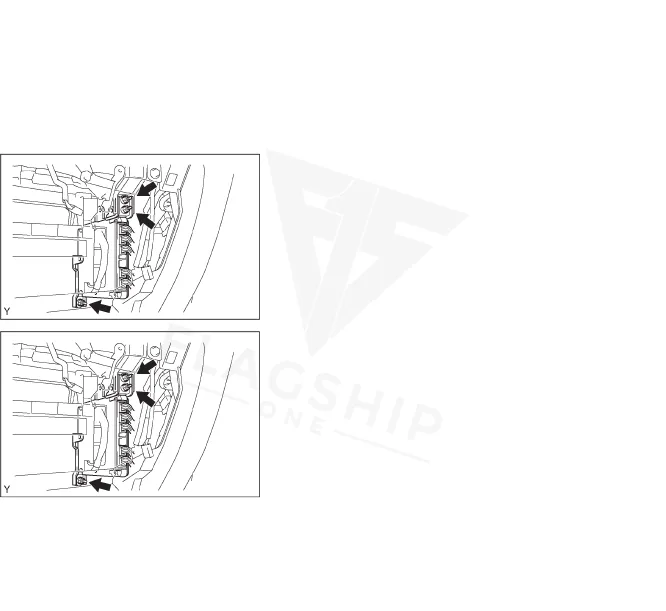
Work with the ignition off, and treat the module as static-sensitive: avoid touching the connector pins at any point.
| Operation | Configuration | Book Time |
|---|---|---|
| Engine Control Module Relearn | All configurations | 0.5 hr |
| Engine Control Module R&R | All configurations | 0.5 hr |
| Powertrain Control Module R&R | All configurations | 0.5 hr |
| Powertrain Control Module Relearn | All configurations | 0.5 hr |
After installing a replacement engine computer in your 2006 Toyota 4Runner, the factory requires writing the vehicle identification number to the module using a diagnostic tester. Toyota updated this procedure on June 3, 2005, expanding coverage to the 2004 and 2006 model years. The VIN must be entered following the prompts on the diagnostic tester screen, and if the confirmation does not match, the VIN must be written again until the process completes. Vehicles lacking a VIN may not pass certain state and local emissions testing programs. For most 2005 model year vehicles, not programming the VIN into the ECM or PCM produces an incomplete monitor status. When you receive a VIN-programmed replacement unit from Flagship One, these programming steps are already completed, so you can install the module and proceed without needing a factory scan tool for VIN writing.
When the engine control module in your 2006 Toyota 4Runner begins to fail, several symptoms may appear. You might experience intermittent stalling, a no-start condition, or rough running that mimics sensor failures. The check engine light often illuminates with internal control codes, and in some cases the scan tool may fail to communicate with the module entirely. Shifting issues can also surface if the powertrain control module loses its ability to manage transmission solenoids. A code like internal control module fault indicates the processor itself has detected an internal malfunction, which typically points to module replacement rather than a wiring repair. Other documented codes for this vehicle include P0604, which relates to internal random access memory performance, P0607, which flags control module performance issues, and P0657, which involves actuator supply voltage circuit problems. These codes rarely resolve without replacing the module.
The following table lists the module-internal trouble codes documented for the 2006 Toyota 4Runner. Each code points to a fault within the engine or powertrain control module itself rather than in external sensors, wiring, or actuators. Reviewing these codes helps confirm whether your module needs replacement.
Toyota issued a factory caution dated June 3, 2005, updating the VIN write procedure to add 2004 and 2006 model year vehicles. The update also incorporated the Highlander HV into the fourth step of the VIN write procedure listed on page 2. The caution reminds technicians to enter the VIN on these vehicles, noting that vehicles lacking a VIN may not pass certain state and local emissions testing programs. For most 2005 model year vehicles, not programming the VIN into the ECM or PCM produces an incomplete monitor, which can trigger a check engine light and prevent emissions readiness. The procedure instructs entering the VIN following the prompts on the diagnostic tester screen, and if the confirmation does not match, repeating the VIN write until the process is complete.
Factory book time for removal and installation is 0.5 hours, and the relearn procedure adds another 0.5 hours. The technician must remove the glove compartment door sub-assembly and instrument panel components to access the module.
Yes, the factory requires writing the VIN to the ECM or PCM using a diagnostic tester. Vehicles with missing VINs may fail state and local emissions inspections. Flagship One units arrive with the VIN already programmed.
Codes P0604, P0606, P0607, and P0657 are documented as module-internal faults for this vehicle. These codes typically point to processor, memory, or actuator supply voltage problems within the module itself.
If your 2006 Toyota 4Runner is showing internal control module codes or experiencing drivability problems that trace back to the engine computer, you have two main paths. A repair may address specific circuit failures, but a refurbished replacement often provides more reliable long-term results. Flagship One provides VIN-programmed units calibrated for your specific 4Runner, eliminating the need for factory scan tool programming after installation. Choosing a pre-programmed module saves time and ensures emissions readiness from the start.
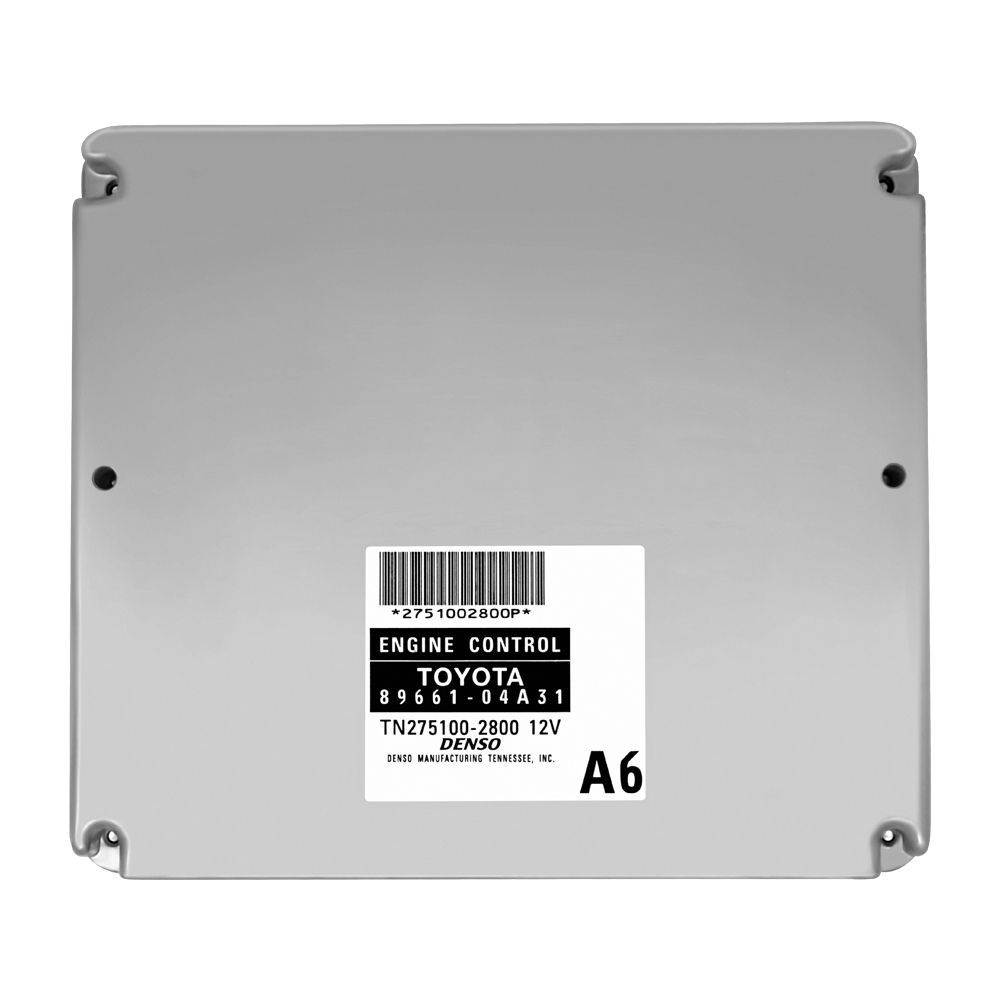
Flagship One stocks a refurbished, VIN-programmed PCM for the 2006 Toyota 4Runner with a lifetime warranty, free shipping and no core charge. The full Toyota 4Runner module lineup covers other engine configurations as well.
The 2006 Toyota 4Runner depends on a properly functioning engine control module for fuel management, emissions compliance, and overall drivability. Internal trouble codes, stalling, or no-start conditions often signal that replacement is the right path. Flagship One provides VIN-programmed units so you can install with confidence and get back on the road without additional programming steps.