
Last updated on August 25th, 2026 at 01:34 pm
In the 2007 Ford F-Series, the Powertrain Control Module (PCM) and Engine Control Module (ECM) manage engine timing, fuel delivery, and emissions. A failure in either unit can trigger idle irregularities, misfire codes, or a illuminated malfunction indicator lamp, compromising drivability and emissions compliance.
When a 2007 Ford F-Series begins to idle erratically or lights up the malfunction indicator lamp, the underlying cause often traces back to the vehicle’s core computer systems. The Powertrain Control Module and Engine Control Module act as the brain for engine operation, interpreting sensor data and commanding actuators. Understanding how these modules function, what the repair process entails, and how to avoid future issues can save you time and money. This guide walks you through the basics of the PCM and ECM in this specific truck, outlines the labor involved, explains the required programming steps, and highlights common symptoms and preventative measures so you can make an informed decision about repair or replacement.
The Powertrain Control Module in the 2007 Ford F-Series oversees the coordination of engine and transmission functions, while the Engine Control Module focuses on fuel injection timing and emissions control. Together they ensure the engine runs smoothly, meets emissions standards, and responds correctly to driver inputs. A malfunction in either computer can lead to idle irregularities, misfire detection, or a persistent check engine light. Proper operation is essential for performance and fuel economy, especially in a work‑oriented truck where reliability matters. The PCM and ECM are interchangeable units that share the same physical location and connector design, and both are considered replacement engine computers for the 2007 Ford F‑Series when sourcing a new part.
2007 Ford F-Series Truck
OEM programmed replacements — plug & play, no dealer visit.
Find yours by year, make & model →
Free shipping · Lifetime warranty
Both the PCM and ECM reside in the engine compartment, typically mounted near the firewall on the driver side. Access usually requires removal of a protective cover and disconnecting the main power connector. According to the labor guide, removing and reinstalling each module takes about 0.5 hours, and the same amount of time is needed for the relearn procedures after installation. No additional torque specifications are listed, so standard connector torque applies. The process involves unplugging the module, extracting it from its bracket, installing the replacement, reconnecting the harness, and securing the cover.
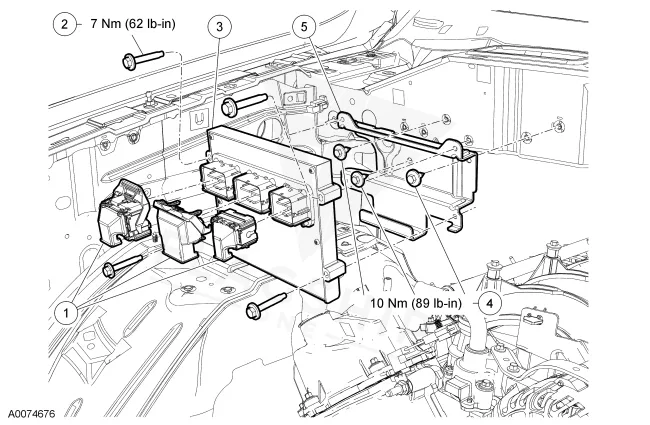
Work with the ignition off, and treat the module as static-sensitive: avoid touching the connector pins at any point.
| Operation | Configuration | Book Time |
|---|---|---|
| Powertrain Control Module R&R | All configurations | 0.5 hr |
| Powertrain Control Module Relearn | All configurations | 0.5 hr |
| Engine Control Module Relearn | All configurations | 0.5 hr |
| Engine Control Module R&R | All configurations | 0.5 hr |
After the new unit is in place, the factory service routine calls for a relearn of the Powertrain Control Module and a separate relearn of the Engine Control Module, each taking roughly 0.5 hours. Flagship One supplies a a VIN‑programmed replacement unit that arrives pre‑configured for your truck, so the relearn steps are already satisfied and you can skip those factory‑only procedures. The only remaining action is to reprogram the passive anti‑theft system (PATS) as required by the vehicle’s security protocol.
When the PCM or ECM begins to fail in a 2007 Ford F-Series, you may notice rough idle, stalling at low speeds, or a persistent check engine light. Common diagnostic trouble codes include misfire detection (P0301) and fuel trim issues (P0171). In some cases, the vehicle may refuse to start or exhibit erratic transmission shifting due to lost communication with the control modules. These symptoms often coincide with the extended idle condition described in the service bulletin, and the presence of PCM internal communication error can indicate a deeper module fault that warrants replacement.
Service bulletin 08-12-01 applies to 5.4L engines built on or before May 20, 2008 and addresses extended idle problems that trigger the MIL with codes P0301 and P0171. The bulletin outlines diagnostic steps and recommends PCM or ECM replacement if the issue persists after verifying sensor operation.
| Bulletin | Subject | What It Addresses |
|---|---|---|
| 08-12-01 | 5.4L ENGINE ONLY – BUILT ON OR BEFORE 5/20/2008 – EXTENDED IDLE ONLY – MIL ON WITH DTCS P0301 A | — |
The labor guide lists about half an hour for removal and half an hour for reinstalling the PCM, plus another half hour for the relearn procedure.
Factory guidelines call for a PCM relearn, but a Flagship One VIN‑programmed unit arrives with that step completed, eliminating the need for additional programming.
If the diagnostic bulletin 08‑12‑01 steps are followed and sensor conditions are verified, replacement may be necessary only if the module continues to log the fault codes.
Yes, each module requires its own relearn routine, each taking roughly 0.5 hours according to the service manual.
The passive anti‑theft system must be re‑initialized using a dealer scan tool to recognize the new module and restore vehicle security functions.
When the PCM or ECM in your 2007 Ford F-Series needs attention, you can choose a factory‑refurbished unit or a new Flagship One replacement. Both options restore the vehicle’s computer functions, but a Flagship One unit arrives VIN‑programmed, which can reduce shop time and eliminate the factory relearn steps. Evaluate the condition of your current module and consider the long‑term reliability benefits of a fresh replacement.
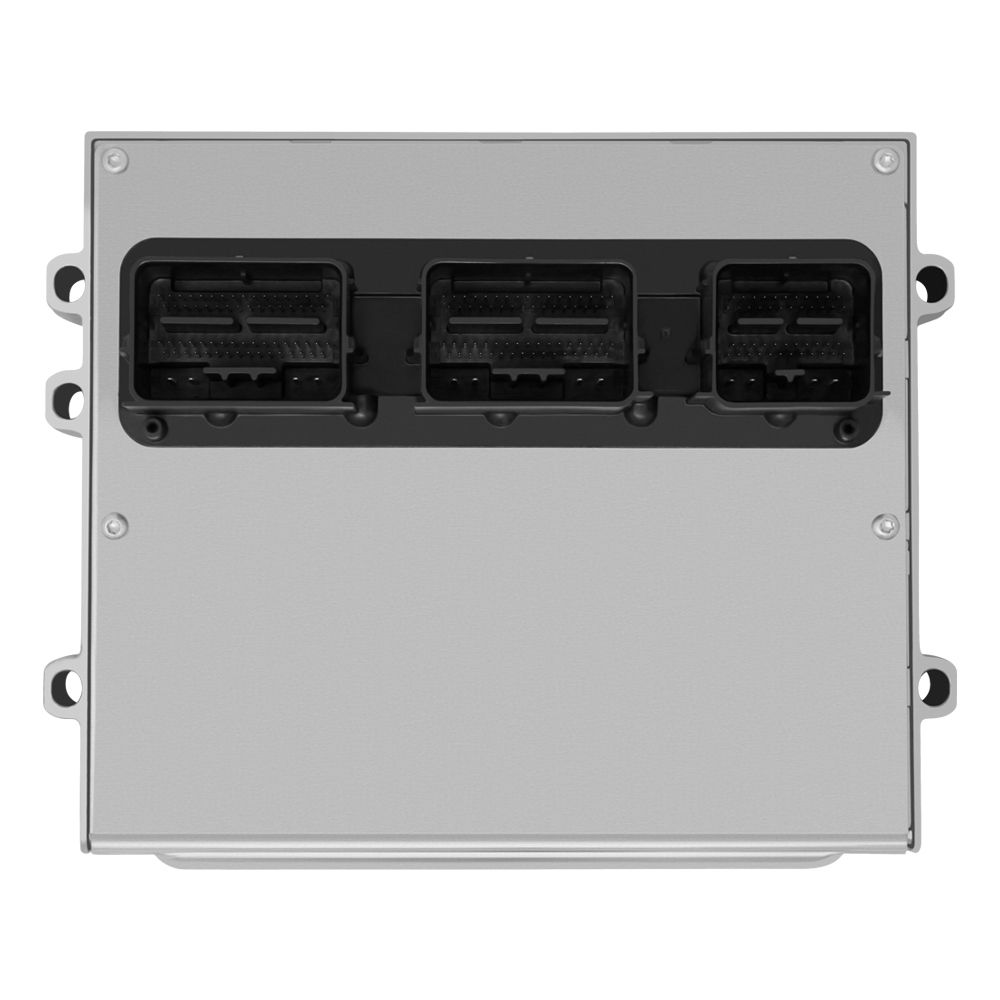
Flagship One stocks a refurbished, VIN-programmed PCM for the 2007 Ford Truck (F-Series) with a lifetime warranty, free shipping and no core charge. The full Ford Truck (F-Series) module lineup covers other engine configurations as well.
Replacing the PCM or ECM in a 2007 Ford F-Series can resolve idle and MIL issues while restoring reliable engine control. Whether you opt for a refurbished or new Flagship One unit, the process is straightforward and supported by clear labor guidelines. Contact a qualified technician to assess your truck and discuss the best replacement path.