
Last updated on August 25th, 2026 at 12:08 pm
The powertrain control module in the 1998 Pontiac Bonneville directs engine and transmission operation. When this unit fails, it may cause no-start conditions, erratic shifting, or diagnostic communication loss, often triggering specific internal fault codes.
When your 1998 Pontiac Bonneville develops drivability issues that trace back to the powertrain control module, understanding what that component does and how replacement works can save considerable time and frustration. The PCM functions as the central brain for your vehicle’s engine and transmission, coordinating fuel delivery, ignition timing, and shift scheduling based on input from numerous sensors throughout the vehicle. If that module begins to fail, the resulting symptoms often overlap with other problems, which makes accurate diagnosis essential before committing to a replacement. Swapping the PCM on the 1998 Pontiac Bonneville involves more than simply exchanging one unit for another. The factory procedure demands careful handling to prevent electrostatic discharge damage, proper documentation of the remaining oil life percentage, and specific steps regarding battery disconnection. Additionally, certain service bulletins outline reprogramming updates that may apply depending on build date and symptom profile. Understanding these requirements ahead of time helps ensure a smooth installation and avoids common mistakes that could damage the new module or leave your vehicle running improperly. This guide covers location, labor expectations, programming considerations, and the documented trouble codes relevant to your Bonneville.
The powertrain control module in the 1998 Pontiac Bonneville with the 3.8L engine serves as the primary computer governing both engine management and automatic transmission operation. It continuously processes signals from throttle position sensors, oxygen sensors, crankshaft position sensors, mass airflow meters, and numerous other inputs to calculate precise fuel injector pulse widths, ignition timing advance, and transmission shift points. When functioning correctly, the PCM adapts to changing conditions such as altitude, temperature, and engine load to maintain optimal performance and emissions compliance. A failing PCM in the Bonneville may produce a range of drivability problems. Because the module controls both engine and transmission, symptoms often appear across multiple systems simultaneously. You might notice hesitation during acceleration, unexpected gear changes, rough idling, or a complete failure to start. Diagnostic scan tools may lose communication with the module, preventing code retrieval. In some cases, the module triggers false sensor codes that lead you down the wrong diagnostic path. Recognizing that these varied symptoms could share a common origin in replacement PCM units for the Bonneville helps narrow your troubleshooting focus rather than replacing individual sensors that are merely reporting what the faulty computer commands. The 1998 Pontiac Bonneville depends on this module for virtually every aspect of powertrain operation, making it a critical component whose failure can render the vehicle undrivable.
Engine computer (ECM/PCM)
OEM programmed replacements — plug & play, no dealer visit.
Find yours by year, make & model →
Free shipping · Lifetime warranty
The PCM in the 1998 Pontiac Bonneville sits next to the air cleaner assembly, accessible from under the hood. Factory documentation specifies disconnecting the negative battery cable before beginning removal, and emphasizes turning the ignition off when unplugging or reconnecting the module connectors. This precaution prevents electrical damage to both the module and the vehicle wiring. Book time for powertrain control module removal and replacement on this vehicle is 1.0 hours, while engine control module R&R is listed at 1.1 hours. Additional relearn procedures carry separate time allowances of 0.5 hours each for both engine and powertrain control module relearns. During the physical swap, avoid touching the connector pins or any soldered components on the circuit board, as electrostatic discharge can damage the sensitive internal electronics. Verify that all connector seals are properly seated during reinstallation to maintain a weather-tight connection.
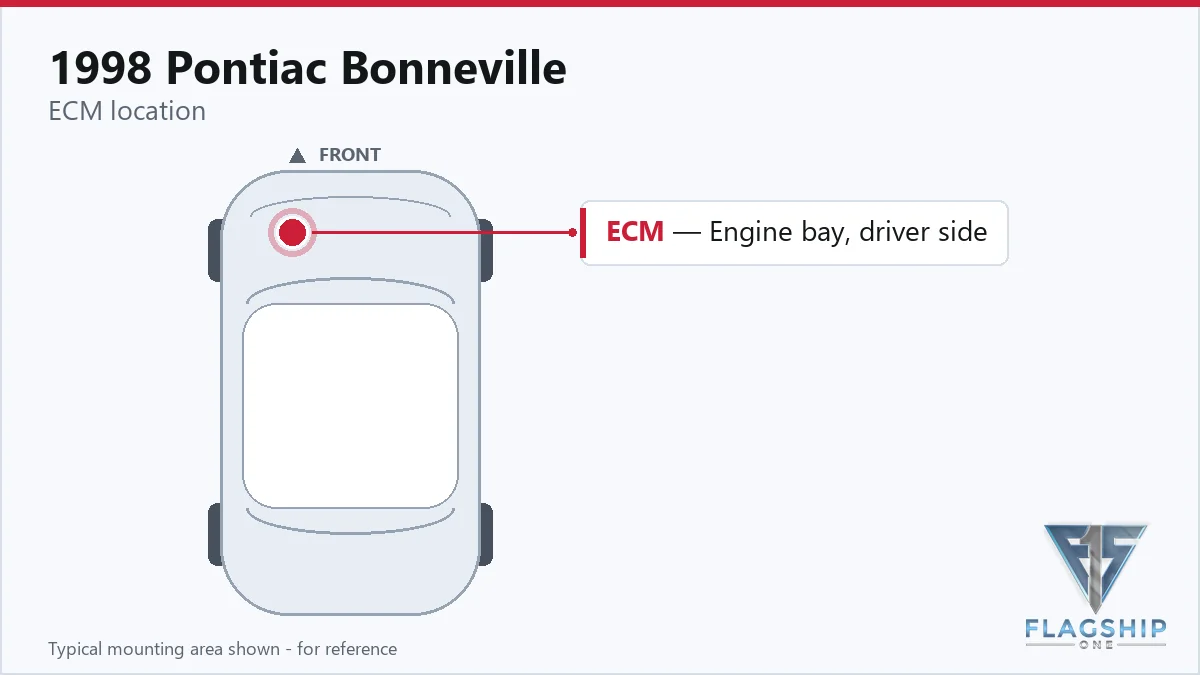
Work with the ignition off, and treat the module as static-sensitive: avoid touching the connector pins at any point.
| Operation | Configuration | Book Time |
|---|---|---|
| Engine Control Module R&R | All configurations | 1.1 hr |
| Engine Control Module Relearn | All configurations | 0.5 hr |
| Powertrain Control Module Relearn | All configurations | 0.5 hr |
| Powertrain Control Module R&R | All configurations | 1.0 hr |
After installing a replacement PCM in the 1998 Pontiac Bonneville, the factory procedure requires several programming steps. The module must be programmed with the vehicle identification number, and any applicable calibration updates should be applied at that time. The factory documentation also notes that the remaining engine oil life percentage must be recorded before removing the original unit and then programmed into the replacement. If this step is skipped, the oil life display resets to full capacity, which may not reflect the actual condition of your engine oil. Relearn procedures for both the engine and powertrain control systems are typically necessary so the replacement module can adapt to your specific vehicle’s sensor inputs and operating characteristics. These procedures account for the 0.5-hour relearn times listed in the labor guides. When you choose a VIN-programmed replacement unit from Flagship One, the VIN programming and calibration updates are already completed before the module ships, eliminating the need for those dealer-level programming steps and allowing you to focus on the relearn and oil life documentation.
Common symptoms of a failing PCM in the 1998 Pontiac Bonneville often span both engine and transmission systems since the module controls both. You may experience a no-start condition where the engine cranks but fails to fire, or intermittent stalling at idle and under load. Misfire codes may appear even when ignition components test within specification, pointing toward a computer issue rather than a mechanical problem. Transmission-related symptoms can include harsh or delayed shifts, failure to shift out of first gear, or erratic torque converter lockup behavior. A particularly notable symptom documented for this vehicle is a shudder felt when reapplying the throttle after coming to a stop, especially at throttle positions exceeding fifty percent. Service bulletin 99-07-30-007 specifically addresses this condition through a PCM reprogramming update. Additionally, if your diagnostic scan tool cannot establish communication with the module, that often indicates an internal failure rather than a wiring problem. The 1998 Pontiac Bonneville has numerous module-internal trouble codes documented, including P0601, P0602, P1619, P1626, P1629, P1635, P1639, P1641, P1646, P1651, P1652, P1662, P1665, P1667, P1671, P1672, and P1676. Among these, PCM internal memory checksum fault indicates that the module’s read-only memory has failed its self-test, which typically requires full module replacement rather than reprogramming.
The 1998 Pontiac Bonneville documents several module-internal trouble codes that point specifically to powertrain control module failures rather than individual sensor or wiring issues. When your diagnostic scan reveals one of these codes, the PCM itself has typically suffered an internal fault that programming alone cannot resolve. The following codes are recognized for this vehicle.
| Code | Meaning | Full Guide |
|---|---|---|
| P0601 | Internal memory checksum error | Full P0601 guide → |
| P0602 | Control module programming error | Full P0602 guide → |
| P1619 | Module-internal fault | — |
| P1626 | Module-internal fault | — |
| P1629 | Module-internal fault | — |
| P1635 | Module-internal fault | — |
| P1639 | Module-internal fault | — |
| P1641 | Module-internal fault | — |
| P1646 | Module-internal fault | — |
| P1651 | Module-internal fault | — |
| P1652 | Module-internal fault | — |
| P1662 | Module-internal fault | — |
Two service bulletins apply to the PCM in the 1998 Pontiac Bonneville. Bulletin 99-06-04-053 provides general information regarding PCM reprogramming procedures, issued in late October 1999. Bulletin 99-07-30-007, issued in April 1999, addresses a specific drivability concern where owners report a vehicle shudder occurring after slowing to a stop and then reapplying the throttle at positions greater than fifty percent. The recommended correction for this shudder condition involves reprogramming the powertrain control module with updated calibration data. If your Bonneville exhibits this throttle reapplication shudder, the PCM may simply need the updated software rather than full replacement, though internal fault codes would suggest a hardware issue instead.
| Bulletin | Subject | What It Addresses |
|---|---|---|
| 99-06-04-053 | Info – PCM Reprogramming – (Oct 26, 1999) | — |
| 99-07-30-007 | Vehicle Shudder When Reapplying Throttle After Stopping (Reprogram PCM) – (Apr 20, 1999) | Some owners may comment about a vehicle shudder after slowing for a stop and reapplying the throttle at greater than 50 |
The powertrain control module sits next to the air cleaner assembly under the hood of your Bonneville. Factory access involves reaching the unit from the engine compartment, and you should disconnect the negative battery cable before attempting removal to prevent electrical damage.
The factory procedure warns against touching the connector pins or the soldered components on the circuit board to prevent electrostatic discharge damage. You should also ensure the ignition is switched off whenever you connect or disconnect the module’s electrical connectors or power supply.
Yes, the factory documentation advises recording the remaining engine oil life before removing the original module. If you fail to program the replacement with the previously recorded percentage, the oil life display resets to its maximum value, which may not accurately reflect the actual condition of your engine oil.
Book time for powertrain control module removal and installation is 1.0 hours, with an additional 0.5 hours allocated for the relearn procedure. If your service facility follows engine control module time, the R&R portion is 1.1 hours with a separate 0.5-hour relearn allowance.
This bulletin addresses a shudder condition that occurs when reapplying the throttle after slowing to a stop, particularly at throttle openings above fifty percent. The recommended repair involves reprogramming the PCM with updated calibration data, which may resolve the concern without requiring full module replacement.
When the PCM in your 1998 Pontiac Bonneville fails, you have options for getting back on the road. A brand-new dealer module requires dealership programming and calibration, adding time and expense to the repair. A refurbished unit from Flagship One arrives already programmed with your vehicle identification number and the latest calibration data, eliminating the need for dealer-level setup. Choosing a pre-programmed replacement simplifies installation and gets your Bonneville running sooner.
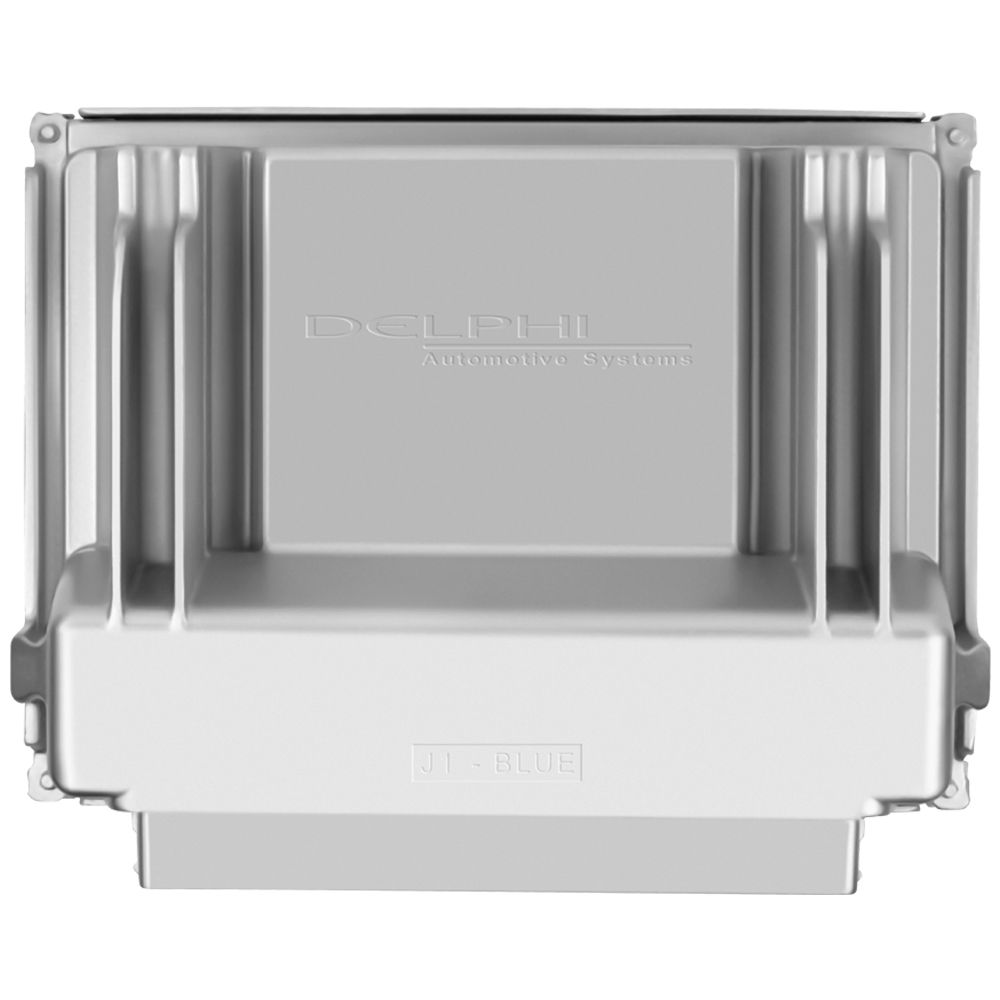
Flagship One stocks a refurbished, VIN-programmed PCM for the 1998 Pontiac Bonneville with a lifetime warranty, free shipping and no core charge. The full Pontiac Bonneville module lineup covers other engine configurations as well.
The 1998 Pontiac Bonneville relies on its powertrain control module for proper engine and transmission operation, and when that module fails, the symptoms can affect nearly every aspect of drivability. Understanding the location, handling precautions, programming requirements, and applicable service bulletins helps ensure a successful replacement. Whether you choose a dealer unit or a pre-programmed option from Flagship One, following the proper procedures will restore your Bonneville to reliable service.