
Last updated on August 25th, 2026 at 12:29 pm
The Powertrain Control Module (PCM) in your 2000 Pontiac Bonneville manages engine and transmission functions. Failures may cause drivability problems, poor performance, or prevent the vehicle from starting.
If your 2000 Pontiac Bonneville has been experiencing unexplained stalling, rough idling, or failure to start, the Powertrain Control Module (PCM) may be the culprit. This critical component acts as the brain of your vehicle’s engine and transmission systems, coordinating fuel delivery, ignition timing, and shift points. When it malfunctions, symptoms can range from subtle performance issues to complete immobilization. Understanding what the PCM does, where it’s located, and how to properly handle replacement can save you time and prevent further complications. This guide covers the essentials of PCM function, common failure signs, and what to expect during replacement—without unnecessary complexity.
In your 2000 Pontiac Bonneville, the Powertrain Control Module (PCM) integrates engine and transmission control into a single unit. It processes data from sensors throughout the vehicle to optimize fuel injection, spark timing, and shift patterns for efficiency and performance. A faulty PCM may disrupt these functions, leading to poor drivability or even a no-start condition. Because the module is vehicle-specific, replacement PCMs for the Bonneville must match the original equipment’s calibration to ensure proper operation. Without a functioning PCM, your vehicle’s systems cannot communicate effectively, making it a critical component for reliable operation.
The PCM in your 2000 Pontiac Bonneville is positioned next to the air cleaner assembly, which simplifies access during replacement. The factory removal procedure involves disconnecting the electrical connectors and removing the mounting hardware. Labor time for PCM removal and reinstallation is typically 1.4 hours. After installation, a relearn procedure of 0.5 hours is required to synchronize the module with the vehicle’s systems. Always ensure the ignition is off before disconnecting or reconnecting the PCM to prevent electrical damage. Following the factory steps carefully helps avoid complications during the process.
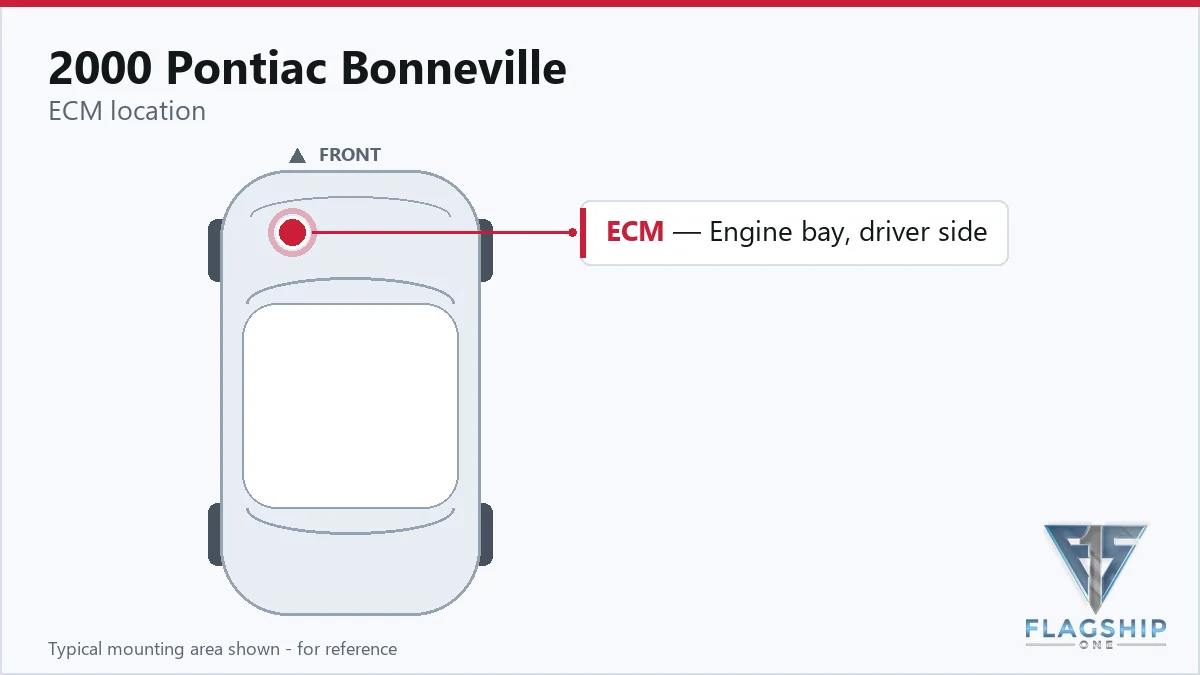
Work with the ignition off, and treat the module as static-sensitive: avoid touching the connector pins at any point.
| Operation | Configuration | Book Time |
|---|---|---|
| Engine Control Module R&R | All configurations | 1.4 hr |
| Engine Control Module Relearn | All configurations | 0.5 hr |
| Powertrain Control Module Relearn | All configurations | 0.5 hr |
| Powertrain Control Module R&R | All configurations | 1.4 hr |
2000 Pontiac Bonneville
OEM programmed ECM for your 2000 Pontiac Bonneville — plug & play, no dealer visit.
Free shipping · Lifetime warranty
After replacing the PCM in your 2000 Pontiac Bonneville, the vehicle requires a relearn procedure to ensure proper communication with the engine and transmission systems. This step typically takes 0.5 hours and must be completed to avoid drivability issues. However, a VIN-programmed replacement unit from Flagship One arrives ready for installation, eliminating the need for additional programming. This ensures a seamless transition and reduces the risk of calibration errors that could affect performance.
A failing PCM in your 2000 Pontiac Bonneville may cause a variety of symptoms, including intermittent stalling, rough idling, or difficulty starting. You might also notice poor acceleration, erratic shifting, or the check engine light illuminating. In some cases, the vehicle may enter a fail-safe mode, limiting performance to prevent further damage. Diagnostic trouble codes like internal control module memory checksum error often appear when the PCM’s memory or processing functions are compromised. If your scan tool fails to communicate with the vehicle, the PCM itself may be the issue, requiring replacement to restore normal operation.
The 2000 Pontiac Bonneville’s PCM may log specific trouble codes when internal faults occur. These codes help pinpoint issues related to memory, communication, or sensor processing within the module itself.
| Code | Meaning | Full Guide |
|---|---|---|
| P0601 | Internal memory checksum error | Full P0601 guide → |
| P0602 | Control module programming error | Full P0602 guide → |
| P0620 | Module-internal fault | Full P0620 guide → |
| P0650 | Module-internal fault | Full P0650 guide → |
| P1602 | Module-internal fault | — |
| P1626 | Module-internal fault | — |
| P1630 | Module-internal fault | — |
| P1631 | Module-internal fault | — |
| P1635 | Module-internal fault | — |
| P1639 | Module-internal fault | — |
| P1689 | Module-internal fault | — |
Factory service bulletins for the 2000 Pontiac Bonneville address PCM-related procedures and warranty guidelines. Bulletin #99-06-04-053 covers PCM reprogramming instructions, while #02-06-04-057E outlines labor operation assignments for control module reprogramming. Additionally, #07-00-89-043 emphasizes the importance of using General Motors-issued parts and calibrations to avoid potential malfunctions. These bulletins provide guidance for technicians performing repairs or updates to the PCM.
| Bulletin | Subject | What It Addresses |
|---|---|---|
| 99-06-04-053 | Info – PCM Reprogramming – (Oct 26, 1999) | — |
| 02-06-04-057 | Warranty Admin. – Labor Operation Assignments for All Control Module Reprogramming – (Mar 2, 20 | — |
| 07-00-89-043 | Warranty Admin. – Use of Parts and Components (Including Control Module Calibrations) Not Issue | — |
Replacing the PCM is possible if you have basic mechanical skills and follow the factory procedure. However, handling the module requires caution to avoid static discharge damage. After installation, a relearn procedure is necessary to ensure proper function, which may require professional tools or equipment.
Stalling after a PCM replacement often indicates an incomplete relearn procedure. The vehicle’s systems need time to recalibrate and synchronize with the new module. If the relearn step is skipped or interrupted, drivability issues like stalling or rough idling may persist.
Common signs include a no-start condition, intermittent stalling, or the check engine light illuminating with module-specific trouble codes. If your scan tool cannot communicate with the vehicle, the PCM itself may be faulty. A professional diagnosis can confirm whether replacement is necessary.
If your 2000 Pontiac Bonneville is experiencing PCM-related issues, you have options for repair or replacement. A refurbished or aftermarket module can restore functionality without the cost of a new unit. Given the labor involved, choosing a pre-programmed replacement ensures a smoother installation process and reduces the risk of post-installation complications.
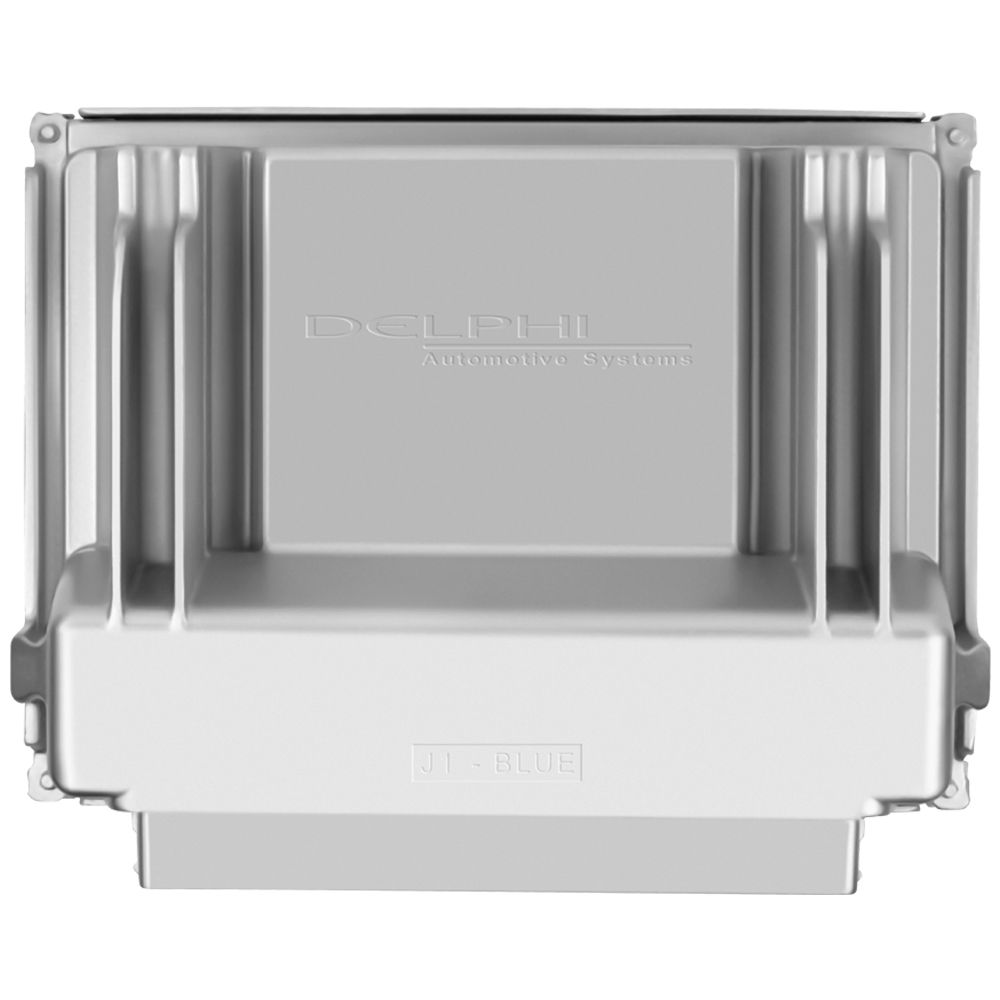
Flagship One stocks a refurbished, VIN-programmed PCM for the 2000 Pontiac Bonneville with a lifetime warranty, free shipping and no core charge. The full Pontiac Bonneville module lineup covers other engine configurations as well.
The PCM in your 2000 Pontiac Bonneville plays a vital role in engine and transmission performance. If you’re facing drivability issues or trouble codes, a replacement may be necessary to restore reliable operation. Understanding the symptoms, location, and installation process helps you make an informed decision. Whether you opt for professional service or a DIY approach, addressing PCM problems promptly can prevent further complications down the road.