
Last updated on August 25th, 2026 at 01:55 pm
The powertrain control module (PCM) in your 1998 Mitsubishi Eclipse manages engine performance and transmission behavior. When it fails, you may experience erratic idling, stalling, or a no-start condition due to disrupted fuel, spark, or sensor coordination.
If your 1998 Mitsubishi Eclipse has been acting up—stalling at stops, refusing to start, or throwing unexplained check engine lights—the powertrain control module (PCM) may be the culprit. This small but critical computer oversees everything from fuel delivery to ignition timing, and when it malfunctions, your vehicle’s performance suffers. Replacing it isn’t just about swapping a part; it involves precise labor, programming, and understanding how this module interacts with your Eclipse’s systems. Knowing what to expect can help you avoid unnecessary delays, whether you’re tackling the job yourself or leaving it to a shop. This guide breaks down the role of the PCM, common failure symptoms, and what the replacement process entails—so you can make an informed decision without the guesswork.
In your 1998 Mitsubishi Eclipse, the powertrain control module (PCM) acts as the brain of the engine and transmission. It processes data from sensors monitoring throttle position, oxygen levels, and engine speed to optimize fuel injection, ignition timing, and shift points. Without a properly functioning PCM, your Eclipse may struggle with poor acceleration, rough idling, or even fail to start. The module also communicates with the onboard diagnostics system, which is why a failing PCM often triggers check engine lights or replacement engine computers for the Eclipse that store trouble codes. Given its role in coordinating multiple systems, a malfunctioning PCM doesn’t just affect drivability—it can lead to long-term issues like catalytic converter damage or transmission wear if left unaddressed. For a vehicle of this age, the PCM is particularly vulnerable to voltage spikes, corrosion, or heat-related degradation, making it a common point of failure in high-mileage examples.
1998 Mitsubishi Eclipse
OEM programmed ECM for your 1998 Mitsubishi Eclipse — plug & play, no dealer visit.
Free shipping · Lifetime warranty
The PCM in your 1998 Mitsubishi Eclipse is located behind the driver-side kick panel, near the firewall. Accessing it requires removing the lower dashboard trim and possibly the driver’s side carpeting to reach the mounting bolts. The replacement process involves disconnecting the battery, unplugging the wiring harness, and removing the module’s mounting hardware. According to factory labor estimates, the removal and reinstallation (R&R) procedure typically takes 0.9 hours. While the physical swap is straightforward, the module’s position makes it susceptible to moisture or debris, so inspecting the connector and surrounding area for corrosion or damage is advisable before installation. Torque specifications for the mounting bolts are not provided, but snugging them evenly will prevent future vibration issues.
| Operation | Configuration | Book Time |
|---|---|---|
| Engine Control Module R&R | All configurations | 0.9 hr |
| Powertrain Control Module R&R | All configurations | 0.9 hr |
| Powertrain Control Module Relearn | All configurations | 0.5 hr |
After replacing the PCM in your 1998 Mitsubishi Eclipse, the factory procedure requires a 0.5-hour relearn process to synchronize the module with the vehicle’s sensors and transmission. This step ensures proper fuel trim, ignition timing, and shift points are calibrated. However, if you install a VIN-programmed replacement unit, these programming steps are already completed, saving you time and the hassle of visiting a dealer or shop for initialization. Without this pre-programming, the vehicle may exhibit erratic behavior, such as poor idle quality or delayed shifts, until the relearn is performed. Flagship One’s units arrive ready to install, eliminating the need for additional software tools or dealer visits, though you’ll still want to verify all connections are secure before starting the engine.
A failing PCM in your 1998 Mitsubishi Eclipse can manifest in several ways, often mimicking other issues like fuel pump or ignition coil failures. Common symptoms include intermittent stalling, especially at idle or during deceleration, as the module loses its ability to regulate fuel and spark timing. You may also notice the engine misfiring or running rough, particularly under load, which can trigger random misfire detected or other cylinder-specific codes. Another telltale sign is a no-start condition, where the engine cranks but fails to fire, often due to the PCM cutting fuel or spark delivery. Communication problems are also frequent; a dead or unresponsive scan tool connection can indicate a PCM that’s no longer sending or receiving data properly. Transmission shifting issues, such as harsh or delayed gear changes, may occur if the PCM’s control over shift solenoids is compromised. In some cases, the check engine light may illuminate without storing any codes, as the module struggles to process sensor inputs. Given the age of these vehicles, voltage fluctuations from a weak battery or alternator can exacerbate PCM problems, so addressing electrical system health is often the first step in diagnosis.
The PCM controls fuel injection and ignition timing, so when it malfunctions, it may cut fuel or spark delivery unexpectedly. This often leads to stalling, particularly at idle or during deceleration, as the engine loses its ability to maintain stable operation. A weak electrical connection to the PCM can also cause intermittent stalling.
Driving with a failing PCM is risky, as it can lead to sudden stalling, misfires, or even a no-start condition. Over time, the lack of proper fuel or spark control may also damage other components, such as the catalytic converter or transmission. If you suspect PCM issues, it’s best to address them promptly to avoid further complications.
If your Eclipse exhibits symptoms like stalling, misfires, or a no-start condition, the PCM may need replacement. However, if the issue is limited to poor performance or shifting problems, a reprogramming or relearn procedure might resolve it. A scan tool can help determine if the PCM is communicating properly or if internal faults are present.
In your Eclipse, the terms PCM (powertrain control module) and ECM (engine control module) are often used interchangeably, but the PCM typically refers to the combined unit that controls both the engine and transmission. The ECM, if referenced separately, usually focuses solely on engine management. For this vehicle, the PCM is the primary module overseeing both systems.
A used PCM from another Eclipse may physically fit, but it will need to be reprogrammed to match your vehicle’s VIN and sensor calibrations. Without proper programming, the module may not communicate with your Eclipse’s systems, leading to drivability issues or a no-start condition. A VIN-programmed replacement unit is often a more reliable option.
If your 1998 Mitsubishi Eclipse is showing signs of PCM failure, you have a few options. A repair shop can diagnose and replace the module, though labor and programming costs can add up quickly. Alternatively, a pre-programmed replacement unit eliminates the need for post-install programming, saving time and hassle. Given the age of these vehicles, a refurbished or new PCM tailored to your Eclipse’s specifications can restore reliable performance without the guesswork of used parts.
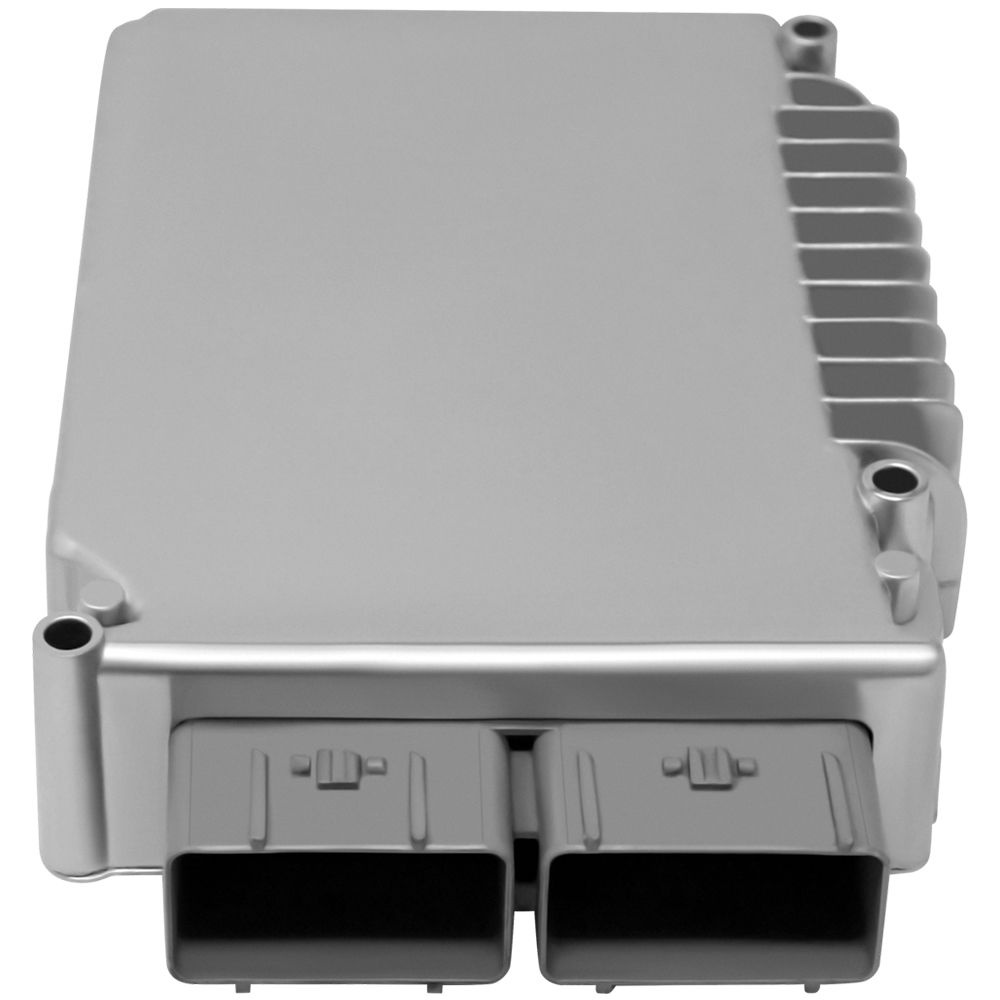
Flagship One stocks a refurbished, VIN-programmed PCM for the 1998 Mitsubishi Eclipse with a lifetime warranty, free shipping and no core charge. The full Mitsubishi Eclipse module lineup covers other engine configurations as well.
The 1998 Mitsubishi Eclipse relies on its PCM to keep the engine and transmission running smoothly. When this module fails, symptoms like stalling, misfires, or a no-start condition can leave you stranded. Replacing it involves careful labor and, in most cases, a relearn procedure—but a VIN-programmed unit simplifies the process. If your Eclipse is showing signs of PCM trouble, addressing it promptly can save you from further drivability issues down the road.