
Last updated on August 25th, 2026 at 12:06 pm
The engine control module (ECM) in the 1997 Toyota Tacoma 2.4L is the primary computer that manages fuel delivery, ignition timing, and idle speed. When it fails, the engine may experience rough idle, vibration, stalling, or a no-start condition, often accompanied by diagnostic trouble codes. The ECM interprets sensor data to adjust air-fuel mixture and spark advance. A malfunctioning unit can cause erratic performance, increased emissions, and prevent the engine from starting.
If your 1997 Toyota Tacoma 2.4L is experiencing rough idle, vibration, stalling, or a no-start condition, the engine control module (ECM) may be the culprit. The ECM is the central computer that manages fuel delivery, ignition timing, and idle speed. When it malfunctions, your truck’s performance and reliability suffer, and diagnostic trouble codes often set. This guide provides a clear overview of the ECM’s function, common failure symptoms, and the replacement process. You’ll discover where the module is located, what labor is involved, and how a VIN-programmed replacement from Flagship One can eliminate the factory relearn procedure, saving you time and hassle. Understanding the ECM’s role and the replacement process helps you make an informed decision. Whether you choose to install a new or refurbished unit, knowing the location and labor times can streamline the repair. This article also covers relevant service bulletins and practical tips to protect your new module.
1997 Toyota Tacoma 2.4L
OEM programmed replacements — plug & play, no dealer visit.
Find yours by year, make & model →
Free shipping · Lifetime warranty
The engine control module (ECM) in your 1997 Toyota Tacoma 2.4L is the primary computer that orchestrates engine operation. It receives input from sensors like the mass airflow sensor, throttle position sensor, and oxygen sensors, then calculates the optimal air-fuel mixture and ignition timing. The ECM also controls idle speed via the idle air control valve. A properly functioning ECM ensures smooth acceleration, stable idle, and efficient fuel economy. When the ECM fails, the engine may run poorly or not start at all. For this reason, many owners seek replacement engine computers for the Tacoma to restore reliable performance. The ECM also monitors emissions systems and triggers the check engine light when faults are detected. It stores diagnostic trouble codes to aid in troubleshooting. In the 1997 Tacoma, the ECM is specifically calibrated for the 2.4L 2RZ-FE engine, making it unique to this model. A failing ECM can cause intermittent issues that are difficult to diagnose, so replacing it with a properly programmed unit is often the most effective solution.
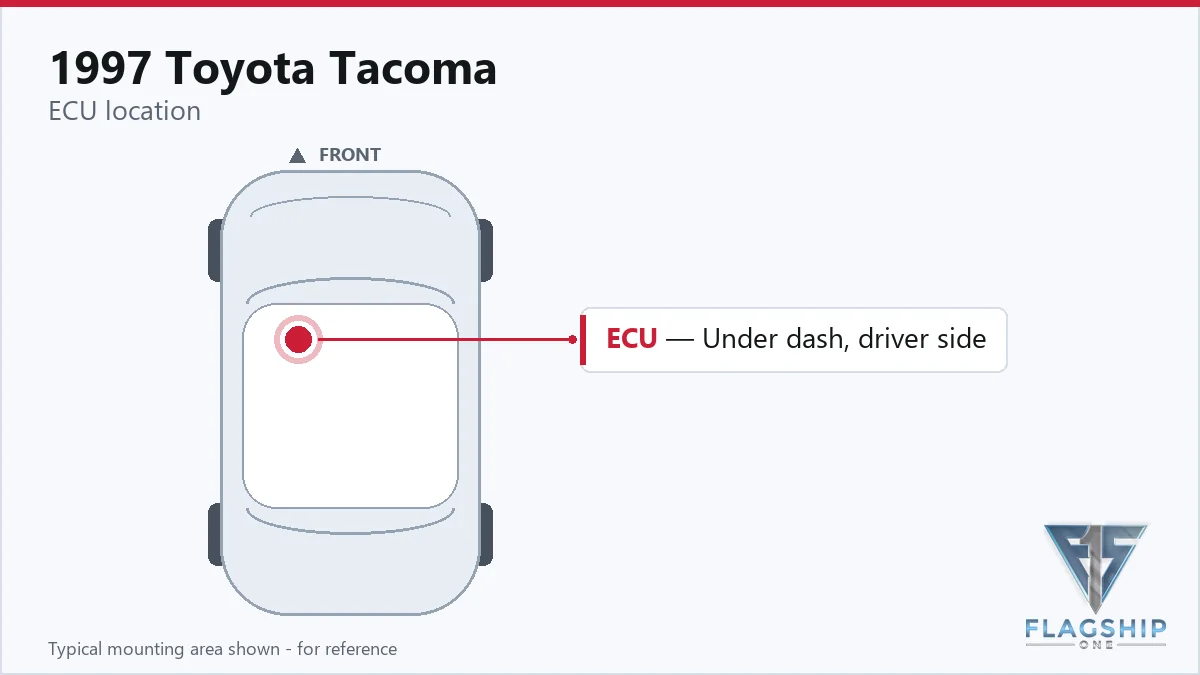
The engine control module in the 1997 Toyota Tacoma 2.4L is located in the instrument panel. Accessing it typically requires removing trim panels and possibly the glove box or lower dash components. The factory book time for removal and replacement of the ECM is 0.7 hours. A separate 0.5-hour relearn procedure is specified after installation to allow the module to adapt to the vehicle’s sensors and actuators. The powertrain control module, if equipped, has the same labor times: 0.7 hours for R&R and 0.5 hours for relearn. Because the module is inside the cabin, it is protected from engine heat and moisture, but electrical issues can still arise. Replacement involves disconnecting the battery, unplugging the electrical connectors, and removing the mounting fasteners. The new module is installed in reverse order. No special tools are required beyond basic hand tools. The 0.7-hour R&R time assumes a technician with experience, but a DIYer may take longer. After installation, the factory relearn procedure involves idling the engine and driving under specific conditions to allow the ECM to learn fuel trims and idle parameters.
| Operation | Configuration | Book Time |
|---|---|---|
| Engine Control Module Relearn | All configurations | 0.5 hr |
| Engine Control Module R&R | All configurations | 0.7 hr |
| Powertrain Control Module R&R | All configurations | 0.7 hr |
| Powertrain Control Module Relearn | All configurations | 0.5 hr |
After installing a new or refurbished ECM in your 1997 Toyota Tacoma 2.4L, the factory service manual specifies a 0.5-hour relearn procedure. This process allows the module to adapt to the engine’s sensors and idle characteristics. However, when you order a VIN-programmed replacement unit from Flagship One, the module arrives already programmed with your vehicle’s specific calibration and VIN. This eliminates the need for the dealer-level relearn procedure, saving you time and potential diagnostic fees. Simply install the module, and the engine should start and run correctly without additional programming steps. The factory relearn typically requires a scan tool to initiate idle learn and may involve driving cycles. With a pre-programmed unit, these steps are unnecessary because the module is already configured for your Tacoma’s 2.4L engine and transmission. This plug-and-play convenience makes replacement straightforward for both professional technicians and DIYers.
When the ECM in a 1997 Toyota Tacoma 2.4L begins to fail, you may notice a range of driveability issues. The engine might crank but not start, or it could stall unexpectedly while driving. Rough idle and vibration, especially at stoplights, are common complaints. The check engine light may illuminate, and a scan tool might fail to communicate with the module. You could experience misfire codes, poor fuel economy, or hesitation during acceleration. In some cases, the transmission may shift erratically if the ECM also controls shift points. These symptoms can be intermittent at first, making diagnosis challenging. If you’ve ruled out other causes like fuel delivery or ignition components, the ECM is a likely suspect.
Toyota issued service bulletin EG001-98 for 1995–1997 Tacoma models with the 2RZ-FE engine, addressing an idle speed vibration concern related to the ECM. The bulletin outlines diagnostic steps and, in some cases, ECM replacement to correct the issue. A separate bulletin, EG003-99, covers a similar idle speed concern for 1995–1997 Tacoma trucks equipped with the 3RZ-FE engine. While your 2.4L engine falls under EG001-98, both bulletins highlight the ECM’s role in idle stability. If your truck exhibits a vibration at idle that cannot be resolved through normal maintenance, the ECM may be the root cause as described in these factory publications.
| Bulletin | Subject | What It Addresses |
|---|---|---|
| EG001-98 | :EG001-98:95-97 Tacoma 2RZ-FE ECM Idle Speed Vibration | — |
| EG003-99 | :EG003-99:95-97 Tacoma 3RZ-FE ECM Idle Speed | — |
Common signs include a no-start condition, stalling, rough idle, and a check engine light with no communication to a scan tool. If you’ve ruled out fuel, spark, and sensor issues, the ECM is a likely culprit. A professional diagnosis can confirm the failure.
Used modules may not be plug-and-play because they are VIN-locked and may have different calibrations. A VIN-programmed replacement from Flagship One is pre-configured for your specific truck, eliminating compatibility issues.
The factory procedure requires a 0.5-hour relearn, but a pre-programmed unit from Flagship One arrives ready to install. No additional programming or relearn is necessary, saving you time and expense.
When your 1997 Toyota Tacoma 2.4L ECM fails, you have two main paths: repair the existing module or replace it with a refurbished unit. Repair can be cost-effective for simple issues like capacitor failure, but internal damage may not be fixable. A refurbished, VIN-programmed replacement offers a reliable, plug-and-play solution that restores factory performance without the wait and uncertainty of repair. For a truck that has served you well, a quality replacement module can extend its life and keep it running smoothly.
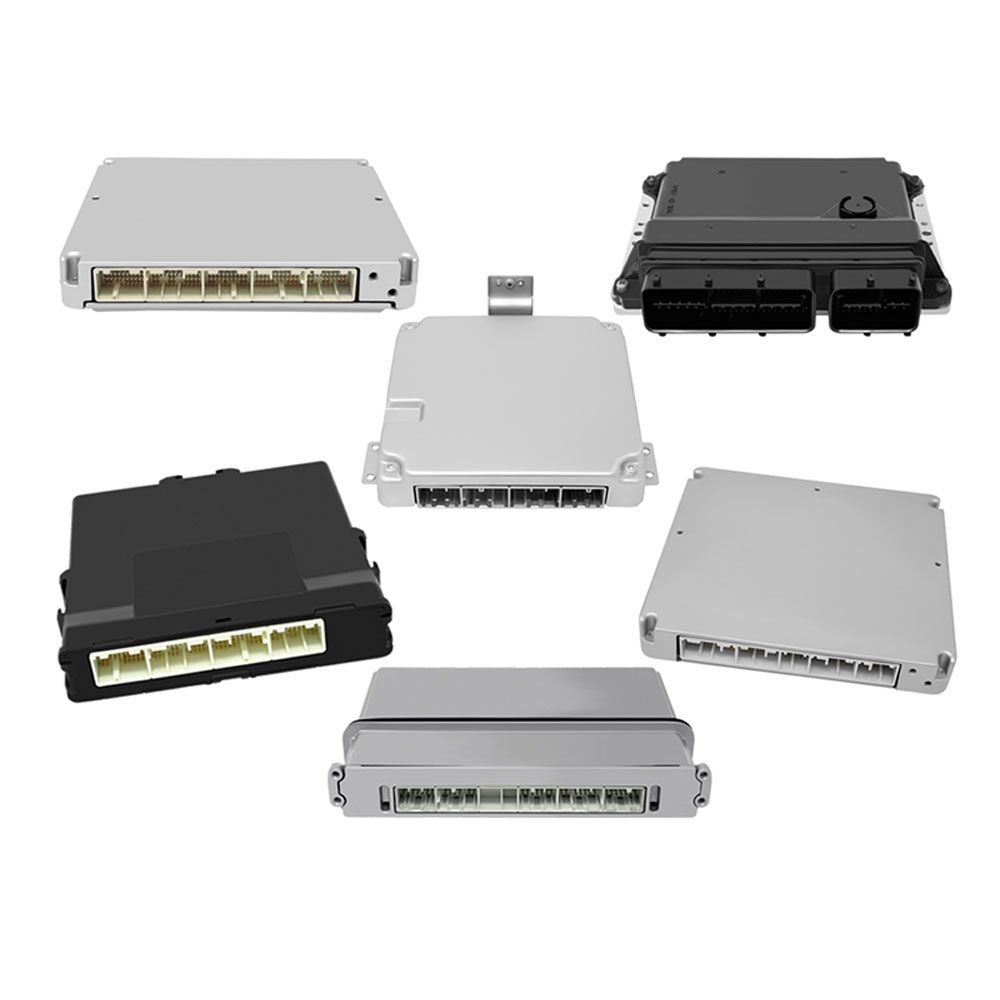
Flagship One stocks a refurbished, VIN-programmed PCM for the 1997 Toyota Tacoma with a lifetime warranty, free shipping and no core charge. The full Toyota Tacoma module lineup covers other engine configurations as well.
A failing ECM in your 1997 Toyota Tacoma 2.4L doesn’t have to mean the end of the road. With the right information and a quality replacement module, you can restore your truck’s performance and reliability. Whether you tackle the job yourself or have a shop handle it, a VIN-programmed unit simplifies the process. Explore your options and get your Tacoma back to running at its best.