
Last updated on August 25th, 2026 at 12:05 pm
The Engine Control Module (ECM) in your 1999 Toyota Tacoma manages fuel injection, ignition timing, and emissions systems. Failure may cause erratic engine behavior, poor performance, or complete no-start conditions.
If your 1999 Toyota Tacoma has been acting up—stalling unexpectedly, refusing to start, or throwing mysterious engine codes—it may be time to consider the Engine Control Module (ECM). This small but critical computer manages everything from fuel delivery to ignition timing, ensuring your engine runs smoothly. When it fails, the symptoms can range from subtle performance issues to a complete breakdown. Replacing the ECM isn’t just about swapping a part; it involves careful access, proper installation, and often, a relearn procedure to sync the new module with your vehicle’s systems. Understanding the role of the ECM, where it’s located, and what to expect during replacement can save you time and frustration. Whether you’re diagnosing a persistent issue or preparing for a repair, knowing these details helps you make informed decisions about your Tacoma’s health.
1999 Toyota Tacoma
OEM programmed ECM for your 1999 Toyota Tacoma — plug & play, no dealer visit.
Free shipping · Lifetime warranty
The Engine Control Module (ECM) in your 1999 Toyota Tacoma is the brain behind your engine’s operation. It continuously monitors sensors throughout the engine bay, adjusting fuel injection, ignition timing, and idle speed to keep everything running efficiently. Without a functioning ECM, your Tacoma may struggle to start, run roughly, or even shut off unexpectedly. This module also plays a key role in emissions control, ensuring your vehicle meets regulatory standards. Over time, exposure to heat, vibration, or electrical surges can degrade the ECM, leading to intermittent or permanent failures. When replacement becomes necessary, you’ll need replacement engine computers for the Tacoma that are designed to integrate seamlessly with your vehicle’s systems. A faulty ECM doesn’t always announce itself with dramatic symptoms, so recognizing early signs of trouble can prevent more serious issues down the road.
The ECM in your 1999 Toyota Tacoma is tucked away behind the instrument panel, specifically near the glove compartment area. To access it, you’ll need to remove the glove compartment door and the lower finish panel labeled No.2. These steps are straightforward but require care to avoid damaging interior clips or wiring. Once the panels are out of the way, the ECM should be visible and accessible for removal. The factory labor guide estimates 0.7 hours for the removal and reinstallation process. After installing the new module, a relearn procedure is typically required, which adds another 0.5 hours to the job. This procedure ensures the ECM syncs properly with the engine’s sensors and systems, allowing for smooth operation. While the location isn’t the most convenient, the process is manageable with basic tools and patience.
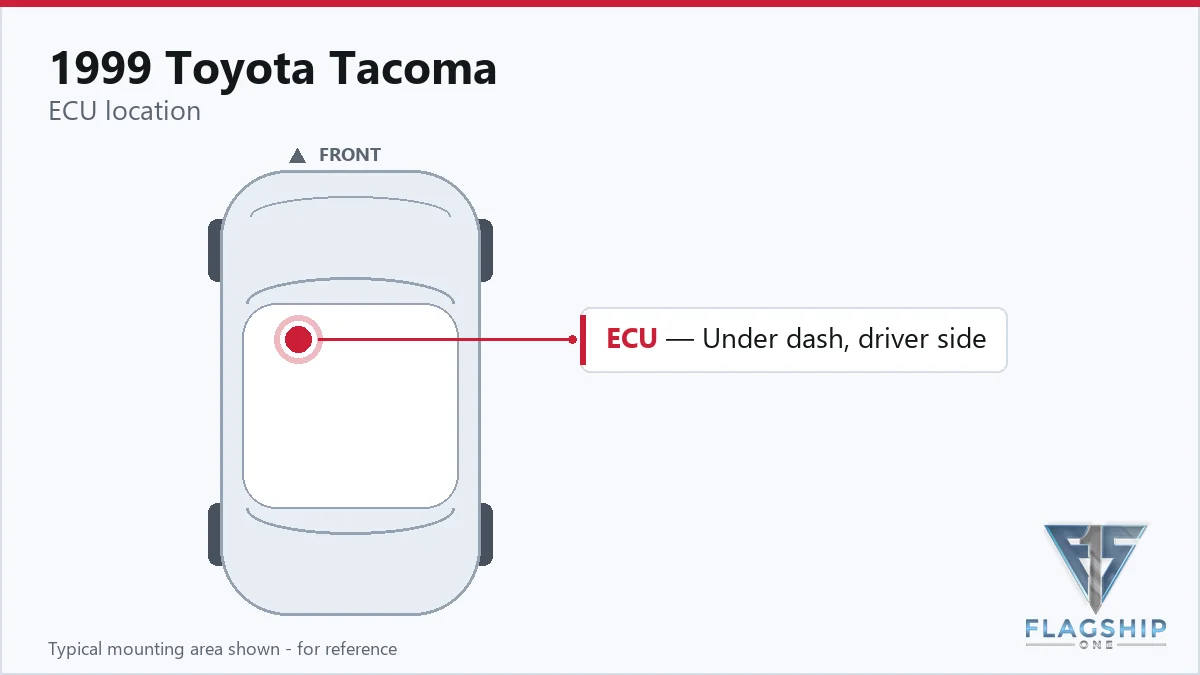
Work with the ignition off, and treat the module as static-sensitive: avoid touching the connector pins at any point.
| Operation | Configuration | Book Time |
|---|---|---|
| Powertrain Control Module R&R | All configurations | 0.7 hr |
| Powertrain Control Module Relearn | All configurations | 0.5 hr |
| Engine Control Module Relearn | All configurations | 0.5 hr |
| Engine Control Module R&R | All configurations | 0.7 hr |
After replacing the ECM in your 1999 Toyota Tacoma, the factory procedure requires a relearn process to synchronize the new module with the engine’s sensors and systems. This step, which typically takes 0.5 hours, ensures the ECM can accurately control fuel delivery, ignition timing, and other critical functions. However, if you opt for a VIN-programmed replacement unit, this relearn step is already completed before the part arrives. The module is pre-configured to match your vehicle’s specifications, eliminating the need for additional programming at installation. This not only saves time but also reduces the risk of errors during the setup process. Whether you’re handling the replacement yourself or having a shop do the work, a pre-programmed ECM simplifies the process and gets your Tacoma back on the road faster.
A failing ECM in your 1999 Toyota Tacoma can manifest in several ways, often mimicking other engine or electrical issues. One of the most common signs is a no-start condition, where the engine cranks but refuses to fire up. This may happen intermittently or become a persistent problem. Stalling is another red flag, particularly if it occurs at idle or during low-speed driving. You might also notice the engine running roughly, with misfires or hesitation under acceleration. In some cases, the Tacoma may throw a memory integrity fault, indicating internal corruption within the ECM. Other symptoms include poor fuel economy, erratic shifting (if equipped with an automatic transmission), or even a complete loss of communication with a scan tool. Since these issues can overlap with problems like faulty sensors or wiring, it’s important to diagnose the ECM thoroughly before assuming it’s the root cause. A professional scan tool can help confirm whether the ECM is sending incorrect signals or failing to communicate with other systems.
Common signs include a no-start condition, stalling, rough running, or trouble codes related to engine performance. If the vehicle struggles to communicate with a scan tool, the ECM may be the culprit. A professional diagnosis can confirm whether the module needs replacement.
Yes, if you’re comfortable with basic mechanical work. The ECM is located behind the glove compartment, requiring removal of interior panels. However, a relearn procedure is typically needed afterward, which may require specialized tools or software.
In the 1999 Tacoma, the ECM (Engine Control Module) specifically manages engine functions like fuel injection and ignition timing. Some vehicles use a PCM (Powertrain Control Module), which combines engine and transmission control. Your Tacoma uses an ECM for engine management.
A used ECM may work, but it often requires reprogramming to match your vehicle’s VIN and specifications. Without proper programming, the engine may run poorly or not start at all. A pre-programmed replacement unit avoids this issue.
Factory labor estimates 0.7 hours for removal and reinstallation, plus an additional 0.5 hours for the relearn procedure. If you’re using a pre-programmed ECM, the relearn step is already completed, reducing the total time.
If your 1999 Toyota Tacoma is showing signs of ECM failure, you have options. A repair shop can diagnose and replace the module, but this often includes additional labor for programming. Alternatively, a pre-programmed replacement ECM ensures compatibility and eliminates the need for post-installation setup. Weighing the cost and convenience of each approach can help you decide the best path forward for your vehicle.
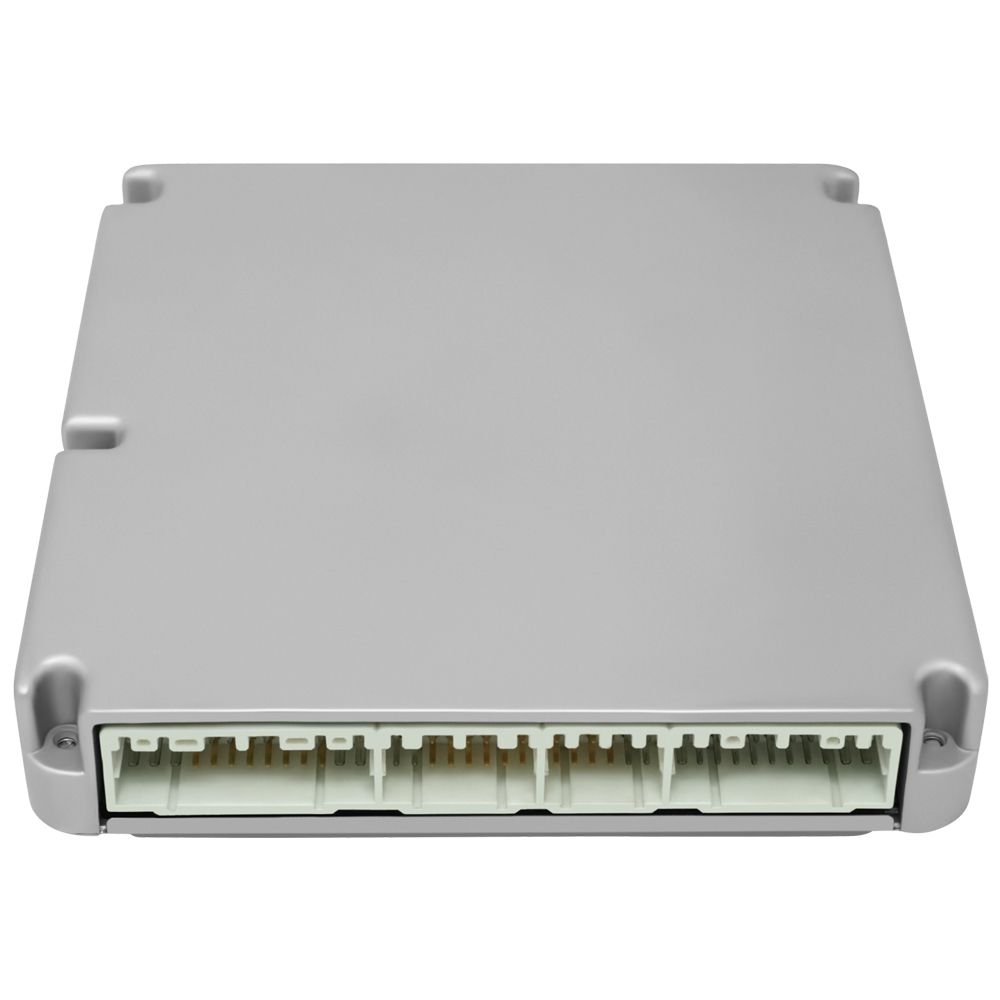
Flagship One stocks a refurbished, VIN-programmed PCM for the 1999 Toyota Tacoma with a lifetime warranty, free shipping and no core charge. The full Toyota Tacoma module lineup covers other engine configurations as well.
The ECM in your 1999 Toyota Tacoma plays a vital role in keeping your engine running smoothly. Whether you’re dealing with stalling, misfires, or a no-start condition, understanding the module’s function and replacement process can help you address issues efficiently. With the right tools and a pre-programmed unit, you can restore your Tacoma’s performance and reliability without unnecessary delays.