
Last updated on August 25th, 2026 at 12:06 pm
The engine control module in your 1997 Toyota Celica manages fuel injection, ignition timing, and emissions systems throughout the vehicle. When internal solder joints crack or capacitors fail from heat cycles and age, you may experience intermittent stalling or a complete failure to start.
When your 1997 Toyota Celica develops mysterious electrical issues or refuses to start, the engine control module often becomes the primary suspect. This onboard computer coordinates fuel delivery, spark timing, and emission controls, making it essential for daily operation. Understanding how this component functions, where technicians locate it, and what replacement entails helps you make informed repair decisions. This guide explains the module’s role within your specific vehicle, outlines factory service procedures, and clarifies programming requirements. You will learn to recognize failure symptoms, understand the technical service bulletin affecting certain models, and discover why pre-programmed replacements save time. Whether you face a no-start condition or simply want to understand the repair before authorizing work, the following information provides clear, model-specific context for your 1997 Celica and prepares you for discussions with your technician.
Your 1997 Toyota Celica relies on the engine control module to govern nearly every aspect of powertrain operation. This unit processes data from sensors monitoring crankshaft position, coolant temperature, and throttle input, then commands fuel injectors and ignition coils accordingly. Without this coordination, your vehicle cannot start or maintain efficient combustion. Heat and vibration eventually degrade internal circuitry, leading to erratic behavior or complete failure. When replacement becomes necessary, selecting replacement engine computers for the Celica ensures compatibility with your vehicle’s specific calibration and prevents additional complications. The module stores adaptive fuel trim values and idle speed parameters, which directly affect drivability and emissions compliance. The processor constantly adjusts ignition advance and injection duration based on operating conditions, ensuring optimal efficiency across varying temperatures and altitudes. Internal memory retains learned values that fine-tune performance over thousands of miles. Proper function requires accurate sensor interpretation and precise output control, making the ECM integral to both performance and longevity. Understanding this component helps you evaluate repair options, anticipate the scope of service required, and communicate effectively with your technician about the specific needs of your 1997 Toyota Celica.
1997 Toyota Celica
OEM programmed ECM for your 1997 Toyota Celica — plug & play, no dealer visit.
Free shipping · Lifetime warranty
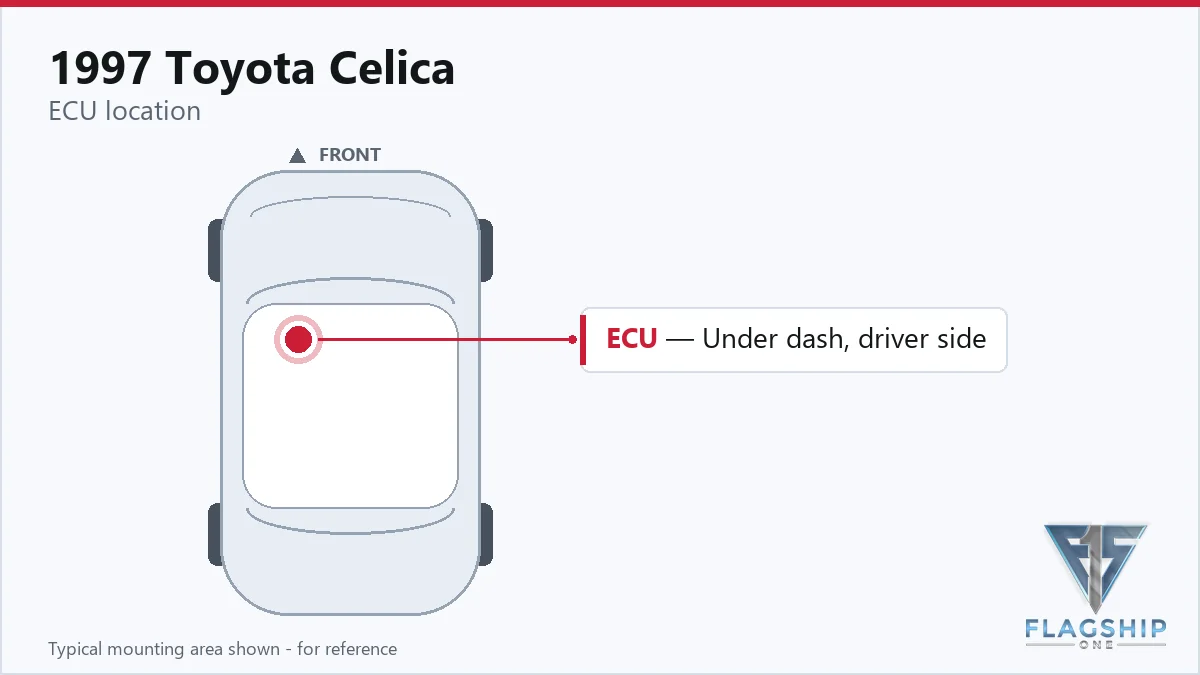
Factory documentation places the engine ECU for your 1997 Toyota Celica within the instrument panel. Technicians must remove dashboard trim to access the module mounting bracket. The standard labor allowance for engine control module removal and replacement is 1.5 hours. This estimate covers gaining access behind the instrument cluster, disconnecting the multi-pin harness connectors, and securing the replacement unit. After physical installation, the factory procedure requires an additional 0.5 hours for the control module relearn process. During this phase, the unit adapts to your specific engine’s mechanical tolerances and sensor characteristics. The location behind the dashboard protects the circuitry from engine compartment heat and fluid exposure, though it complicates access compared to under-hood mounting. No torque specifications accompany these labor times, so technicians follow standard hardware practices for the mounting fasteners. You should expect the technician to disconnect the battery before service to prevent electrical shorts during the procedure. Understanding these time allowances helps you evaluate service quotes and anticipate how long your vehicle may remain in the shop.
| Operation | Configuration | Book Time |
|---|---|---|
| Engine Control Module Relearn | All configurations | 0.5 hr |
| Engine Control Module R&R | All configurations | 1.5 hr |
| Powertrain Control Module R&R | All configurations | 1.5 hr |
| Powertrain Control Module Relearn | All configurations | 0.5 hr |
After installing a new module, the factory service procedure requires 0.5 hours for the engine control module relearn. This process allows the computer to establish baseline values for fuel trim and idle control specific to your 1.8L engine. When you receive a VIN-programmed replacement unit, this calibration step has already been completed at the factory. Your technician can proceed directly to installation without performing the relearn sequence. This eliminates the need for specialized programming equipment and reduces the total time your 1997 Toyota Celica spends in the service bay. The pre-programmed approach ensures that emission control parameters and security protocols match your vehicle exactly.
A failing engine control module in your 1997 Toyota Celica often produces intermittent symptoms before complete failure. You may notice the engine stalls unexpectedly at traffic lights or refuses to restart after parking. Rough idling and unexplained misfire codes frequently indicate the computer cannot process sensor data accurately. Some owners experience sudden loss of throttle response or shifting irregularities if the module affects automatic transmission communication. Diagnostic scanners may fail to establish communication with the ECU, or you might see check engine lights that remain illuminated despite repairs to other components. These issues typically worsen as internal solder connections expand and contract with temperature changes. Addressing these warning signs promptly prevents roadside breakdowns and secondary damage to the catalytic converter from improper fuel mixtures.
Toyota issued technical service bulletin EG009-97 addressing specific calibration concerns for the 1996 Camry and 1996-1997 Celica equipped with the 5S-FE engine. The bulletin documents changes to the ECM TAU fuel cut logic, which affects how the computer manages fuel delivery during deceleration. This revision addresses driveability concerns and emission control parameters for affected vehicles. If your 1997 Toyota Celica falls within this production range, your technician should verify whether this software logic update applies to your specific unit. The bulletin helps explain certain performance characteristics and guides proper diagnosis when symptoms relate to fuel cut operation.
| Bulletin | Subject | What It Addresses |
|---|---|---|
| EG009-97 | :EG009-97: 96 Camry & 96-97 Celica 5S-FE ECM TAU Fuel Cut Logic Changed | — |
The factory procedure requires 0.5 hours for the control module relearn process. However, Flagship One provides units that arrive pre-programmed with your VIN, eliminating the need for your technician to perform this step.
Factory documentation places the engine ECU within the instrument panel. Technicians must remove dashboard components to access the unit, and the standard labor allowance for removal and replacement is 1.5 hours.
You may experience intermittent stalling, difficulty starting, or rough idling. Diagnostic scanners may fail to communicate with the computer, and you might see unexplained misfire codes despite proper ignition components.
When facing ECM failure in your 1997 Toyota Celica, you must decide between repairing the existing unit or installing a refurbished replacement. Repairing involves soldering work with uncertain longevity, while a refurbished module offers tested reliability. Consider the labor investment of 1.5 hours for installation plus the convenience of pre-programmed calibration when evaluating your options. A replacement unit often provides faster resolution and consistent performance compared to attempting component-level repairs on the original computer.
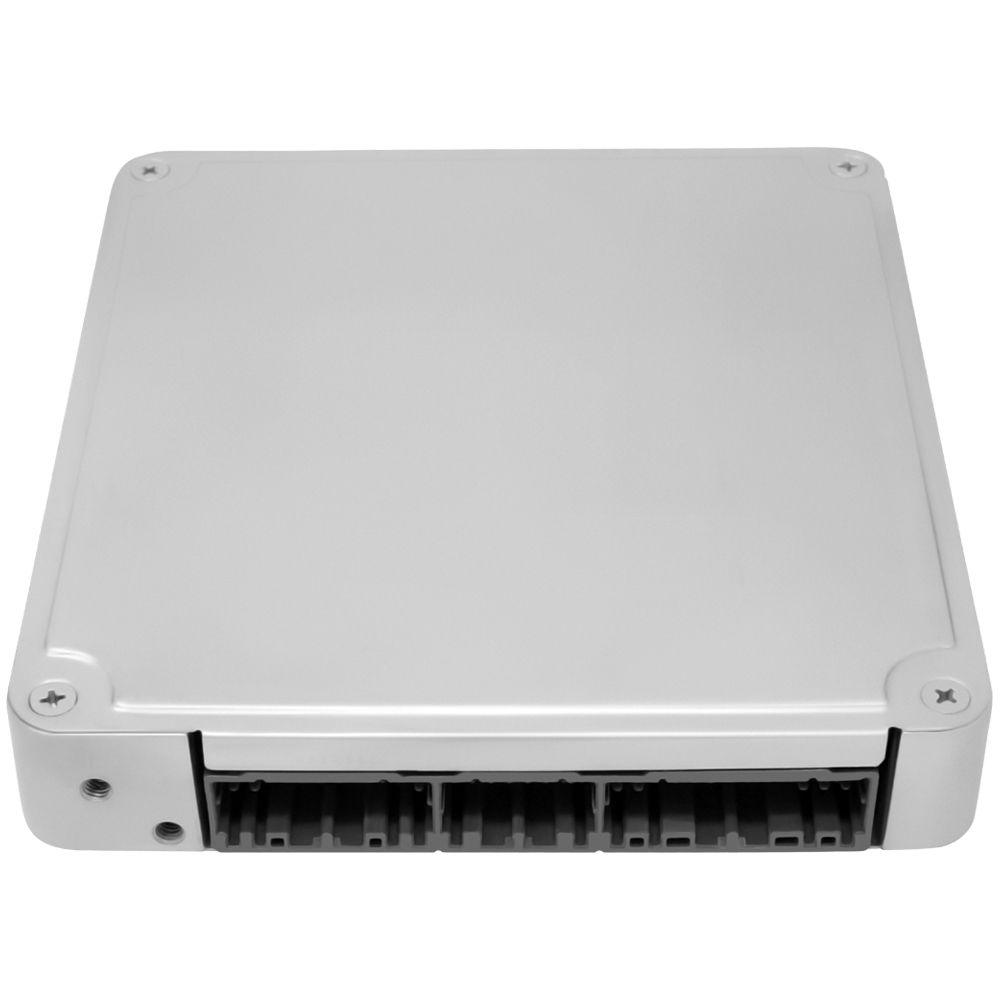
Flagship One stocks a refurbished, VIN-programmed PCM for the 1997 Toyota Celica with a lifetime warranty, free shipping and no core charge. The full Toyota Celica module lineup covers other engine configurations as well.
Understanding the function and location of your engine computer helps you navigate repairs for your 1997 Toyota Celica confidently. Whether you face intermittent stalling or complete failure, informed decisions about replacement and programming save time and prevent unnecessary expenses. Consider your specific symptoms, the 1.5 hour installation time, and the benefits of pre-programmed units when planning the next steps for your vehicle.