
Last updated on August 25th, 2026 at 01:38 pm
The Powertrain Control Module (PCM) in your 1997 Ford Contour manages engine and transmission functions. Failures may cause erratic performance, no-start conditions, or diagnostic trouble codes related to fuel, ignition, or emissions systems.
If your 1997 Ford Contour is experiencing unexplained stalling, rough idling, or a no-start condition, the Powertrain Control Module (PCM) may be the culprit. This critical component oversees engine and transmission performance, and its failure can disrupt your vehicle’s operation. Replacing or reprogramming the PCM is a precise task, but understanding the process helps you make informed decisions. You’ll learn where the module is located, what replacement involves, and why factory procedures matter. This guide also covers common symptoms, preventive tips, and how a pre-programmed unit can simplify the job.
The Powertrain Control Module (PCM) in your 1997 Ford Contour acts as the brain for both the engine and transmission. It processes data from sensors to optimize fuel delivery, ignition timing, and shift points, ensuring smooth operation and emissions compliance. A faulty PCM may lead to poor performance, reduced fuel economy, or even a vehicle that won’t start. When replacement becomes necessary, replacement engine computers for the Contour are designed to restore factory-level functionality. Without a properly functioning PCM, your vehicle’s systems may operate erratically or fail to communicate with diagnostic tools.
1997 Ford Contour
OEM programmed replacements — plug & play, no dealer visit.
Find yours by year, make & model →
Free shipping · Lifetime warranty
The PCM in your 1997 Ford Contour is mounted on the right-hand (RH) lower side of the dash panel. To access it, you’ll need to loosen the powertrain control module bracket support nut. Replacement labor typically ranges from 0.6 to 1.0 hours, depending on whether you’re removing and reinstalling the module or performing a full Engine Control Module (ECM) swap. The process involves disconnecting the wiring harness, removing the mounting hardware, and carefully extracting the unit. No torque specifications are provided for this procedure, but ensuring secure connections is critical to avoid future issues.
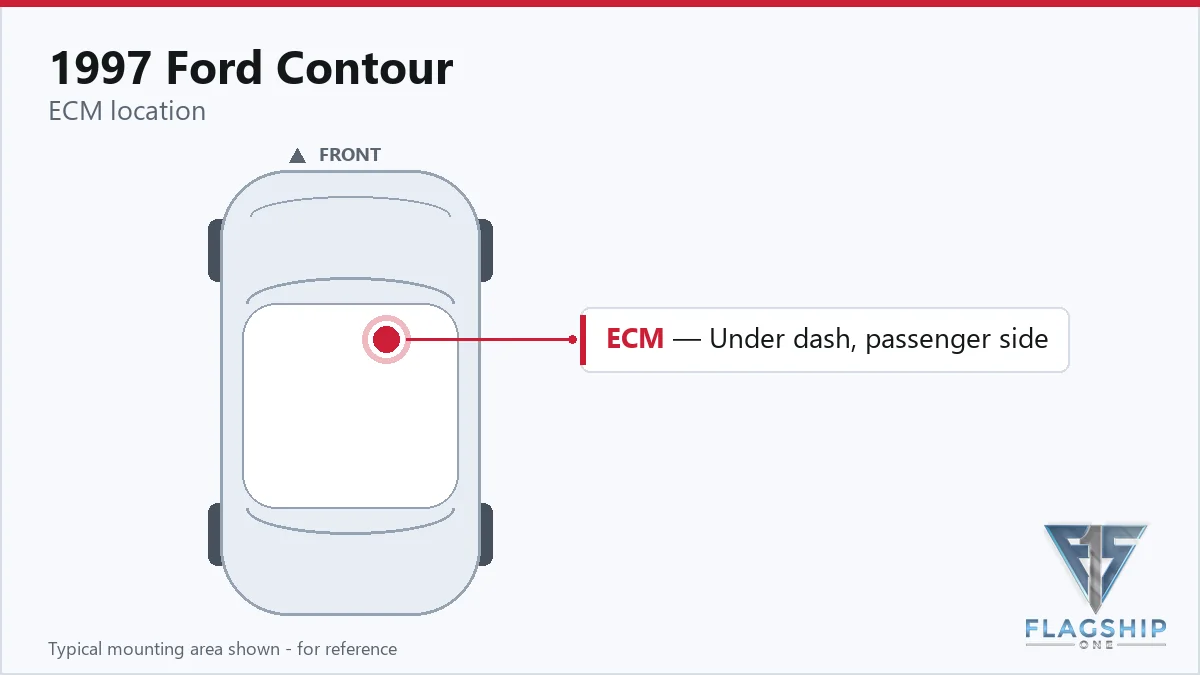
Work with the ignition off, and treat the module as static-sensitive: avoid touching the connector pins at any point.
| Operation | Configuration | Book Time |
|---|---|---|
| Powertrain Control Module R&R | All configurations | 0.6 hr |
| Powertrain Control Module Relearn | All configurations | 0.5 hr |
| Engine Control Module R&R | All configurations | 1.0 hr |
After replacing the PCM in your 1997 Ford Contour, the factory procedure requires a relearn process, which typically takes 0.5 hours. This step ensures the module synchronizes with the vehicle’s sensors and systems. However, if you install a VIN-programmed replacement unit, this step is already completed, saving you time and potential calibration errors. Factory service bulletins also outline reprogramming procedures for specific conditions, such as alternate fuel configurations or updates for EEC V vehicles, but these are unnecessary with a pre-programmed module.
A failing PCM in your 1997 Ford Contour may cause a range of symptoms, including intermittent stalling, rough idling, or a complete no-start condition. You might also notice poor acceleration, transmission shifting issues, or the check engine light illuminating. Diagnostic trouble codes, such as internal control module memory check sum error, often point to PCM-related faults. Additionally, a dead scan tool connection or erratic sensor readings may indicate a communication failure with the module. Addressing these symptoms promptly can prevent further drivability issues.
Ford issued several service bulletins addressing PCM reprogramming for the 1997 Contour. TSB 97-09-08 outlines general reprogramming procedures for the Powertrain Control Module. TSB 99-04-03 applies specifically to EEC V vehicles, detailing out-of-vehicle reprogramming steps. Additionally, TSB 00-06-11 covers recalibration requirements for alternate fuel vehicles after PCM replacement. These bulletins provide guidance for ensuring the module operates correctly under various conditions.
| Bulletin | Subject | What It Addresses |
|---|---|---|
| 97-09-08 | POWERTRAIN CONTROL MODULE – REPROGRAM POWERTRAIN CONTROL MODULE (PCM) – SERVICE PROCEDURES – SE | — |
| 99-04-03 | EEC V VEHICLES ONLY – OUT-OF-VEHICLE – REPROGRAMMING POWERTRAIN CONTROL MODULES (PCMS) | — |
| 00-06-11 | ALTERNATE FUEL VEHICLES ONLY – CALIBRATION – RECALIBRATION OF POWERTRAIN CONTROL MODULES (PCMS) | — |
The relearn procedure ensures the new PCM synchronizes with your vehicle’s sensors and systems. Without it, the module may not communicate properly, leading to performance issues or diagnostic errors. The process typically takes 0.5 hours.
Replacement is possible if you’re comfortable working with electrical components and have basic tools. The module is located on the RH lower side of the dash panel, requiring you to loosen the bracket support nut. Labor time is typically 0.6 to 1.0 hours.
In this vehicle, the terms are often used interchangeably, but the PCM controls both engine and transmission functions, while the ECM may refer specifically to engine management. Replacement procedures and labor times may vary slightly between the two.
If your 1997 Ford Contour is experiencing PCM-related issues, you have options. A repair may be possible, but replacement is often more reliable. A refurbished or new module, especially one pre-programmed to your VIN, can restore functionality without the need for additional calibration. Consider the labor and programming requirements when deciding the best approach for your vehicle.
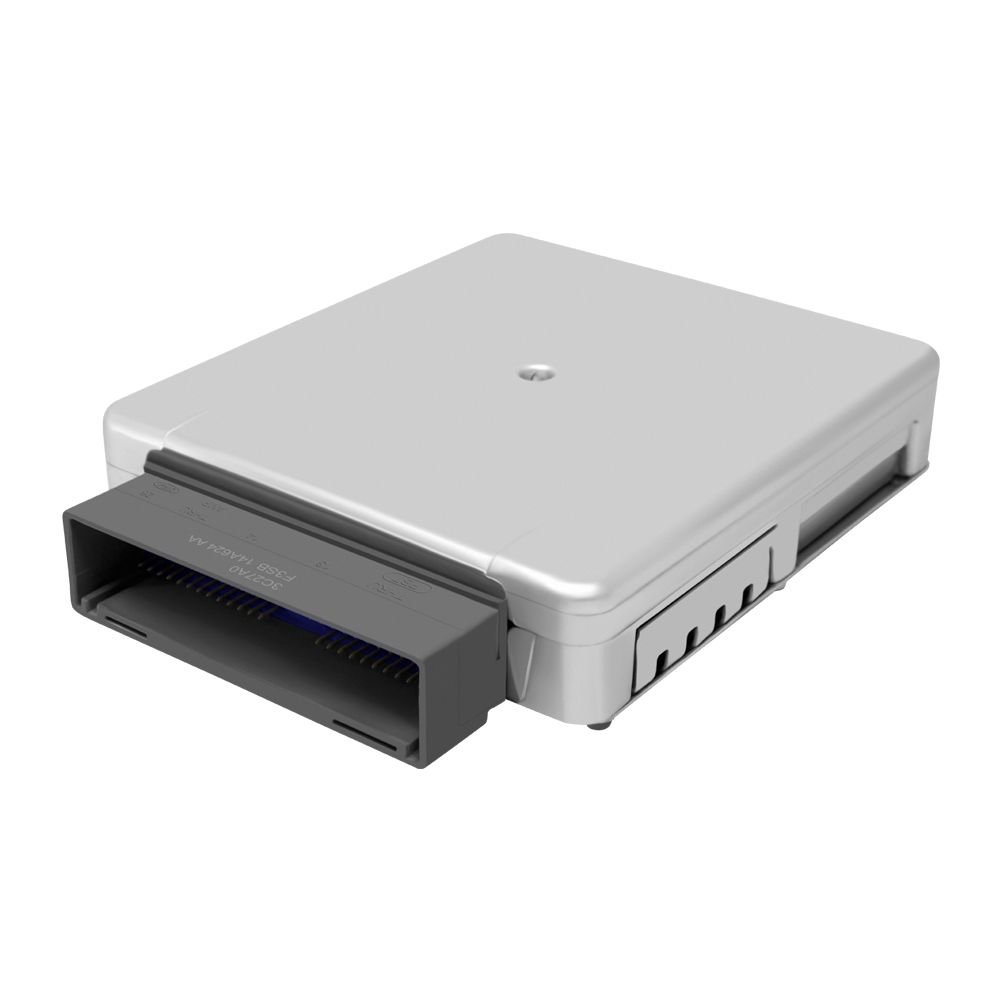
Flagship One stocks a refurbished, VIN-programmed PCM for the 1997 Ford Contour with a lifetime warranty, free shipping and no core charge. The full Ford Contour module lineup covers other engine configurations as well.
The Powertrain Control Module in your 1997 Ford Contour plays a vital role in engine and transmission performance. If you’re facing symptoms like stalling, no-start conditions, or diagnostic trouble codes, addressing the PCM promptly can save time and frustration. Whether you opt for a repair or replacement, understanding the process ensures a smoother experience. Keep your vehicle running reliably with the right approach.