
Last updated on August 25th, 2026 at 12:30 pm
The powertrain control module in a 1993 Pontiac Grand Prix manages engine timing, fuel delivery and transmission shift strategy. When the module fails, the vehicle may refuse to start, stall unexpectedly, or exhibit erratic shifting because the computer can no longer command critical actuators.
When a 1993 Pontiac Grand Prix begins to exhibit no‑start conditions, rough idle, or irregular shifting, the powertrain control module is a common culprit. Understanding how the PCM functions, where it lives, and what the factory recommends for removal and replacement can save you time and prevent inadvertent damage. This guide walks you through the location of the module, the labor involved, the required post‑install procedures, and the benefits of using a VIN‑programmed replacement from Flagship One. By the end, you will know how to approach the job safely, what to expect during the relearn process, and how to keep the new unit operating reliably.
In the 1993 Pontiac Grand Prix, the powertrain control module serves as the central brain that coordinates engine ignition timing, fuel injection pulses and transmission shift points. It receives sensor data from the crankshaft position, throttle position and vehicle speed sensors, then issues commands to the injectors, ignition coils and transmission solenoids. Because the module directly controls both engine output and gear changes, any loss of communication or internal fault can cause the engine to stall, refuse to start, or shift harshly. Maintaining a healthy PCM is essential for smooth performance and emissions compliance. The module’s role is especially critical in this model, where the engine and transmission share a single control strategy. For those seeking a direct swap, replacement powertrain control modules for the 1993 Pontiac Grand Prix provide a drop‑in solution that matches the original specifications.
1993 Pontiac Grand Prix
OEM programmed ECM for your 1993 Pontiac Grand Prix — plug & play, no dealer visit.
Free shipping · Lifetime warranty
The powertrain control module in a 1993 Pontiac Grand Prix is mounted inside the passenger compartment, positioned beneath the instrument panel. Access typically requires removal of the lower dash trim and disconnecting the module connector while ensuring the ignition switch remains off, as mandated by the factory caution. The book labor time for removing the module and reinstalling it is listed as one hour. Once the connector is unplugged and any securing bolts are released, the unit can be withdrawn from its cradle. Installation mirrors removal, with the connector reattached, bolts torqued to the specified value if provided, and the dash trim reassembled. The entire process, including any necessary re‑routing of wiring, is covered by the one‑hour labor estimate.
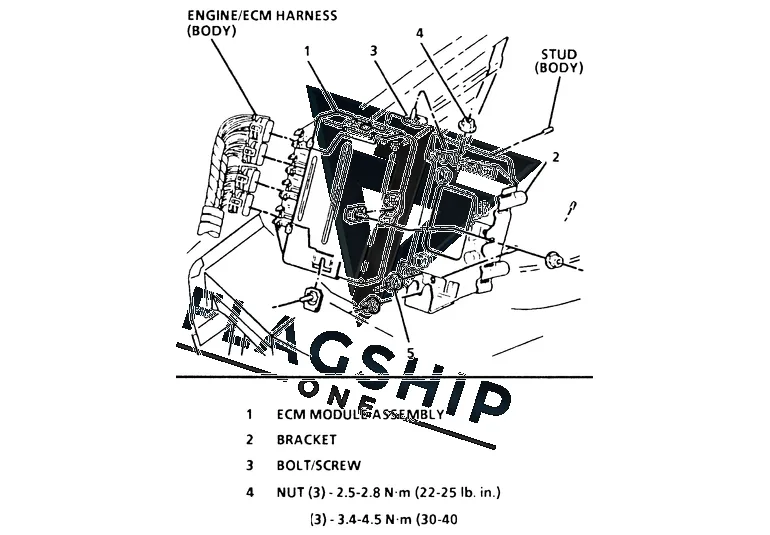
Work with the ignition off, and treat the module as static-sensitive: avoid touching the connector pins at any point.
| Operation | Configuration | Book Time |
|---|---|---|
| Engine Control Module R&R | All configurations | 1.0 hr |
| Engine Control Module Relearn | All configurations | 0.5 hr |
| Powertrain Control Module Relearn | All configurations | 0.5 hr |
| Powertrain Control Module R&R | All configurations | 0.5 hr |
After a new PCM is installed in a 1993 Pontiac Grand Prix, the factory service procedure calls for a series of relearn operations: Engine Control Module Relearn for half an hour, Powertrain Control Module Relearn for another half hour, and a Powertrain Control Module R&R of half an hour. Flagship One units arrive as a VIN‑programmed replacement unit that already contains the correct calibration data, so those relearn steps are effectively completed at the factory. Nevertheless, technicians should still verify that the ignition is off before any power is disconnected and that the module is seated securely before starting the vehicle.
When the PCM in a 1993 Pontiac Grand Prix begins to fail, owners often notice a complete lack of engine start, intermittent stalling while driving, or irregular transmission shifts that feel harsh or delayed. Diagnostic scans may return communication failures or specific fault codes such as Powertrain control module internal error. In addition, the engine may run rough, exhibit misfires, or display reduced fuel efficiency because the computer can no longer manage fuel and spark timing accurately. These symptoms typically point to a loss of module integrity rather than isolated sensor issues.
Yes, the module is accessible under the instrument panel and the labor time is about one hour, but you must keep the ignition off while disconnecting power and follow the factory safety warning.
Standard hand tools are sufficient; the primary requirement is to remove the dash trim and disconnect the module connector without applying excessive force.
The procedure includes an Engine Control Module Relearn for 0.5 hours, a Powertrain Control Module Relearn for 0.5 hours, and a Powertrain Control Module R&R for 0.5 hours.
Flagship One’s VIN‑programmed units are calibrated at the factory, so the relearn steps are already satisfied, though verification of proper installation is still recommended.
The ignition switch must always be turned off before you disconnect or reconnect any power to the module, as the factory caution advises.
When the PCM in a 1993 Pontiac Grand Prix needs attention, you can either have a professional perform a repair using a refurbished unit or choose a new, VIN‑programmed replacement from Flagship One. Both options address the same mechanical removal steps, but a pre‑programmed module saves you the factory relearn time and reduces the risk of installation error.
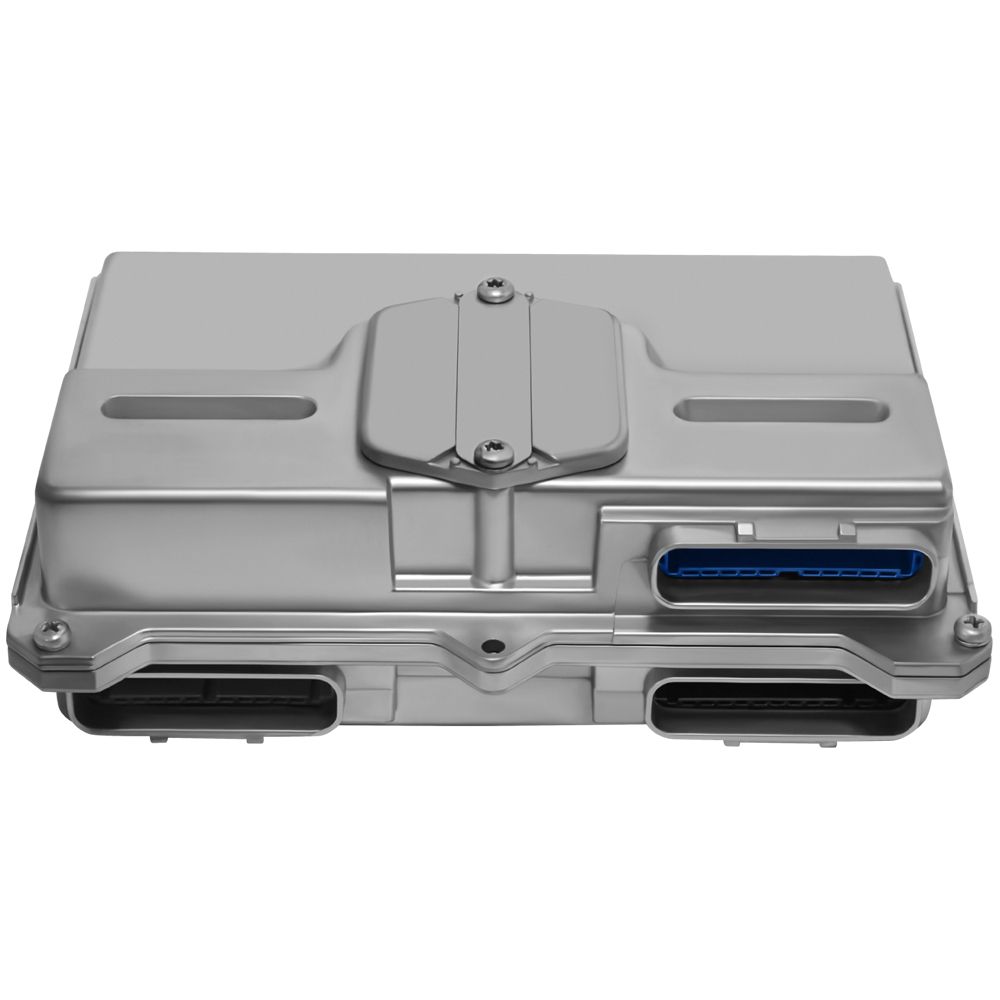
Flagship One stocks a refurbished, VIN-programmed PCM for the 1993 Pontiac Grand Prix with a lifetime warranty, free shipping and no core charge. The full Pontiac Grand Prix module lineup covers other engine configurations as well.
Replacing the powertrain control module in your 1993 Pontiac Grand Prix can restore reliable start‑up, smooth shifting, and proper engine management. Consider a VIN‑programmed replacement to simplify post‑install procedures and keep your vehicle running as intended.