
Last updated on August 25th, 2026 at 12:31 pm
The powertrain control module in a 1990 Pontiac Grand Prix manages fuel delivery, ignition timing, and emission functions. Failure typically results from electrical damage or internal component wear, leading to loss of engine control and diagnostic communication.
When a 1990 Pontiac Grand Prix begins to exhibit intermittent power loss, rough idle, or a complete no‑start condition, the powertrain control module often lies at the heart of the problem. Understanding where the PCM lives, how it interacts with the engine, and what steps are needed to replace it can save you time and prevent costly mistakes. This guide walks you through the module’s location, the safety precautions required during removal, the programming expectations, and the common symptoms that point to a failing unit. By the end, you’ll know how to approach a PCM swap with confidence and what to expect from a Flagship One replacement that arrives ready for installation.
1990 Pontiac Grand Prix
OEM programmed ECM for your 1990 Pontiac Grand Prix — plug & play, no dealer visit.
Free shipping · Lifetime warranty
In the 1990 Pontiac Grand Prix the powertrain control module serves as the central computer that monitors sensor inputs, regulates fuel injector timing, controls ignition spark, and coordinates emission controls. Its continuous operation is essential for smooth engine performance and emissions compliance. Because the PCM interprets data from the crankshaft position sensor, throttle position sensor, and oxygen sensors, any disruption can cause the engine to stall, run rough, or refuse to start. The module also stores diagnostic information that helps technicians pinpoint issues. Proper function of this computer is critical for maintaining drivability and fuel efficiency. For owners seeking a new unit, replacement powertrain control modules for the 1990 Pontiac Grand Prix provide a direct fit and maintain the vehicle’s original control strategies.
The PCM for the 1990 Pontiac Grand Prix is installed inside the passenger compartment, positioned beneath the instrument panel. Access typically requires removal of the lower dash cover and disconnecting the module’s electrical connector. Because the module is not located in the engine bay, you do not need to work around the right‑side shock tower or other engine‑compartment components. The removal process may involve a few minutes of panel removal followed by a quick connector release. Reinstallation follows the reverse order, ensuring the connector seats fully and any mounting bolts are torqued to the factory specification if provided. The location makes the PCM relatively easy to reach compared with engine‑bay mounted units on later models.
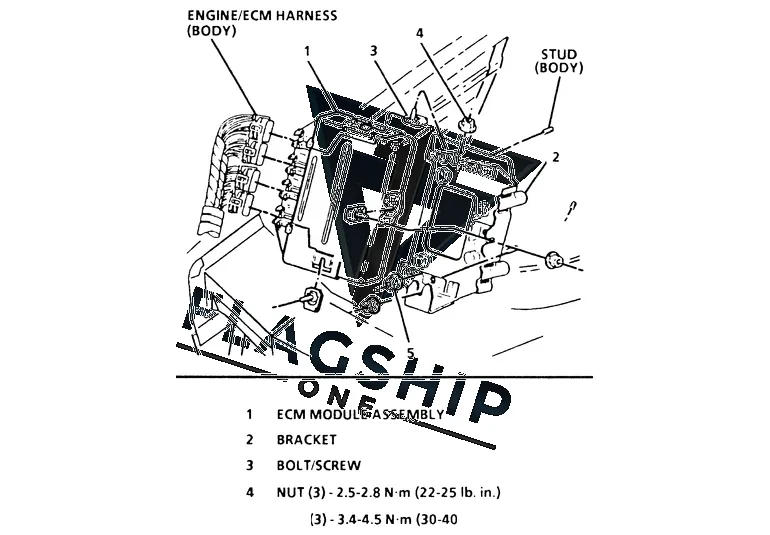
Work with the ignition off, and treat the module as static-sensitive: avoid touching the connector pins at any point.
After installing a new PCM in a 1990 Pontiac Grand Prix the factory service procedure calls for a complete VIN‑specific programming sequence to align the module with the vehicle’s existing sensor calibrations and emission settings. Flagship One units arrive already VIN‑programmed, so those steps are already completed before the part reaches your shop. This means you can focus on the physical installation and final verification without needing to perform additional coding. The pre‑programmed replacement ensures that the module will communicate correctly with the vehicle’s existing wiring harness and sensor suite immediately after installation.
Every VIN-programmed replacement unit from Flagship One arrives with these steps already completed.
A failing PCM in a 1990 Pontiac Grand Prix often reveals itself through a variety of drivability problems. You may notice the engine cranking but not starting, sudden stalling while driving, or a rough idle that does not smooth out. In some cases the vehicle’s diagnostic scanner will lose communication with the control module, preventing code retrieval. Misfire patterns or erratic shifting in automatic transmissions can also be traced back to PCM issues. When the module detects a fault, it may set a diagnostic code such as Processor Clock Signal Failure which indicates an internal timing problem within the computer itself. These symptoms together point to a likely need for replacement.
If the ignition switch is left on while disconnecting power, the module can suffer permanent damage. Always ensure the ignition is off before any connector work.
The PCM is accessible under the dash, but you must follow proper safety steps, including disconnecting the battery and keeping the ignition off, to avoid damaging the unit.
Flagship One replacement units arrive VIN‑programmed, so no additional programming tools are required after installation.
Common signs include no‑start conditions, engine stalling, rough idle, loss of scan‑tool communication, and related diagnostic codes.
Regular visual checks during routine service are advisable, especially if you notice intermittent electrical issues or after jump‑starting the battery.
When the PCM in your 1990 Pontiac Grand Prix needs attention, you can choose a brand‑new unit or a refurbished replacement that meets the same specifications. Both options address the same core function, but a refurbished part may offer a cost‑effective solution while still delivering reliable performance for this classic model.
Flagship One stocks a refurbished, VIN-programmed ECM for the 1990 Pontiac Grand Prix with a lifetime warranty, free shipping and no core charge. The full Pontiac Grand Prix module lineup covers other engine configurations as well.
Replacing the powertrain control module in a 1990 Pontiac Grand Prix can restore smooth operation and eliminate frustrating drivability issues. Consider a Flagship One replacement to benefit from factory‑level programming and reliable fit. Contact a qualified technician to assess your needs.