
Last updated on August 25th, 2026 at 02:01 pm
The powertrain control module (PCM) in your 1993 Mazda B2200 manages fuel injection, ignition timing, and emissions systems. When it fails, you may experience stalling, poor performance, or a complete no-start condition due to disrupted engine control signals.
If your 1993 Mazda B2200 has been acting up—stalling unexpectedly, refusing to start, or running roughly—it may be time to look at the powertrain control module (PCM). This small but critical computer manages everything from fuel injection to ignition timing, ensuring your engine runs smoothly. When it fails, the symptoms can be frustrating and unpredictable. Replacing it isn’t just about swapping a part; it’s about restoring your vehicle’s reliability. In this guide, you’ll learn what the PCM does, where to find it, how replacement works, and what to expect if yours needs attention. Whether you’re diagnosing an issue or preparing for a repair, understanding the role of this module will help you make informed decisions about your B2200’s performance.
1993 Mazda B2200
OEM programmed ECM for your 1993 Mazda B2200 — plug & play, no dealer visit.
Free shipping · Lifetime warranty
The powertrain control module (PCM) in your 1993 Mazda B2200 serves as the brain of the engine management system. It continuously monitors sensors throughout the vehicle, adjusting fuel delivery, ignition timing, and idle speed to maintain optimal performance. Without a functioning PCM, your engine may struggle to start, run inefficiently, or even shut off unexpectedly. This module also plays a role in emissions control, ensuring your B2200 meets the standards of its time. Over the years, heat, vibration, and electrical fluctuations can degrade its performance, leading to intermittent or complete failure. When that happens, you’ll need a reliable replacement PCM for the B2200 to get your vehicle back on the road. The PCM’s location under the dashboard makes it accessible, but its role in coordinating engine functions means its failure can disrupt multiple systems at once.
In your 1993 Mazda B2200, the PCM is mounted inside the vehicle, under the dashboard on the right (passenger) side. To access it, you’ll typically need to remove the lower dashboard panel or trim pieces, which may require disconnecting a few electrical connectors or fasteners. Once exposed, the module is secured with mounting screws or bolts. Replacement involves unplugging the wiring harness, removing the old unit, and installing the new one in its place. Since this is a pre-OBD-II vehicle, there’s no standardized diagnostic port communication to worry about, but you’ll still need to ensure all connections are clean and secure. The process is straightforward but requires care to avoid damaging the module or surrounding components.
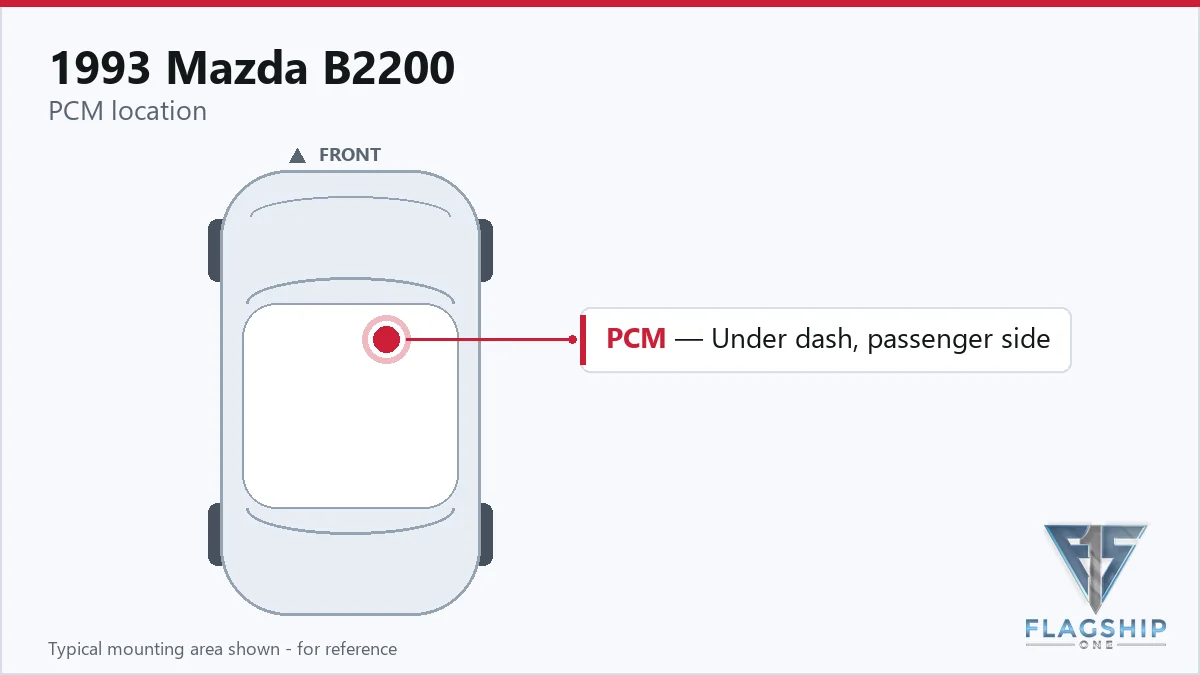
Work with the ignition off, and treat the module as static-sensitive: avoid touching the connector pins at any point.
After installing a new PCM in your 1993 Mazda B2200, the factory procedure typically requires programming the module to match your vehicle’s specific calibration. This step ensures the engine runs correctly and avoids issues like poor fuel economy or erratic performance. However, if you opt for a pre-programmed replacement unit, this step is already completed for you. The module arrives ready to install, saving you time and the hassle of finding a dealer or specialist to perform the programming. This convenience is especially valuable for older vehicles like the B2200, where original equipment tools and software may no longer be readily available. Always verify that the replacement unit is compatible with your vehicle’s engine and transmission configuration to avoid compatibility issues.
A failing PCM in your 1993 Mazda B2200 can cause a range of symptoms, often mimicking other engine or electrical problems. One of the most common signs is a vehicle that cranks but won’t start, as the module may fail to send the correct signals to the fuel injectors or ignition system. You might also experience stalling, especially at idle or during deceleration, due to incorrect fuel or spark timing. Rough idling, misfires, or a noticeable drop in fuel efficiency can also point to PCM issues. In some cases, the engine may run but feel sluggish or unresponsive, particularly under load. Another telltale sign is a complete lack of communication with diagnostic tools, as the module may fail to respond to scan attempts. If you’ve ruled out other potential causes like fuel pump failure or ignition issues, the PCM is often the next component to investigate. While trouble codes aren’t standardized in pre-OBD-II vehicles, some aftermarket tools may still detect faults like internal control module memory check sum error, which can help confirm a PCM problem.
Common signs include stalling, a no-start condition, rough idling, or poor engine performance. If you’ve ruled out fuel, ignition, or sensor issues, the PCM may be the culprit. A diagnostic tool that reads pre-OBD-II codes can also help identify internal module faults.
Yes, the PCM is located under the dashboard on the passenger side, making it accessible for DIY replacement. However, you’ll need to ensure the new unit is compatible and properly installed to avoid electrical issues. If programming is required, a pre-programmed unit simplifies the process.
A used PCM may work if it’s from a compatible vehicle, but it could also have internal wear or calibration mismatches. Programming may still be required, and there’s a risk of hidden faults that could cause performance issues. A new or remanufactured unit is often a more reliable choice.
Stalling after replacement can occur if the new PCM isn’t properly programmed or if there’s an issue with the wiring harness. Double-check all connections and ensure the module is securely mounted. If the problem persists, the unit may need recalibration or further diagnosis.
Driving with a failing PCM can be unpredictable. The vehicle may stall unexpectedly, run poorly, or even refuse to start. If you notice symptoms like rough idling or stalling, it’s best to address the issue promptly to avoid being stranded or causing further damage.
If your 1993 Mazda B2200 is showing signs of PCM failure, you have options. Repairing the original module may be possible in some cases, but it often involves specialized equipment and expertise. A more straightforward solution is replacing it with a remanufactured or new unit, especially one that arrives pre-programmed to match your vehicle’s specifications. This approach saves time and ensures compatibility, getting you back on the road with minimal hassle.
Flagship One stocks a refurbished, VIN-programmed ECM for the 1993 Mazda B2200 with a lifetime warranty, free shipping and no core charge. The full Mazda B2200 module lineup covers other engine configurations as well.
Your 1993 Mazda B2200 relies on its PCM to keep the engine running smoothly. If you’re experiencing stalling, no-start conditions, or other performance issues, this module could be the root cause. Replacing it is a manageable task, especially with a pre-programmed unit that eliminates the need for dealer calibration. By addressing the problem early, you can restore your vehicle’s reliability and avoid more costly repairs down the road.