
Last updated on August 25th, 2026 at 02:32 pm
The Powertrain Control Module (PCM) in your 1990 Chevrolet Lumina manages fuel delivery, ignition timing, and emissions systems. When it fails, you may experience hard starts, rough idling, or complete engine shutdowns due to disrupted sensor signals.
If your 1990 Chevrolet Lumina is struggling to start, stalling unexpectedly, or running poorly, the Powertrain Control Module (PCM) could be the culprit. This small but critical computer manages everything from fuel injection to ignition timing, ensuring your engine runs smoothly. Unlike later models with advanced diagnostics, the Lumina’s pre-OBD-II system relies on basic sensor inputs, making PCM failures harder to pinpoint without proper testing. Replacing it isn’t just about swapping a part—it requires careful handling to avoid damage and correct programming to restore full function. Understanding where the module is, how it works, and what signs indicate failure will help you decide whether a replacement is necessary and how to approach the job safely.
The Powertrain Control Module in your 1990 Chevrolet Lumina acts as the brain of the engine, processing data from sensors to optimize performance. It adjusts fuel mixture, spark timing, and idle speed based on inputs like throttle position, coolant temperature, and oxygen levels. Without a functioning PCM, your Lumina may run too rich or too lean, misfire, or refuse to start at all. Because this model predates standardized OBD-II diagnostics, troubleshooting often relies on physical inspections and voltage checks rather than scan tool codes. When the module fails, it typically disrupts multiple systems at once, leading to symptoms that mimic other issues like fuel pump or ignition problems. A reliable fix often means installing replacement engine computers for the Lumina, which must be programmed to match your vehicle’s specifications for proper operation.
1990 Chevrolet Lumina
OEM programmed replacements — plug & play, no dealer visit.
Find yours by year, make & model →
Free shipping · Lifetime warranty
In the 1990 Chevrolet Lumina, the PCM is mounted inside the passenger compartment, tucked under the instrument panel. This location protects it from extreme engine bay temperatures and moisture but makes access slightly more involved than in later models where the module sits near the shock tower. To replace it, you’ll need to remove the lower dashboard panel, which may require disconnecting wiring harnesses and trim clips. The module itself is secured with a mounting bracket, and its connector must be unplugged carefully to avoid bending pins. Since the ignition must be off during any power disconnection, ensure the key is removed before starting the job. While the physical replacement is straightforward, the confined space may add time to the process, especially if other components like the radio or climate controls are in the way.
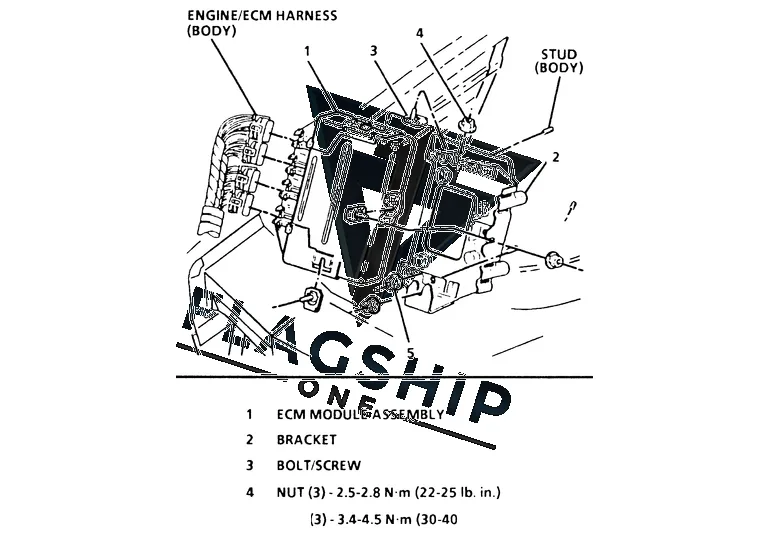
Work with the ignition off, and treat the module as static-sensitive: avoid touching the connector pins at any point.
After installing a new PCM in your 1990 Chevrolet Lumina, the factory procedure requires a specific initialization process to sync the module with the vehicle’s systems. This typically involves cycling the ignition key in a precise sequence or using a scan tool to input vehicle-specific data. Without this step, the engine may not start or could run poorly due to incorrect fuel and timing parameters. However, a VIN-programmed replacement unit from Flagship One arrives pre-configured to your Lumina’s specifications, eliminating the need for post-install programming. This ensures the module communicates correctly with sensors and actuators right out of the box, saving you time and potential frustration. Always follow the manufacturer’s guidelines for battery disconnection and reconnection to avoid voltage spikes that could damage the new module.
A failing PCM in your 1990 Chevrolet Lumina can cause a range of frustrating issues, often mimicking other mechanical or electrical problems. One of the most common signs is a no-start condition, where the engine cranks but refuses to fire, usually because the module isn’t sending the correct signals to the fuel injectors or ignition coils. Stalling at idle or during acceleration is another red flag, often accompanied by rough running or misfires that feel like a skipping engine. You might also notice erratic shifting if the transmission relies on PCM inputs, though this is less common in the Lumina’s simpler drivetrain. In some cases, the engine may run excessively rich or lean, leading to poor fuel economy, black smoke from the exhaust, or a strong gasoline odor. Dead scan tool communication—where the tool fails to connect to the vehicle at all—is a strong indicator of PCM failure, as the module acts as the gateway for diagnostics. If you’re experiencing a combination of these issues, especially after ruling out fuel, ignition, or sensor problems, the PCM may be the root cause.
Stalling at stops can stem from a failing PCM, particularly if it’s not adjusting idle speed correctly. The module relies on inputs from the throttle position sensor and idle air control valve to maintain smooth operation. If these signals are disrupted, the engine may die when transitioning to idle. Check for vacuum leaks or sensor issues first, but persistent stalling often points to PCM failure.
Yes, a faulty PCM can lead to misfires by sending incorrect timing signals to the ignition coils or failing to deliver the right fuel mixture. This often feels like a hesitation or stumble during acceleration. Since the Lumina’s PCM controls both fuel and spark, a misfire caused by the module may not trigger a specific code but will typically affect multiple cylinders rather than just one.
A completely dead PCM will usually prevent the engine from starting at all, with no fuel pump prime or spark. If the engine cranks but doesn’t fire, or if you’re getting no response from a scan tool, the module may have failed. Reprogramming is rarely an option for this model, as the PCM doesn’t store adaptive data like later vehicles. If the module is unresponsive, replacement is typically the only solution.
A used PCM from a compatible Lumina may work, but it must be from the same engine and transmission configuration. Even then, the module may need to be reprogrammed or initialized to match your vehicle’s VIN and sensor calibrations. Without proper programming, the engine may run poorly or not at all. For reliability, a new or remanufactured unit programmed to your VIN is often the better choice.
Voltage spikes and corrosion are the leading causes of PCM failure in this model. Jump-starting with incorrect voltage, loose battery connections, or moisture intrusion into the connector can all damage the module’s internal circuits. Over time, heat and vibration from the dashboard location may also contribute to solder joint cracks or component wear.
If your 1990 Chevrolet Lumina is showing signs of PCM failure, you have a few options for repair. While some owners attempt to source used modules, these may not be reliable or properly programmed for your vehicle. A new or remanufactured replacement ensures compatibility and eliminates the guesswork of initialization. Given the Lumina’s age, a pre-programmed unit can save time and prevent further issues down the road. Consider whether the cost of replacement aligns with your vehicle’s overall condition before proceeding.
Flagship One stocks a refurbished, VIN-programmed ECM for the 1990 Chevrolet Lumina Car with a lifetime warranty, free shipping and no core charge. The full Chevrolet Lumina Car module lineup covers other engine configurations as well.
The 1990 Chevrolet Lumina’s PCM is a critical component that can cause a range of drivability issues when it fails. From no-start conditions to erratic engine behavior, the symptoms often overlap with other problems, making diagnosis tricky. If you’ve ruled out sensors, fuel delivery, and ignition issues, a faulty PCM may be the next logical step. Replacing it requires careful handling to avoid damage, and programming is essential for proper function. With the right approach, you can restore your Lumina’s reliability and get back on the road.