
Last updated on August 25th, 2026 at 02:31 pm
The Powertrain Control Module (PCM) in your 1994 Chevrolet Lumina manages fuel delivery, ignition timing, and emissions systems. Failure may cause stalling, poor performance, or a no-start condition, often due to electrical stress or internal faults.
If your 1994 Chevrolet Lumina has been stalling unexpectedly, refusing to start, or running poorly, the Powertrain Control Module (PCM) may be the culprit. This small but critical computer manages everything from fuel injection to ignition timing, ensuring smooth operation. When it fails, symptoms can range from subtle drivability issues to complete engine shutdown. Replacing the PCM isn’t just about swapping a part—it involves careful handling to avoid damage and ensuring the new unit communicates correctly with your vehicle’s systems. Understanding the location, replacement process, and post-install requirements can save you time and frustration. With the right approach, you can restore reliable performance without unnecessary complications.
The Powertrain Control Module in your 1994 Chevrolet Lumina acts as the brain of the engine and transmission, coordinating fuel delivery, spark timing, and emissions controls. It constantly adjusts these systems based on sensor inputs, ensuring optimal performance and efficiency. Without a functioning PCM, your Lumina may struggle to start, run roughly, or even fail to idle. This module is particularly sensitive to voltage spikes, which is why proper handling during battery disconnections or jump-starts is critical. When replacement becomes necessary, choosing replacement engine computers for the Lumina ensures compatibility and avoids the hassle of manual programming. The PCM’s role is so central that even minor faults can trigger noticeable drivability issues, making timely diagnosis and repair essential.
1994 Chevrolet Lumina
OEM programmed replacements — plug & play, no dealer visit.
Find yours by year, make & model →
Free shipping · Lifetime warranty
In the 1994 Chevrolet Lumina, the PCM is mounted inside the passenger compartment, tucked under the instrument panel. This location makes it less exposed to extreme temperatures and moisture compared to engine-bay installations, but it also means accessing it requires removing interior trim panels. Replacement typically involves 1.1 hours of labor, as the technician must carefully disconnect wiring harnesses and secure the new module in place. There are no torque specifications provided for this procedure, but ensuring connectors are fully seated and free of corrosion is critical. The factory cautions against disconnecting power with the ignition on, as this may cause permanent damage to the module or related components.
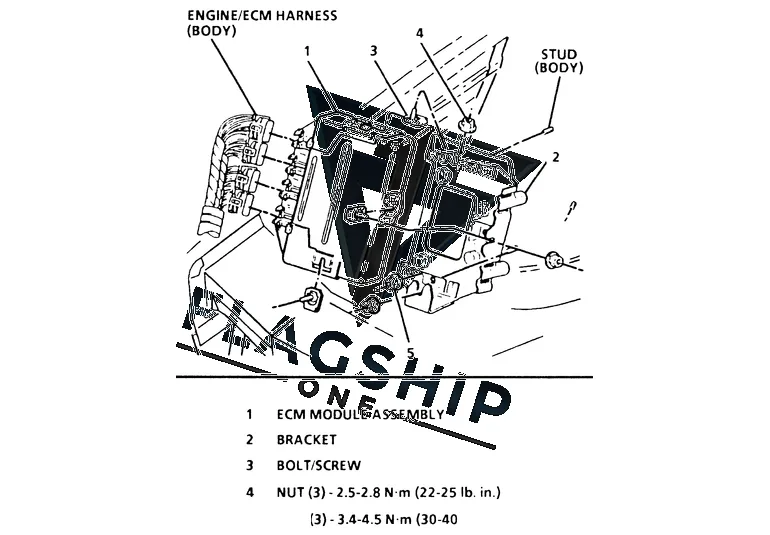
Work with the ignition off, and treat the module as static-sensitive: avoid touching the connector pins at any point.
| Operation | Configuration | Book Time |
|---|---|---|
| Powertrain Control Module Relearn | All configurations | 0.5 hr |
| Engine Control Module R&R | All configurations | 1.1 hr |
| Engine Control Module Relearn | All configurations | 0.5 hr |
After installing a new PCM in your 1994 Chevrolet Lumina, the factory requires a relearn procedure to synchronize the module with the vehicle’s systems. This typically takes 0.5 hours and ensures proper communication between the PCM and sensors. However, if you opt for a VIN-programmed replacement unit, these steps are already completed, saving you time and potential headaches. The relearn process may involve driving the vehicle under specific conditions to allow the PCM to adapt to your Lumina’s unique characteristics. Without this step, you might experience rough idling, poor acceleration, or even stalling. Flagship One units eliminate the need for manual programming, allowing for a straightforward installation.
A failing PCM in your 1994 Chevrolet Lumina can manifest in several ways, often mimicking other issues like fuel pump failure or ignition problems. Common symptoms include intermittent stalling, especially at idle or during deceleration, as the module loses its ability to regulate fuel and spark. You may also experience a no-start condition, where the engine cranks but refuses to fire, or rough running accompanied by poor acceleration. Some drivers report the vehicle suddenly dying while driving, only to restart moments later. Another telltale sign is erratic transmission behavior, such as harsh or delayed shifts, as the PCM also controls transmission functions. If your Lumina exhibits an internal control module memory check fault, it’s a strong indicator of PCM failure. Dead communication with a scan tool is another red flag, as the module may no longer respond to diagnostic requests. These symptoms often worsen over time, so addressing them promptly can prevent further complications.
Stalling at idle is a common symptom of PCM failure in the Lumina. The module may lose its ability to regulate fuel delivery or ignition timing, causing the engine to cut out. A thorough diagnosis, including checking for trouble codes, can confirm if the PCM is the root cause.
While it’s possible to replace the PCM yourself, the location under the instrument panel can make access challenging. You’ll also need to ensure the ignition is off during disconnection to avoid damaging the module. If you’re not comfortable with electrical work, a professional installation is recommended.
A failing PCM often causes multiple symptoms at once, such as stalling, no-start conditions, and erratic shifting. Sensors, on the other hand, typically trigger specific issues, like poor acceleration or rough idling. A scan tool can help differentiate between the two by checking for module communication faults.
Skipping the relearn procedure may result in poor engine performance, including rough idling, hesitation, or stalling. The PCM needs to adapt to your Lumina’s specific characteristics, such as sensor readings and fuel trims, to ensure smooth operation. A VIN-programmed unit eliminates this step.
Driving with a failing PCM can be unpredictable. The vehicle may stall unexpectedly or refuse to start, leaving you stranded. Additionally, a faulty PCM may cause poor fuel economy or increased emissions. If you suspect an issue, it’s best to address it promptly to avoid further complications.
If your 1994 Chevrolet Lumina is experiencing PCM-related issues, you have options for repair or replacement. While a dealership may offer a new unit, the cost and programming requirements can be prohibitive. A refurbished replacement, pre-programmed to your VIN, provides a reliable and cost-effective solution. Flagship One units eliminate the need for manual relearn procedures, allowing for a straightforward installation and immediate restoration of performance.
Flagship One stocks a refurbished, VIN-programmed PCM for the 1994 Chevrolet Lumina Car with a lifetime warranty, free shipping and no core charge. The full Chevrolet Lumina Car module lineup covers other engine configurations as well.
The 1994 Chevrolet Lumina relies on its PCM to manage critical engine and transmission functions. When this module fails, symptoms like stalling, no-start conditions, or rough running can disrupt your daily driving. Understanding the replacement process, location, and post-install requirements helps you make informed decisions. Whether you choose to tackle the job yourself or seek professional help, addressing PCM issues promptly ensures your Lumina remains reliable for years to come.