
Last updated on August 25th, 2026 at 11:56 am
The Powertrain Control Module (PCM) and Engine Control Module (ECM) in the 2017 Toyota Prius Prime manage the hybrid system’s engine operations, fuel delivery, and emissions controls. These modules can fail due to voltage spikes, heat exposure, or connector corrosion, leading to drivability issues or complete no-start conditions.
If your 2017 Toyota Prius Prime has developed starting issues, stalling, or warning lights related to the engine or hybrid system, the Powertrain Control Module or Engine Control Module may be the culprit. These computers are the brain of your vehicle’s powertrain, managing critical functions that keep the engine running smoothly and efficiently. This guide walks you through what these modules do, common failure symptoms, factory service procedures, and your replacement options. Whether you’re diagnosing a no-start condition or planning a repair, understanding the role of these modules helps you make informed decisions about your vehicle’s care.
The PCM in your Prius Prime serves as the central coordinator for the hybrid powertrain, managing engine startup, throttle response, and communication between the engine and motor generator controls. The ECM handles fuel injection timing, emissions systems, and sensor inputs from the engine compartment. Both modules interface with the inverter/converter assembly, which manages power flow between the gasoline engine and electric motor. Because these computers process data from dozens of sensors in real time, a failing module can cascade into multiple drivability symptoms. Replacement units for the 2017 Toyota Prius Prime replacement engine computers restore proper communication between the hybrid components and ensure the vehicle meets factory specifications for emissions and performance.
2017 Toyota Prius Prime
OEM programmed ECM for your 2017 Toyota Prius Prime — plug & play, no dealer visit.
Free shipping · Lifetime warranty
The PCM and ECM are located within the inverter/converter assembly housing in the engine compartment of your Prius Prime. Replacement requires first disconnecting the cable from the negative auxiliary battery terminal, following the factory-specified waiting period after turning off the power switch. Access involves working around the motor generator control ECU kit and its vibration dampening connectors — these connectors must not be lowered or disturbed until the new ECU kit is fully installed to the inverter assembly. Book time for Powertrain Control Module R&R is 0.8 hours, while Engine Control Module R&R requires 0.8 hours. Plan for additional time if performing relearn procedures on either module.
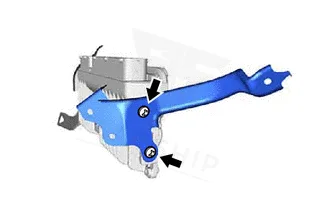
Work with the ignition off, and treat the module as static-sensitive: avoid touching the connector pins at any point.
| Operation | Configuration | Book Time |
|---|---|---|
| Powertrain Control Module R&R | All configurations | 0.8 hr |
| Powertrain Control Module Relearn | All configurations | 0.5 hr |
| Engine Control Module Relearn | All configurations | 0.5 hr |
| Engine Control Module R&R | All configurations | 0.8 hr |
| Engine Control Module Reset | All configurations | 0.3 hr |
After replacing either control module on your Prius Prime, the factory requires specific post-install procedures to ensure proper vehicle operation. The Powertrain Control Module Relearn procedure takes 0.5 hours, while the Engine Control Module Relearn requires an additional 0.5 hours. The Engine Control Module Reset procedure adds 0.3 hours. These steps initialize the new module with your vehicle’s unique VIN and calibration data. Flagship One units arrive VIN-programmed, meaning the unit is pre-configured with your specific vehicle information before installation, saving significant time on the initialization steps that would otherwise be performed at the dealership. When you install a VIN-programmed replacement unit, the module is already calibrated to your Prius Prime, reducing the programming burden and getting you back on the road faster.
When the PCM or ECM fails on a 2017 Prius Prime, symptoms often begin with hard starting or no-start conditions followed by stalling shortly after startup. The vehicle may run roughly at idle, exhibit hesitation during acceleration, or display multiple misfire-related codes. In some cases, the scan tool cannot communicate with the engine module at all, indicating a complete module failure. The check engine light typically illuminates, and in this vehicle, you may find internal processor fault logged in the module’s internal memory. Other symptoms include erratic shifting if the transmission control interface is affected, unpredictable idle speeds, and reduced fuel efficiency as the engine management system loses its ability to optimize fuel delivery.
The 2017 Toyota Prius Prime documents specific module-internal trouble codes that indicate processor-level failures within the control modules themselves. Unlike conventional oxygen sensor or misfire codes, these faults originate inside the ECU/PCM hardware and often point to internal circuit issues rather than external sensor problems.
| Code | Meaning | Full Guide |
|---|---|---|
| P0606 | Module processor failure | Full P0606 guide → |
Factory guidance specifically warns against replacing the battery ECU assembly and ECM simultaneously, as doing so will cause the HV battery learning values to be lost. If both units require replacement, follow the specific sequential procedure outlined in the factory service manual to preserve the hybrid battery calibration data.
Book time for Powertrain Control Module R&R is 0.8 hours, with an additional 0.5 hours for the relearn procedure. Engine Control Module R&R requires another 0.8 hours plus 0.5 hours for its relearn. These times do not include diagnosis or any unexpected complications with connector access.
The engine may run poorly, exhibit drivability issues, or trigger additional fault codes. The vehicle may fail emissions testing because the ECM has not learned the specific characteristics of your engine and sensors. Proper relearn ensures the module optimizes fuel delivery and emissions for your specific vehicle.
When your 2017 Prius Prime requires a new control module, you have two primary paths: paying dealership prices for a brand-new unit with programming, or choosing a quality refurbished replacement. Flagship One offers VIN-programmed units that arrive ready to install, eliminating the need for you to pay additional programming fees or visit the dealership after installation. Consider your budget, warranty preferences, and how quickly you need your vehicle back on the road when making your choice.
Flagship One stocks a refurbished, VIN-programmed PCM for the 2017 Toyota Prius Prime with a lifetime warranty, free shipping and no core charge. The full Toyota Prius Prime module lineup covers other engine configurations as well.
The 2017 Toyota Prius Prime relies on properly functioning PCM and ECM modules to manage its sophisticated hybrid powertrain. If you’re experiencing starting issues, stalling, or warning lights, these computers are worth investigating. Whether you pursue dealership service or a quality replacement unit, addressing the problem promptly helps prevent secondary damage and keeps your Prius Prime running efficiently for years to come.