
Last updated on August 25th, 2026 at 12:01 pm
The 2007 Toyota Sequoia 4.7L uses an engine control module to manage fuel injection, ignition timing, and transmission shifts. When this unit fails, you may experience no-start conditions, erratic shifting, or sudden stalling because the processor can no longer execute its calibration.
Owners of the 2007 Toyota Sequoia with the 4.7L V8 sometimes encounter drivability problems that trace back to the engine or powertrain control module. These computers govern fuel delivery, spark advance, and shift logic, so a malfunction can leave you with a crank-no-start, sudden stalling, or harsh shifts. This guide explains what the modules do, how they are serviced, and what the factory reprogramming process involves. You will learn the typical labor times for removal, installation, and relearn procedures, plus the service bulletins that outline the official flash process. Understanding these details helps you evaluate repair quotes and decide whether a pre-programmed replacement makes sense for your situation.
The engine control module in your 2007 Toyota Sequoia 4.7L acts as the central processor for the powertrain, constantly reading sensor inputs such as crankshaft position, throttle angle, and oxygen sensor voltage to calculate injector pulse width and ignition timing. It also communicates with the transmission control logic to determine shift points and torque converter lockup. Because the module stores adaptive values that compensate for engine wear and component tolerances, a failure can erase those learned corrections and cause rough idle, poor fuel economy, or a complete loss of communication with a scan tool. The powertrain control module integrates both engine and transmission functions in a single housing, so its failure may produce a broader range of symptoms including erratic gear engagement or limp-mode operation. When either unit fails, technicians often look for replacement engine computers for the Sequoia that match the original calibration to avoid extensive reprogramming. The factory design uses a robust circuit board sealed against moisture, but voltage spikes from a weak alternator or improper jump-starting can damage internal drivers, leading to the symptoms described later.
2007 Toyota Sequoia
OEM programmed replacements — plug & play, no dealer visit.
Find yours by year, make & model →
Free shipping · Lifetime warranty
Factory labor data indicates 0.5 hours for removing and installing the engine control module and another 0.5 hours for the powertrain control module. Each replacement also calls for a 0.5-hour relearn procedure after the new unit is fitted. These times suggest the modules are accessible without extensive disassembly, though the exact mounting position is not specified in the provided labor data. In typical practice, the technician disconnects the battery, detaches the wiring harness connectors, unbolts the module from its bracket, and reverses the steps for installation. The relearn process allows the new module to adapt to the vehicle’s specific sensor inputs and store fresh adaptive values. Because the labor times are identical for both modules, the work can often be completed in a single visit if both units require attention.
| Operation | Configuration | Book Time |
|---|---|---|
| Engine Control Module Relearn | All configurations | 0.5 hr |
| Engine Control Module R&R | All configurations | 0.5 hr |
| Powertrain Control Module R&R | All configurations | 0.5 hr |
| Powertrain Control Module Relearn | All configurations | 0.5 hr |
After a module is replaced, the factory procedure requires a Techstream flash reprogramming sequence to load the latest calibration and perform the necessary relearns. Service bulletins T-TCI-2758 and T-SB-0064-10 detail this process for applicable Toyota models, including the 2007 Sequoia. The steps involve connecting the Techstream scan tool, selecting the correct ECU, downloading the current software version, and initiating the flash. Once the flash completes, the technician must run the idle learn and throttle position learn routines, each of which consumes the 0.5-hour relearn time noted in the labor guide. Flagship One supplies a VIN-programmed replacement unit that arrives with the correct software already installed, so the flash and relearn steps are already satisfied. This can reduce shop time and eliminate the risk of a failed flash due to communication errors or outdated calibration files.
Common signs of a failing engine or powertrain control module in the 2007 Toyota Sequoia 4.7L include a crank-no-start condition where the engine turns over but never fires, often accompanied by a dead scan-tool communication link. You may also notice intermittent stalling at idle or while decelerating, especially when the engine is warm. Rough running, misfire codes that do not correspond to actual ignition faults, and sudden loss of power can appear when the processor miscalculates fuel or timing. Transmission-related symptoms such as harsh shifts, delayed engagement, or the transmission locking in a single gear (limp mode) may point to the powertrain control module. In some cases, the check engine light illuminates with codes that clear but return immediately, indicating an internal processor fault rather than a sensor issue. Voltage spikes from a failing alternator or improper jump-starting can accelerate module degradation, so these symptoms often emerge after electrical system disturbances. Because the modules control both engine and transmission functions, a single failure can produce a combination of the above symptoms, making diagnosis more complex.
Two factory service bulletins address ECU flash reprogramming for the 2007 Toyota Sequoia. Bulletin T-TCI-2758 covers the Techstream ECU flash reprogramming procedure for 2001 through 2008 Toyota models in Canada. Bulletin T-SB-0064-10 extends the same procedure to 2001 through 2011 applicable Toyota models. Both documents outline the steps for connecting the Techstream tool, verifying the current calibration, downloading the update, and performing the required idle and throttle relearns. They do not mandate module replacement but provide the official method for updating software after a repair or when addressing a drivability concern linked to calibration.
| Bulletin | Subject | What It Addresses |
|---|---|---|
| T-TCI-2758 | ’01-’08 All Applicable Toyota Models: Techstream ECU Flash Reprogramming Procedure (Canada) | — |
| T-SB-0064-10 | 01-11 Applicable Toyota Models: Techstream ECU Flash Reprogramming Procedure | — |
The module removal and installation labor time is 0.5 hours each, suggesting the hardware is accessible with common hand tools. However, the required relearn and potential flash reprogramming need a Techstream-capable scan tool, which most DIYers do not own. A pre-programmed unit can simplify the process but still requires the idle and throttle relearns.
A used module will likely have different adaptive values and may not match your vehicle’s VIN-specific calibration. The factory bulletins require a Techstream flash to load the correct software, so a used unit typically needs full reprogramming before it will function properly.
The 4.7L Sequoia uses a combined powertrain control module that handles both engine and transmission functions. If you experience both engine drivability issues and transmission problems, the single PCM is the likely culprit. A scan tool that reads module identification can confirm which unit is present.
The relearn includes an idle learn where the engine runs at operating temperature with no load, allowing the module to store base idle airflow values, followed by a throttle position learn that calibrates the electronic throttle body. Both steps are required after any module replacement or flash.
For the 4.7L model, Toyota uses a single powertrain control module that integrates engine and transmission control. This means one module replacement addresses both systems, but it also means a failure can affect both engine and transmission operation simultaneously.
When the module in your 2007 Toyota Sequoia fails, you can choose between a dealer flash of your original unit, a remanufactured exchange that still requires programming, or a new VIN-programmed replacement that arrives ready to install. The labor times are the same for each path, but the pre-programmed option removes the flash step and reduces the chance of a communication error during the update.
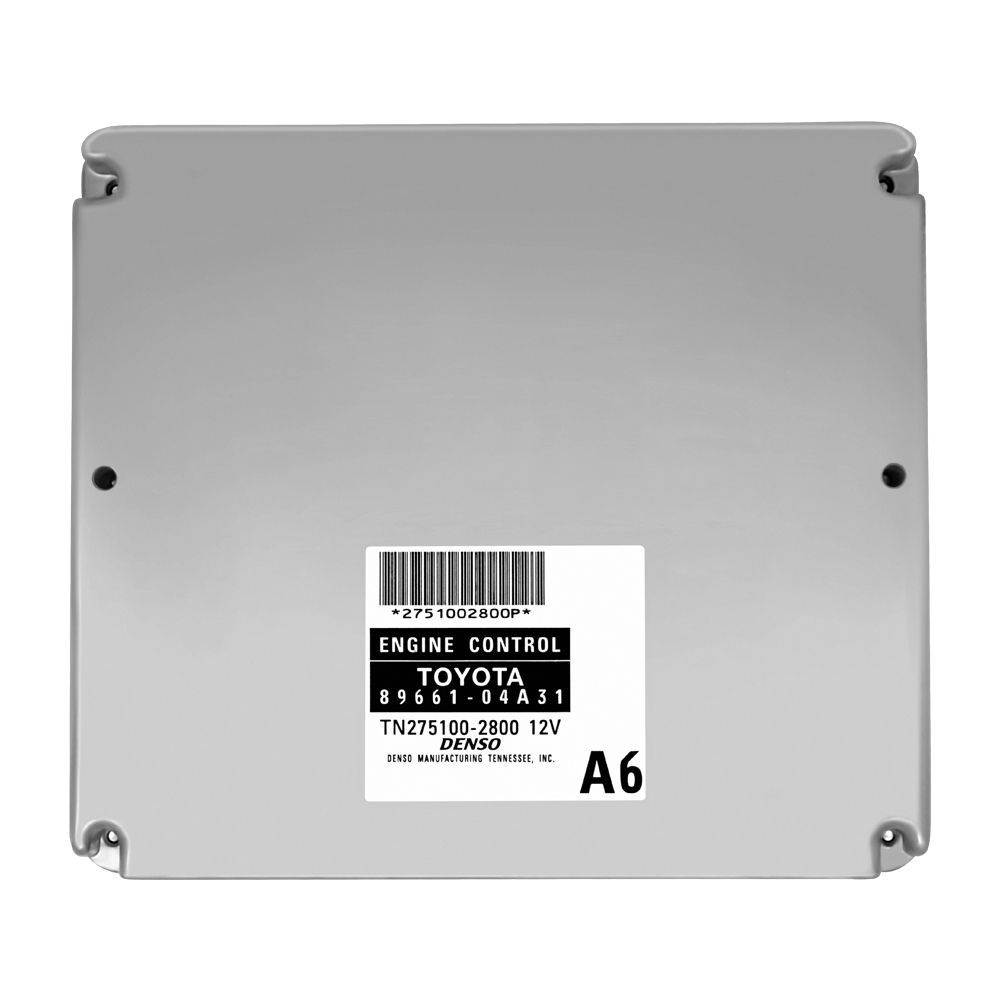
Flagship One stocks a refurbished, VIN-programmed PCM for the 2007 Toyota Sequoia with a lifetime warranty, free shipping and no core charge. The full Toyota Sequoia module lineup covers other engine configurations as well.
The 2007 Toyota Sequoia 4.7L relies on a single powertrain control module to manage engine and transmission functions, and factory labor data shows 0.5 hours for removal, 0.5 hours for installation, and 0.5 hours for each required relearn. Service bulletins T-TCI-2758 and T-SB-0064-10 define the official reprogramming process. A VIN-programmed replacement can streamline the repair and get your Sequoia back on the road with confidence.