
Last updated on August 25th, 2026 at 12:03 pm
In the 2004 Toyota Corolla, the engine control module manages fuel injection, ignition timing, and emissions monitoring. A malfunction can cause loss of power, stalling, or a dead scan‑tool connection, often triggering diagnostic trouble codes and preventing emissions certification.
When a 2004 Toyota Corolla exhibits no‑start conditions, rough idle, or fails an emissions inspection, the engine control module often becomes the focal point of diagnosis. Understanding how the ECM integrates with the vehicle’s powertrain and the steps required after a replacement can save time and reduce shop visits. This guide outlines where the unit lives, the labor effort involved, the programming actions mandated by Toyota, and how Flagship One’s VIN‑programmed replacements simplify the process. By the end, you will know what to expect during removal, the essential post‑install procedures, and how to avoid common pitfalls that lead to repeated failures.
2004 Toyota Corolla
OEM programmed replacements — plug & play, no dealer visit.
Find yours by year, make & model →
Free shipping · Lifetime warranty
The engine control module in the 2004 Toyota Corolla acts as the brain for the internal combustion system, controlling fuel delivery, spark timing, and emissions sensors. It receives input from the throttle position sensor, oxygen sensors, and crankshaft position sensor, then calculates the optimal injector pulse width and ignition advance. Proper operation ensures smooth acceleration, fuel efficiency, and compliance with state emissions standards. Because the module directly influences the powertrain’s performance, any loss of communication can trigger a no‑start condition or cause the vehicle to enter limp mode. The module also stores diagnostic codes that help pinpoint failures. replacement engine computers for the 2004 Corolla are designed to match these functions while offering updated firmware.
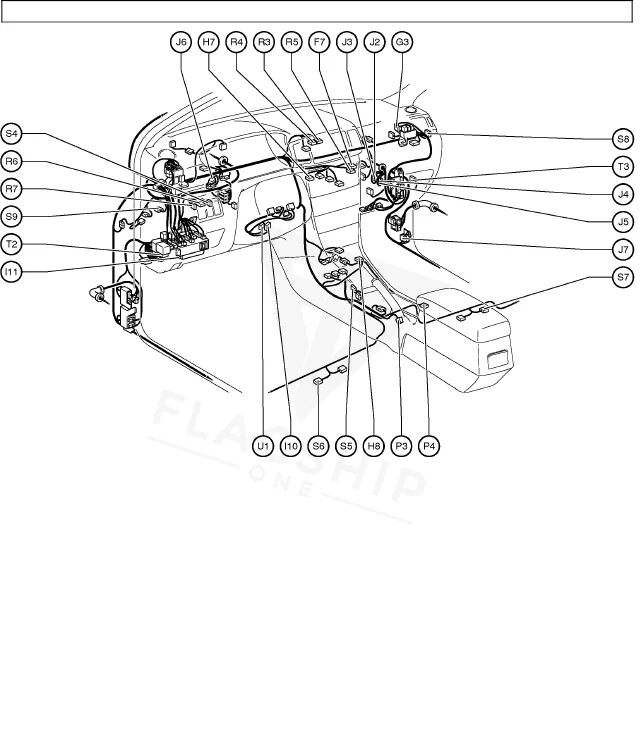
The factory wiring guide lists the engine control unit as being positioned within the instrument panel area. Access typically requires removal of trim pieces to reach the ECU housing. Labor times indicate that removing and reinstalling the module each require about half an hour of work. The process involves disconnecting the electrical connector, unscrewing the mounting bolts, and extracting the unit without disturbing surrounding wiring. Reinstallation reverses these steps, ensuring the connector seats fully and any grounding straps are re‑attached. No torque specifications were supplied, so standard hand‑tightening to secure the unit is recommended.
| Operation | Configuration | Book Time |
|---|---|---|
| Engine Control Module Relearn | All configurations | 0.5 hr |
| Engine Control Module R&R | All configurations | 0.5 hr |
| Powertrain Control Module R&R | All configurations | 0.5 hr |
| Powertrain Control Module Relearn | All configurations | 0.5 hr |
After the ECU is swapped, Toyota requires the VIN to be entered using a diagnostic tester display. The VIN entry must be confirmed as complete before the vehicle can pass emissions testing. Flagship One offers a a VIN‑programmed replacement unit that arrives with the correct VIN already written, eliminating the need for a separate write step. If the VIN write is not confirmed, the procedure advises repeating the entry until the system indicates completion. This ensures the vehicle remains compliant with state and local inspection programs.
A failing ECM in a 2004 Corolla may manifest as intermittent no‑start, rough idle, or stalling during acceleration. Drivers often notice a loss of power while climbing hills, and the check engine light may illuminate with codes related to fuel trim or sensor failures. Scan‑tool communication can drop, preventing any live data from being displayed. In some cases, the vehicle may exhibit shifting irregularities if the powertrain control module is also affected. One common diagnostic is ECM internal processor fault, which points to a malfunction within the module itself.
The factory book time for removing the engine control module is about half an hour, and the same amount of time is listed for reinstalling it.
Toyota’s emissions program requires the vehicle identification number to be stored in the module; without it, the car may fail state and local inspections.
Yes, a replacement that arrives with the correct VIN already programmed satisfies the factory requirement, so the additional write procedure is not needed.
Common signs include no‑start conditions, rough idle, stalling, loss of scan‑tool communication, and the appearance of codes such as P0601.
No torque values were supplied; securing the unit with hand‑tightened bolts and ensuring the connector is fully seated is standard practice.
When the engine control module fails, you can choose a repair that restores the original unit or opt for a refurbished replacement that meets OEM specifications. Both approaches require the same post‑install VIN entry, but a VIN‑programmed unit from Flagship One removes that step, simplifying the service process for your 2004 Toyota Corolla.
Flagship One stocks a refurbished, VIN-programmed PCM for the 2004 Toyota Corolla with a lifetime warranty, free shipping and no core charge. The full Toyota Corolla module lineup covers other engine configurations as well.
The 2004 Toyota Corolla’s engine control module plays a crucial role in performance and emissions compliance. Whether you repair the original or install a VIN‑programmed replacement, following the proper relearn and VIN entry steps ensures reliable operation and helps you avoid inspection failures.