
Last updated on August 25th, 2026 at 12:04 pm
The powertrain control module (PCM) in the 2003 Toyota Tacoma 2.4L is the engine computer that manages fuel delivery, ignition timing, and emissions controls. When it fails, the truck may crank without starting, stall unexpectedly, or lose communication with diagnostic tools.
When your 2003 Toyota Tacoma with the 2.4-liter engine begins acting erratically—refusing to start, stalling at idle, or failing to communicate with a scan tool—the powertrain control module (PCM) often becomes the prime suspect. This compact computer orchestrates nearly every aspect of engine operation, from fuel injection pulse width to ignition advance. A malfunctioning PCM can mimic other component failures, leading to unnecessary parts replacement and frustration. Understanding what the module does, where it lives, and how to replace it correctly can save you time and money. This guide walks you through the module’s role, its location in the instrument panel, the labor involved in swapping it, and the programming steps that follow. You’ll also learn how a VIN-programmed replacement from Flagship One streamlines the process, so you can get your Tacoma back on the road with confidence. Whether you’re a DIY owner or a professional technician, knowing the correct procedures helps avoid comebacks and ensures the new module integrates seamlessly with your truck’s existing systems.
2003 Toyota Tacoma 2.4L
OEM programmed ECM for your 2003 Toyota Tacoma 2.4L — plug & play, no dealer visit.
Free shipping · Lifetime warranty
The powertrain control module in the 2003 Toyota Tacoma 2.4L serves as the central processor for the engine management system. It receives data from sensors such as the mass airflow sensor, throttle position sensor, crankshaft position sensor, and oxygen sensors, then calculates the optimal air-fuel mixture and ignition timing for every combustion event. The module also controls the idle air control valve, evaporative emissions purge, and cooling fan operation, adapting in real time to changes in load, temperature, and altitude. When the PCM begins to fail, these calculations become erratic, leading to driveability problems that can be difficult to diagnose without specialized equipment. Because the module is vehicle-specific and VIN-locked, a replacement must be programmed with the correct calibration data and security information to function. Many owners turn to replacement engine computers for the Tacoma that arrive pre-programmed, eliminating the need for a dealership visit. The module’s internal circuitry is vulnerable to voltage spikes, heat, and vibration, all of which are common in a truck that may see off-road use or high-mileage service. Over time, solder joints can crack, capacitors can leak, and processor chips can degrade, causing intermittent or permanent failures. Recognizing the module’s critical role helps you understand why a no-start condition or sudden stalling may point directly to the PCM rather than a simpler sensor or wiring issue. In the 2.4L engine, the PCM also manages the distributorless ignition system and sequential fuel injection, making it essential for smooth acceleration and fuel economy.
| Operation | Configuration | Book Time |
|---|---|---|
| Powertrain Control Module R&R | All configurations | 0.7 hr |
| Powertrain Control Module Relearn | All configurations | 0.5 hr |
| Engine Control Module Relearn | All configurations | 0.5 hr |
| Engine Control Module R&R | All configurations | 0.7 hr |
After installing a new engine control module, the factory procedure calls for a relearn process that takes 0.5 hours. This step calibrates the module to the vehicle’s specific sensor readings and actuator responses, including idle air control, fuel trim adaptation, and, on automatic transmission models, shift strategy. Without this relearn, the engine may exhibit rough idle, hesitation, or incorrect transmission behavior. When you order a VIN-programmed replacement unit from Flagship One, the module arrives with your truck’s VIN and calibration data already loaded. This means the relearn procedure is often reduced to a simple idle learn or drive cycle, and in many cases the vehicle starts and runs correctly right away. The pre-programming eliminates the need for a dealership visit or expensive J2534 pass-through programming tools. You still need to perform any required security resets, such as key relearn if the immobilizer system is involved, but the core engine calibration is ready to go. This approach saves time and reduces the risk of programming errors that can occur during manual flashing. For the 2003 Tacoma, the immobilizer system may require a separate key registration procedure, but the engine management parameters are already set.
A failing powertrain control module in the 2003 Toyota Tacoma 2.4L can produce a range of symptoms that often mimic other problems. The most common is a no-start condition where the engine cranks but does not fire, often because the PCM fails to trigger the fuel injectors or ignition coils. Intermittent stalling, especially at idle or when coming to a stop, is another frequent complaint. You may notice the engine cutting out momentarily while driving, then restarting after a brief pause. The check engine light may illuminate, but in some cases the module fails to communicate with a scan tool, making diagnosis difficult. Other signs include erratic idle speed, poor fuel economy, and a lack of power under acceleration. In automatic transmission models, harsh or delayed shifting can occur because the PCM also controls shift solenoids. Electrical issues such as voltage spikes from a failing alternator or a weak battery can damage the module’s internal circuits, leading to these symptoms. Because the module is located in the instrument panel, it is somewhat protected from engine heat, but vibration and age still take a toll. If you experience multiple seemingly unrelated electrical or driveability issues, the PCM should be high on your diagnostic checklist. Sometimes the module may cause a no-communication condition with the OBD-II port, preventing code retrieval. In such cases, checking power and ground at the module connector is a logical first step before condemning the PCM. A failing PCM can also cause the engine to run rich or lean, triggering oxygen sensor codes that may lead you to replace sensors unnecessarily. The module’s internal voltage regulator can fail, causing sensor reference voltage to drop and creating a cascade of fault codes. When the module loses its ability to control the idle air control valve, the engine may surge or die at stops. These symptoms often worsen as the module heats up, then temporarily improve after cooling down.
The most common signs include a no-start condition where the engine cranks but does not fire, intermittent stalling, and a lack of communication with a scan tool. You may also experience erratic idle, poor fuel economy, and harsh transmission shifting. These symptoms often appear intermittently and can worsen as the module heats up.
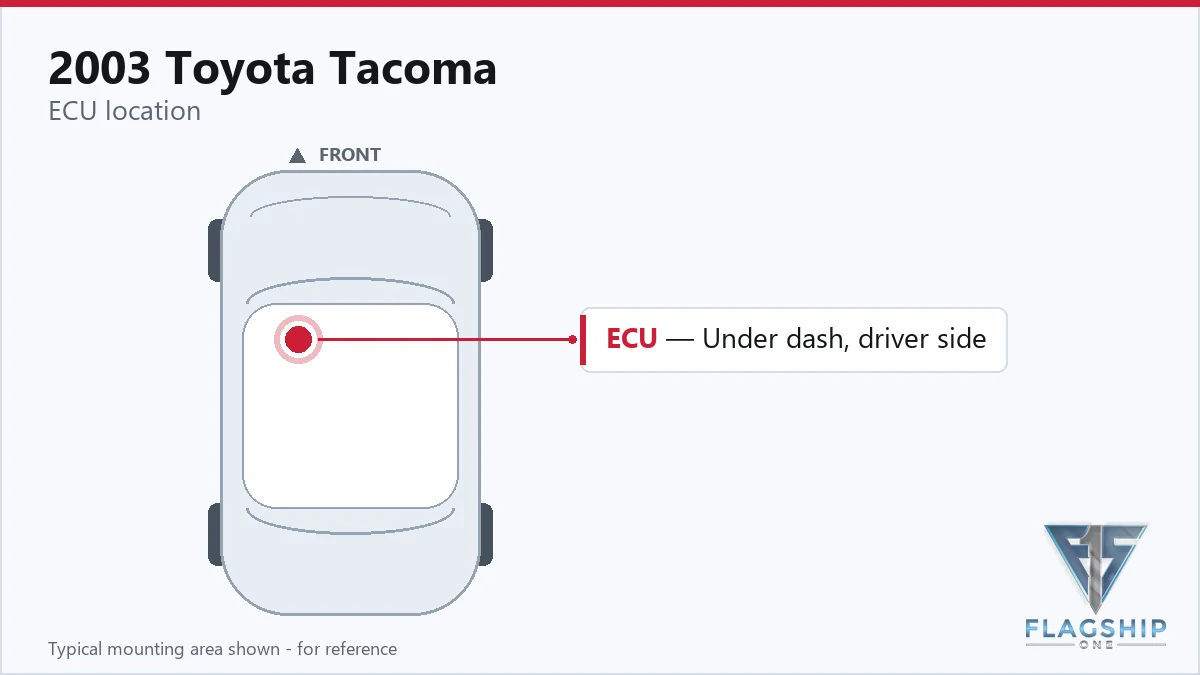
The factory wiring guide places the engine ECU in the instrument panel. Accessing it typically requires removing lower dash trim panels and possibly the glove box to reach the mounting bracket. The module is secured with fasteners and electrical connectors that must be handled carefully.
Yes, the factory procedure calls for a relearn process that takes 0.5 hours after installation. However, when you purchase a VIN-programmed unit from Flagship One, the module arrives with your truck’s calibration already loaded, often eliminating the need for additional programming beyond a simple idle learn or drive cycle.
Used modules are typically VIN-locked and contain the original vehicle’s security data, so they will not start your truck without extensive reprogramming. A VIN-programmed replacement matched to your specific vehicle is a more reliable solution.
The book time for removing and replacing the module is 0.7 hours. The relearn procedure adds another 0.5 hours. With a pre-programmed unit, the total time may be less because the relearn is often simplified.
When your Tacoma’s engine computer fails, you have two main paths: attempt a repair of the original module or install a replacement. Repair can be cost-effective for simple issues like capacitor failure, but internal processor damage often requires a full replacement. A VIN-programmed unit from Flagship One arrives ready to install, with your truck’s calibration and security data pre-loaded. This approach avoids the complexity of dealer programming and gets your truck back on the road faster. Consider your diagnostic certainty and budget when choosing between repair and replacement.
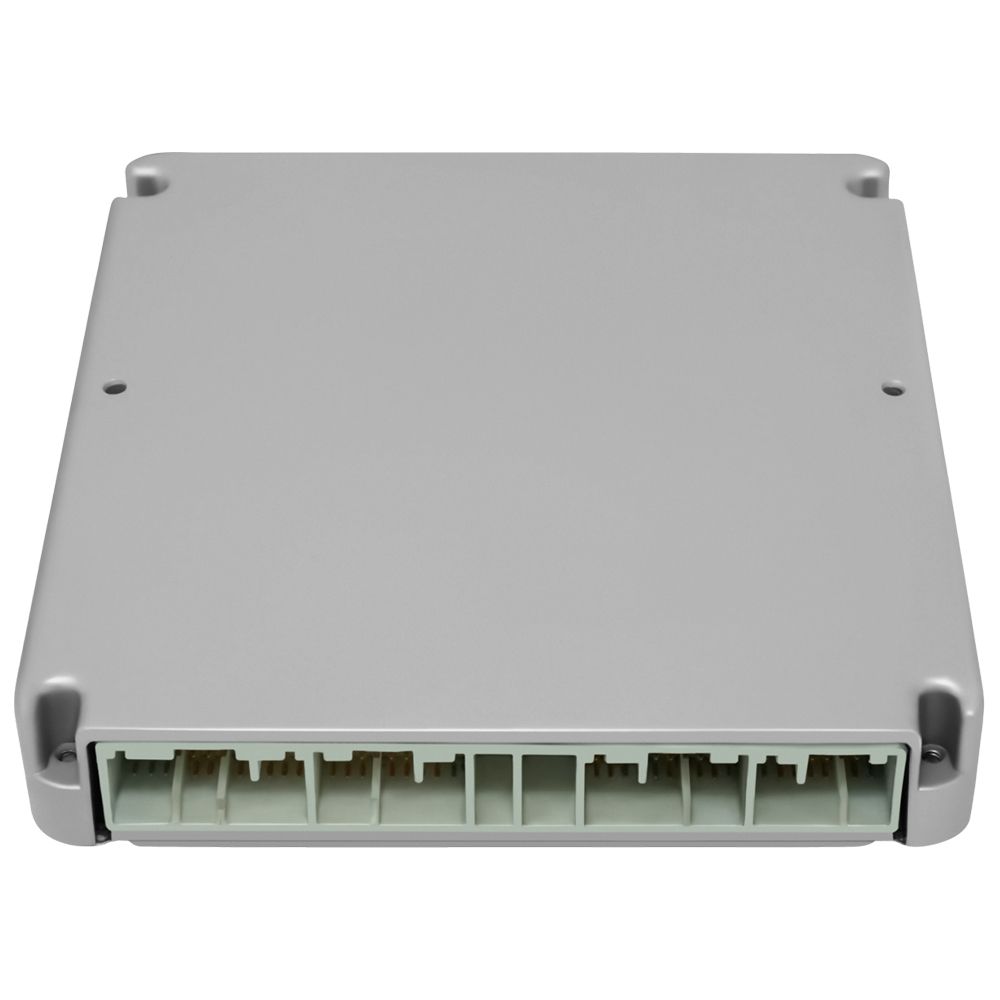
Flagship One stocks a refurbished, VIN-programmed PCM for the 2003 Toyota Tacoma with a lifetime warranty, free shipping and no core charge. The full Toyota Tacoma module lineup covers other engine configurations as well.
A properly functioning powertrain control module is essential for the 2003 Toyota Tacoma 2.4L to deliver reliable performance. When symptoms point to a failing PCM, addressing the issue promptly prevents further driveability problems. With the module located in the instrument panel and replacement taking under an hour of labor, the swap is straightforward. Choosing a VIN-programmed replacement from Flagship One simplifies the process and helps you avoid programming headaches. Get your Tacoma back to dependable service with a module that’s ready to work.