
Last updated on August 25th, 2026 at 12:02 pm
The engine control module in the 2005 Toyota Tacoma 4.0L manages fuel injection, ignition timing, and transmission coordination; internal circuit damage, processor failure, or corrupted software can cause no-start, stalling, misfires, erratic shifting under load, or communication loss with scan tools.
When your 2005 Toyota Tacoma 4.0L begins to exhibit hard starting, unexpected stalling, or a check engine light that points to the engine control module, the situation can feel uncertain. This module, often called the ECM or PCM, acts as the central processor for fuel delivery, spark timing, and transmission shift logic. A failure inside its circuit board or processor can mimic many other problems, so proper diagnosis is essential before any replacement is considered. In the following sections you will learn where the module sits in the instrument panel, what the factory labor times look like for removal, installation, and the required relearn procedures, and how a VIN-programmed unit can simplify the job. Understanding these details helps you decide whether to tackle the repair yourself, hire a shop, or source a pre-programmed replacement that arrives ready to install. The goal is to give you a clear picture of the process so you can plan the work with confidence and avoid unnecessary expense. This overview also covers common symptoms, preventive habits, and answers to frequent questions so you have a complete reference before starting.
The engine control module in the 2005 Toyota Tacoma 4.0L is responsible for monitoring sensor inputs such as crankshaft position, throttle angle, coolant temperature, and oxygen sensor signals, then calculating the precise injector pulse width and ignition advance for each cylinder. It also communicates with the transmission control system to coordinate shift points and torque converter lockup. Because the module integrates both engine and powertrain functions, a single internal fault can produce a wide range of drivability issues ranging from a no-start condition to rough idle, hesitation on acceleration, or erratic shifting. The module houses its own processor, memory, and driver circuits for the injectors and ignition coils; heat cycles, vibration, and voltage spikes can degrade solder joints or damage the processor over time. When the module fails, owners often search for replacement engine computers for the Tacoma to restore proper function, but a thorough diagnostic scan should always precede any parts purchase to rule out wiring, sensor, or power supply problems. The factory service information lists separate labor operations for the powertrain control module and the engine control module, reflecting the possibility that either unit may require attention depending on the specific fault. Understanding the module’s role helps you evaluate whether a reported symptom aligns with a control module failure or points toward a peripheral cause. The module also stores adaptive learning values for idle quality and fuel trim, which are lost if the unit is replaced without proper programming. This means a replacement module must undergo a relearn sequence to rebuild those values, a step that adds time to the repair. Additionally, the module’s internal diagnostics continuously check its own circuitry and will set internal codes if a processor or memory fault is detected, providing a starting point for troubleshooting.
2005 Toyota Tacoma 4.0L
OEM programmed replacements — plug & play, no dealer visit.
Find yours by year, make & model →
Free shipping · Lifetime warranty
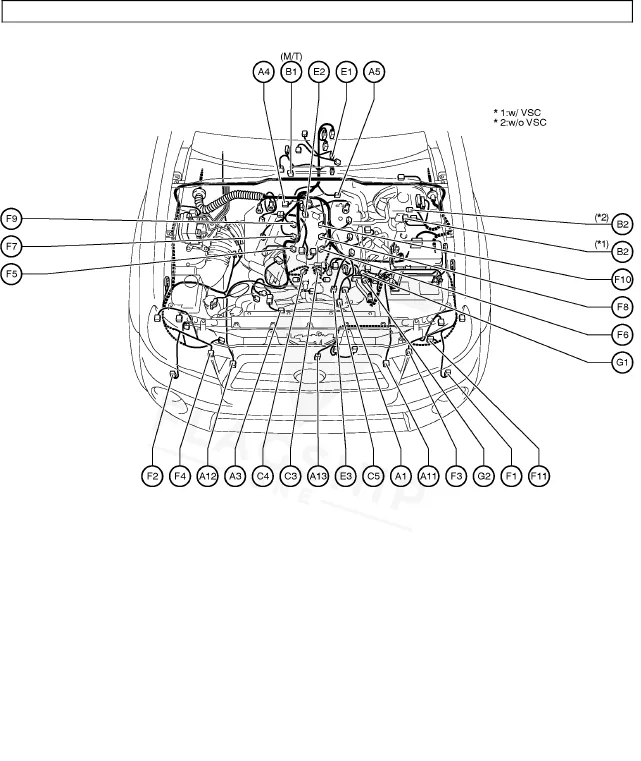
The factory wiring guide places the engine ECU inside the instrument panel, which means access requires removing trim panels and possibly the lower dash cover to reach the mounting bolts and connectors. The labor guide lists several distinct operations: removing and replacing the powertrain control module is allocated 0.7 hours, while the engine control module R&R is listed at 0.5 hours. If a relearn procedure is needed after installation, the engine control module relearn calls for 0.5 hours, and a separate engine control module reset is specified at 0.3 hours. The powertrain control module relearn also carries a 0.5 hour allocation. These times reflect the work needed to disconnect the battery, unbolt the module, transfer any mounting hardware, reconnect the harness, and perform the required software initialization with a scan tool. No torque specifications are provided in the available data, so fasteners should be snugged to typical instrument panel values. Because the module sits in the cabin, the environment is relatively clean, but care should be taken to avoid damaging the connector pins during removal.
| Operation | Configuration | Book Time |
|---|---|---|
| Powertrain Control Module R&R | All configurations | 0.7 hr |
| Powertrain Control Module Relearn | All configurations | 0.5 hr |
| Engine Control Module Relearn | All configurations | 0.5 hr |
| Engine Control Module R&R | All configurations | 0.5 hr |
| Engine Control Module Reset | All configurations | 0.3 hr |
After a new or remanufactured engine control module is installed in the 2005 Toyota Tacoma 4.0L, the factory procedure requires an engine control module relearn that takes 0.5 hours and an engine control module reset that takes 0.3 hours, both performed with a factory-capable scan tool. The powertrain control module relearn, if that unit was replaced, also requires 0.5 hours. These steps allow the module to learn idle airflow characteristics, fuel trim baselines, and transmission adaptives. When you order a unit from Flagship One, it arrives as a VIN-programmed replacement unit so the relearn and reset routines have already been completed during the bench programming process. This means the module can be installed and the vehicle started without additional scan-tool time for those specific initialization steps. The technician still needs to verify that no other codes are present and that the vehicle operates normally, but the mandatory factory relearn and reset are effectively eliminated. This can reduce overall shop time and simplify the repair for a do-it-yourselfer who lacks access to a professional scan tool.
Common symptoms of a failing engine control module in the 2005 Toyota Tacoma 4.0L often start with intermittent operation. You may experience a no-start condition where the engine cranks but does not fire, or the engine may start and then stall shortly after. Rough idle, hesitation during acceleration, and sudden loss of power can also appear as the processor struggles to maintain correct fuel and spark calculations. Transmission behavior may become erratic, with harsh or delayed shifts, failure to engage overdrive, or unexpected downshifts. The check engine light will typically illuminate, and a scan tool may reveal communication errors or an inability to read live data from the module. In some cases, the module may cause multiple unrelated sensor codes to set simultaneously because the internal analog-to-digital converter is malfunctioning. Voltage spikes from a weak alternator or improper jump-starting can accelerate module degradation, so a charging system check is advisable when these symptoms appear. Because the module controls both engine and powertrain functions, the symptom list overlaps with sensor or wiring faults, making thorough diagnostics essential before condemning the module. Another indicator is a scan tool that cannot establish communication with the ECM at all, which suggests a total loss of power or ground to the module or an internal processor failure. You might also notice that the fuel pump does not prime when the key is turned on, or that the ignition coils receive no trigger signal. These signs point directly to the module’s driver circuits. If the module has suffered water intrusion through a damaged connector seal, corrosion on the circuit board can cause intermittent faults that worsen with temperature changes. Keeping a record of when symptoms occur — such as after rain or on hot days — can help narrow the diagnosis. Remember that a healthy battery and clean grounds are prerequisites for reliable module operation, so those should be verified early in the troubleshooting process.
The factory labor guide lists 0.5 hours for engine control module removal and installation, plus 0.5 hours for the required relearn and 0.3 hours for a reset if those steps are needed. Actual shop time may vary based on access and equipment.
According to the factory wiring guide, the engine control module is mounted inside the instrument panel, requiring removal of lower dash trim for access.
A scan tool is required to perform the factory relearn and reset procedures after installation unless the replacement module arrives pre-programmed with your vehicle’s VIN, which eliminates those steps.
Common signs include no-start, stalling, rough idle, erratic shifting, loss of communication with a scan tool, and multiple unrelated sensor codes setting at once.
The factory labor guide lists distinct operations for both a powertrain control module and an engine control module, indicating they may be separate units or combined depending on the specific configuration; verify your vehicle’s setup before ordering.
Choosing between repairing the original module and installing a refurbished unit depends on the nature of the fault and your access to programming equipment. For the 2005 Toyota Tacoma 4.0L, a VIN-programmed replacement can eliminate the factory relearn and reset steps, saving time and reducing the chance of post-install issues. If the module damage is limited to a known circuit, a specialized repair service may be viable, but a warrantied replacement often provides more predictable long-term reliability.
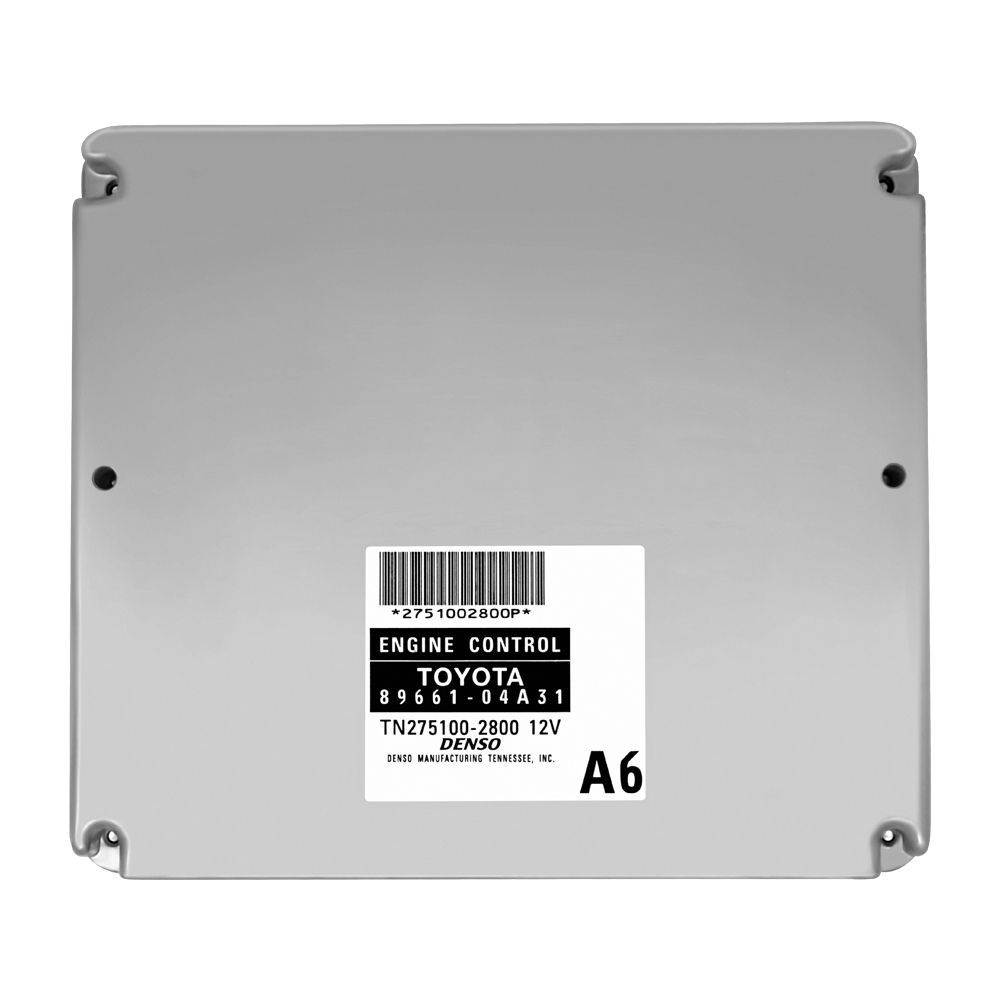
Flagship One stocks a refurbished, VIN-programmed PCM for the 2005 Toyota Tacoma with a lifetime warranty, free shipping and no core charge. The full Toyota Tacoma module lineup covers other engine configurations as well.
The 2005 Toyota Tacoma 4.0L relies on a properly functioning engine control module for smooth operation and reliable starts. By understanding the module’s location, the required labor times, and the programming requirements, you can approach the repair with a clear plan. Whether you choose to have a shop perform the work or install a pre-programmed unit yourself, verifying the diagnosis first will help ensure the fix lasts.