
Last updated on August 25th, 2026 at 12:04 pm
The engine control module in the 2002 Toyota Tacoma manages essential fuel delivery and ignition timing functions. When this computer fails, it often causes rough idling, starting difficulties, or unexpected stalling, significantly disrupting the normal operation of your vehicle.
When your 2002 Toyota Tacoma experiences drivability issues, the engine computer might be the underlying culprit. Understanding how the engine control module and powertrain control module interact with your vehicle’s systems takes the guesswork out of diagnosing frustrating performance problems. You gain clarity on why these components fail and what exact steps are necessary for a proper repair. Rather than throwing parts at the issue, you will learn the specific location of these modules, the labor times involved in swapping them, and the factory programming requirements that ensure your truck runs correctly again. This targeted knowledge helps you make informed decisions about repairing your 2002 Toyota Tacoma, saving time and avoiding unnecessary expenses.
2002 Toyota Tacoma
OEM programmed ECM for your 2002 Toyota Tacoma — plug & play, no dealer visit.
Free shipping · Lifetime warranty
In the 2002 Toyota Tacoma, the engine control module and powertrain control module function as the central brains of the truck. These computers continuously monitor sensor data from throughout the vehicle to regulate critical functions like fuel injection, ignition timing, and emissions controls. When these modules operate correctly, your engine runs efficiently and smoothly. However, internal circuitry degradation or software glitches can disrupt these commands, leading to poor performance or complete immobilization. If you find yourself needing 2002 Toyota Tacoma replacement computers to resolve these drivability failures, understanding their role clarifies why a direct swap often requires additional steps. The module relies on highly specific programming tailored to your vehicle’s configuration, meaning a new unit must communicate seamlessly with the immobilizer and other onboard systems to function properly.
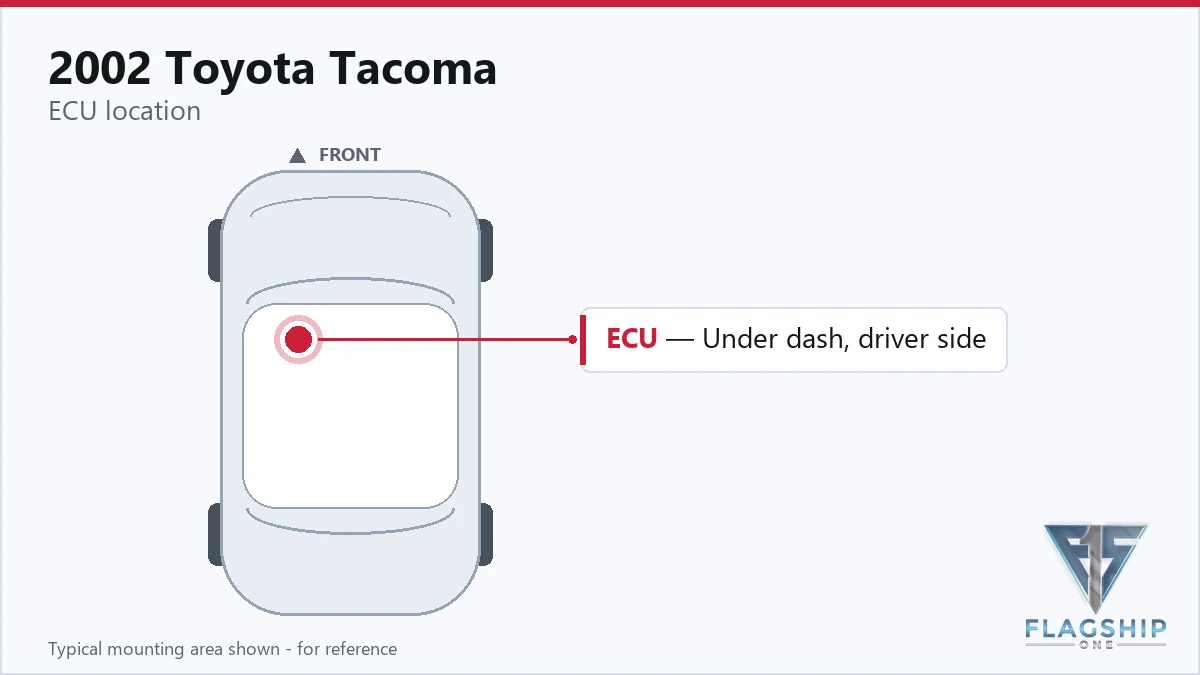
Locating the engine ECU in your 2002 Toyota Tacoma requires looking inside the instrument panel, as indicated by the factory wiring guide’s component grid. Accessing this area typically involves removing plastic trim panels beneath the dashboard to expose the mounting bracket. The labor time allocated for removing and reinstalling the powertrain control module stands at 0.7 hours, while the same procedure for the engine control module also requires 0.7 hours. Once the defective unit is detached and the replacement is secured, the vehicle must undergo a relearn process. The book time for an engine control module relearn is 0.5 hours, and the powertrain control module relearn also takes 0.5 hours. These times reflect the procedure needed to synchronize the new computer with the rest of the truck’s electronic systems.
| Operation | Configuration | Book Time |
|---|---|---|
| Engine Control Module Relearn | All configurations | 0.5 hr |
| Engine Control Module R&R | All configurations | 0.7 hr |
| Powertrain Control Module R&R | All configurations | 0.7 hr |
| Powertrain Control Module Relearn | All configurations | 0.5 hr |
Following the installation of a new computer, the 2002 Toyota Tacoma typically requires a specific reprogramming sequence. Technical service bulletins outline that an ECU flash reprogramming process is often necessary to ensure the module runs the latest software calibration. This usually involves using specialized diagnostic software to flash the unit while connected to the vehicle. Choosing a VIN-programmed replacement unit from Flagship One bypasses these complicated flashing steps because the necessary programming is already completed before shipment. Your new module arrives ready to communicate with the existing immobilizer and sensors, eliminating the need for you to perform the factory relearn procedures on your own.
When the engine computer begins to fail in the 2002 Toyota Tacoma, several distinct symptoms often present themselves. You may experience a crank-but-no-start condition where the engine turns over but refuses to fire due to a lack of fuel or spark commands. Unexpected stalling while driving or idling is another common indicator, as the module may intermittently drop communication with critical sensors. Misfire codes frequently appear because the computer struggles to control the ignition coils properly. Additionally, you might notice harsh or erratic shifting if the unit controls transmission functions, or you may find that a diagnostic scan tool cannot establish communication with the module at all. These drivability issues often worsen over time, making it important to diagnose the root cause promptly.
Toyota has released technical service bulletins regarding the computer systems in your vehicle. Bulletin number SS002-01 addresses a revised ECU flash reprogramming process for 2001 and later applicable models. Additionally, bulletin number SS002-07 details the Techstream ECU flash reprogramming procedure for 2001 through 2008 applicable Toyota vehicles. These bulletins indicate that updating the software on the factory computer is sometimes necessary to resolve drivability concerns or software glitches. When replacing a module, referencing these bulletins ensures the new unit receives the most current calibration available from the manufacturer.
| Bulletin | Subject | What It Addresses |
|---|---|---|
| SS002-01 | :SS002-01: 2001 & Later Applicable Models: ECU Flash Reprogramming Process (Revised) | — |
| SS002-07 | :SS002-07: 01-08 Applicable Toyota: Techstream ECU Flash Reprogramming Procedure | — |
The factory wiring guide places the engine ECU within the instrument panel of your 2002 Toyota Tacoma. You typically need to remove interior trim panels to access the module for inspection or replacement.
The designated book time for removing and reinstalling the powertrain control module is 0.7 hours. A separate relearn procedure for this module generally requires an additional 0.5 hours of labor.
Technical service bulletin SS002-07 outlines the Techstream ECU flash reprogramming procedure required for applicable Toyota models. Additionally, bulletin SS002-01 details a revised ECU flash reprogramming process that may need to be performed to ensure proper calibration.
Deciding between repairing your existing computer or opting for a refurbished replacement for your 2002 Toyota Tacoma depends on the extent of the internal damage. A professional repair may address specific circuit board failures, but a refurbished unit often provides a more reliable long-term solution with guaranteed functionality. Choosing a pre-programmed option eliminates the hassle of factory relearn procedures, getting your truck back on the road efficiently.
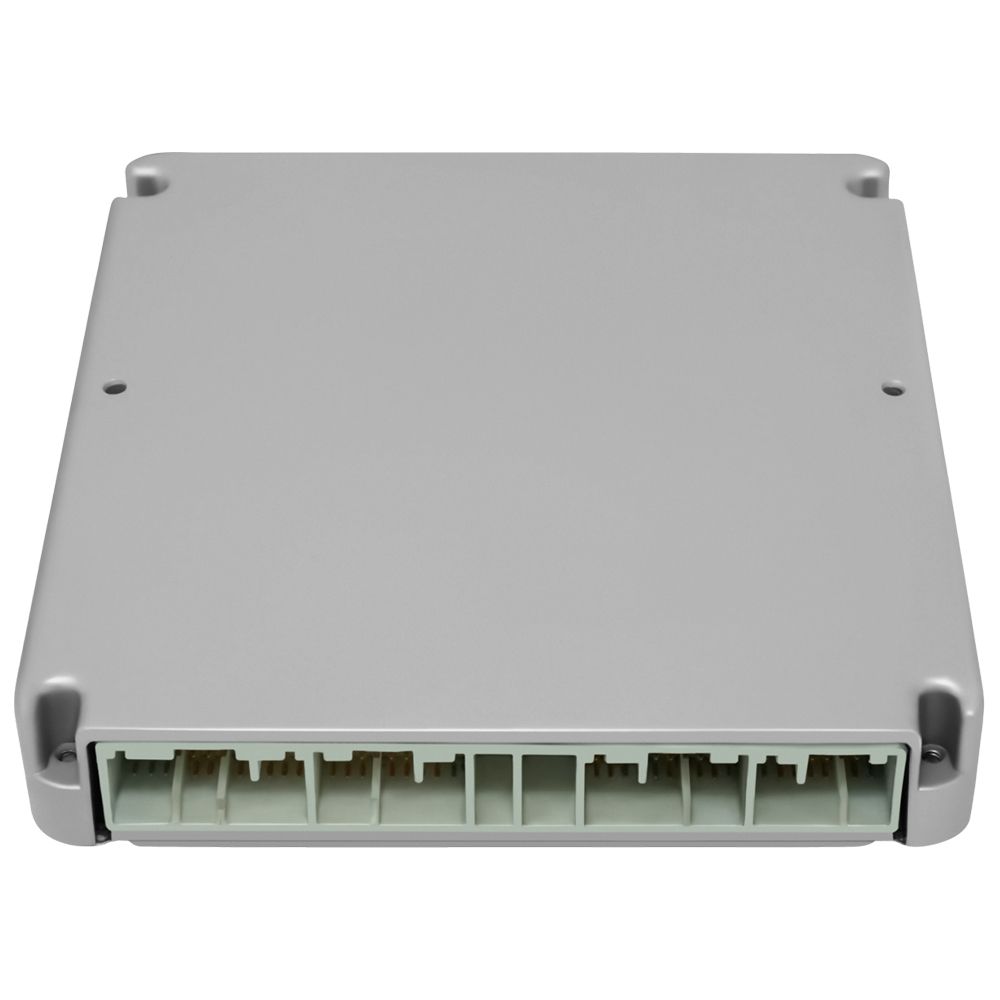
Flagship One stocks a refurbished, VIN-programmed PCM for the 2002 Toyota Tacoma with a lifetime warranty, free shipping and no core charge. The full Toyota Tacoma module lineup covers other engine configurations as well.
Addressing engine computer issues in your 2002 Toyota Tacoma requires understanding the specific location, labor times, and programming steps involved. Whether dealing with a no-start condition or stalling, proper diagnosis ensures you resolve the root cause effectively. When you are ready to restore your vehicle’s performance, exploring high-quality replacement options provides a straightforward path to getting your truck running smoothly again.