
Last updated on August 25th, 2026 at 12:04 pm
The powertrain control module (PCM) in your 2003 Toyota Highlander manages engine and transmission functions. Failures may cause erratic performance, stalling, or a complete no-start condition, often triggered by voltage spikes or corrosion.
If your 2003 Toyota Highlander has been stalling unexpectedly, refusing to start, or throwing cryptic engine codes, the powertrain control module (PCM) may be the culprit. This small but critical computer manages everything from fuel delivery to transmission shifts, and when it fails, your vehicle’s performance can suffer in frustrating ways. Replacing the PCM isn’t just about swapping a part—it involves precise installation and often a relearn procedure to ensure the new module communicates correctly with the engine and transmission. Understanding the process helps you avoid unnecessary trips to the dealer and ensures your Highlander runs as smoothly as it did when it left the factory. This guide covers what the PCM does, where it’s located, how replacement works, and why choosing the right replacement unit matters for your specific vehicle.
The powertrain control module (PCM) in your 2003 Toyota Highlander acts as the brain of the engine and transmission, coordinating fuel injection, ignition timing, and shift points to keep the vehicle running efficiently. Without a properly functioning PCM, your Highlander may struggle with poor fuel economy, rough idling, or even fail to start. The module constantly monitors sensors throughout the engine bay, adjusting parameters in real time to maintain optimal performance. Over time, voltage spikes, moisture intrusion, or simple wear can degrade the PCM’s internal circuitry, leading to intermittent or permanent failures. When replacement becomes necessary, you’ll need a module that matches your vehicle’s specifications—replacement engine computers for the Highlander are designed to integrate seamlessly with the 3.0L V6, ensuring compatibility and reliability. The PCM’s role is especially critical in vehicles like the Highlander, where smooth power delivery and transmission shifts are key to a comfortable driving experience.
2003 Toyota Highlander
OEM programmed ECM for your 2003 Toyota Highlander — plug & play, no dealer visit.
Free shipping · Lifetime warranty
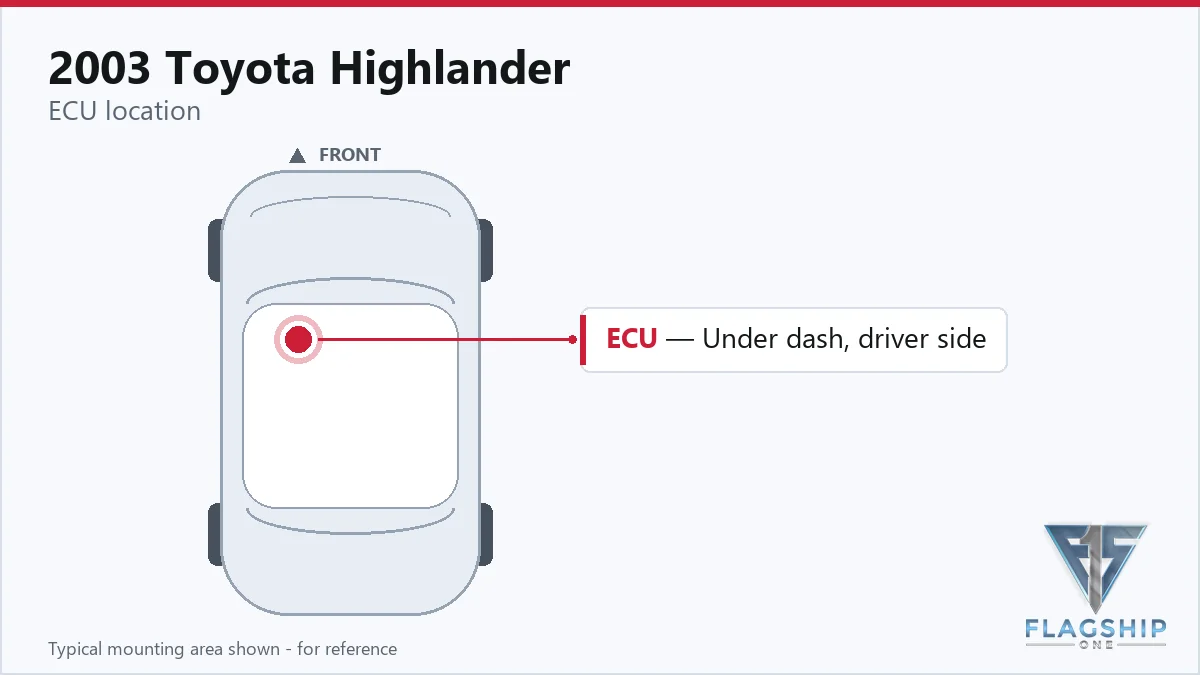
In the 2003 Toyota Highlander, the PCM is located behind the instrument panel, which means accessing it requires removing interior trim pieces rather than working under the hood. The factory wiring guide specifies this placement, so replacement involves carefully disassembling the dashboard to reach the module. According to labor estimates, removing and reinstalling the PCM typically takes 0.5 hours for the 3.0L engine. The process may involve disconnecting wiring harnesses and securing the new module in place, though no specific torque values are provided for this vehicle. Since the PCM is tucked away, it’s protected from direct exposure to heat or moisture, but corrosion or loose connections can still develop over time. If you’re replacing the module yourself, take care to avoid damaging surrounding components during disassembly.
| Operation | Configuration | Book Time |
|---|---|---|
| Engine Control Module Relearn | All configurations | 0.5 hr |
| Engine Control Module R&R | 3.0L | 0.5 hr |
| Engine Control Module R&R | 2.4L | 0.4 hr |
| Powertrain Control Module R&R | 2.4L | 0.4 hr |
| Powertrain Control Module R&R | 3.0L | 0.5 hr |
| Powertrain Control Module Relearn | All configurations | 0.5 hr |
After installing a new PCM in your 2003 Toyota Highlander, the factory procedure requires a calibration update to ensure the module communicates correctly with the engine and transmission. The process involves connecting a diagnostic tester to the vehicle and selecting the “CURRENT ECU CAL” option from the reprogramming menu. From there, you’d typically follow prompts to update the calibration ID, a step that synchronizes the PCM with your Highlander’s specific hardware. However, if you opt for a VIN-programmed replacement unit, these steps are already completed before the module arrives. This eliminates the need for dealer reprogramming and ensures the PCM is ready to function as soon as it’s installed. Without pre-programming, you may face additional labor time (0.5 hours) to complete the relearn process, which can add unnecessary complexity to the repair.
When the PCM in your 2003 Toyota Highlander begins to fail, you may notice a range of symptoms that can make driving unpredictable. One of the most common signs is a no-start condition, where the engine cranks but refuses to fire, often due to incorrect fuel or ignition signals from the module. Stalling at idle or during acceleration is another frequent issue, as the PCM struggles to maintain stable engine operation. Misfires, rough idling, or poor throttle response may also occur, sometimes accompanied by a check engine light. If the PCM loses communication with the scan tool, you might see generic codes like internal control module memory checksum error, indicating a fault within the module itself. Transmission shifting problems, such as harsh or delayed gear changes, can also stem from PCM failure, as the module controls shift points and torque converter lockup. In some cases, the vehicle may enter a “limp mode,” limiting speed or power to prevent further damage. These symptoms often appear intermittently at first, becoming more frequent as the failure progresses.
Stalling after PCM replacement often indicates a relearn procedure wasn’t completed. The module needs to synchronize with the engine and transmission sensors, which typically requires a diagnostic tool. If the PCM wasn’t pre-programmed, this step may have been missed, causing erratic performance.
Driving with a failing PCM is risky, as it can lead to stalling, misfires, or transmission issues. In some cases, the vehicle may enter limp mode, limiting power to prevent damage. If you suspect PCM failure, it’s best to address it promptly to avoid further complications.
A scan tool can help distinguish between PCM and sensor issues. If the PCM isn’t communicating with the tool or throws internal fault codes like P0601, the module itself is likely the problem. Sensor-related codes typically point to specific components, such as the oxygen sensor or throttle position sensor.
Yes, the factory procedure requires a calibration update after PCM replacement to ensure proper communication with the engine and transmission. However, a pre-programmed replacement unit eliminates this step, saving time and avoiding the need for dealer reprogramming.
PCM failure in the Highlander is often caused by voltage spikes, moisture intrusion, or corrosion in the wiring harness. Over time, these factors can degrade the module’s internal circuitry, leading to intermittent or permanent failure. Poor battery or charging system health can also contribute to premature PCM damage.
If your 2003 Toyota Highlander is experiencing PCM-related issues, you have options beyond a costly dealer visit. A refurbished replacement module can restore functionality at a fraction of the price, especially if it arrives pre-programmed to your VIN. This eliminates the need for additional calibration steps and ensures the module is ready to install. Whether you’re tackling the job yourself or working with a mechanic, choosing the right replacement unit can save time and hassle while getting your Highlander back on the road.
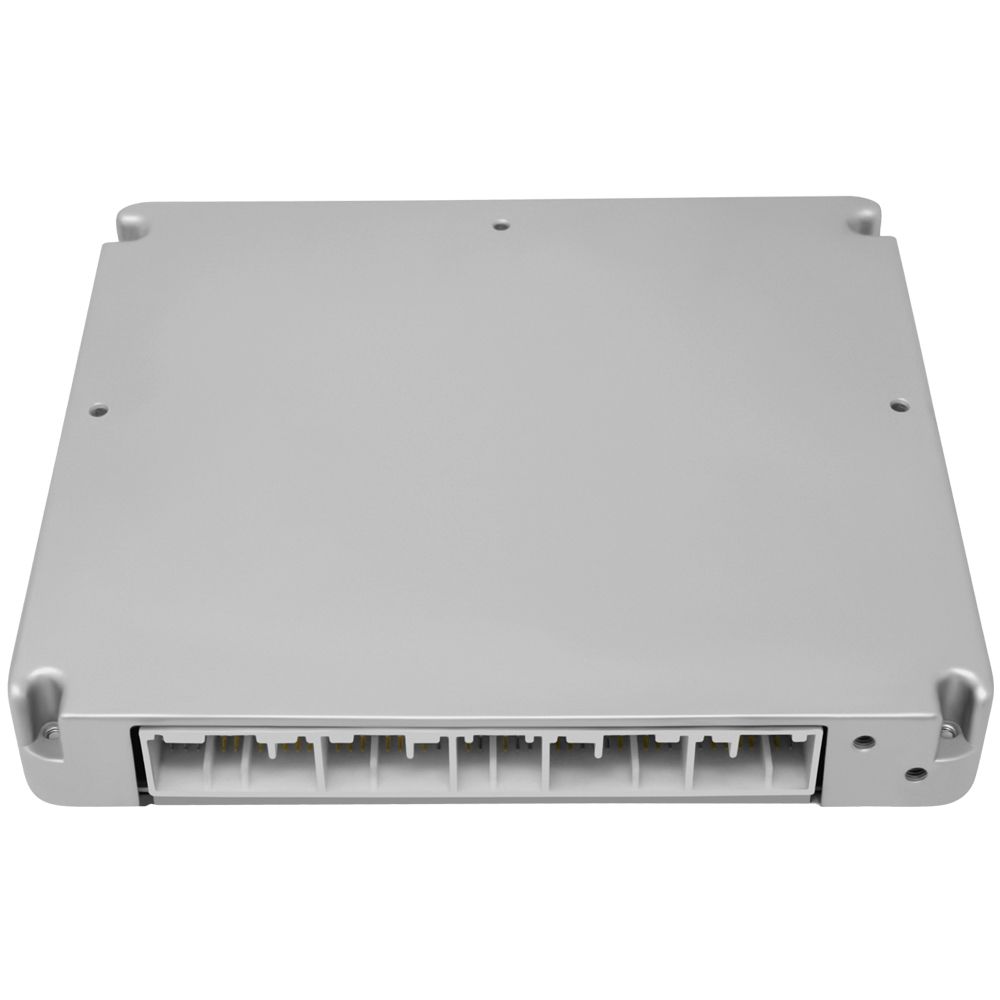
Flagship One stocks a refurbished, VIN-programmed PCM for the 2003 Toyota Highlander with a lifetime warranty, free shipping and no core charge. The full Toyota Highlander module lineup covers other engine configurations as well.
The PCM in your 2003 Toyota Highlander plays a critical role in keeping the engine and transmission running smoothly. When it fails, symptoms like stalling, misfires, or a no-start condition can leave you stranded. Replacing the module involves careful installation and, in some cases, a relearn procedure to ensure proper function. By opting for a pre-programmed replacement, you can simplify the process and avoid unnecessary dealer trips. Addressing PCM issues promptly helps maintain your Highlander’s reliability and performance for years to come.