
Last updated on August 25th, 2026 at 12:05 pm
The engine control module in your 2001 Toyota Tundra manages fuel delivery, ignition timing, and emissions functions for the 3.4L V6. When this unit fails, your truck may experience hard starting, rough idle, or complete shutdown. The module processes sensor inputs in real time to keep the engine running efficiently across all driving conditions.
When your 2001 Toyota Tundra starts acting up with no obvious mechanical cause, the engine control module often becomes a suspect. This computer sits at the heart of your truck’s fuel and ignition management, translating dozens of sensor readings into precise commands every second. A failing module can leave you stranded or trigger persistent check-engine lights that resist conventional repairs. Understanding what this component does, where it lives in your vehicle, and what the replacement process involves helps you make confident decisions about your repair path. Whether you are troubleshooting intermittent stalling or preparing for a module swap, knowing the factory labor times, location details, and relevant service bulletins gives you a clear picture of what to expect. The 3.4L V6 in your Tundra relies on this unit for everything from cold-start enrichment to emissions monitoring, so recognizing the signs of trouble early can save time and prevent more costly damage down the road.
In your 2001 Toyota Tundra, the engine control module serves as the central processor for the 3.4L V6 powertrain. It continuously reads input from the mass airflow sensor, throttle position sensor, oxygen sensors, coolant temperature sensor, and crankshaft position sensor, then adjusts fuel injector pulse width and ignition timing to match current operating conditions. The module also controls the evaporative emissions system, idle air control valve, and fuel pump relay, making it integral to nearly every aspect of engine operation. When internal circuitry degrades or memory becomes corrupted, the truck may run rich, misfire intermittently, or refuse to start at all. Because this computer manages both emissions compliance and drivability, a fault here often mimics other problems, leading to unnecessary parts replacement before the module itself is identified as the culprit. Selecting replacement engine computers for the Tundra ensures your truck receives a unit calibrated for the 3.4L V6 with correct firmware. The module communicates with the transmission control system and body electronics through the vehicle’s network, so a malfunction can produce symptoms across multiple systems simultaneously.
2001 Toyota Tundra 3.4L
OEM programmed replacements — plug & play, no dealer visit.
Find yours by year, make & model →
Free shipping · Lifetime warranty
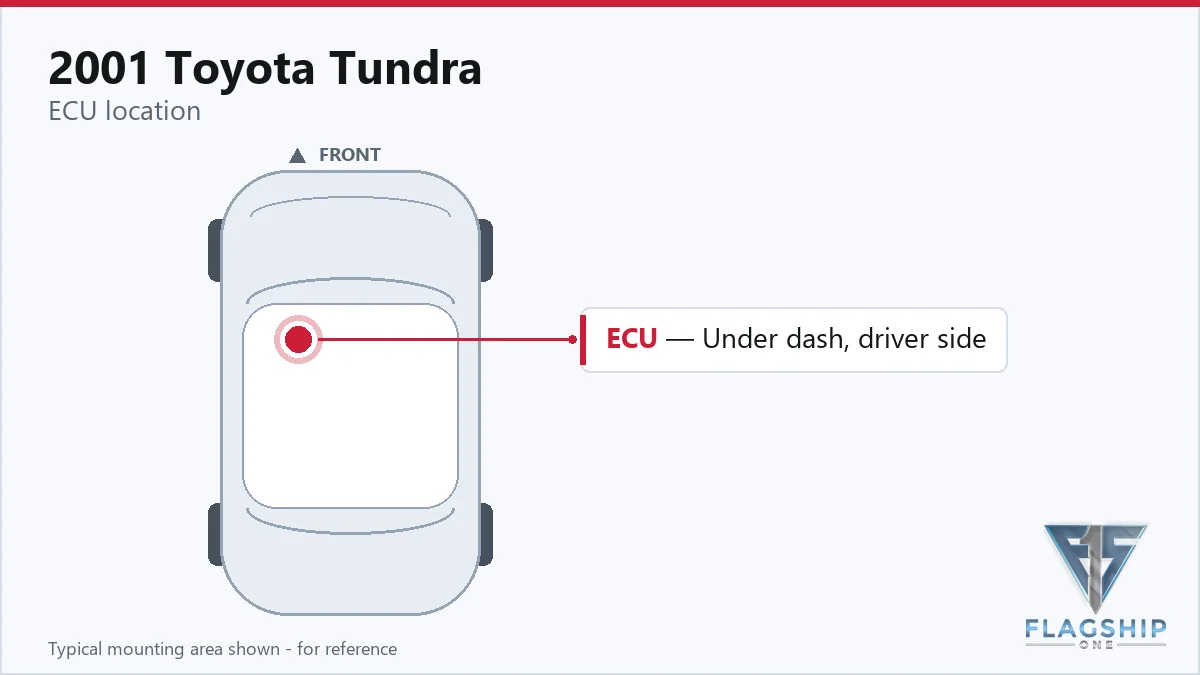
According to the component grid in the factory wiring guide, the engine ECU in your 2001 Toyota Tundra resides within the instrument panel area. Accessing it typically involves working around or behind the dashboard trim, which means careful panel removal is necessary to reach the unit without damaging surrounding components. The published book time for engine control module removal and installation is 0.5 hours, reflecting the straightforward nature of the physical swap once the panel is opened. A separate 0.5 hours is allotted for the relearn procedure, which allows the replacement module to adapt to your vehicle’s specific sensor values and operating parameters. The same labor figures apply whether the service involves the engine control module or the powertrain control module, with 0.5 hours for R&R and 0.5 hours for relearn in either case. Because the module sits inside the cabin rather than in the engine bay, it is generally sheltered from heat and moisture, though connector corrosion can still develop over years of service. Taking photos of the connector layout before disconnection may help ensure correct reassembly.
| Operation | Configuration | Book Time |
|---|---|---|
| Engine Control Module Relearn | All configurations | 0.5 hr |
| Engine Control Module R&R | All configurations | 0.5 hr |
| Powertrain Control Module R&R | All configurations | 0.5 hr |
| Powertrain Control Module Relearn | All configurations | 0.5 hr |
After a module replacement, the factory procedure requires a relearn step so the new unit can calibrate itself to your Tundra’s sensors and operating conditions. Toyota service bulletins outline an ECU flash reprogramming process that dealerships perform using specialized diagnostic equipment. This procedure ensures the replacement module carries the correct firmware and adapts to your vehicle’s specific configuration. When you choose a VIN-programmed replacement unit from Flagship One, the reprogramming and relearn steps are already completed at the factory. Your module arrives flashed and configured to your truck’s VIN, which means the 0.5 hours of relearn time and the dealer flash procedure are typically unnecessary. You still need the 0.5 hours for physical removal and installation, but the software side of the job is handled before the unit ships.
Several symptoms may point to a failing engine control module in your 2001 Toyota Tundra. One of the most common signs is a no-start condition where the engine cranks but never fires, often accompanied by a lack of injector pulse or spark output. Intermittent stalling at idle or while driving can also indicate internal module issues, especially when the stall happens without warning and the truck restarts after sitting for a few minutes. Persistent misfire codes that do not resolve after replacing spark plugs, ignition coils, and fuel injectors may lead technicians to suspect the computer itself. Loss of communication with a scan tool is another strong indicator, as a healthy module should respond to diagnostic requests through the OBD-II port. Your Tundra may also exhibit poor fuel economy, black smoke from the exhaust, or a check-engine light that returns immediately after being cleared. Because these symptoms overlap with sensor failures and wiring problems, thorough diagnosis is essential before concluding the module has failed.
Toyota released two service bulletins relevant to the engine control module in your 2001 Tundra. Bulletin SS002-01 covers the ECU flash reprogramming process for 2001 and later applicable models, providing the revised procedure for updating module software. Bulletin SS002-07 addresses the Techstream ECU flash reprogramming procedure for 2001 through 2008 Toyota vehicles, outlining the steps technicians follow when using Toyota’s diagnostic software to flash the module. Both bulletins focus on the software update process rather than physical replacement, meaning they come into play when a module needs reprogramming or when a new unit requires initialization. If your Tundra has never had the module flashed according to these bulletins, the updated software may address drivability or emissions concerns that Toyota identified after production.
| Bulletin | Subject | What It Addresses |
|---|---|---|
| SS002-01 | :SS002-01: 2001 & Later Applicable Models: ECU Flash Reprogramming Process (Revised) | — |
| SS002-07 | :SS002-07: 01-08 Applicable Toyota: Techstream ECU Flash Reprogramming Procedure | — |
The factory wiring guide’s component grid places the engine ECU within the instrument panel area of your 2001 Toyota Tundra. Accessing it typically requires removing or working around dashboard trim panels. The published book time for removal and installation is 0.5 hours.
Yes, the factory procedure includes a relearn step of 0.5 hours after physical installation. Toyota service bulletins SS002-01 and SS002-07 outline the ECU flash reprogramming process using specialized diagnostic equipment. A VIN-programmed replacement unit from Flagship One typically eliminates the need for these post-install programming steps.
Typical symptoms include a no-start condition where the engine cranks but does not fire, intermittent stalling, persistent misfire codes that resist conventional repairs, and loss of scan-tool communication through the OBD-II port. Poor fuel economy and a check-engine light that returns immediately after clearing may also point to module trouble.
When your 2001 Toyota Tundra needs an engine computer replacement, you have options. A dealer-installed unit requires both the physical swap and the factory flash reprogramming procedure outlined in Toyota bulletins SS002-01 and SS002-07. A VIN-programmed unit from Flagship One arrives ready to install with the software already configured to your truck, eliminating the dealer visit for reprogramming. The 0.5-hour relearn procedure is typically unnecessary when the module is pre-flashed to your VIN, saving you time and getting your Tundra back on the road sooner.
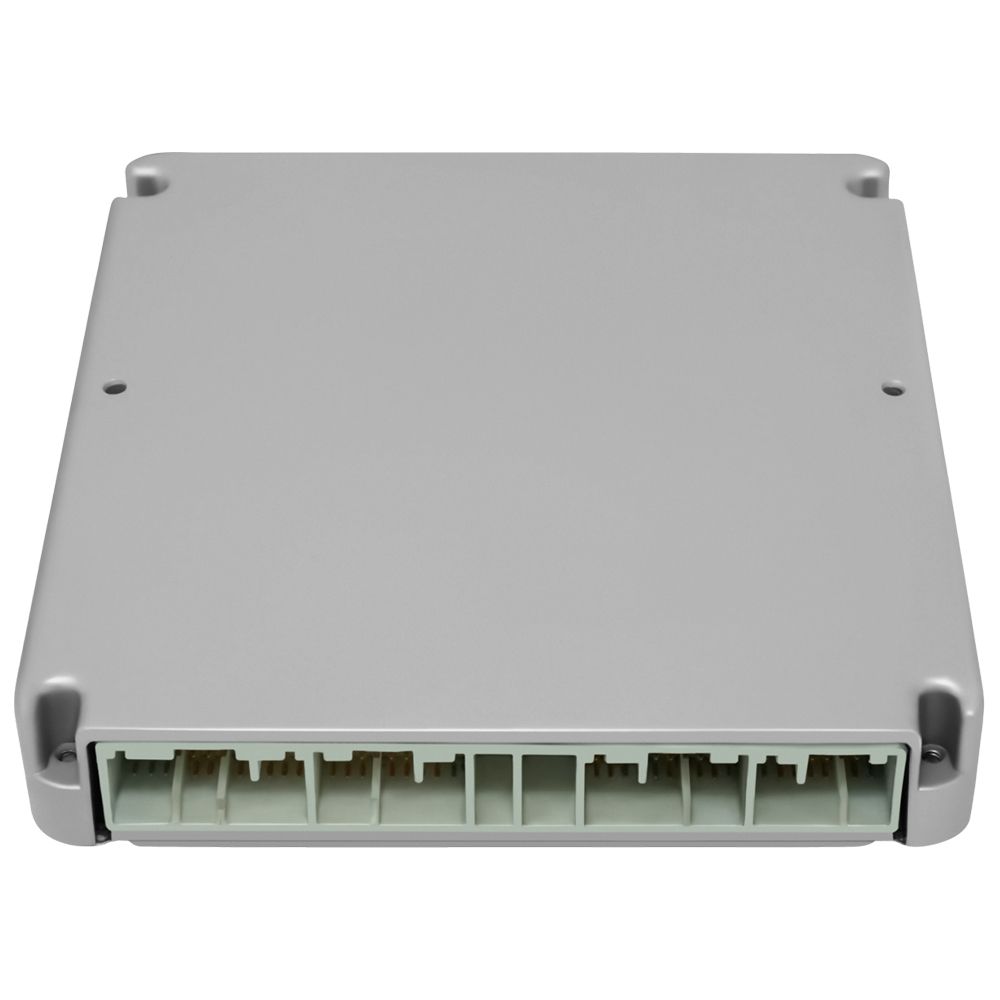
Flagship One stocks a refurbished, VIN-programmed PCM for the 2001 Toyota Tundra with a lifetime warranty, free shipping and no core charge. The full Toyota Tundra module lineup covers other engine configurations as well.
Your 2001 Toyota Tundra depends on a healthy engine control module to keep the 3.4L V6 running smoothly and efficiently. Recognizing the symptoms of module failure early, understanding the replacement location and labor times, and knowing what the factory reprogramming involves all help you make an informed repair decision. A VIN-programmed replacement from Flagship One can simplify the process by eliminating the dealer flash step, getting your truck back on the road with confidence.