
Last updated on August 25th, 2026 at 12:03 pm
The engine control module in your 2003 Toyota Tundra manages ignition timing, fuel injection, and emission systems. Internal processor faults or voltage spikes may trigger stored fault codes and cause drivability issues that typically require module replacement rather than circuit-level repair or component rebuilding.
When your 2003 Toyota Tundra develops intermittent starting problems or unexplained stalling, the engine control module may be the underlying source rather than a simple sensor failure. This onboard computer coordinates ignition timing, fuel delivery, and emission controls while continuously monitoring sensor data throughout your vehicle. Understanding how this component functions and where it resides inside the cabin helps you discuss repair options knowledgeably with your technician and avoid unnecessary replacement of good parts. You will learn how to recognize specific failure symptoms such as communication errors or internal fault codes, what the replacement process involves in terms of labor time and instrument panel access, and why proper programming matters for restoring long-term reliability and driveability to your truck.
The engine control module serves as the central processing unit for your 2003 Toyota Tundra, interpreting signals from crankshaft position sensors, oxygen sensors, and throttle position sensors to manage fuel injection and ignition timing. It also controls the automatic transmission shift points and communicates with the anti-lock brake system when equipped. When this module fails internally due to processor degradation or voltage damage, you may experience hard starting, erratic idle, or transmission shifting problems that do not respond to individual sensor replacement. The module stores adaptive learning data for your specific engine and transmission combination, making proper configuration essential for optimal performance. Purchasing replacement engine computers for the Tundra ensures you receive hardware specifically matched to your vehicle’s calibration requirements and processor architecture.
Engine computer (ECM/PCM)
OEM programmed replacements — plug & play, no dealer visit.
Find yours by year, make & model →
Free shipping · Lifetime warranty
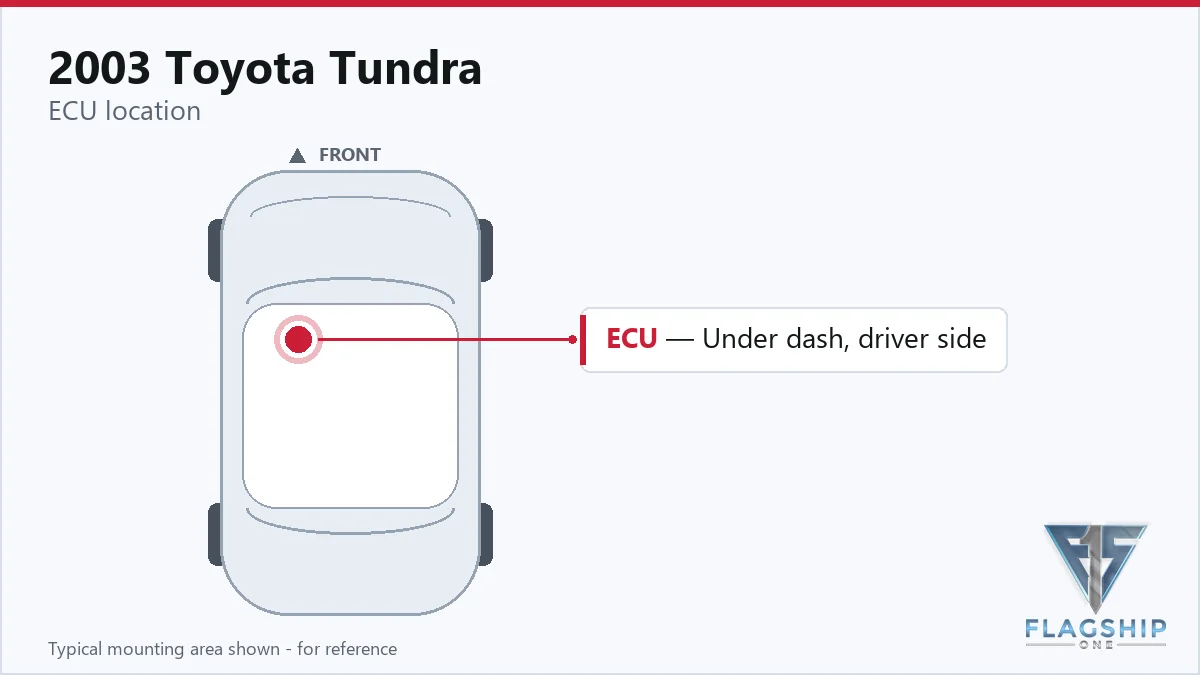
The engine ECU mounts within the instrument panel in your 2003 Toyota Tundra. Technicians must access this location behind the dashboard to disconnect the electrical harnesses and remove the mounting hardware during service. Removing and replacing the engine control module requires 0.5 hours. Additionally, powertrain control module removal and replacement requires 0.5 hours. After physical installation completes, the engine control module relearn procedure requires 0.5 hours. The powertrain control module relearn procedure also requires 0.5 hours to complete the configuration process and establish communication with other vehicle systems. These times reflect standard service conditions without additional complications.
| Operation | Configuration | Book Time |
|---|---|---|
| Engine Control Module Relearn | All configurations | 0.5 hr |
| Engine Control Module R&R | All configurations | 0.5 hr |
| Powertrain Control Module R&R | All configurations | 0.5 hr |
| Powertrain Control Module Relearn | All configurations | 0.5 hr |
Factory service procedures require performing relearn operations after installing new control modules in your 2003 Toyota Tundra. Specifically, the engine control module relearn requires 0.5 hours, and the powertrain control module relearn requires 0.5 hours. These procedures allow the processor to establish baseline parameters for engine management and transmission operation while syncing with existing vehicle systems. When you order from Flagship One, a VIN-programmed replacement unit arrives ready for installation with your specific calibration data already loaded, eliminating the need for these additional labor steps and reducing total service time.
A failing engine control module in your 2003 Toyota Tundra may produce intermittent no-start conditions where the engine cranks but fails to fire, particularly after the vehicle sits overnight or during hot weather. You might notice random stalling at stoplights or erratic transmission shifting that feels harsh or delayed compared to normal operation. The check engine light may illuminate with stored codes indicating internal processor faults rather than sensor circuit issues. Communication failures between your scan tool and the module often suggest internal circuit board damage or voltage spike effects. Additionally, internal processor fault P0606 may appear when the module’s central processing unit detects performance errors outside acceptable parameters.
The 2003 Toyota Tundra may store specific diagnostic trouble codes when the engine or powertrain control module detects internal hardware or software malfunctions affecting processor operation. These codes differ from sensor circuit faults because they indicate internal performance issues within the module itself rather than external wiring problems.
| Code | Meaning | Full Guide |
|---|---|---|
| P0606 | Module processor failure | Full P0606 guide → |
| P0607 | Module performance fault | Full P0607 guide → |
Factory procedures specify 0.5 hours for engine control module relearn and 0.5 hours for powertrain control module relearn. However, Flagship One modules arrive with your VIN-specific calibration preloaded, eliminating these steps.
The factory wiring guide places the engine ECU within the instrument panel behind the dashboard. Replacement typically requires 0.5 hours for removal and installation.
Code P0606 typically signals an internal processor fault within the engine control module. This often requires module replacement rather than wiring repair.
You may consider repairing your existing module or installing a quality replacement unit for your 2003 Toyota Tundra. While repair shops can sometimes address solder joint issues, internal processor damage usually necessitates replacement. Flagship One provides remanufactured units that match factory specifications and arrive ready for installation with your specific programming already applied, saving the additional 0.5 hours relearn time.
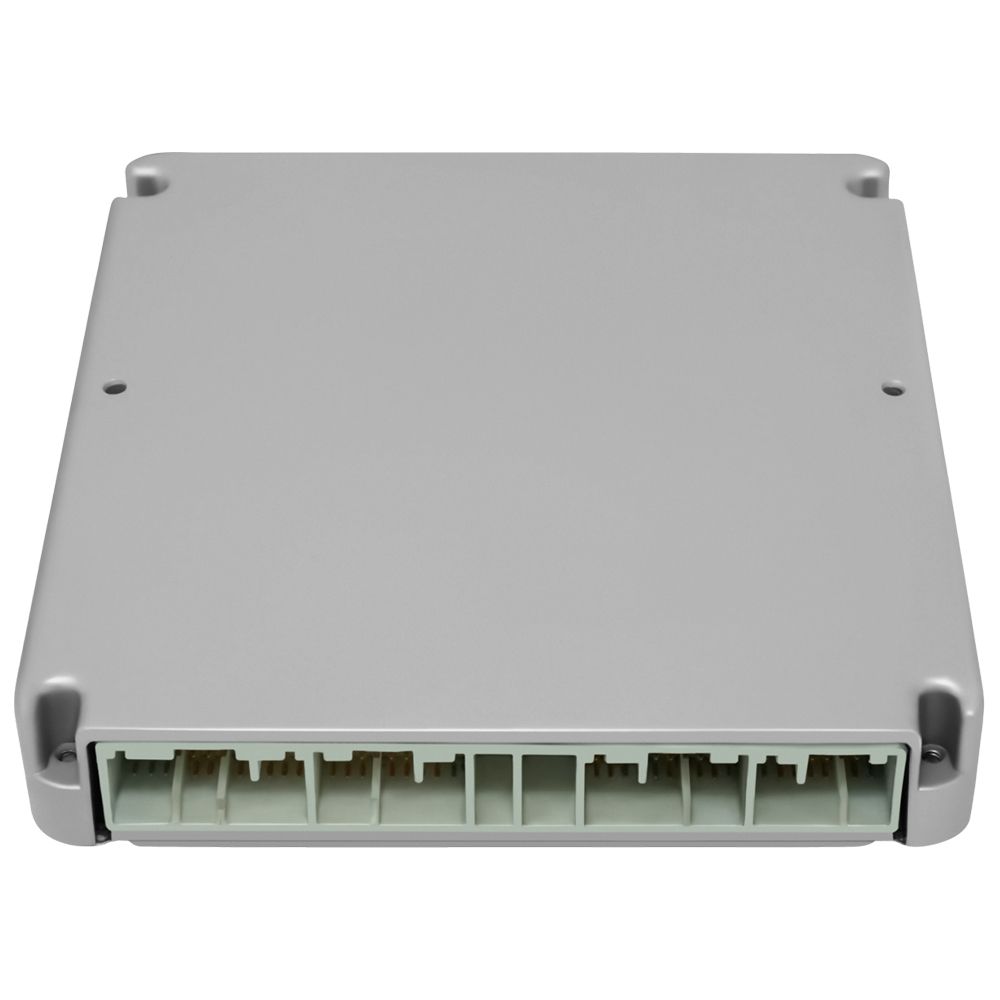
Flagship One stocks a refurbished, VIN-programmed PCM for the 2003 Toyota Tundra with a lifetime warranty, free shipping and no core charge. The full Toyota Tundra module lineup covers other engine configurations as well.
Addressing engine control module issues promptly helps maintain your 2003 Toyota Tundra’s reliability and performance. With proper diagnosis and a correctly programmed replacement, you can resolve intermittent stalling or starting problems and return to confident driving. Understanding the 0.5 hour replacement time and location behind the instrument panel helps you plan the repair effectively. Contact Flagship One to discuss options for your specific vehicle configuration.