
Last updated on August 25th, 2026 at 12:05 pm
The engine control module in your 2000 Toyota 4Runner with the 3.4L V6 manages fuel delivery, ignition timing, and emissions functions. When this computer fails, it may cause rough running, stalling, or a vehicle that refuses to start. The module stores adaptive learning data and communicates with sensors throughout the powertrain to keep operation smooth.
When your 2000 Toyota 4Runner starts acting up, the engine computer is often one of the last components you suspect. Yet a failing powertrain control module can produce confusing symptoms that mimic bad sensors, vacuum leaks, or fuel delivery problems. Understanding how this module fits into your vehicle helps you avoid throwing parts at a problem and gets you closer to a confident diagnosis.
Your 4Runner’s 3.4L engine relies on its engine control unit to process signals from dozens of sensors and adjust fuel, spark, and idle parameters in real time. If that computer develops internal faults, the drivability issues that follow can be intermittent and difficult to pin down. This guide walks through where the module lives, what replacement involves in terms of labor, and what the factory expects after a new unit is installed. You will also find relevant service bulletin information and practical tips to help extend the life of your engine computer.
The engine control module in your 2000 Toyota 4Runner serves as the central processor for the 3.4L powertrain. It continuously reads input from the mass airflow sensor, oxygen sensors, throttle position sensor, coolant temperature sender, and crankshaft position pickup, then adjusts injector pulse width and ignition advance to match current operating conditions. The module also regulates idle speed, monitors evaporative emissions, and controls the electric cooling fans.
Because this computer manages so many interdependent systems simultaneously, its failure rarely produces a single obvious symptom. You might experience a rough idle one day and a complete no-start the next. Drivers often replace upstream sensors first, only to find the root cause was the computer itself all along. When shopping for replacement engine computers for the 4Runner, it helps to understand that the module stores adaptive fuel trim data and idle learn values that gradually adjust to your engine’s wear patterns. A new or remanufactured unit needs those values reset and relearned before the vehicle will run at its best.
2000 Toyota 4Runner
OEM programmed ECM for your 2000 Toyota 4Runner — plug & play, no dealer visit.
Free shipping · Lifetime warranty
The factory wiring guide for your 2000 Toyota 4Runner positions the engine ECU inside the instrument panel area. Reaching the module requires removing the glove compartment door and the lower finish number two panel. These access steps expose the computer without requiring extensive disassembly of the dashboard structure.
According to published labor time guides, removing and reinstalling the powertrain control module takes 0.8 hours. An additional 0.5 hours covers the relearn procedure that follows installation. The same labor figures apply whether the service involves the engine control module or the powertrain control module, since both share identical book times for removal and relearn operations. No torque specifications were published alongside these labor figures, so technicians typically rely on standard plastic-to-metal fastener practices when securing the module bracket. Plan for a total service visit that accounts for both the physical swap and the computer relearning process.
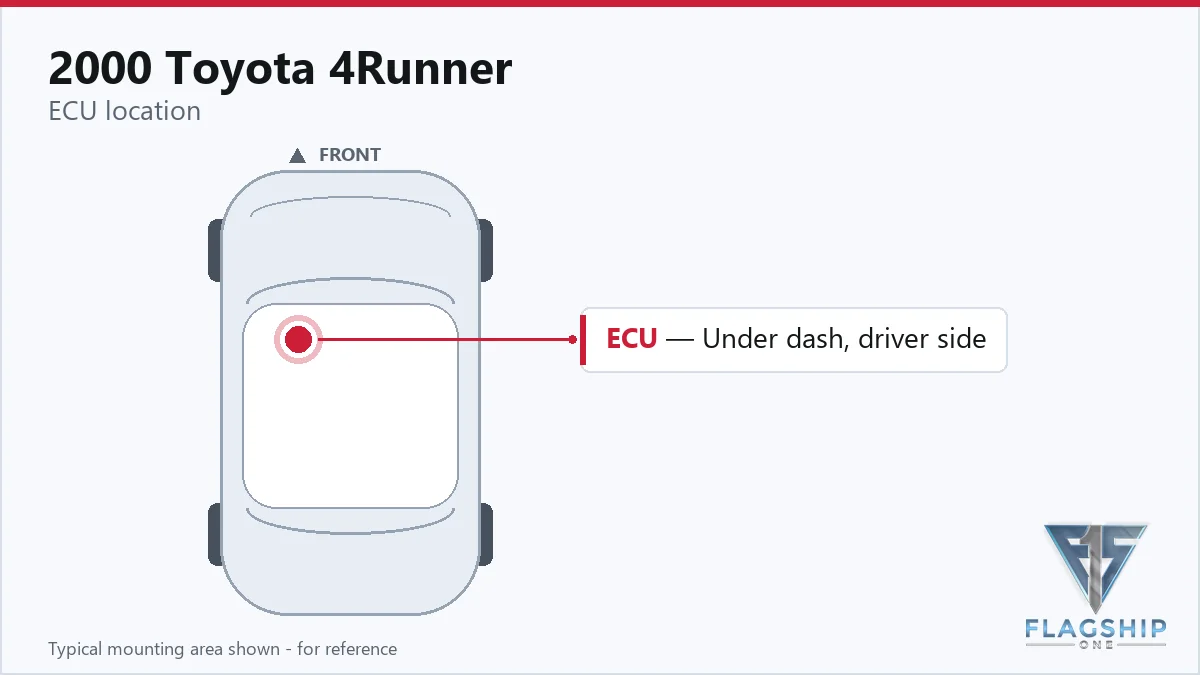
Work with the ignition off, and treat the module as static-sensitive: avoid touching the connector pins at any point.
| Operation | Configuration | Book Time |
|---|---|---|
| Engine Control Module Relearn | All configurations | 0.5 hr |
| Engine Control Module R&R | All configurations | 0.8 hr |
| Powertrain Control Module R&R | All configurations | 0.8 hr |
| Powertrain Control Module Relearn | All configurations | 0.5 hr |
After a module swap on your 2000 Toyota 4Runner, the factory procedure calls for a relearn process that takes 0.5 hours of labor time. This relearn allows the replacement computer to establish baseline idle parameters, fuel trim values, and throttle position calibration specific to your 3.4L engine. Without completing this step, the vehicle may idle erratically or exhibit drivability quirks until the module gradually adapts on its own over several drive cycles.
Flagship One eliminates this concern by shipping a VIN-programmed replacement unit that already contains the necessary calibration data for your specific vehicle. Because the programming matches your 4Runner’s configuration from the start, the relearn labor time is effectively built into the product rather than added at the shop.
A failing engine computer in the 2000 Toyota 4Runner can produce a wide range of drivability symptoms that often overlap with other common failures. One frequent sign is a no-start condition where the engine cranks but never fires, despite healthy fuel pressure and spark. Intermittent stalling at idle or deceleration is another hallmark, particularly when the module loses its ability to maintain stable idle control.
You may also encounter persistent misfire codes that do not resolve after replacing ignition components, or fuel trim readings that swing rich and lean without an obvious vacuum leak. Some owners report that the scan tool cannot establish communication with the computer at all, which typically points to an internal module failure rather than a wiring issue. Transmission shifting irregularities can also surface when the powertrain control module loses its adaptive learning data or develops internal processor faults. When several of these symptoms appear together, the engine computer becomes a strong candidate for further testing.
Toyota issued service bulletin number TC002-03, titled “ECM Reset Memory Function,” covering all 2000 through 2005 Toyota models along with 2004 and 2005 Scion vehicles. This bulletin was revised and addresses the procedure for resetting the engine control module’s learned memory values. For your 2000 Toyota 4Runner, this bulletin is directly relevant because it outlines the factory-approved method for clearing adaptive data stored within the ECM.
The reset function described in TC002-03 typically comes into play after a module has been replaced or when a technician wants to erase fuel trim and idle adaptations that may have learned around a problem. Following the bulletin’s procedure ensures the computer starts from a clean baseline, which often resolves lingering drivability issues after repairs. This bulletin reinforces the importance of proper relearn procedures following any engine computer service.
| Bulletin | Subject | What It Addresses |
|---|---|---|
| TC002-03 | :TC002-03: ECM Reset Memory Function: All 00-05 Toyota & 04-05 Scion (Revised) | — |
Published labor guides list 0.8 hours for removing and reinstalling the module, plus 0.5 hours for the relearn procedure. The module is accessed through the glove compartment door and lower finish panel, so the physical swap is relatively straightforward.
Yes, the factory requires a relearn procedure after installation. However, Flagship One ships units that are already VIN-programmed to your specific vehicle, which means the calibration work is completed before the part arrives at your door.
Bulletin TC002-03 addresses the ECM reset memory function for all 2000 through 2005 Toyota vehicles. It outlines the factory-approved procedure for clearing adaptive learning values from the engine control module, which is relevant after module replacement or when erasing learned data that may have compensated for a prior fault.
When your 2000 Toyota 4Runner needs an engine computer, you have two main paths: repair the existing module or replace it with a remanufactured unit. Repairing is sometimes viable for specific circuit faults, but a replacement often makes more sense given the labor involved in repeated removal. A VIN-programmed unit from Flagship One arrives ready to install, saving the 0.5 hours of relearn time that a blank module would require at the shop.
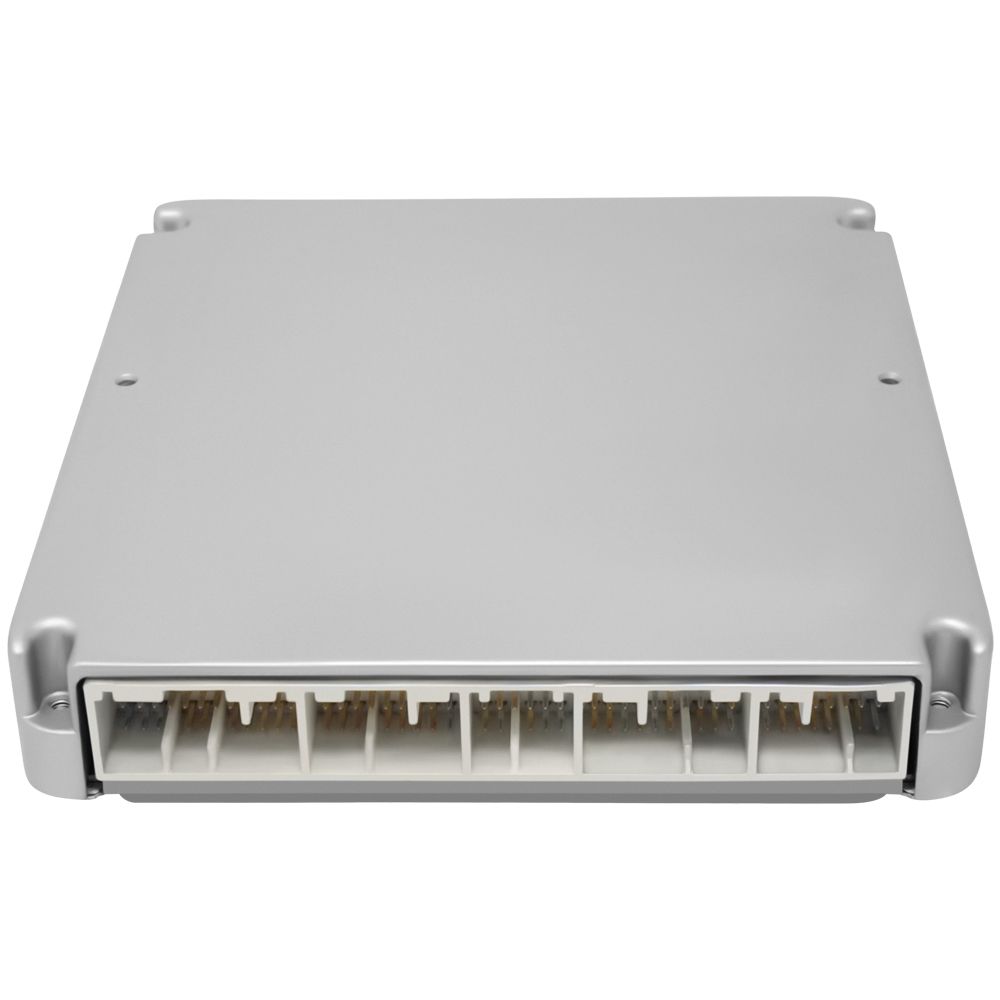
Flagship One stocks a refurbished, VIN-programmed PCM for the 2000 Toyota 4Runner with a lifetime warranty, free shipping and no core charge. The full Toyota 4Runner module lineup covers other engine configurations as well.
Your 2000 Toyota 4Runner depends on a healthy engine control module to keep the 3.4L running smoothly. Whether you are dealing with stalling, no-start conditions, or communication faults, understanding the module’s location, labor times, and relearn requirements helps you make an informed repair decision. A VIN-programmed replacement from Flagship One simplifies the process by eliminating post-install programming steps. Take time to verify your symptoms before committing to a replacement.