
Last updated on August 25th, 2026 at 12:06 pm
In the 1998 Toyota Corolla, the engine control module manages fuel injection, ignition timing, and emissions controls. When this unit fails, the engine may not start, run roughly, or set diagnostic codes due to lost communication or internal processor errors.
When a 1998 Toyota Corolla develops a sudden no-start condition, intermittent stalling, or a check engine light that refuses to clear, the engine control module or powertrain control module often becomes the focus of diagnosis. These computers govern fuel delivery, spark timing, and transmission behavior, so any internal fault can mimic a variety of mechanical problems. This article explains what each module does, where it lives, how long the book times suggest for removal and reinstallation, and what programming steps the factory expects after a swap. You will also learn which symptoms commonly point toward module failure, how to interpret the most relevant trouble codes, and what preventive habits help extend the life of these components. By the end, you should have a clear picture of whether a repair, a reprogrammed exchange unit, or a new computer makes the most sense for your situation.
The engine control module in the 1998 Toyota Corolla acts as the central processor for the 1.8L four-cylinder engine, constantly reading sensors such as the mass airflow, throttle position, and oxygen sensors to calculate precise injector pulse widths and ignition advance. It also manages idle speed, evaporative emissions, and the fuel pump relay. The powertrain control module, when equipped, adds transmission shift logic and torque converter lockup control to those duties. Both units store adaptive learning values that compensate for engine wear and component tolerances; if the processor or its memory becomes corrupted, the vehicle may exhibit hard starting, rough idle, sudden power loss, or a complete failure to communicate with a scan tool. Because the modules are sealed against moisture and vibration, internal circuit failure is less common than connector corrosion or voltage spikes, but it does happen. When replacement becomes necessary, sourcing replacement engine computers for the Corolla that match the exact calibration ensures the adaptive values start from a known baseline and the vehicle returns to factory drivability without extended relearn cycles.
1998 Toyota Corolla
OEM programmed replacements — plug & play, no dealer visit.
Find yours by year, make & model →
Free shipping · Lifetime warranty
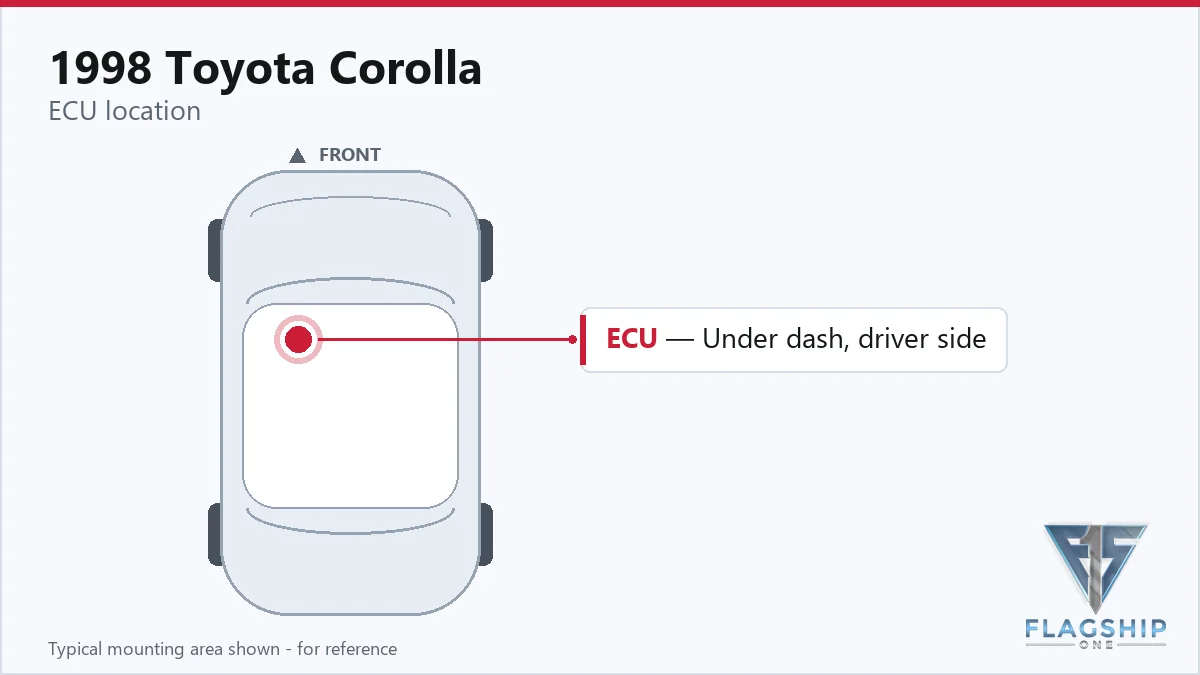
According to the factory wiring guide, the engine ECU is mounted within the instrument panel, which means access requires removing the lower dash trim and possibly the knee bolster. The book time for ECM removal and installation is 0.6 hours, while the separate relearn procedure adds another 0.5 hours. If the vehicle uses a separate powertrain control module, its removal and installation is listed at 1.3 hours with an additional 0.5 hours for the PCM relearn. No torque specifications are provided for the module fasteners in the available data, so technicians should follow standard practice for electronic module mounting screws. Careful handling of the wiring harness connectors is critical, as the pins are delicate and the connector seals must remain intact to prevent future moisture intrusion.
| Operation | Configuration | Book Time |
|---|---|---|
| Engine Control Module Relearn | All configurations | 0.5 hr |
| Engine Control Module R&R | All configurations | 0.6 hr |
| Powertrain Control Module R&R | All configurations | 1.3 hr |
| Powertrain Control Module Relearn | All configurations | 0.5 hr |
After a module is physically installed, the factory service procedure requires a relearn sequence that allows the computer to recalibrate its adaptive parameters to the specific engine and transmission. For the ECM this takes 0.5 hours, and for the PCM another 0.5 hours. These steps normally involve a scan tool commanded initialization followed by a prescribed drive cycle. Flagship One supplies a VIN-programmed replacement unit that arrives with the correct calibration and adaptive data already loaded, so the relearn process is effectively completed before the part reaches the shop. This can reduce total labor time and eliminate the risk of an incomplete drive cycle causing drivability complaints after the repair.
A failing engine control module in the 1998 Toyota Corolla often reveals itself through a cluster of electrical and drivability symptoms. The engine may crank but refuse to start because the injector driver or ignition coil control circuits are not receiving the correct signals. Intermittent stalling at idle or during deceleration can occur when the processor loses its ability to maintain the idle air control valve position. Rough running, hesitation on acceleration, and sudden loss of power may accompany corrupted fuel trim values stored in non-volatile memory. In some cases the check engine light illuminates with codes related to internal control module memory, processor performance, or communication bus faults. A dead scan tool connection — where the tool powers up but cannot establish communication with the ECM — strongly suggests a power, ground, or internal bus failure inside the module. Transmission-related symptoms such as harsh shifts, delayed engagement, or failure to lock up the torque converter can point to a powertrain control module issue when the vehicle is equipped with one. Because these symptoms overlap with sensor failures, wiring faults, and mechanical problems, thorough diagnosis including voltage drop tests on power and ground circuits is essential before condemning the computer.
Start by verifying power and ground at the ECM connector with a multimeter, then check for communication with a scan tool. If the tool cannot connect and powers/grounds are good, the module itself is suspect. Sensor faults typically set specific circuit codes rather than internal module codes.
The factory relearn procedure can be performed with any capable OBD-II scan tool that supports Toyota bidirectional controls. However, a VIN-programmed exchange unit from a specialist supplier arrives pre-calibrated, eliminating the need for on-site programming.
The published book time for ECM removal and installation is 0.6 hours, with an additional 0.5 hours for the required relearn procedure. Actual time may vary based on dash disassembly difficulty and technician experience.
A used module will likely have different calibration and adaptive values, which can cause drivability issues or a no-start condition. It must be reprogrammed to match your vehicle’s VIN and specifications, or you can purchase a pre-programmed unit.
Codes such as P0601 (internal control module memory checksum error), P0604 (internal control module RAM error), and P0606 (ECM/PCM processor fault) point directly to module hardware problems rather than external sensor circuits.
If diagnosis confirms a failed computer, you can choose between sending your original module out for repair, installing a refurbished exchange unit, or fitting a new pre-programmed replacement. Repair services may take several days and carry a risk of recurring faults if the root cause is not fully addressed. A refurbished unit from a reputable supplier offers a balance of cost and reliability, while a new VIN-matched computer provides the longest warranty and eliminates programming steps entirely. Consider your timeline, budget, and how long you plan to keep the 1998 Toyota Corolla when deciding.
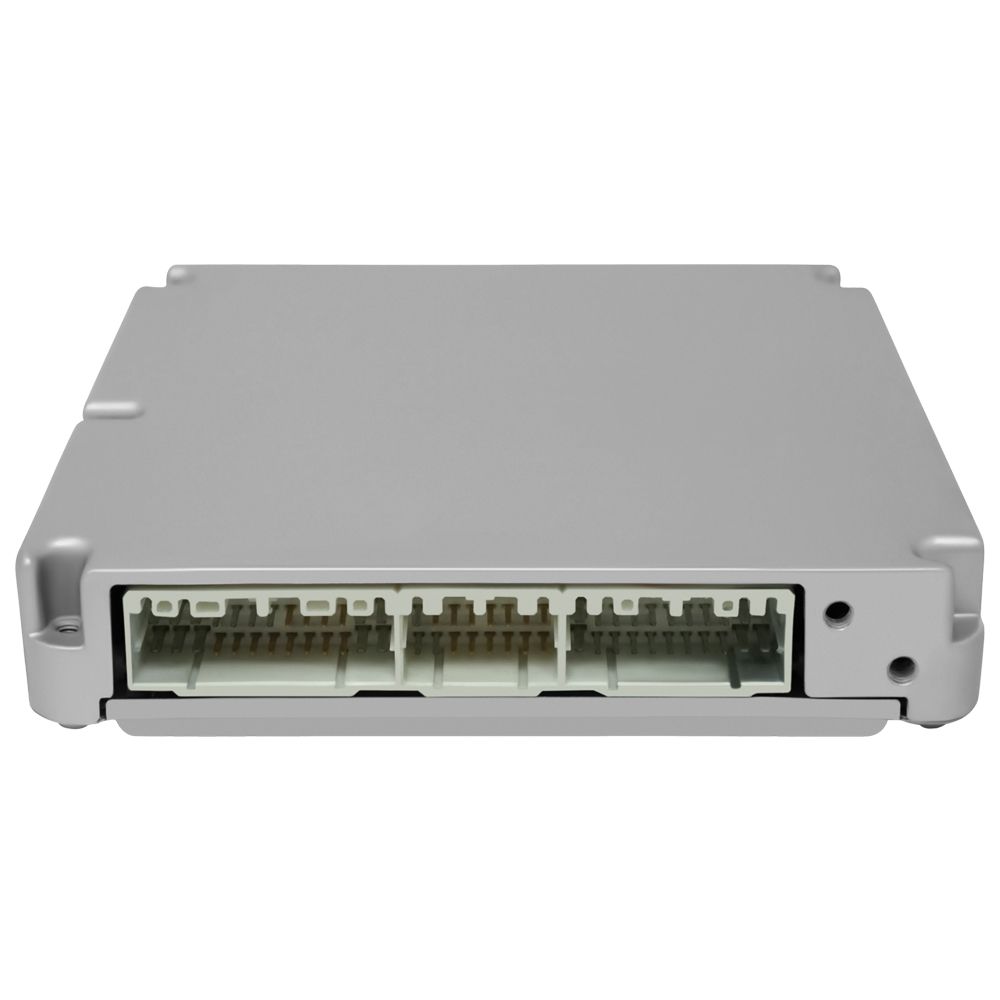
Flagship One stocks a refurbished, VIN-programmed PCM for the 1998 Toyota Corolla with a lifetime warranty, free shipping and no core charge. The full Toyota Corolla module lineup covers other engine configurations as well.
The 1998 Toyota Corolla relies on a well-functioning engine control module to deliver the smooth, efficient performance the model is known for. Understanding the module’s role, location, and the labor involved in replacement helps you make an informed repair decision. Whether you opt for a repair, a refurbished exchange, or a new pre-programmed unit, addressing the issue promptly will restore dependable operation and prevent further drivability complaints.