
Last updated on August 25th, 2026 at 12:07 pm
The engine control module (ECM) in the 1996 Toyota Corolla 1.6L manages fuel injection, ignition timing, and emissions. Failure can cause no-start, stalling, poor fuel economy, and check engine light. It is located in the instrument panel and requires programming after replacement.
If you own a 1996 Toyota Corolla with the 1.6L engine, you may eventually face issues with the engine control module (ECM) or powertrain control module (PCM). These modules are the brains of your vehicle’s engine management system, controlling fuel delivery, ignition timing, and emissions. Over time, age, heat, and electrical stress can cause them to fail. This guide explains what these modules do, where they are located, how replacement works, and what programming steps are required. You will learn the common symptoms of a failing ECM, the labor times involved, and how a pre-programmed replacement unit can simplify the repair. Whether you are a DIY owner or a professional technician, this information helps you make an informed decision about restoring your Corolla’s performance and reliability.
1996 Toyota Corolla 1.6L
OEM programmed ECM for your 1996 Toyota Corolla 1.6L — plug & play, no dealer visit.
Free shipping · Lifetime warranty
The engine control module (ECM) in your 1996 Toyota Corolla 1.6L is a dedicated computer that interprets sensor data to adjust fuel injector pulse width, spark timing, and idle speed. It also manages the evaporative emissions system and monitors oxygen sensor feedback for closed-loop operation. The powertrain control module (PCM) on this vehicle integrates engine and transmission control, handling shift points and torque converter lockup. When either module fails, the engine may run poorly or not at all. replacement ECMs for the Corolla are available from aftermarket suppliers, but they must match the original specifications and be programmed with the correct calibration data. The ECM communicates with sensors like the crankshaft position sensor, throttle position sensor, and coolant temperature sensor to maintain optimal performance. Without a functioning ECM, the Corolla cannot start or run properly, making it a critical component for daily driving.
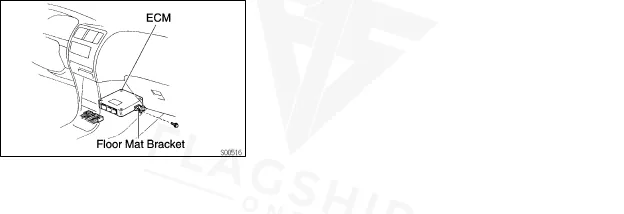
According to the factory wiring guide, the engine ECU in the 1996 Toyota Corolla 1.6L is located in the instrument panel. Typically, this means it is mounted behind the glove box or lower dashboard on the passenger side. Access requires removing the glove box assembly and possibly a metal bracket. The ECM R&R (remove and replace) labor time is 1.1 hours, while the PCM R&R is 1.3 hours. After installation, a relearn procedure takes an additional 0.5 hours. The module is secured with bolts or screws, and the wiring harness connectors have locking tabs that must be released carefully. No special tools are needed beyond basic hand tools, but take care not to damage the connector pins or the module housing.
| Operation | Configuration | Book Time |
|---|---|---|
| Engine Control Module Relearn | All configurations | 0.5 hr |
| Engine Control Module R&R | All configurations | 1.1 hr |
| Powertrain Control Module R&R | All configurations | 1.3 hr |
| Powertrain Control Module Relearn | All configurations | 0.5 hr |
After replacing the ECM or PCM in your 1996 Toyota Corolla 1.6L, the factory procedure requires a relearn process that takes 0.5 hours. This step allows the module to synchronize with the vehicle’s immobilizer system (if equipped) and learn idle and fuel trim values. Without this relearn, the engine may run poorly or set trouble codes. a VIN-programmed replacement unit from Flagship One arrives with the correct calibration already loaded, so the relearn step is already completed. This means you can install the module and start the engine without needing a dealer visit or specialized scan tool. The programming covers the vehicle’s VIN, immobilizer data, and all software parameters, saving you time and ensuring a plug-and-play installation.
A failing ECM or PCM in the 1996 Toyota Corolla 1.6L often presents with a no-start condition where the engine cranks but does not fire. You may also experience intermittent stalling, rough idle, or hesitation during acceleration. The check engine light may illuminate with generic or module-specific trouble codes. Another common symptom is a complete loss of communication with a scan tool, indicating the module is not responding. Transmission shifting may become erratic or harsh if the PCM is involved. In some cases, the engine may run but with poor fuel economy or misfire codes that do not trace to a specific cylinder. These issues can be intermittent at first, making diagnosis tricky. If you notice any of these symptoms, checking the ECM and its connections should be a priority.
Common signs include a no-start condition, stalling, or a check engine light that stays on. You may also notice poor fuel economy or a scan tool that cannot communicate with the module. A professional diagnosis with a multimeter and scan tool can confirm the fault.
Yes, if you have basic mechanical skills and tools. The ECM is located behind the instrument panel, typically behind the glove box. The job takes about 1.1 hours for the ECM itself, plus 0.5 hours for the relearn procedure. A pre-programmed unit simplifies the process.
The ECM (engine control module) manages engine functions like fuel and ignition. The PCM (powertrain control module) also controls the transmission. In this vehicle, both are separate units with different labor times: 1.1 hours for ECM R&R and 1.3 hours for PCM R&R.
Yes, the factory procedure requires a relearn after installation to synchronize the module with the vehicle. This takes 0.5 hours. However, a VIN-programmed unit from Flagship One comes ready to install, so no additional programming is needed.
Common causes include voltage spikes from a failing alternator or bad battery, moisture intrusion, corrosion on connectors, and age-related component degradation. Heat from the engine bay can also shorten the module’s lifespan.
When your 1996 Toyota Corolla 1.6L needs a new ECM or PCM, you have two main options: repair the original module or replace it with a refurbished unit. Repair may be possible for simple issues like bad capacitors, but internal failures often require a replacement. A refurbished module that is pre-programmed with your VIN offers a reliable, cost-effective solution that avoids dealer programming fees and gets you back on the road quickly.
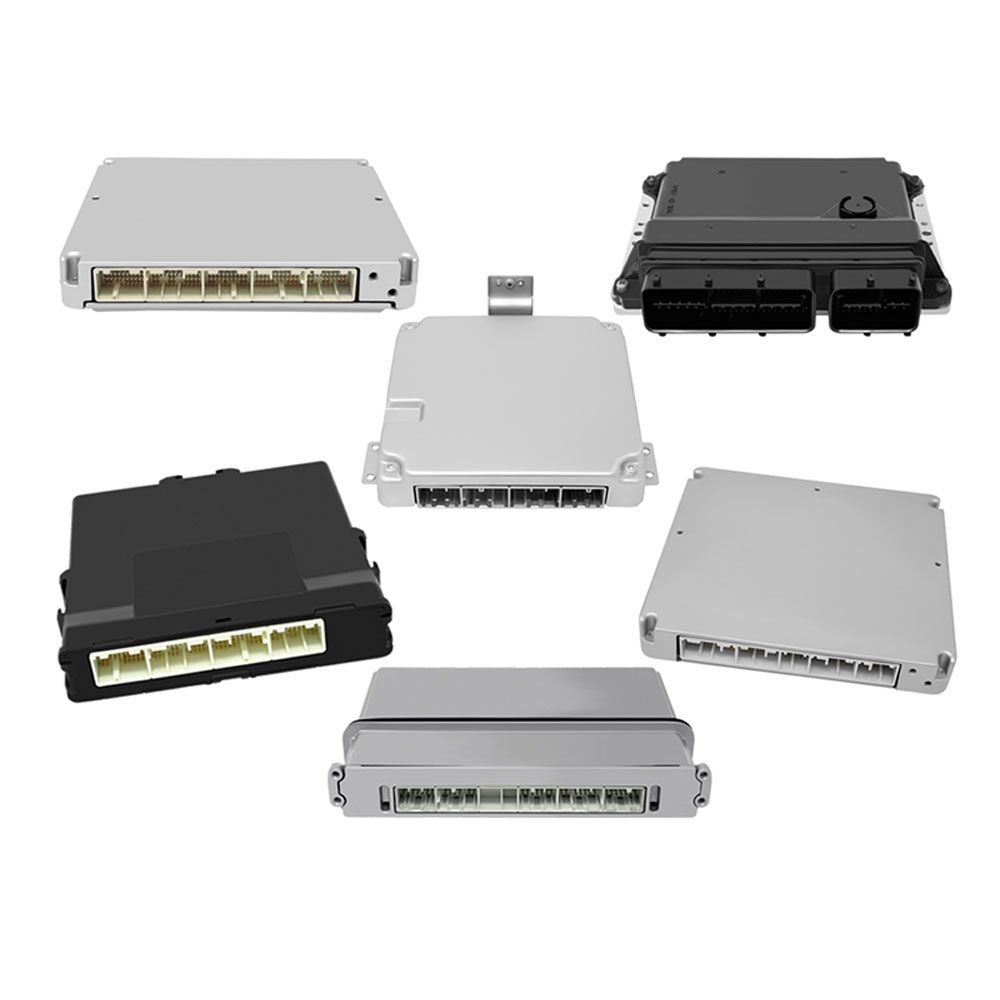
Flagship One stocks a refurbished, VIN-programmed PCM for the 1996 Toyota Corolla with a lifetime warranty, free shipping and no core charge. The full Toyota Corolla module lineup covers other engine configurations as well.
The 1996 Toyota Corolla 1.6L relies on its ECM and PCM for proper engine and transmission operation. Understanding the symptoms, location, and replacement process helps you address problems early. Whether you choose a repair or a pre-programmed replacement, ensuring the module is correctly installed and programmed is key to restoring your Corolla’s performance and reliability.