
Last updated on August 25th, 2026 at 12:07 pm
The engine control module installed in your 1996 Toyota Supra manages fuel injection, ignition timing, and emissions systems for the 3.0L engine. Failure often stems from heat cycling, voltage spikes, or internal solder joint fatigue, resulting in erratic engine behavior or complete operational shutdown.
When your 1996 Toyota Supra develops mysterious electrical gremlins or refuses to start altogether, the engine control module often sits at the center of the diagnosis. This onboard computer coordinates nearly every aspect of engine management for your 3.0L powerplant, from precisely metering fuel delivery to controlling ignition advance. Understanding how this component functions, where technicians access it, and what replacement involves helps you make informed decisions about repairs. Whether you face intermittent stalling, persistent check-engine illumination, or complete failure to communicate with scan tools, knowing the facts about module replacement saves both time and money. This guide explains the specific role of the engine computer in your Supra, details the exact location behind the instrument panel, and breaks down the factory labor procedures involved. You will learn why simple swap-and-go replacements rarely succeed without proper programming, and how professional preparation eliminates additional shop time. By the end, you will understand the full scope of replacing this critical component, including realistic labor expectations and the technical steps required to restore proper engine management to your vehicle. Armed with this knowledge, you can discuss repair options confidently with your technician.
1996 Toyota Supra 3.0L
OEM programmed replacements — plug & play, no dealer visit.
Find yours by year, make & model →
Free shipping · Lifetime warranty
The engine control module in your 1996 Toyota Supra serves as the central processing unit for the entire powertrain management system. Mounted within the interior cabin, this solid-state computer continuously interprets data streams from numerous sensors positioned throughout the 3.0L engine bay and exhaust system. It calculates optimal fuel injection pulse widths, ignition timing curves, and idle speed settings hundreds of times per second based on real-time operating conditions. The module also stores adaptive learning values that fine-tune engine behavior to compensate for component wear and environmental changes over time. When you purchase replacement modules for the Supra, you are obtaining the hardware that houses these critical calibration parameters. Beyond basic engine management, this computer interfaces with the automatic transmission control systems on applicable models, coordinating shift points and torque converter lockup strategies. It monitors emissions-related components, triggering warning indicators when catalytic converter efficiency or evaporative system integrity falls outside acceptable parameters. The module maintains constant communication with the diagnostic port, allowing technicians to retrieve operational data and stored fault information. Because this computer integrates so deeply with vehicle operations, any internal malfunction typically manifests as drivability concerns ranging from subtle performance degradation to complete operational failure. Heat stress from the engine compartment, voltage fluctuations from charging system issues, and moisture intrusion through damaged seals rank among the common causes of internal circuit board damage. Understanding that this component functions as the brain of your vehicle underscores why replacement requires both mechanical precision and electronic expertise to ensure proper integration with existing systems.
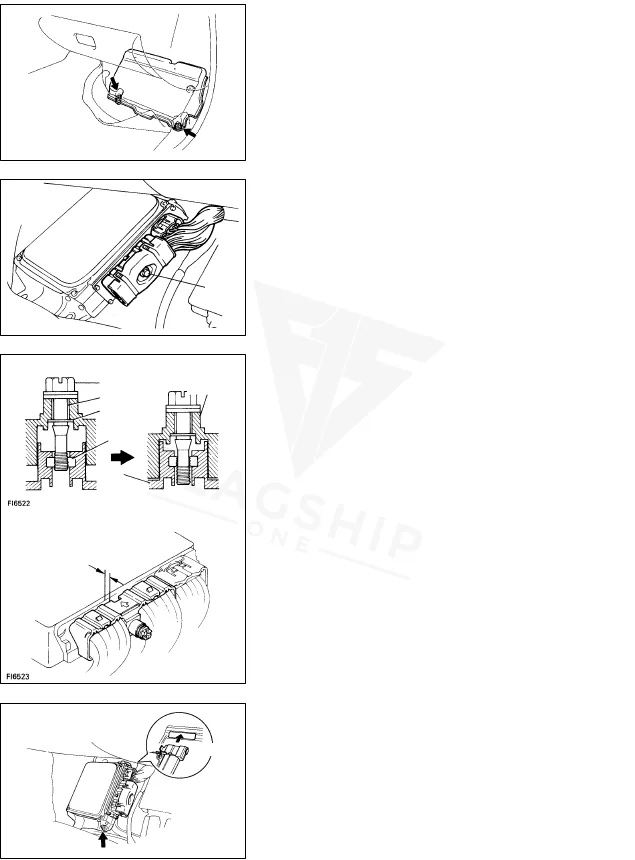
According to factory service documentation, the engine computer on your 1996 Toyota Supra installs within the instrument panel assembly behind the dashboard. This interior mounting location protects the sensitive electronics from engine compartment heat and fluid contamination while maintaining relatively straightforward access for qualified technicians. To reach the module, service procedures typically require removing lower dash panels and potentially the glove box assembly depending on specific trim configurations. The book time allocated for removing and replacing the engine control module stands at 1.0 hours, reflecting the careful handling required when disconnecting multiple harness connectors and sliding the unit from its mounting bracket. Similarly, powertrain control module replacement carries an identical 1.0 hour labor allowance. After physical installation, the factory procedure mandates a relearn process requiring 0.5 hours for the engine control module, and the same 0.5 hour interval applies to powertrain control module relearning. These procedures allow the computer to establish baseline operating parameters and synchronize with existing vehicle systems. Technicians must exercise caution when manipulating the wiring harness to avoid pin damage or connector stress during the exchange.
| Operation | Configuration | Book Time |
|---|---|---|
| Engine Control Module Relearn | All configurations | 0.5 hr |
| Engine Control Module R&R | All configurations | 1.0 hr |
| Powertrain Control Module R&R | All configurations | 1.0 hr |
| Powertrain Control Module Relearn | All configurations | 0.5 hr |
Factory repair procedures specify that any new engine or powertrain control module installed in your 1996 Toyota Supra requires comprehensive programming before the vehicle will start or run correctly. This process involves writing vehicle-specific calibration data, security codes, and immobilizer information to the blank computer’s memory. Dealerships and independent shops typically charge additional labor time for this procedure, which occurs separately from the physical installation process. However, when you order a VIN-programmed replacement unit from Flagship One, these critical software preparations arrive already completed. Our technicians pre-load the module with your Supra’s specific calibration files, security synchronizations, and learned values matched to your exact vehicle identification number. This preparation eliminates the need for your mechanic to perform complex flashing procedures or lengthy security handshake protocols. The module arrives ready for immediate installation, allowing your technician to focus solely on the physical exchange and the standard 0.5 hour relearn procedure outlined in service manuals. This approach significantly reduces total shop time and eliminates the risk of programming errors that could otherwise trigger additional diagnostic charges or return visits.
Recognizing early warning signs of engine computer failure in your 1996 Toyota Supra helps prevent roadside breakdowns and expensive towing charges. The most obvious symptom involves a complete failure to start, where the engine cranks normally but never achieves combustion despite adequate fuel pressure and spark. Intermittent stalling often indicates thermal issues within the module, where expansion and contraction of internal circuit boards disrupt signal processing until the component cools. You may notice erratic idle behavior, sudden surging during steady cruise, or unexplained misfire codes that persist despite replacing ignition components and fuel injectors. Communication failures present another clear indicator; when your diagnostic scanner cannot establish a connection with the engine control module, or displays no response messages, the computer’s internal network interface may have failed. Automatic transmission models may exhibit harsh shifting, delayed engagement, or unexpected gear selection changes when the module responsible for coordinating powertrain functions begins deteriorating. Check engine illumination with stored codes related to voltage references, sensor grounds, or internal memory errors often point toward module hardware rather than peripheral sensor failures. Some owners report that the vehicle operates normally when cold but develops problems as the engine bay heats up, suggesting solder joint fractures that open with thermal expansion. Additionally, you might experience simultaneous failures of multiple unrelated systems, such as the tachometer dropping to zero while the engine continues running, or the fuel pump failing to prime during key-on sequences. These cascading failures typically stem from the central processor losing ability to manage multiple outputs simultaneously.
Factory documentation places the engine control module within the instrument panel assembly behind the dashboard. Technicians typically access the unit by removing lower trim panels and potentially the glove box to reach the mounting bracket.
Service manuals list 1.0 hours for the removal and replacement procedure alone. An additional 0.5 hours applies to the required relearn process, meaning the electronic portion of the repair requires separate consideration from the physical exchange.
While the physical installation involves standard hand tools, the replacement module requires VIN-specific programming that demands specialized flashing equipment. Without this programming, the vehicle typically will not start or will run in reduced-power mode.
Thermal expansion often reveals internal solder joint failures or circuit board cracks within the engine computer. As the module heats up, damaged connections separate and disrupt signal processing, causing stalls that resolve temporarily after cooling.
While dealerships possess factory programming tools, properly pre-programmed replacement units arrive ready for installation at any qualified repair facility. This eliminates the need for dealership-specific flashing procedures and reduces total repair time.
When facing engine computer failure on your 1996 Toyota Supra, you typically choose between attempting board-level repair of your existing module or installing a fully prepared replacement. Repair services address specific solder failures but cannot guarantee long-term reliability, while refurbished units provide tested hardware with updated components. Consider your timeline, budget constraints, and the value of pre-programmed convenience when selecting the appropriate solution for your 3.0L sports car.
Flagship One stocks a refurbished, VIN-programmed PCM for the 1996 Toyota Supra with a lifetime warranty, free shipping and no core charge. The full Toyota Supra module lineup covers other engine configurations as well.
Understanding the role and replacement requirements of the engine control module helps you maintain your 1996 Toyota Supra with confidence. With proper preparation and correct programming, you can restore reliable engine management to your 3.0L vehicle and avoid repeated trips to the repair shop. Consider consulting with a qualified technician to discuss whether a pre-programmed replacement suits your specific situation and driving needs.