
Last updated on August 25th, 2026 at 12:10 pm
The engine control module (ECM) in your 1994 Nissan Altima manages fuel delivery, ignition timing, and emissions systems. Failure may cause erratic engine behavior, stalling, or a no-start condition without triggering obvious warning signs.
If your 1994 Nissan Altima has been running poorly or refusing to start, the engine control module (ECM) could be the culprit. This small but critical computer manages everything from fuel injection to ignition timing, ensuring smooth operation. When it fails, symptoms can range from subtle drivability issues to complete engine shutdown. Replacing the ECM in this vehicle is straightforward, but the process involves more than just swapping parts—proper programming is essential to restore full functionality. Understanding the steps involved, from locating the module to completing the relearn procedure, can help you avoid unnecessary delays. Whether you’re tackling the job yourself or working with a shop, knowing what to expect ensures your Altima runs reliably again.
The engine control module in your 1994 Nissan Altima acts as the brain of the engine, interpreting signals from sensors to optimize performance. It adjusts fuel mixture, spark timing, and idle speed in real time, balancing power and efficiency. Without a properly functioning ECM, the engine may run roughly, consume excess fuel, or fail to start altogether. Over time, heat, vibration, or electrical issues can degrade the module, leading to intermittent or permanent failures. Replacing it with replacement engine computers for the Altima ensures compatibility and restores factory-level control. While the part itself is relatively simple, its role in maintaining drivability makes it one of the most important components under the hood.
1994 Nissan Altima
OEM programmed ECM for your 1994 Nissan Altima — plug & play, no dealer visit.
Free shipping · Lifetime warranty
The ECM in the 1994 Nissan Altima is tucked behind an access panel at the front of the center console, near the driver’s feet. To replace it, you’ll need to remove the panel, disconnect the wiring harness, and unbolt the module from its mount. The process is straightforward but requires care to avoid damaging connectors or surrounding components. According to factory labor estimates, removing and reinstalling the ECM typically takes about 0.7 hours. Once the new unit is in place, the wiring harness is reconnected, and the access panel is secured. While the physical swap is quick, additional steps are needed to ensure the module communicates correctly with the vehicle’s systems.
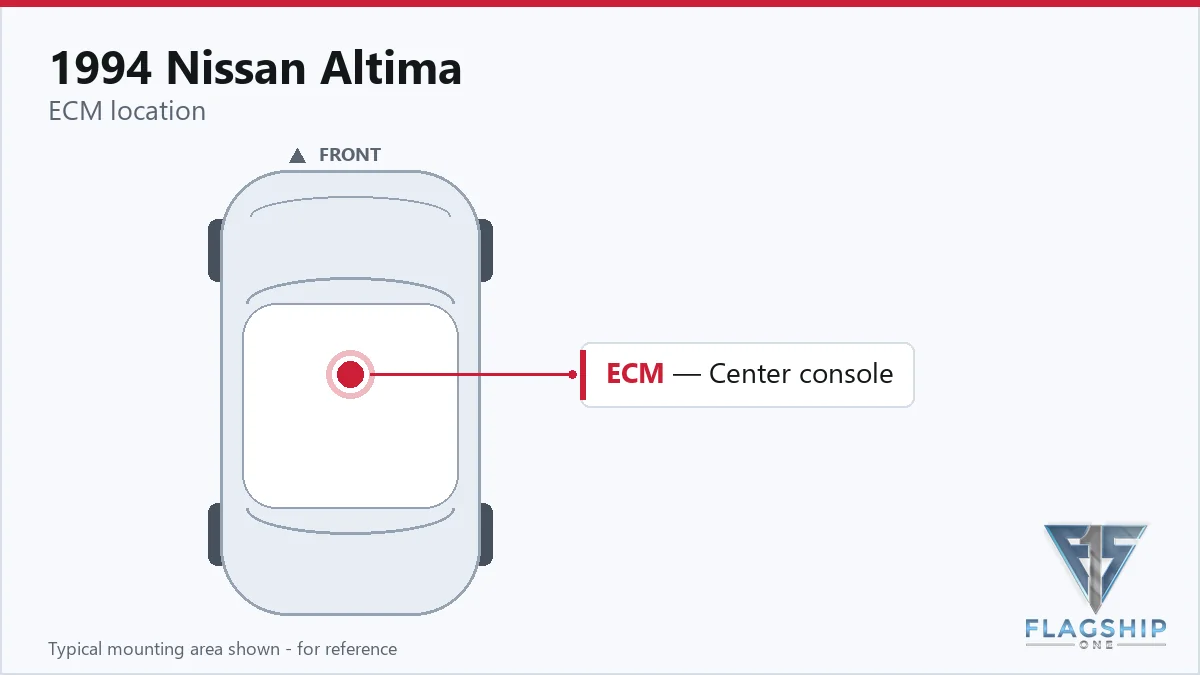
Work with the ignition off, and treat the module as static-sensitive: avoid touching the connector pins at any point.
| Operation | Configuration | Book Time |
|---|---|---|
| Powertrain Control Module R&R | All configurations | 0.7 hr |
| Powertrain Control Module Relearn | All configurations | 0.5 hr |
| Engine Control Module R&R | All configurations | 0.7 hr |
| Engine Control Module Relearn | All configurations | 0.5 hr |
After installing a new ECM in your 1994 Nissan Altima, the factory procedure requires a relearn process to synchronize the module with the engine and transmission. This step, which typically takes about 0.5 hours, ensures proper fuel delivery, ignition timing, and idle control. Without it, the vehicle may run poorly or fail to start. Flagship One units arrive as a VIN-programmed replacement unit, eliminating the need for this additional step. The module is pre-configured to match your Altima’s specifications, so you can install it and drive immediately. This saves time and reduces the risk of programming errors, which can occur if the relearn procedure isn’t performed correctly.
When the ECM in your 1994 Nissan Altima begins to fail, symptoms can vary but often include stalling, rough idling, or a no-start condition. The engine may hesitate during acceleration or run unevenly at highway speeds. In some cases, the vehicle might start but immediately die, as if the fuel pump or ignition system isn’t working. Poor fuel economy and increased emissions are also common, as the ECM struggles to maintain the correct air-fuel ratio. Another telltale sign is erratic behavior after the engine warms up, such as surging or sudden loss of power. If the module fails completely, the engine may crank but not start at all. Some owners report seeing a check engine light for internal control module faults, though pre-OBD-II vehicles like the Altima may not always trigger a warning. If your scan tool shows no communication with the ECM, that’s a strong indicator of a failed module.
Nissan issued several service bulletins addressing ECM-related issues in the 1994 Altima. Bulletin NTB97026 describes instances where the malfunction indicator lamp (MIL) illuminates due to a multi-cylinder misfire caused by the ECM. Another bulletin, NTB97059, covers cases where the MIL turns on because of a stored mass air flow sensor fault linked to the ECM. NTB94065 provides detailed instructions for proper ECM installation, emphasizing correct mounting and electrical connections to prevent future failures. These bulletins highlight the importance of following factory procedures when replacing or servicing the module to avoid recurring issues.
| Bulletin | Subject | What It Addresses |
|---|---|---|
| — | EC – ENGINE CONTROL SYSTEM: 1997.5 ALTIMA MIL ‘ON’; P0300 (MULTI-CYLINDER MISFIRE) STORED DUE T | — |
| — | EC – ENGINE CONTROL SYSTEM: MIL ‘ON’; DIAGNOSTIC TROUBLE CODE P0100 (MASS AIR FLOW SENSOR) STOR | — |
| — | EC – ENGINE CONTROL SYSTEM: ECM INSTALLATION | — |
Driving with a failing ECM is risky, as it may cause sudden stalling or a no-start condition. While the vehicle might run intermittently, continued use can lead to further damage or leave you stranded. It’s best to address the issue as soon as symptoms appear.
Common signs of ECM failure include stalling, rough idling, and poor acceleration. If the engine cranks but doesn’t start, or if a scan tool shows no communication with the ECM, the module is likely the problem. However, similar symptoms can arise from faulty sensors or wiring, so proper diagnosis is key.
Yes, the factory procedure requires a relearn process after installation to ensure the ECM syncs with the engine and transmission. This step typically takes about 0.5 hours. However, using a pre-programmed replacement unit eliminates the need for this additional step.
Replacing the ECM requires basic hand tools, such as a socket set and screwdrivers, to remove the access panel and disconnect the wiring harness. A torque wrench may be needed to secure the module properly. If you’re not using a pre-programmed unit, a scan tool capable of ECM relearn procedures will also be necessary.
Yes, a failing ECM can lead to poor fuel mixture control, increased emissions, and potential test failure. If the module isn’t regulating the air-fuel ratio correctly, the vehicle may produce higher levels of pollutants. Addressing ECM issues before testing can help ensure compliance.
If your 1994 Nissan Altima is experiencing ECM-related issues, you have options for repair or replacement. While some shops may attempt to refurbish the existing module, a pre-programmed replacement unit offers a more reliable solution. This approach eliminates the need for post-installation programming, saving time and reducing the risk of errors. Whether you choose to tackle the job yourself or have a professional handle it, using a unit designed for your Altima ensures compatibility and long-term performance.
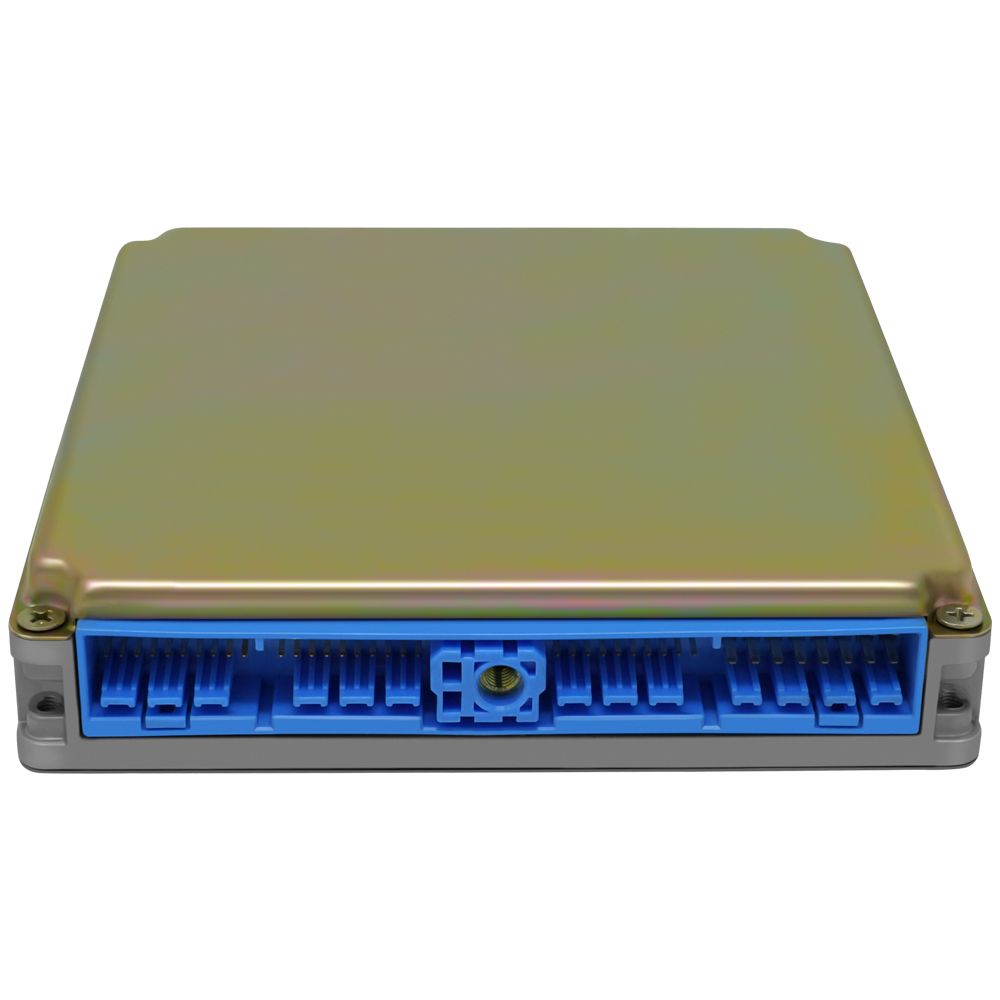
Flagship One stocks a refurbished, VIN-programmed PCM for the 1994 Nissan Altima with a lifetime warranty, free shipping and no core charge. The full Nissan Altima module lineup covers other engine configurations as well.
Replacing the ECM in your 1994 Nissan Altima can restore smooth engine operation and prevent frustrating breakdowns. While the process involves careful installation and programming, using a pre-configured unit simplifies the job. By addressing symptoms early and following proper procedures, you can keep your Altima running reliably for years to come. If you suspect ECM failure, don’t delay—taking action now can save you time and hassle down the road.