
Last updated on August 25th, 2026 at 12:25 pm
In the 1995 Toyota Celica, the Engine Control Module (ECM) manages fuel delivery, ignition timing, and emissions functions. A failure typically results from electrical faults, corrosion, or internal component wear, leading to loss of engine control and drivability issues.
When a 1995 Toyota Celica begins to exhibit no‑start conditions, rough idle, or erratic power delivery, the Engine Control Module often becomes the focus of diagnosis. This guide walks you through locating the ECM, the steps needed to remove and install a replacement, and the post‑install procedures that ensure your vehicle returns to normal operation. By understanding where the module lives, the safety precautions required, and the labor effort involved, you can make an informed decision about repair versus replacement and avoid common pitfalls during service.
The Engine Control Module in a 1995 Toyota Celica acts as the central computer that continuously monitors sensor data and commands fuel injectors, spark plugs, and emissions controls. It interprets inputs such as throttle position, engine speed, and coolant temperature to calculate the optimal fuel‑air mixture and ignition timing for each cylinder. Because the ECM directly influences engine performance, any malfunction can cause stalling, misfire, or a complete loss of power. Proper operation is essential for meeting emissions standards and delivering a smooth driving experience. For owners seeking a new unit, 1995 Toyota Celica ECM offers a direct replacement that matches the original specifications.
1995 Toyota Celica
OEM programmed ECM for your 1995 Toyota Celica — plug & play, no dealer visit.
Free shipping · Lifetime warranty
The factory wiring guide lists the engine ECU within the instrument panel, while the removal instructions specify that the ECM sits under the dash on the driver’s side close to the center console. Access typically involves removing the lower dash panel to expose the module and disconnecting the electrical connectors. Removal and installation each require roughly one and a half hours of labor, according to the book times. After the unit is secured, the connectors are reattached and the dash panel is reinstalled. The factory caution notes that work should not begin until at least ninety seconds have passed after the ignition is locked and the negative battery cable is disconnected, to prevent unintended SRS deployment.
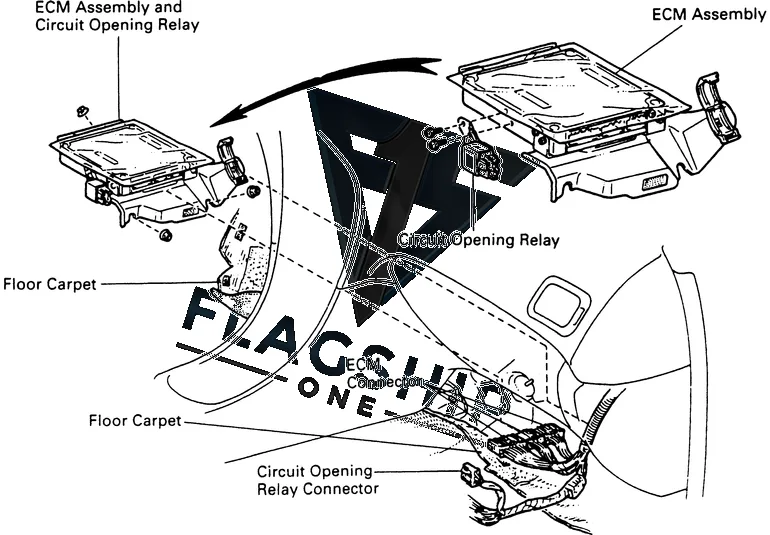
Work with the ignition off, and treat the module as static-sensitive: avoid touching the connector pins at any point.
| Operation | Configuration | Book Time |
|---|---|---|
| Engine Control Module Relearn | All configurations | 0.5 hr |
| Engine Control Module R&R | All configurations | 1.5 hr |
| Powertrain Control Module R&R | All configurations | 1.5 hr |
| Powertrain Control Module Relearn | All configurations | 0.5 hr |
Following a replacement, the factory procedure calls for a relearn of the ECM to synchronize sensor calibrations and adaptive strategies. This process is documented as taking half an hour of labor. Flagship One units arrive already calibrated to the vehicle’s VIN, so the a VIN-programmed replacement unit eliminates the need for on‑site coding or additional software steps. After installation, you simply reconnect the battery, wait the required ninety seconds, and complete the relearn routine using the appropriate scan tool.
Typical signs of a failing ECM in a 1995 Toyota Celica include a complete lack of engine start, intermittent stalling during acceleration, rough idle, and erratic throttle response. You may also notice the check engine light illuminated without a clear diagnostic code, or the scan tool may be unable to communicate with the vehicle’s computer. In some cases, the transmission may shift harshly because the powertrain control module relies on data from the ECM. These symptoms often prompt owners to seek a diagnostic check, which frequently points to the ECM as the source of the problem.
Starting work too soon can allow residual energy in the SRS system to trigger deployment. Waiting the prescribed ninety seconds helps ensure the backup power source is fully discharged, reducing that risk.
The replacement process involves removing interior dash components and handling sensitive electrical connections. If you are comfortable with moderate disassembly and follow safety guidelines, a DIY approach is feasible; otherwise, a qualified technician can ensure proper reinstallation.
A VIN‑programmed unit arrives calibrated to match your vehicle’s specifications, eliminating the need for on‑site coding and reducing the chance of mismatched parameters that can affect performance.
The labor guide lists one and a half hours for removal and another one and a half hours for installation, plus an additional half hour for the relearn procedure.
Yes, because the powertrain control module depends on data from the ECM. A malfunctioning ECM can cause harsh or delayed shifts, as the transmission may not receive accurate engine speed information.
When the ECM in your 1995 Toyota Celica needs attention, you can choose to repair the original unit or install a refurbished replacement. Both options require the same safety precautions and labor effort, but a refurbished Flagship One module arrives pre‑programmed, saving you the post‑install coding step. Evaluate the condition of your existing module, consider warranty coverage, and decide which path best fits your service plan.
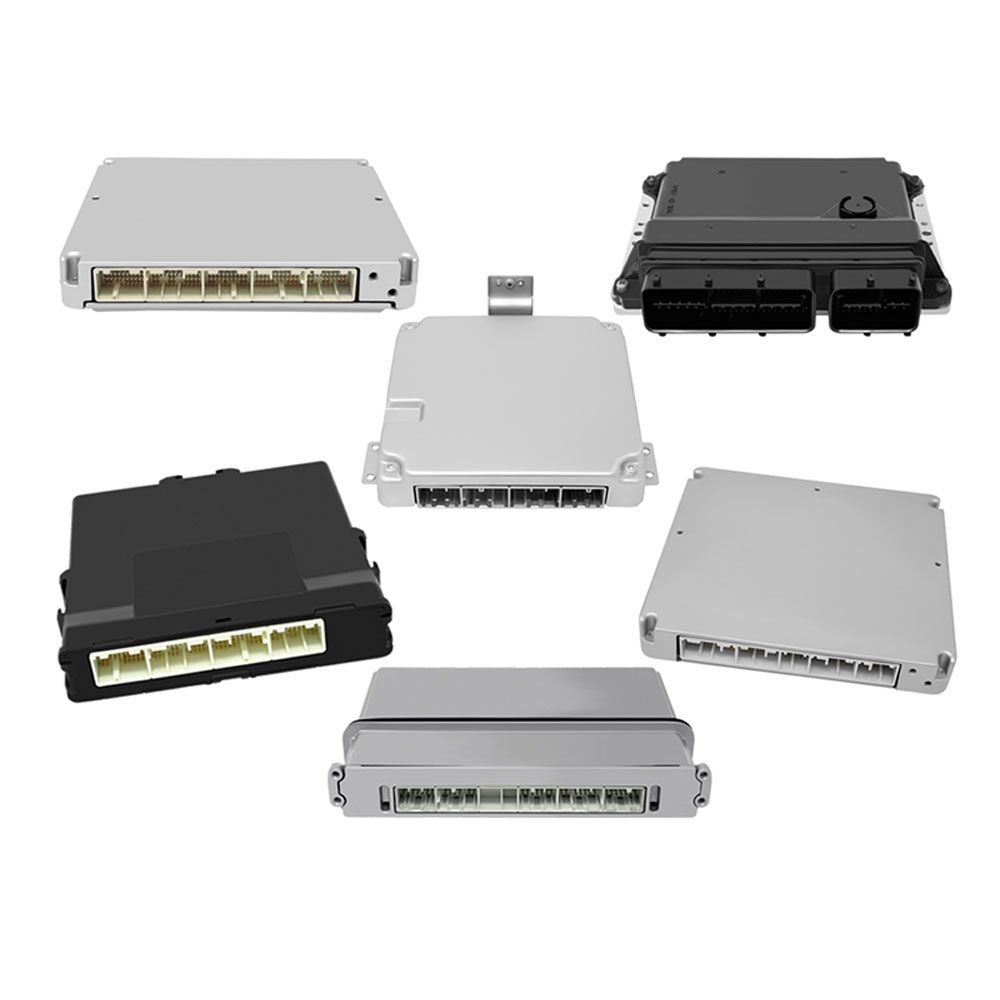
Flagship One stocks a refurbished, VIN-programmed PCM for the 1995 Toyota Celica with a lifetime warranty, free shipping and no core charge. The full Toyota Celica module lineup covers other engine configurations as well.
The Engine Control Module is vital to the operation of your 1995 Toyota Celica. Proper removal, safety timing, and relearn procedures keep the vehicle running smoothly. Whether you opt for a repaired original or a Flagship One replacement, ensure the work follows factory guidelines for the best results.