
Last updated on August 25th, 2026 at 12:25 pm
The Engine Control Module in your 1994 Toyota Celica serves as the primary computer managing fuel delivery, ignition timing, and emissions systems. When this unit fails, your vehicle may exhibit hard-starting, stalling, poor idle, or complete no-start conditions despite otherwise healthy mechanical systems.
If your 1994 Toyota Celica is experiencing hard starting, intermittent stalling, or poor idle quality, the Engine Control Module may be the culprit. This guide covers factory-recommended removal and installation procedures, relearn requirements, and what to expect during replacement. Understanding these steps helps you make informed decisions about repair versus replacement options. The information here applies specifically to the 1.8L engine found in the 1994 Celica. You will learn where the module is located, what the replacement process involves, and why proper post-installation procedures matter for long-term reliability.
The Engine Control Module in your 1994 Toyota Celica functions as the central computer governing engine operation. This unit monitors inputs from various sensors throughout the engine bay and adjusts fuel injection, spark timing, and idle speed accordingly. For a vehicle equipped with replacement engine computers for the Celica, the module must maintain precise coordination between the crankshaft position sensor, throttle position sensor, and oxygen sensors to ensure proper air-fuel mixture and combustion timing.
On pre-OBD-II vehicles like the 1994 Celica, the ECM operates with fewer diagnostic capabilities than later systems. The module stores basic fault information that technicians can retrieve, but the architecture differs significantly from OBD-II systems introduced in 1996 and later. This older design means module failures often produce immediate drivability symptoms rather than subtle performance degradation over time.
1994 Toyota Celica
OEM programmed ECM for your 1994 Toyota Celica — plug & play, no dealer visit.
Free shipping · Lifetime warranty
The ECM on the 1994 Toyota Celica is positioned under the dash on the driver’s side near the center console. Access requires working in the footwell area, which may involve removing kick panels or trim pieces depending on your specific approach.
The book time for ECM removal and reinstallation is 1.5 hours. This covers the physical R&R process including disconnecting electrical connectors, removing mounting hardware, and reinstalling the new unit. An additional 0.5 hours is allocated for the relearn procedure that must be performed after the new module is installed.
When accessing this location, be aware of surrounding components. The SRS system in this vehicle retains backup power even with the battery disconnected, which is why the factory specifies waiting 90 seconds after turning the ignition to LOCK and disconnecting the negative battery cable before beginning any work near airbag components or the ECM area.
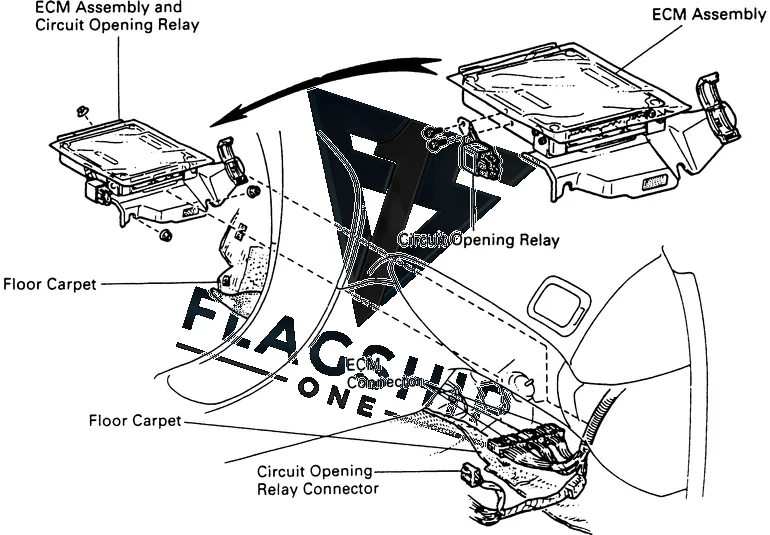
Work with the ignition off, and treat the module as static-sensitive: avoid touching the connector pins at any point.
| Operation | Configuration | Book Time |
|---|---|---|
| Engine Control Module Relearn | All configurations | 0.5 hr |
| Engine Control Module R&R | All configurations | 1.5 hr |
| Powertrain Control Module R&R | All configurations | 1.5 hr |
| Powertrain Control Module Relearn | All configurations | 0.5 hr |
After replacing the ECM on your 1994 Toyota Celica, the factory procedure requires performing a relearn process. This procedure takes approximately 0.5 hours according to book time. The relearn allows the new module to calibrate to your specific vehicle’s engine characteristics and sensor outputs.
Flagship One units arrive as a VIN-programmed replacement unit, which means the most time-consuming aspects of programming are already completed before installation. This pre-programming eliminates the need for dealer-level equipment or software to handle the VIN relearn portion of the procedure, reducing overall shop time and complexity. You should still expect the standard relearn procedure to be performed, but the initial configuration steps are handled in advance.
When the Engine Control Module fails on your 1994 Toyota Celica, symptoms often appear suddenly rather than developing gradually. A no-start condition where the engine cranks normally but fails to fire is a common indicator. Stalling, particularly at idle or when coming to a stop, frequently points to ECM issues.
Misfire conditions may occur when the module fails to properly time fuel injection or spark events. You might notice rough running, decreased power, or poor throttle response. In some cases, the check engine light may illuminate, though pre-OBD-II vehicles have more limited diagnostic capabilities than later models.
Dead scan tool communication can indicate a failed ECM, as the diagnostic link may become unresponsive when internal circuitry fails. Transmission shifting problems can also occur since the module often coordinates with the transmission control system.
ECM failures often cause multiple simultaneous symptoms affecting unrelated systems. If your Celica exhibits no-start, stalling, and poor idle together with no response from the scan tool, the module itself is likely at fault. Replacing known-failed sensors first may help isolate the problem, but professional diagnosis can confirm whether the ECM is the root cause.
Units from Flagship One arrive VIN-programmed, eliminating the need for dealer-level programming equipment. The factory relearn procedure still requires completion, but this can often be performed with standard professional-grade scan tools rather than manufacturer-specific software.
The SRS system in the 1994 Toyota Celica maintains backup power even after the battery is disconnected. Working near airbag components or the ECM before this backup power depletes risks unintentional deployment. Following the 90-second wait ensures the capacitor-based backup supply has fully discharged.
Replacing the Engine Control Module on your 1994 Toyota Celica requires weighing repair of your existing unit against installing a remanufactured or new replacement. Your existing ECM may be repairable if the damage is minor, but for a pre-OBD-II vehicle, sourcing a known-good replacement often provides more confidence in long-term reliability. Remanufactured units undergo testing and repair processes that address common failure modes. New replacement modules from suppliers like Flagship One arrive ready to install with VIN programming completed, reducing shop time and complexity compared to ordering a blank unit that requires programming before use.
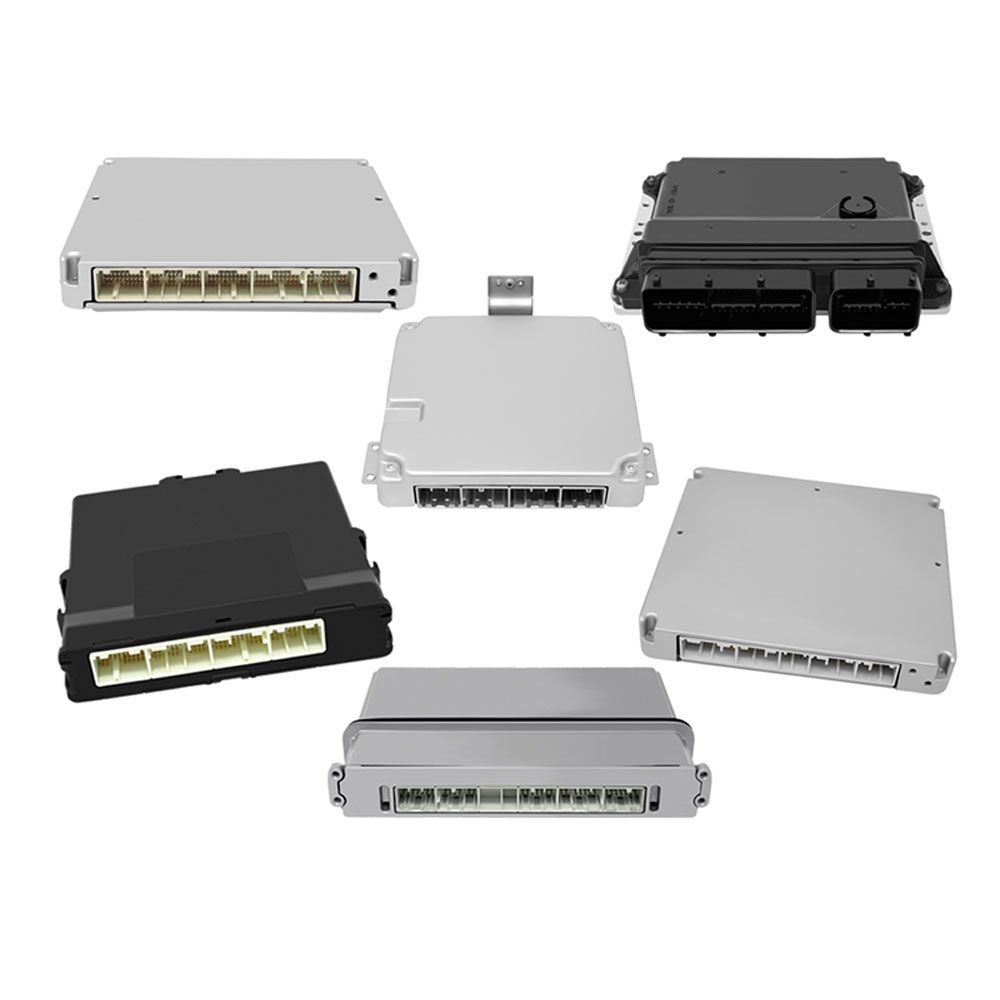
Flagship One stocks a refurbished, VIN-programmed PCM for the 1994 Toyota Celica with a lifetime warranty, free shipping and no core charge. The full Toyota Celica module lineup covers other engine configurations as well.
The Engine Control Module in your 1994 Toyota Celica plays a critical role in engine operation, and understanding its location, replacement requirements, and post-installation procedures helps you navigate the repair process with confidence. Whether you choose repair or replacement, following factoryrecommended procedures ensures proper function. Flagship One offers model-specific replacement units for the 1994 Toyota Celica that arrive pre-programmed and ready to install, simplifying your next step.