
Last updated on August 25th, 2026 at 12:26 pm
The engine control module on your 1991 Toyota MR2 serves as the central computer responsible for managing fuel delivery, ignition timing, idle speed, and emissions systems. When this module malfunctions, your engine may fail to start, run roughly, or experience significant power loss. Pre-OBD-II vehicles like this MR2 lack standardized diagnostic trouble codes, which can make electrical failures harder to pinpoint without proper testing.
A no-start condition on your 1991 Toyota MR2 can have several causes, and the engine control module is one component worth investigating. This module acts as the central processor for your 2.0L engine, managing critical functions that keep everything running smoothly. When the ECM fails, your vehicle may exhibit hard starting, stalling, rough idle, or complete driveability loss. Understanding what this component does, where it lives, and what replacement involves can help you make an informed repair decision. This guide covers the engine control module’s role in your MR2, common failure patterns, and the practical realities of replacement including factory procedures and post-install requirements.
1991 Toyota MR2
OEM programmed ECM for your 1991 Toyota MR2 — plug & play, no dealer visit.
Free shipping · Lifetime warranty
The engine control module in your 1991 Toyota MR2 serves as the central processor responsible for managing fuel delivery, spark timing, idle speed, and emissions control on the 2.0L engine. This integrated computer receives data from various sensors positioned throughout the engine bay and uses that information to command actuators that control the combustion process. The module must precisely coordinate multiple subsystems simultaneously to maintain driveability, fuel economy, and emissions compliance. When you invest in replacement engine computers for the MR2, you restore the closed-loop feedback control that keeps your engine running efficiently under varying loads and conditions. Without proper communication between sensors and actuators, the engine reverts to open-loop operation with compromised performance and potentially increased emissions.
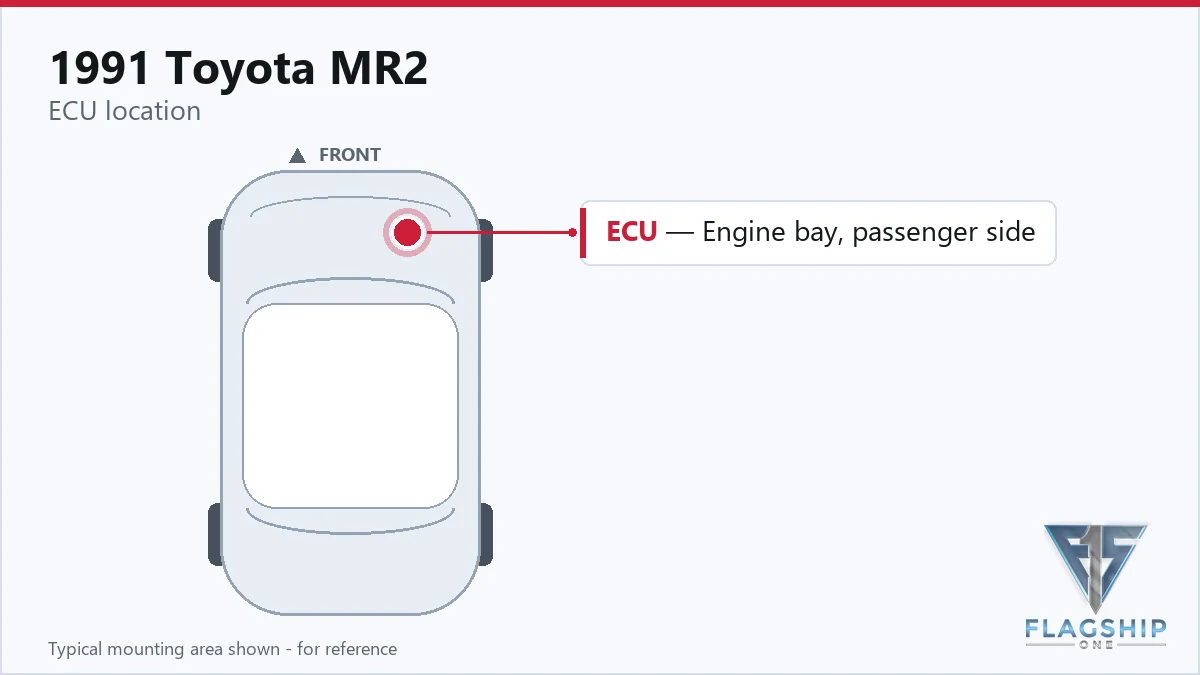
The engine control module for the 2.0L engine is positioned in the engine compartment. Replacing it requires disconnecting the battery ground terminal first to eliminate any risk of short circuits during service. The old module is unbolted from its mounting location, and the electrical harness is carefully disconnected. When installing the new unit, transfer any mounting brackets or hardware from the original module to ensure secure attachment. The electrical connector must be fully seated and locked into place before reconnecting the battery. Engine Control Module removal and reinstallation is estimated at 1.3 hours according to standard book times, with Powertrain Control Module removal and reinstallation taking a similar amount. Actual service time varies based on vehicle condition and accessibility.
| Operation | Configuration | Book Time |
|---|---|---|
| Engine Control Module Relearn | All configurations | 0.5 hr |
| Engine Control Module R&R | All configurations | 1.3 hr |
| Powertrain Control Module R&R | All configurations | 1.3 hr |
| Powertrain Control Module Relearn | All configurations | 0.5 hr |
After installing a new engine control module, the factory service procedure requires an initialization sequence to synchronize the replacement unit with your vehicle’s engine management system. This relearn process allows the new module to establish proper communication with sensors and calibrate itself to your specific 2.0L engine. The relearn procedure for the Engine Control Module requires 0.5 hours, and the Powertrain Control Module relearn takes an additional 0.5 hours. Rather than requiring a dealer visit or programming tool, a VIN-programmed replacement unit arrives from Flagship One already configured with your vehicle identification number, so those essential initialization steps are completed before the module reaches your shop.
Engine control module failures on pre-OBD-II vehicles like your 1991 Toyota MR2 typically manifest as drivability complaints rather than specific diagnostic trouble codes. Common symptoms include hard starting or no-start conditions, intermittent stalling, rough idle, hesitation during acceleration, and sudden power loss while driving. Some owners report that their engine will crank normally but fail to fire, while others experience running issues that come and go without clear pattern. A failed module may also cause inconsistent fuel delivery leading to rich or lean running conditions. Manual transmission models may exhibit difficulty shifting or unresponsive clutch engagement. In some cases, the engine may run but display warning indicators or fail emissions testing due to improper combustion control.
A used engine control module may work, but it likely requires programming by a Toyota dealership using factory equipment. Additionally, used modules carry unknown history and may be approaching failure themselves.
This generation uses an integrated control module design where the engine control and powertrain control functions are combined into a single unit rather than split across separate computers.
The replacement procedure is straightforward for someone with basic mechanical experience. The module is accessible in the engine compartment, and the swap involves removing a few bolts and disconnecting one harness. Plan for roughly 1 to 3 hours of labor depending on your experience level and tool availability.
When your 1991 Toyota MR2 shows signs of engine control module failure, you have practical repair options. You can pursue module repair through a specialty shop, source a used unit with unknown history, or choose a professionally refurbished replacement that arrives ready to install. Each approach carries different costs, guarantees, and convenience factors. Flagship One provides replacement modules pre-programmed with your specific VIN, removing a significant hurdle from the repair process.
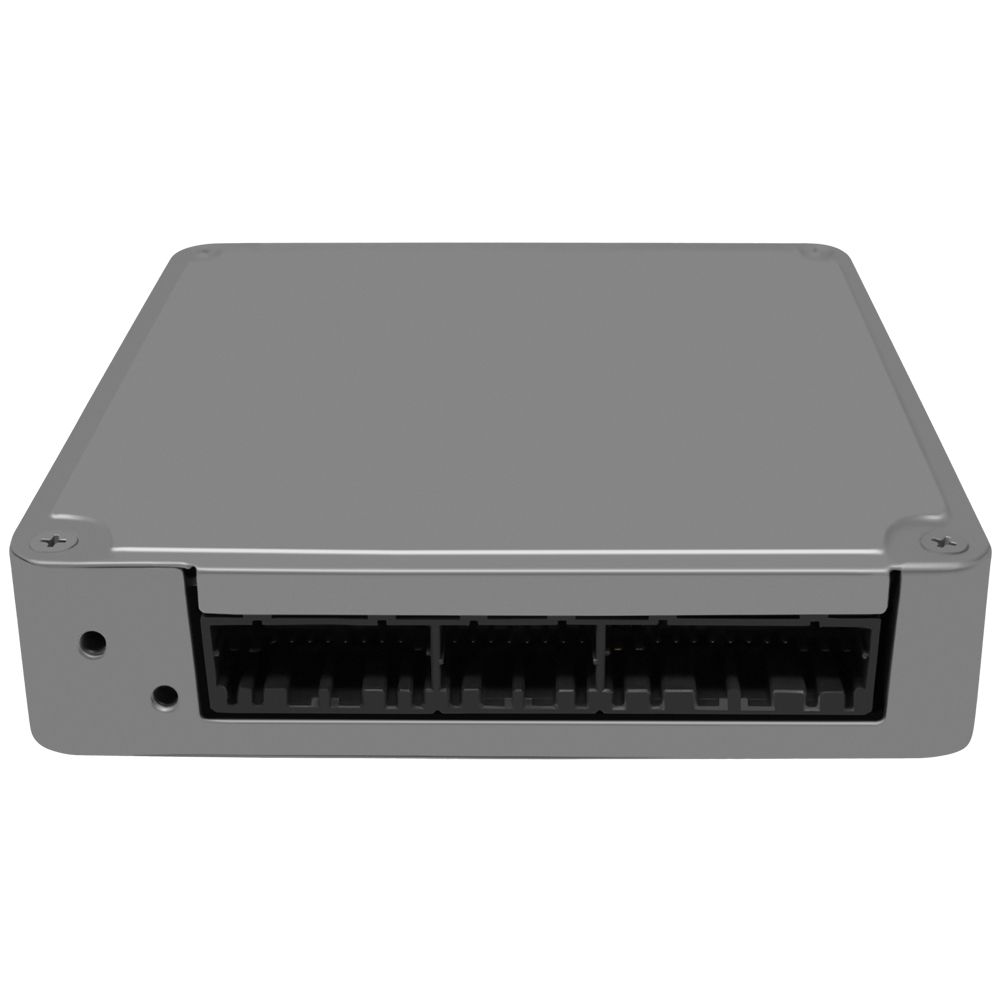
Flagship One stocks a refurbished, VIN-programmed PCM for the 1991 Toyota MR2 with a lifetime warranty, free shipping and no core charge. The full Toyota MR2 module lineup covers other engine configurations as well.
The engine control module on your 1991 Toyota MR2 handles essential engine management functions that directly affect drivability and reliability. Understanding its location, replacement procedures, and post-install requirements helps you approach this repair with realistic expectations. Whether you handle the installation yourself or delegate to a trusted shop, sourcing the right replacement unit is the critical first step toward restoring your MR2 to proper operation.