
Last updated on August 25th, 2026 at 12:26 pm
The Engine Control Module (ECM) in your 1993 Toyota MR2 manages fuel injection, ignition timing, and emissions systems. Failure may cause erratic engine behavior, stalling, or a no-start condition without warning.
If your 1993 Toyota MR2 has been experiencing unexplained stalling, rough idling, or difficulty starting, the Engine Control Module (ECM) may be the culprit. This small but critical computer oversees fuel delivery, ignition timing, and emissions controls, ensuring your 2.0L engine runs smoothly. When the ECM fails, symptoms can range from subtle performance issues to a complete inability to start the vehicle. Replacing the ECM in your MR2 involves more than just swapping a part—it requires precise installation and often a relearn procedure to sync the new unit with your engine’s sensors. Understanding the role of the ECM, its location, and the steps involved in replacement can help you make an informed decision about repairs. Whether you’re a DIY enthusiast or relying on a professional mechanic, knowing what to expect can save time and prevent frustration. This guide covers everything you need to know about the ECM in your 1993 Toyota MR2, from symptoms of failure to the replacement process and beyond.
1993 Toyota MR2
OEM programmed ECM for your 1993 Toyota MR2 — plug & play, no dealer visit.
Free shipping · Lifetime warranty
The Engine Control Module (ECM) in your 1993 Toyota MR2 is the brain behind your 2.0L engine’s performance. It continuously monitors data from sensors throughout the engine bay, adjusting fuel injection, ignition timing, and idle speed to optimize power, efficiency, and emissions. Without a properly functioning ECM, your MR2 may struggle to maintain consistent operation, leading to poor fuel economy, rough idling, or even a complete no-start condition. The ECM also plays a role in managing the vehicle’s emissions systems, ensuring compliance with environmental standards of the era. Over time, exposure to heat, vibration, and electrical fluctuations can degrade the ECM’s internal components, causing intermittent or permanent failure. When this happens, replacing the module with replacement engine computers for the MR2 is often the most reliable solution. While the ECM is designed to last the life of the vehicle, age-related wear or electrical issues may necessitate replacement. Understanding its function helps clarify why symptoms like stalling or misfires can point to ECM failure rather than a mechanical issue.
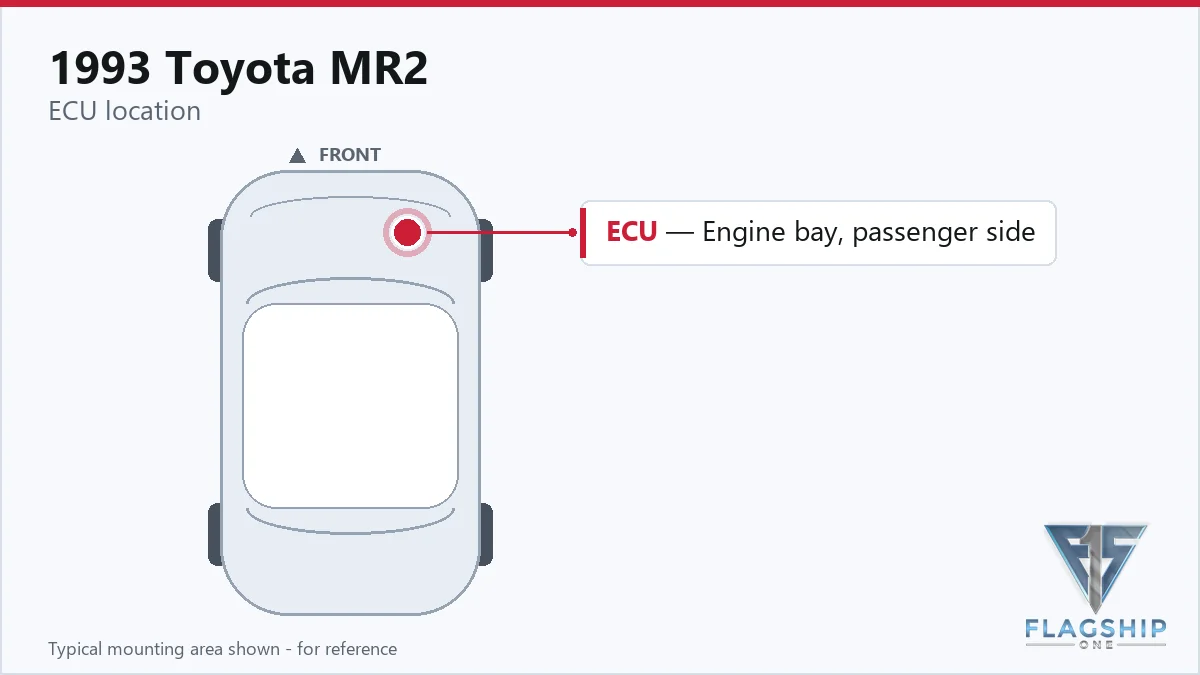
In the 1993 Toyota MR2, the ECM is mounted in the engine compartment, as specified in the factory wiring guide. This location makes it more accessible than modules tucked inside the cabin, but replacement still requires careful handling. To remove and reinstall the ECM, you’ll typically need to disconnect the battery, unplug the wiring harness, and remove any mounting bolts securing the module. The labor time for this procedure is estimated at 1.3 hours, which includes the time needed to safely disconnect and reconnect electrical connections. Since the ECM is sensitive to static electricity and voltage spikes, it’s important to follow proper grounding procedures during installation. After the new unit is installed, a relearn procedure may be required to ensure the ECM synchronizes with the engine’s sensors and systems. This additional step typically takes 0.5 hours and involves resetting learned values to restore optimal performance.
| Operation | Configuration | Book Time |
|---|---|---|
| Engine Control Module Relearn | All configurations | 0.5 hr |
| Engine Control Module R&R | All configurations | 1.3 hr |
| Powertrain Control Module R&R | All configurations | 1.3 hr |
| Powertrain Control Module Relearn | All configurations | 0.5 hr |
After installing a new ECM in your 1993 Toyota MR2, the factory procedure typically requires a relearn process to ensure the module adapts to your engine’s specific characteristics. This step, which takes about 0.5 hours, involves resetting learned values for fuel trim, idle speed, and other parameters to prevent drivability issues like rough idling or poor acceleration. However, if you opt for a VIN-programmed replacement unit, these steps are already completed before the module arrives. This means your MR2’s new ECM will be ready to plug in and start the engine without additional programming, saving time and reducing the risk of calibration errors. While the relearn procedure is straightforward, it requires a scan tool capable of communicating with the MR2’s pre-OBD-II system, which may not be available in all repair shops. Choosing a pre-programmed unit eliminates this concern entirely.
When the ECM in your 1993 Toyota MR2 begins to fail, symptoms can vary widely, often mimicking other mechanical or electrical issues. One of the most common signs is a no-start condition, where the engine cranks but refuses to fire, as the ECM may fail to send the correct signals to the fuel injectors or ignition system. Stalling or rough idling is another frequent complaint, particularly when the ECM loses its ability to maintain consistent fuel delivery or ignition timing. You might also notice poor acceleration, hesitation, or surging, as the ECM struggles to adjust air-fuel ratios in real time. In some cases, the engine may misfire under load, triggering performance issues that feel like a spark plug or ignition coil failure. Another telltale sign is erratic or incorrect sensor readings, which can lead to the check engine light illuminating—though without OBD-II, diagnosing these faults requires a scan tool compatible with the MR2’s system. If the ECM’s internal memory becomes corrupted, you may experience intermittent electrical gremlins, such as the fuel pump failing to prime or the engine dying unexpectedly. In rare cases, the vehicle may enter a limp-home mode, severely limiting power to prevent damage. While these symptoms can stem from other issues, persistent or multiple occurrences often point to ECM failure, especially in a high-mileage MR2.
Yes, a faulty ECM can prevent the engine from starting by failing to trigger the fuel injectors or ignition system. Before replacing the ECM, check for spark, fuel pressure, and sensor signals to rule out other causes. If those systems are functioning, the ECM may be the culprit.
If your MR2 exhibits multiple symptoms like stalling, misfires, or a no-start condition, and diagnostic tests rule out other issues, the ECM may need replacement. Internal failures, such as corrupted memory or damaged circuitry, often require a new unit rather than repairs.
Replacing the ECM is straightforward if you’re comfortable working with electrical components. However, the relearn procedure may require a scan tool. If you’re unsure about the process, a professional mechanic can ensure proper installation and calibration.
A used ECM may work, but it could require reprogramming to match your MR2’s specific engine and emissions settings. Additionally, used modules carry the risk of hidden faults or wear, making a new or remanufactured unit a more reliable choice.
Stalling after ECM replacement often indicates a failed relearn procedure. The new ECM needs to recalibrate to your engine’s sensors and fuel system. A scan tool can help reset learned values, or you can opt for a pre-programmed unit to avoid this issue.
If your 1993 Toyota MR2 is experiencing ECM-related issues, you have two primary options: repair or replacement. While some shops may attempt to refurbish the existing module, this approach can be time-consuming and may not address underlying electrical faults. A replacement ECM, particularly one that arrives pre-programmed to your VIN, offers a reliable solution with minimal downtime. Given the MR2’s age, a new or remanufactured ECM ensures compatibility with your vehicle’s systems and eliminates the need for additional programming steps.
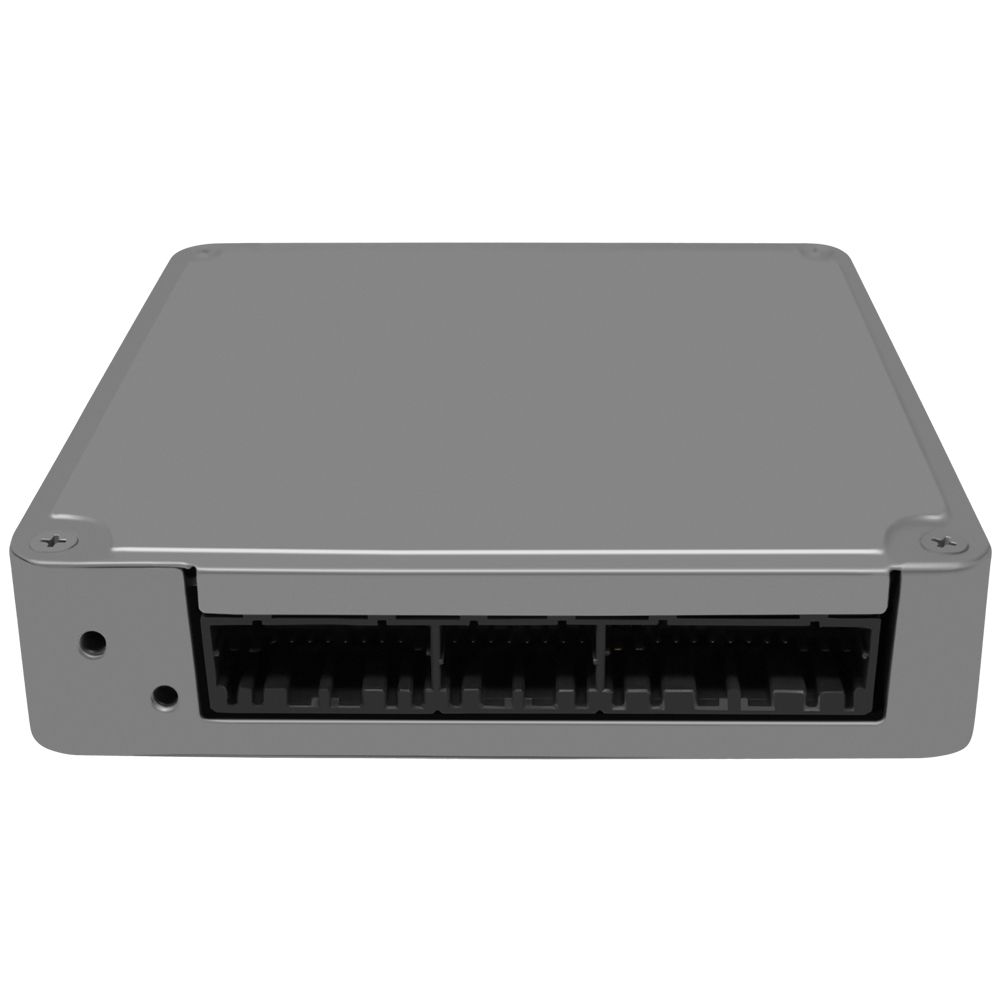
Flagship One stocks a refurbished, VIN-programmed PCM for the 1993 Toyota MR2 with a lifetime warranty, free shipping and no core charge. The full Toyota MR2 module lineup covers other engine configurations as well.
The ECM in your 1993 Toyota MR2 plays a critical role in keeping your 2.0L engine running smoothly. Whether you’re dealing with stalling, misfires, or a no-start condition, understanding the symptoms and replacement process can help you make an informed decision. With the right tools and a pre-programmed unit, restoring your MR2’s performance can be a straightforward task. If you suspect ECM failure, addressing it promptly will help you avoid further drivability issues and keep your vehicle on the road.