
Last updated on August 25th, 2026 at 12:07 pm
In the 1995 Toyota MR2 2.2L the engine control module manages fuel delivery, ignition timing, and idle strategy for the four‑cylinder engine. When the module fails, the processor can no longer calculate correct injector pulse widths, leading to no‑start, stalling, or erratic running.
Owners of a 1995 Toyota MR2 2.2L often encounter a sudden loss of power or an engine that simply will not fire after a period of normal operation. The root cause can be the engine control module, the electronic brain that calculates fuel‑injector pulse width, ignition timing, and idle‑air‑control strategy for the four‑cylinder powerplant. When the module’s internal processor or its memory becomes corrupted, the vehicle may exhibit a no‑start condition, intermittent stalling, or rough running that does not respond to conventional tune‑up steps. This article explains how the module functions in this specific model, where it is mounted, what the factory service manual calls for in terms of removal and reinstallation time, and why a VIN‑matched replacement can shorten the repair. You will also learn the typical symptoms that point to module failure, the factory relearn procedure that follows installation, and practical steps to protect the unit from future damage. By the end you should have a clear picture of whether a repair, a refurbished unit, or a new programmed module best fits your situation.
1995 Toyota MR2 2.2L
OEM programmed ECM for your 1995 Toyota MR2 2.2L — plug & play, no dealer visit.
Free shipping · Lifetime warranty
The engine control module in the 1995 Toyota MR2 2.2L is a dedicated computer that reads sensor inputs such as crankshaft position, manifold absolute pressure, coolant temperature, and throttle angle, then calculates the precise injector pulse width and spark advance for each cylinder. It also governs the idle‑air‑control valve and manages the fuel‑pump relay, so a loss of communication or an internal fault can shut down the entire fuel‑delivery chain. Because the module is housed in the engine compartment, it is exposed to heat, vibration, and occasional moisture from road spray, all of which can degrade solder joints or cause connector corrosion over time. When the processor fails, the engine may crank without firing, stall at idle, or run with a pronounced misfire that does not clear with new plugs or wires. Diagnosing the unit typically involves verifying power and ground at the connector, checking for continuity in the sensor circuits, and confirming that the module can communicate with a scan tool. If the module is determined to be defective, the service manual calls for removal of the mounting bolts, disconnection of the wiring harness, and installation of a replacement. replacement engine computers for the MR2 are available pre‑programmed to the vehicle identification number, which eliminates the separate relearn step that the factory procedure otherwise requires. Understanding the module’s role helps you decide whether a repair attempt, a refurbished unit, or a new programmed computer is the most reliable path for your MR2.
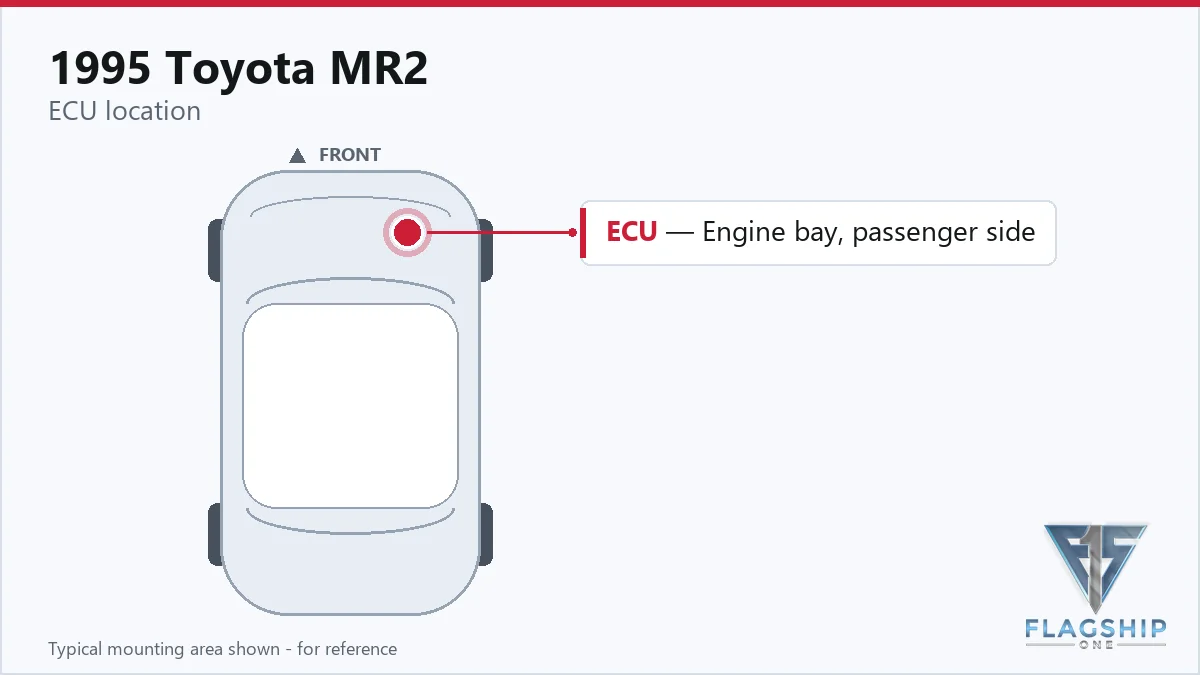
The factory wiring guide places the engine control module in the engine compartment, mounted on the driver’s side of the firewall near the brake‑master cylinder. To replace it, you first disconnect the negative battery cable, then unplug the main harness connector and any secondary sensor leads. The module is secured by two 10‑mm bolts that are accessed from the top of the engine bay; removal of the bolts and the unit typically takes the 1.3‑hour book time listed for engine control module R&R. After the new module is bolted in place and the connectors are re‑seated, the service manual calls for a relearn procedure that consumes an additional 0.5 hour of scan‑tool time. No torque specification is published for the mounting bolts, so a snug hand‑tight fit followed by a final quarter‑turn with a ratchet is customary. Because the compartment is relatively open, no major component removal is required, but you should protect the wiring from sharp edges and verify that the connector seals are intact before closing the hood.
| Operation | Configuration | Book Time |
|---|---|---|
| Engine Control Module Relearn | All configurations | 0.5 hr |
| Engine Control Module R&R | All configurations | 1.3 hr |
| Powertrain Control Module R&R | All configurations | 1.3 hr |
| Powertrain Control Module Relearn | All configurations | 0.5 hr |
After the replacement module is installed, the factory service manual requires a relearn sequence that lets the computer memorize the idle‑air‑control position, fuel‑trim baselines, and crankshaft‑position sensor alignment; this step is allocated 0.5 hour of scan‑tool time in the labor guide. The relearn is performed by connecting a compatible diagnostic scanner, selecting the ECM initialization routine, and following the on‑screen prompts until the tool reports completion. If the module is sourced from Flagship One, it arrives a VIN-programmed replacement unit that has already been calibrated to the specific vehicle identification number, so the relearn routine can be skipped entirely. This eliminates the need for a dealer‑level scanner and reduces total shop time by roughly half an hour. Even when the relearn is omitted, it is good practice to verify that the engine starts cleanly, idles within the specified RPM range, and that no pending codes remain in the system before returning the vehicle to the customer.
The 1995 Toyota MR2 2.2L can display several tell‑tale signs when the engine control module begins to fail. A common early symptom is an intermittent no‑start condition: the starter cranks normally but the engine never fires, and the problem may disappear after the vehicle sits for a while. Stalling at idle or during low‑speed maneuvers is another frequent indicator; the engine may die abruptly and then restart without any apparent cause. Rough running or a persistent misfire that does not clear after replacing spark plugs, wires, or the fuel filter often points to incorrect injector pulse widths generated by a corrupted processor. The check‑engine light may illuminate, but because this is a pre‑OBD‑II vehicle the light does not provide standardized codes; instead, a scan tool that can communicate with the proprietary data stream may show a loss of communication with the module. In some cases the fuel pump relay fails to energize, leaving the engine starved of fuel even though the pump itself tests good. Voltage spikes from a weak alternator or an improper jump‑start can accelerate the degradation of the module’s internal circuitry, making the above symptoms appear suddenly after electrical work. If you notice any combination of these behaviors, verify power and ground at the module connector before condemning the unit, as a simple wiring fault can mimic a module failure.
Common signs include intermittent no‑start, sudden stalling at idle, persistent misfire that does not clear with new plugs, and loss of communication with a scan tool. The check‑engine light may come on, but it does not display standard OBD‑II codes on this pre‑OBD‑II vehicle.
The service manual lists 1.3 hours for ECM removal and installation, plus an additional 0.5 hour for the required relearn procedure after the new module is fitted.
No. Flagship One units arrive VIN‑programmed, so the factory relearn step is already completed and can be skipped, saving roughly half an hour of scan‑tool time.
The module is mounted on the driver’s side of the firewall in the engine compartment, near the brake‑master cylinder, secured by two 10‑mm bolts accessible from the top of the bay.
Yes. Since the ECM controls the fuel‑pump relay, an internal failure can prevent the relay from energizing, leaving the engine without fuel pressure even though the pump itself tests good.
Choosing between repairing the original module, installing a refurbished unit, or fitting a new VIN‑programmed computer depends on the severity of the damage and the shop’s equipment. A refurbished module may cost less but still requires the 0.5‑hour relearn, while a new programmed unit eliminates that step and restores factory calibrations instantly. Weigh the labor savings against the price difference to decide the most efficient path for your 1995 Toyota MR2 2.2L.
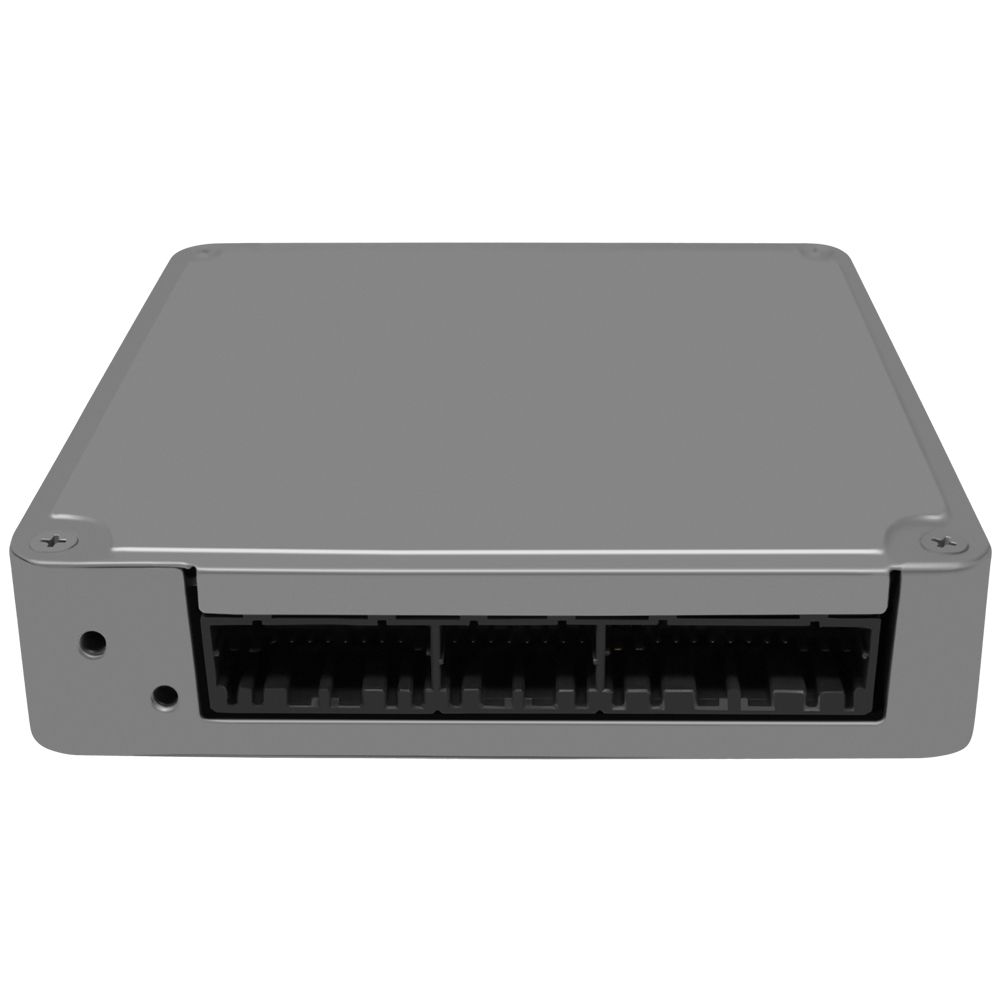
Flagship One stocks a refurbished, VIN-programmed PCM for the 1995 Toyota MR2 with a lifetime warranty, free shipping and no core charge. The full Toyota MR2 module lineup covers other engine configurations as well.
The 1995 Toyota MR2 2.2L relies on a single engine control module to manage fuel, spark, and idle functions, so a reliable replacement restores drivability quickly. Whether you opt for a refurbished part or a new VIN‑matched computer, verifying power, ground, and connector integrity first will prevent repeat failures. If you need a plug‑and‑play solution that skips the relearn, a programmed unit from a trusted supplier can get the car back on the road with minimal downtime.