
Last updated on August 25th, 2026 at 12:26 pm
The Engine Control Module (ECM) in the 1990 Toyota Supra manages fuel injection, ignition timing, and idle control. Failure may cause hard starts, stalling, or poor performance, often due to internal corrosion or voltage spikes.
If your 1990 Toyota Supra suddenly refuses to start or stalls unexpectedly, the Engine Control Module (ECM) may be the culprit. This small but critical computer manages fuel delivery, ignition timing, and other essential functions. When it fails, your vehicle may exhibit a range of symptoms from rough idling to complete engine shutdown. Understanding the ECM’s role, location, and replacement process helps you make informed decisions about repairs. With the right approach, you can restore reliable operation without unnecessary delays or complications.
1990 Toyota Supra
OEM programmed replacements — plug & play, no dealer visit.
Find yours by year, make & model →
Free shipping · Lifetime warranty
The ECM in the 1990 Toyota Supra acts as the brain of the engine, continuously adjusting fuel injection and ignition timing based on sensor inputs. It ensures optimal performance, fuel efficiency, and emissions control. Without a functioning ECM, your Supra may struggle to start, run poorly, or even stall unexpectedly. Replacing the module involves installing replacement engine computers for the Supra, which must be programmed to match your vehicle’s specific configuration. The factory unit is designed to last, but age, voltage spikes, or moisture intrusion may lead to failure over time.
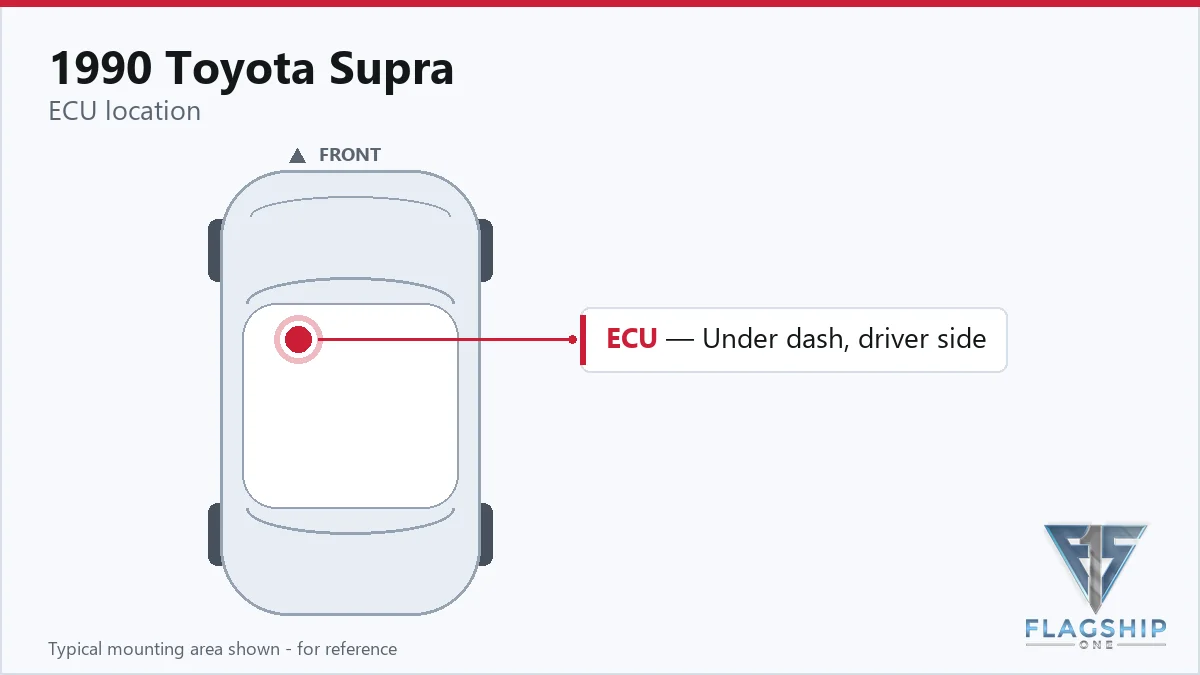
In the 1990 Toyota Supra, the ECM is mounted behind the instrument panel, providing some protection from moisture and heat. Accessing it requires removing interior trim panels, which adds to the labor time. According to factory estimates, replacing the ECM typically takes 1.4 hours. The process involves disconnecting the battery, unplugging the wiring harness, and carefully removing the old unit. The new module is then installed and secured, followed by reconnecting the harness and battery. No special tools are required, but care must be taken to avoid damaging the wiring or connectors during removal.
| Operation | Configuration | Book Time |
|---|---|---|
| Engine Control Module Relearn | All configurations | 0.5 hr |
| Engine Control Module R&R | All configurations | 1.4 hr |
| Powertrain Control Module R&R | All configurations | 1.4 hr |
| Powertrain Control Module Relearn | All configurations | 0.5 hr |
After installing a new ECM in your 1990 Toyota Supra, the factory procedure requires a relearn process to synchronize the module with the engine’s sensors. This typically takes 0.5 hours and ensures proper fuel and ignition timing. However, a VIN-programmed replacement unit arrives pre-configured for your vehicle, eliminating the need for this additional step. This saves time and reduces the risk of errors during the relearn procedure, allowing your Supra to return to normal operation more quickly.
A failing ECM in the 1990 Toyota Supra may cause a variety of symptoms. Common issues include a no-start condition, stalling at idle, or rough running. You might also notice poor fuel economy or hesitation during acceleration. In some cases, the engine may misfire or run erratically, particularly under load. If the ECM’s internal memory is corrupted, it could trigger a module memory checksum error, though this vehicle does not support OBD-II code retrieval. Dead communication with a scan tool is another potential sign of ECM failure.
Replacing the ECM is possible if you’re comfortable with basic automotive electrical work. The module is located behind the instrument panel, requiring removal of interior trim. However, the factory relearn procedure may require specialized tools or knowledge, so professional installation is often recommended.
Stalling after ECM replacement may indicate an incomplete relearn procedure. The module needs to synchronize with the engine’s sensors to ensure proper fuel and ignition timing. If the relearn isn’t performed, the engine may run poorly or stall. A pre-programmed unit avoids this issue.
Common signs include a no-start condition, stalling, rough idling, or poor performance. If the ECM is failing, you may also experience dead communication with a scan tool. Since this vehicle predates OBD-II, diagnosis may require a pre-OBD-II diagnostic tool or professional assessment.
If your 1990 Toyota Supra’s ECM has failed, you have options for repair or replacement. A refurbished or new module can restore reliable operation, but programming is critical. Choosing a VIN-programmed replacement eliminates the need for a factory relearn procedure, saving time and reducing the risk of errors. Consider your vehicle’s age and your budget when deciding the best path forward.
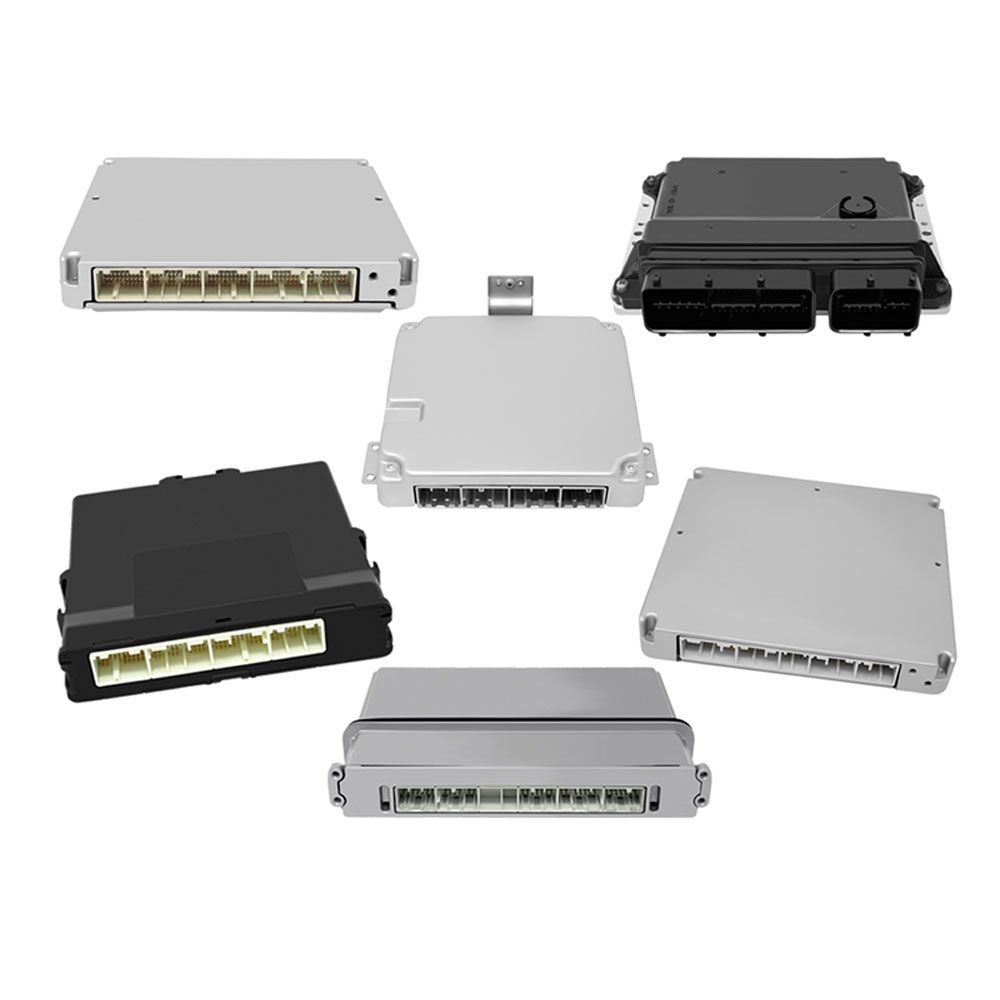
Flagship One stocks a refurbished, VIN-programmed PCM for the 1990 Toyota Supra with a lifetime warranty, free shipping and no core charge. The full Toyota Supra module lineup covers other engine configurations as well.
The ECM in your 1990 Toyota Supra plays a vital role in engine performance and drivability. If you’re experiencing symptoms like stalling or a no-start condition, a replacement may be necessary. With the right module and proper installation, you can restore your Supra’s reliability and enjoy trouble-free driving once again.