
Last updated on August 25th, 2026 at 12:27 pm
The engine control module in the 1989 Toyota Van 2.2L is the central computer that manages fuel delivery, ignition timing, and idle speed based on sensor inputs. When it fails, the engine may crank without starting, run erratically, or refuse to respond to diagnostic attempts, leaving the van undrivable.
When a 1989 Toyota Van with the 2.2-liter engine refuses to start or begins behaving unpredictably, the engine control module (ECM) is often overlooked in favor of more obvious culprits like the fuel pump or ignition system. Yet this compact computer, mounted inside the cabin, orchestrates nearly every aspect of engine operation. Because the van predates modern OBD-II diagnostics, troubleshooting can feel like working in the dark — there are no generic P-codes to scan, and the factory diagnostic procedure relies on counting flashes of a check-engine light. A failing ECM may not even trigger that light, leaving you with a crank-no-start situation and a handful of guesses. This article walks through what the ECM does in your 1989 Toyota Van, how to recognize when it is failing, and what a replacement involves. You will gain a clear understanding of the module’s role, practical location and installation guidance, and insight into how a pre-programmed unit can get you back on the road without a trip to the dealership.
1989 Toyota Van 2.2L
OEM programmed ECM for your 1989 Toyota Van 2.2L — plug & play, no dealer visit.
Free shipping · Lifetime warranty
The engine control module in the 1989 Toyota Van 2.2L is a dedicated microprocessor that reads signals from sensors such as the coolant temperature sensor, throttle position sensor, oxygen sensor, and manifold absolute pressure sensor. It uses those inputs to calculate the correct air-fuel mixture and ignition advance for the current operating conditions. Unlike later OBD-II systems, this ECM does not monitor emissions components for compliance; its primary job is to keep the engine running smoothly and efficiently. Inside the module, a printed circuit board holds the processor, memory chips, and power transistors that drive the fuel injectors and ignition coil. Over decades of heat cycling and vibration, solder joints can crack and capacitors can leak, leading to intermittent or permanent failures. When the ECM malfunctions, the engine may crank but not fire, or it may start and then stall without warning. Because the module also controls the check-engine light, a complete failure can leave you with no warning at all. For owners of the 1989 Toyota Van, sourcing a reliable replacement ECM for the Toyota Van is critical to restoring proper engine management and driveability.
In the 1989 Toyota Van, the engine control module is typically located under the front passenger seat. Access requires removing the seat trim or the seat itself, depending on how the interior was assembled. Once the seat is moved aside, the ECM is visible as a rectangular metal box secured by a bracket and a few bolts. Replacement involves disconnecting the battery, unplugging the wiring harness connectors from the module, and unfastening the mounting hardware. The new unit slides into the same bracket and the connectors lock back into place. No special tools are needed beyond basic hand tools, and the job can often be completed in under an hour. After installation, the battery is reconnected and the engine should start and idle normally if the replacement module is correctly programmed for the van’s VIN and calibration.
The original ECM in a 1989 Toyota Van was not flash-programmable in the modern sense; it contained a fixed calibration chip matched to the vehicle’s engine, transmission, and emissions package. When a replacement module is installed, it must carry the correct calibration data for the specific van, or the engine may run poorly or not at all. Dealerships and specialized shops can transfer the calibration from the old unit or load it from Toyota’s database, but this requires proprietary hardware that is increasingly scarce for vehicles of this era. Flagship One eliminates that step by shipping each unit already programmed with the exact VIN and calibration for your van. When you install a pre-programmed replacement ECM, the module is ready to operate immediately — no additional flashing, no dealer visit, and no need to hunt down obsolete programming tools. This plug-and-play approach is especially valuable for a pre-OBD-II vehicle where factory support is limited.
A deteriorating ECM in a 1989 Toyota Van often produces symptoms that mimic other common problems, making diagnosis challenging. The engine may crank strongly but refuse to start because the module fails to trigger the fuel pump or fire the injectors. Intermittent stalling, especially when the engine is warm, can point to heat-related solder joint failures inside the ECM. Rough or surging idle, hesitation on acceleration, and a sudden drop in fuel economy are also typical when the module can no longer process sensor data accurately. In some cases, the check-engine light may illuminate and then go out, or it may not come on at all during key-on, indicating a loss of communication with the ECM. Because this is a pre-OBD-II system, retrieving diagnostic codes requires jumping terminals in the underhood check connector and counting flashes of the check-engine light; a dead ECM often produces no codes, which itself is a strong clue. Hard-start issues when the engine is cold can also point to an ECM that is failing to enrich the fuel mixture properly. Over time, these symptoms tend to worsen until the van becomes completely unreliable.
Begin by confirming that the check-engine light illuminates when the key is turned to the ON position. If it does not, the ECM may not be receiving power or could be completely dead. Next, check for spark and fuel pressure; if both are absent and the main relay and fuses are good, the ECM is a likely cause. A no-code condition during diagnostic jumper tests also points toward a module failure.
Original replacement modules from the dealer required programming with Toyota’s legacy diagnostic tools, which are now rare. However, a pre-programmed unit from Flagship One arrives with your van’s VIN and calibration already loaded, so no additional programming is needed. You simply install it and the engine should start and run correctly.
The ECM is typically mounted under the front passenger seat. You may need to remove the seat or its trim panel to access the module. It is a silver metal box secured by a bracket and a couple of bolts, with a large wiring connector plugged into it.
Yes, if your van has an automatic transmission, the ECM also controls the lock-up torque converter and shift timing on some models. A malfunctioning module can cause harsh or erratic shifting, or prevent the transmission from locking up at highway speeds, which may feel like a slipping transmission.
Verify that all ECM-related fuses and relays are intact, and that the module is receiving battery voltage and ground. Inspect the wiring harness for chafed or broken wires, especially where it passes through the floor. Also confirm that the ignition coil and fuel pump are functional, as a faulty sensor or actuator can sometimes mimic ECM failure.
Repairing a 35-year-old ECM is rarely cost-effective because internal component degradation tends to spread. A refurbished unit that has been thoroughly tested and pre-programmed to your van’s VIN offers a practical path back to reliable operation. For the 1989 Toyota Van, this approach avoids the downtime and uncertainty of hunting for a used module that may carry the same age-related weaknesses.
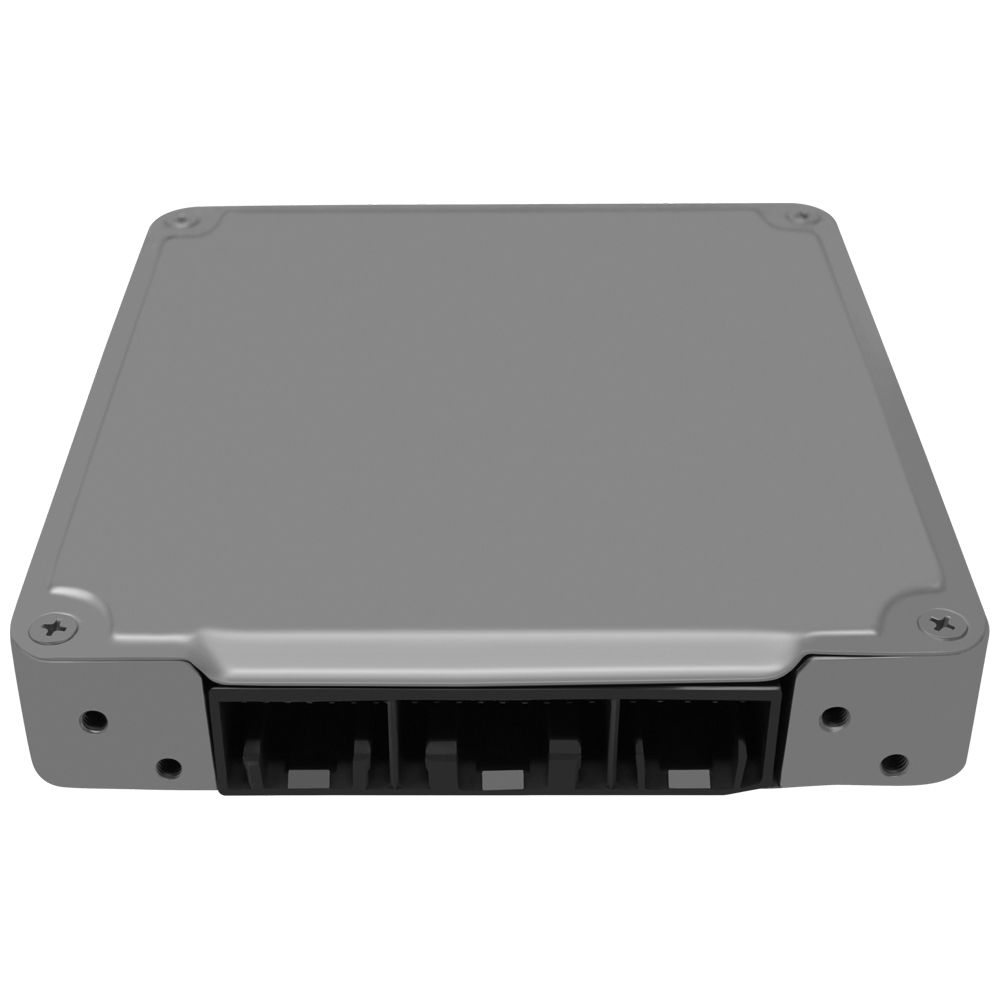
Flagship One stocks a refurbished, VIN-programmed ECM for the 1989 Toyota Van with a lifetime warranty, free shipping and no core charge. The full Toyota Van module lineup covers other engine configurations as well.
The engine control module in a 1989 Toyota Van 2.2L is a durable but aging component that can fail in ways that are easy to misdiagnose. Recognizing the symptoms and understanding the replacement process helps you make an informed decision without unnecessary parts swapping. With a VIN-programmed module, you can restore the van’s drivability quickly and get back to enjoying its unique combination of utility and simplicity.