
Last updated on August 25th, 2026 at 12:28 pm
The 2008 Pontiac Montana with its 3.5L V6 engine relies on an engine control module to coordinate virtually every aspect of drivability. This central computer manages the fuel delivery system, ignition events, transmission shift points, and emission control devices. When this module begins to fail or develops internal memory faults, the vehicle may exhibit a range of drivability issues that can leave you stranded. Understanding where this module is located, what the replacement process involves, and the critical programming requirements can save you significant time and expense. This guide walks through the factory-authorized replacement procedure while explaining how modern replacement units arrive pre-programmed to eliminate many of the traditional programming hurdles. Whether you are diagnosing a no-start condition or planning a preventive replacement, the information here helps you make informed decisions about servicing this critical component.
The engine control module in your 2008 Pontiac Montana serves as the brain of the powertrain. It receives input from dozens of sensors throughout the engine compartment—including the mass airflow sensor, coolant temperature sensor, throttle position sensor, and oxygen sensors—then uses this information to calculate the precise fuel injector pulse width and ignition timing for each operating condition. This continuous adjustment ensures the engine runs efficiently under varying loads, temperatures, and altitudes while meeting federal emission standards. replacement engine computers for the Montana are designed to replicate this exact function, but they must contain the correct calibration files specific to your vehicle’s VIN, transmission type, and engine displacement to operate properly. Without the proper calibration, the engine may run poorly, generate diagnostic codes, or fail to start entirely. The module also monitors its own internal circuits, and when it detects faults in its internal memory or processor, it stores module-internal trouble codes that indicate the ECM itself has failed and requires replacement.
The factory removal procedure positions the control module next to the air cleaner assembly, which means accessing it requires working in the engine bay rather than from under the dash. To reach the ECM, you first remove the air cleaner housing assembly that supplies the engine with filtered intake air. Once the air cleaner is out of the way, the module becomes visible, typically mounted in a protective bracket or housing. The replacement process involves disconnecting the electrical connectors, removing the mounting hardware, installing the new module, and reconnecting everything in reverse order. The factory service information does not specify exact torque values for the mounting fasteners, but proper connector engagement is critical—push each connector in until the locking tab clicks to ensure a reliable electrical connection. After installation, any disturbed vacuum lines or intake ducting must be reconnected and verified to prevent air leaks that could cause drivability issues.
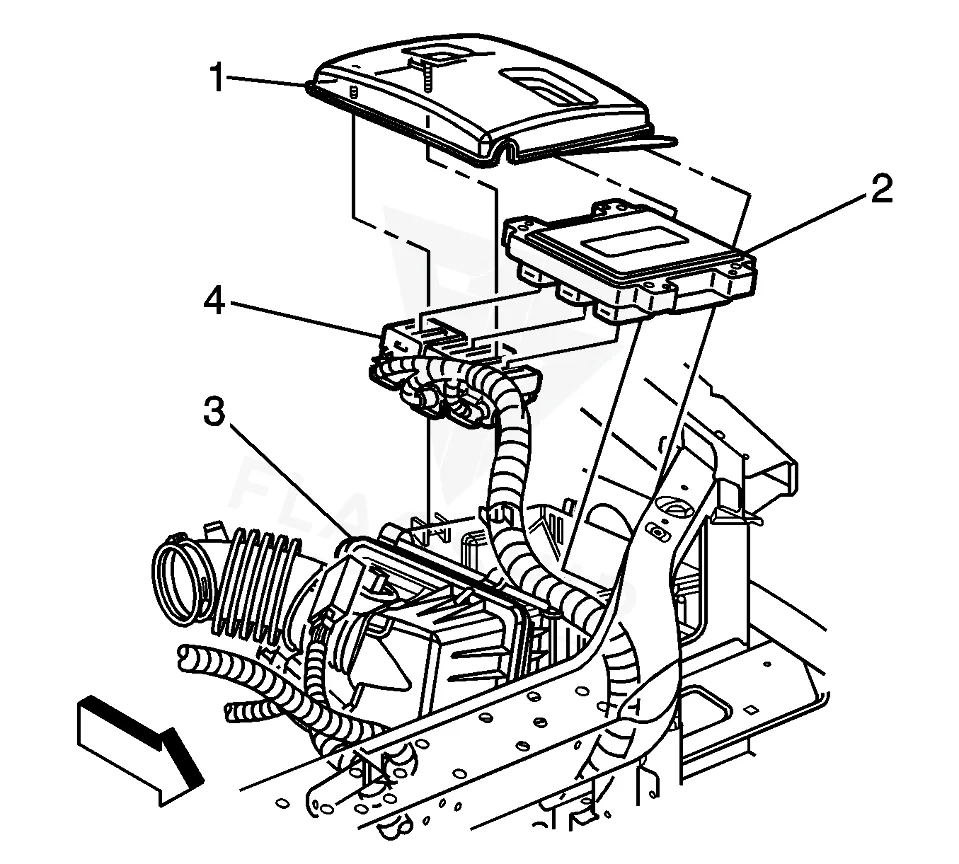
Work with the ignition off, and treat the module as static-sensitive: avoid touching the connector pins at any point.
2008 Pontiac Montana
OEM programmed ECM for your 2008 Pontiac Montana — plug & play, no dealer visit.
Free shipping · Lifetime warranty
The factory procedure is explicit: before removing the old ECM, a scan tool must capture all stored data from the module. This captured information includes vehicle-specific calibration data, learned idle settings, fuel trims, and other adaptive values that allow the engine to run optimally with your specific powertrain. Once the new ECM is installed, this captured data must be restored to the new module so it recognizes your vehicle’s characteristics. Additionally, the replacement unit requires reprogramming with the correct program and calibration for the vehicle using factory-grade equipment. a VIN-programmed replacement unit from quality suppliers arrives with the proper calibration already loaded, meaning the data restore step may still be necessary but the reprogramming process is simplified. After programming, the scan tool should verify that all systems communicate properly and that no diagnostic trouble codes remain active.
When the ECM on this vehicle fails, the symptoms often appear suddenly and can be confusing because they may mimic failures in other components. A no-start condition is common—the engine may crank normally but receive no fuel injector pulse or spark because the ECM is not outputting commands. The engine may also stall unexpectedly, particularly at idle or when coming to a stop, because the module is not properly controlling idle air or fuel delivery. Misfire codes (P0300 series) frequently appear when the ECM cannot properly coordinate firing order or fuel delivery. In some cases, the scan tool may not communicate with the ECM at all, or communication may be intermittent. Transmission shifting problems can occur because the ECM controls shift solenoids and line pressure. The check engine light typically illuminates, and when retrieved, the codes are often module-internal failures such as P0601 (internal memory check sum error) or P0602 (internal control module programming error). These module-internal codes indicate the ECM hardware itself has developed a fault rather than a temporary electrical issue.
When the internal diagnostics of the engine control module detect a fault within its own circuitry, it stores module-internal trouble codes. The 2008 Pontiac Montana with this engine is documented to store the following module-internal codes: P0601, P0602, P0603, P0604, P0606, P0607, P060D, P062F, P0641, P0651, and P1621. These codes indicate various internal failures including memory checksum errors, calibration corruption, and processor faults that typically require module replacement rather than repair.
A used ECM from another vehicle will not work without reprogramming, and even then it may not contain the correct calibration for your specific VIN and configuration. Additionally, a used unit with internal faults may fail shortly after installation, making this approach risky.
The mechanical replacement is straightforward for those comfortable working in the engine bay, but the programming step requires specialized scan tool equipment and software that is typically only available at dealerships or professional repair facilities.
If the new module was not programmed with the correct vehicle-specific calibration, the engine may run poorly or generate multiple trouble codes. The data capture requirement exists precisely to prevent this—ensure the new module has the proper program loaded.
Without the captured data, the new ECM will not have the learned values and calibration adjustments specific to your vehicle. This can result in rough idle, poor fuel economy, and drivability issues until the module relearns through normal driving cycles.
While these codes indicate module-internal faults, they can occasionally be triggered by severe electrical disturbances such as a short circuit or disconnected battery while the engine is running. Professional diagnosis should verify the ECM is actually faulty before replacing it.
When the ECM on your 2008 Pontiac Montana fails, you have two primary repair paths. You can purchase a new or refurbished replacement unit from a supplier and pay a dealership or tuning shop to program it with factory-grade equipment. Alternatively, you can obtain a replacement unit that arrives pre-programmed with the correct calibration for your specific VIN, reducing the post-install programming to primarily the data restore step. The second option typically reduces overall cost and wait time, though the final programming still requires professional equipment. Either way, the module-internal codes your vehicle has stored indicate a hardware-level failure that will not resolve without replacing the ECM itself.
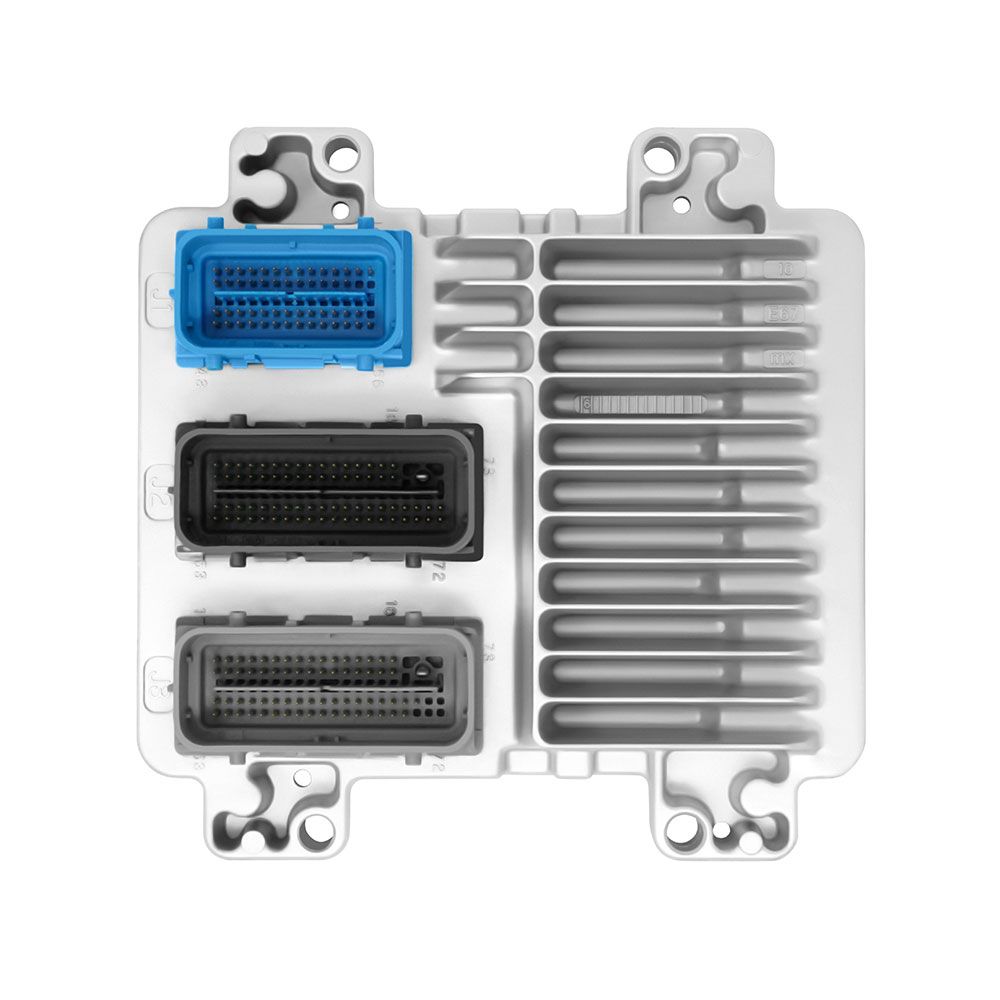
Flagship One stocks a refurbished, VIN-programmed ECM for the 2008 Pontiac Montana with a lifetime warranty, free shipping and no core charge. The full Pontiac Montana module lineup covers other engine configurations as well.
The 2008 Pontiac Montana depends on its engine control module for reliable operation, and when internal faults occur, replacement is the only permanent solution. Understanding the location, programming requirements, and symptoms helps you communicate effectively with repair professionals and make informed decisions about replacement options. Whether you pursue dealer programming or a pre-programmed replacement unit, addressing ECM failure promptly prevents further drivability issues and gets your minivan back on the road reliably.