
Last updated on August 25th, 2026 at 12:58 pm
In the 2012 Audi TT, the Powertrain Control Module (PCM) and Engine Control Module (ECM) act as the vehicle’s brain, interpreting sensor data to manage fuel delivery, ignition timing, and transmission shifts. A failure in either module may trigger a loss of engine power, erratic shifting, or complete no‑start conditions, often accompanied by diagnostic trouble codes.
When a 2012 Audi TT begins to hesitate, stalls, or refuses to start, the underlying cause may lie in its electronic control modules. Understanding how the Powertrain Control Module and Engine Control Module operate, and what the factory recommends for their removal and replacement, helps you make an informed decision. This guide walks you through the location of each unit, the labor involved, the required post‑install procedures, and practical steps to keep the modules healthy. By the end, you will know what to expect from a professional repair and how Flagship One’s VIN‑programmed units fit into the process.
2012 Audi TT
OEM programmed ECM for your 2012 Audi TT — plug & play, no dealer visit.
Free shipping · Lifetime warranty
The Powertrain Control Module in the 2012 Audi TT gathers data from the engine, transmission, and emissions sensors to calculate optimal fuel and spark timing, as well as shift points for the dual‑clutch gearbox. It also stores learned parameters that improve performance over time. When the PCM fails, the engine may run rough, shift erratically, or not start at all. The Engine Control Module performs a similar role for the engine’s core functions, handling ignition timing, fuel injection, and emissions controls. Both modules share communication lines with the vehicle’s diagnostic port, so a loss of signal can prevent trouble‑code retrieval. Proper operation is essential for emissions compliance and drivability, which is why the factory specifies precise removal, replacement, and relearn procedures. For owners seeking a new unit, replacement PCM for Audi TT offers a direct path to restored functionality.
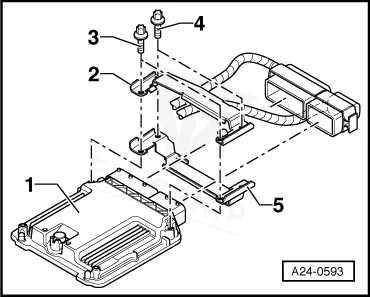
The PCM in the 2012 Audi TT is mounted behind the passenger‑side footwell, attached to the vehicle’s wiring harness with a secured connector. Removing the module typically requires about 1.3 hours of labor, including disconnecting the battery, releasing the fasteners, and routing the new unit into place. The ECM resides under the engine cover, accessible after the air intake and associated brackets are removed; the book time for this removal is also 1.3 hours. Installation mirrors the removal steps in reverse, with torque specifications followed as outlined in the service manual. Once the new module is seated, the technician proceeds with the relearn procedures: 0.5 hours for PCM relearn, 0.5 hours for ECM relearn, and a brief 0.3‑hour reset for the ECM if required.
| Operation | Configuration | Book Time |
|---|---|---|
| Powertrain Control Module R&R | All configurations | 1.3 hr |
| Powertrain Control Module Relearn | All configurations | 0.5 hr |
| Engine Control Module Relearn | All configurations | 0.5 hr |
| Engine Control Module Reset | All configurations | 0.3 hr |
| Engine Control Module R&R | All configurations | 1.3 hr |
After the physical replacement, the factory service routine calls for a PCM relearn and an ECM relearn, each lasting about half an hour, plus a short ECM reset. Flagship One supplies units that arrive already VIN‑programmed, so those post‑install coding steps are effectively completed before the module reaches your shop. This eliminates the need for a separate programming session, allowing the technician to focus on the mechanical aspects of the install. Consequently, the overall downtime for your 2012 Audi TT may be reduced, and the risk of programming errors is minimized when using a VIN-programmed replacement unit for the correct application.
A failing PCM or ECM in a 2012 Audi TT often reveals itself through a combination of erratic engine behavior and diagnostic trouble codes. Common signs include a complete no‑start condition, intermittent stalling at idle, rough acceleration, and unexpected transmission shifts. Misfire codes may appear, and the scan tool can lose communication with the vehicle’s network. When the control module cannot process sensor inputs, the engine may revert to limp‑mode, limiting power output. In some cases, the diagnostic system logs a specific fault such as timing error which points to a timing‑related issue within the module’s internal clock. Addressing these symptoms promptly can prevent further damage to related components.
The service manual lists about 1.3 hours for removing and installing the PCM, plus an additional 0.5 hours for the required relearn procedure.
Yes, the ECM reset is part of the post‑install steps and typically takes around 0.3 hours according to the factory guidelines.
Flagship One units arrive pre‑programmed with the vehicle’s VIN, so the separate programming step is not required, simplifying the repair process.
When the PCM or ECM in your 2012 Audi TT shows signs of failure, you can choose a professional repair with a brand‑new unit or consider a refurbished replacement that meets the same specifications. Both options restore the vehicle’s electronic control functions, and Flagship One’s VIN‑programmed modules streamline the installation by removing the need for additional coding steps.
Flagship One stocks a refurbished, VIN-programmed PCM for the 2012 Audi TT with a lifetime warranty, free shipping and no core charge. The full Audi TT module lineup covers other engine configurations as well.
The Powertrain and Engine Control Modules are vital to the performance of your 2012 Audi TT. Whether you opt for a new or refurbished replacement, ensuring proper installation and relearn procedures will keep the car running smoothly. Contact a qualified technician to evaluate the best solution for your situation.