
Last updated on August 25th, 2026 at 12:57 pm
The 2014 Audi TT’s powertrain and engine control modules serve as the central computers managing engine functions, fuel delivery, ignition timing, emissions control, and transmission shifting. When these modules fail, your vehicle may experience no-start conditions, stalling, check engine illumination, or drivability issues that prevent normal operation.
The 2014 Audi TT with its 2.0L turbocharged engine represents a sophisticated integration of performance-oriented engineering and complex electronic management systems. At the heart of these systems lies the powertrain control module, which serves as the primary computational hub coordinating engine operation, transmission behavior, and emissions compliance. When this critical component experiences internal failures or communication breakdowns, your vehicle may exhibit a range of distressing symptoms from intermittent no-start conditions to persistent check engine illumination and reduced driving performance. Understanding what these control modules do, where they reside, and what the replacement process involves empowers you to make informed decisions when facing such repairs. This guide examines the factory-recommended procedures, typical failure patterns, and practical considerations specific to your 2014 Audi TT, helping you navigate the repair process with confidence whether you service your vehicle yourself or rely on professional assistance.
2014 Audi TT
OEM programmed ECM for your 2014 Audi TT — plug & play, no dealer visit.
Free shipping · Lifetime warranty
The powertrain control module in your 2014 Audi TT functions as the central brain managing all engine and transmission operations. This sophisticated computer receives input from dozens of sensors throughout the powertrain, including mass airflow sensors, coolant temperature sensors, throttle position sensors, oxygen sensors, and transmission gear sensors. Using this continuous stream of data, it calculates optimal fuel injection quantities, ignition timing advances, turbocharger boost levels, and transmission shift points to deliver smooth power delivery while meeting emissions standards. The engine control module operates as a dedicated processor for emissions-related functions and idle quality control, working in concert with the powertrain module to ensure the engine operates cleanly and efficiently under all conditions. Both modules communicate extensively, sharing sensor data and coordinating their respective responsibilities to maintain proper engine operation. When either module encounters internal faults, the vehicle typically defaults to a protective limp mode designed to prevent potential damage to engine components. For owners facing module replacement needs, replacement engine computers for the Audi TT provide a viable solution when the original unit becomes unserviceable due to internal component failure.
The control module on your 2014 Audi TT is positioned in the plenum chamber located at the base of the windshield, within the vehicle’s HVAC ducting system. Accessing this location requires significant disassembly of interior components, including removal of the windshield wiper assembly and related trim pieces to reach the module housing. The factory service manual allocates 1.3 hours for the removal and reinstallation procedure, though this timeframe represents book time and actual labor may vary based on technician experience and any encountered complications. The module itself mounts securely within the plenum assembly, with multiple electrical connectors that must be carefully disconnected and reconnected during the replacement process. Proper torque specifications and connector seating are critical to ensure reliable operation after reinstallation. Once the physical replacement is complete, the vehicle requires additional time for system initialization and verification of proper function before returning to customer use.
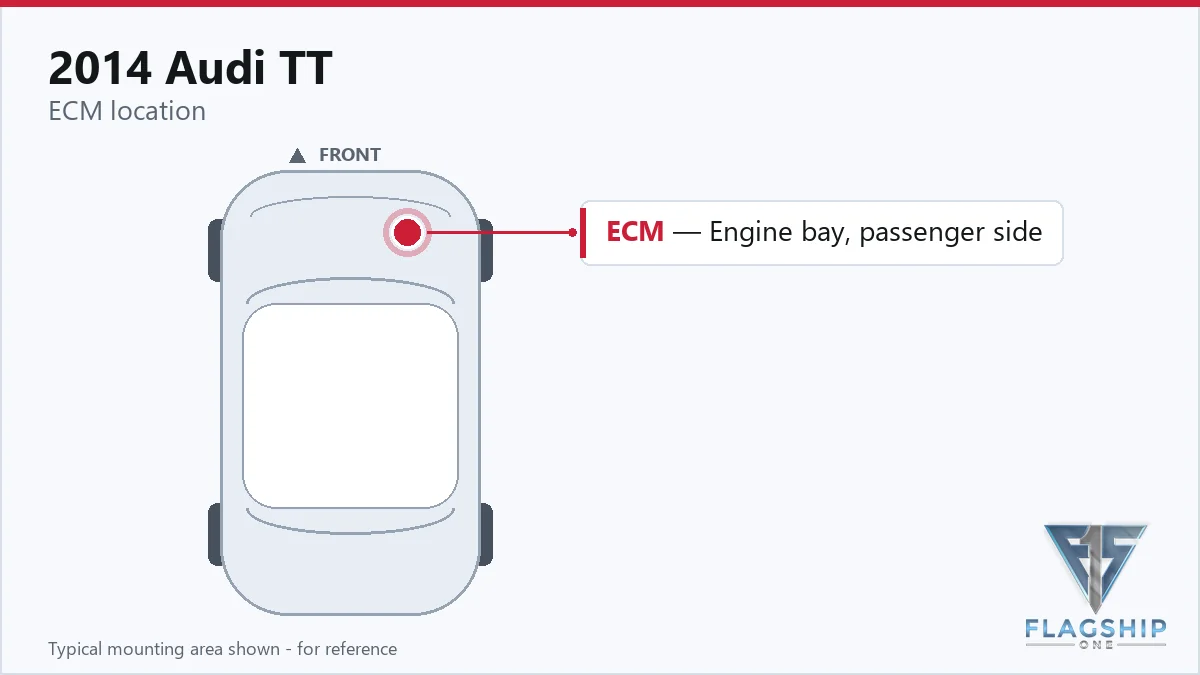
Work with the ignition off, and treat the module as static-sensitive: avoid touching the connector pins at any point.
| Operation | Configuration | Book Time |
|---|---|---|
| Powertrain Control Module R&R | All configurations | 1.3 hr |
| Powertrain Control Module Relearn | All configurations | 0.5 hr |
| Engine Control Module Relearn | All configurations | 0.5 hr |
| Engine Control Module Reset | All configurations | 0.3 hr |
| Engine Control Module R&R | All configurations | 1.3 hr |
Following the physical installation of a replacement control module, the factory service procedure requires several programming and initialization steps to restore proper vehicle operation. The powertrain control module relearn procedure takes approximately 0.5 hours, allowing the new unit to adapt to your specific engine’s characteristics and establish proper communication with all vehicle systems. Additionally, the engine control module requires its own relearn procedure, also taking around 0.5 hours, to calibrate emissions-related functions and idle stability parameters. A final reset procedure consuming approximately 0.3 hours clears any stored diagnostic trouble codes and establishes baseline values for ongoing monitoring. These programming steps are essential for the vehicle to operate correctly after module replacement. Flagship One addresses these requirements by shipping a VIN-programmed replacement unit that arrives pre-configured with your specific vehicle identification number, eliminating the need for dealer programming appointments and reducing overall repair completion time significantly.
Control module failures in the 2014 Audi TT typically present with several recognizable symptoms that indicate electronic control system problems. The most concerning symptom involves no-start conditions where the engine cranks normally but fails to ignite, leaving you stranded and requiring professional diagnosis. Persistent check engine illumination often accompanies module failures, with multiple diagnostic trouble codes stored in memory that may clear temporarily only to return. Intermittent stalling during idle or low-speed operation occurs when the module loses proper communication with fuel or ignition system components. Reduced engine power output manifests as sluggish acceleration and inability to maintain highway speeds, sometimes triggering limp mode protection. Failed communication with scan tools during diagnostics represents another common indicator, as the module may become unresponsive to standard diagnostic requests. Transmission shifting problems, including harsh shifts or failure to shift into gear, may also stem from powertrain module malfunctions affecting gear selection logic. These symptoms often develop gradually as internal circuitry degrades, though sudden complete failures can occur without prior warning.
When your 2014 Audi TT requires control module attention, you face two primary repair paths: remanufactured original units or direct replacement with a pre-programmed module. Each approach offers distinct advantages regarding cost, turnaround time, and long-term reliability. Flagship One provides VIN-programmed replacement units that arrive ready for installation, eliminating dealer programming delays and associated costs while restoring your vehicle’s electronic control systems to proper function.
Flagship One stocks a refurbished, VIN-programmed PCM for the 2014 Audi TT with a lifetime warranty, free shipping and no core charge. The full Audi TT module lineup covers other engine configurations as well.
The 2014 Audi TT relies on sophisticated electronic control modules to manage its turbocharged powertrain effectively. When these computers fail, understanding your replacement options helps you make informed repair decisions. Whether you choose a remanufactured unit or a pre-programmed replacement from Flagship One, addressing control module issues promptly restores your vehicle’s performance and reliability while protecting against more extensive damage.