
Last updated on August 25th, 2026 at 01:18 pm
The Engine Control Module (ECM) in your 1993 Infiniti Q45 manages fuel injection, ignition timing, idle speed, and transmission shift points. When it fails, the engine may not start, stall unexpectedly, or run poorly. Capacitor degradation and voltage spikes are common failure causes.
If your 1993 Infiniti Q45 has begun exhibiting intermittent stalling, a no-start condition, or erratic transmission shifting, the Engine Control Module (ECM) may be the culprit. The ECM is the brain of your vehicle’s engine management system, controlling fuel delivery, ignition timing, idle speed, and even transmission operation. Over time, internal components such as electrolytic capacitors can degrade, leading to erratic behavior or complete failure. This article will help you understand what the ECM does in your Q45, recognize the symptoms of a failing unit, and learn what replacement involves. You will also discover how a pre-programmed replacement module can save you time and money by avoiding a trip to the dealership for VIN programming. Whether you are a DIY owner or a professional technician, the information here will guide you through diagnosis and repair decisions for your 1993 Infiniti Q45.
1993 Infiniti Q45
OEM programmed ECM for your 1993 Infiniti Q45 — plug & play, no dealer visit.
Free shipping · Lifetime warranty
The Engine Control Module (ECM) in your 1993 Infiniti Q45 is a sophisticated computer that continuously monitors sensor inputs—such as engine coolant temperature, throttle position, mass airflow, and oxygen sensor readings—and adjusts fuel injector pulse width, ignition timing, and idle air control accordingly. It also communicates with the transmission control unit to manage shift points and torque converter lockup. Because the Q45 uses a VH45DE V8 engine with variable valve timing and a complex fuel injection system, the ECM must process data rapidly to maintain smooth performance and fuel efficiency. When the ECM fails, the engine may run in a limp-home mode, or not run at all. The module is designed to last the life of the vehicle, but heat, vibration, and voltage spikes can shorten its lifespan. If you need to replace the ECM, you can find replacement ECMs for the Q45 that are pre-programmed to match your vehicle’s VIN, eliminating the need for dealer configuration. Understanding the ECM’s role helps you appreciate why prompt diagnosis and quality replacement parts are important for restoring your Q45’s drivability.
The ECM in your 1993 Infiniti Q45 is mounted on the passenger side firewall, behind the glove box. To access it, you must first disconnect the negative battery cable to prevent any electrical shorts or accidental airbag deployment. Then remove the glove box assembly by releasing the retaining clips or screws and lowering the door. You may also need to remove a lower trim panel to reach the module. The ECM is secured with several mounting screws; after removing them, carefully unplug the two large wiring harness connectors. Note the orientation of the connectors—they are keyed to prevent incorrect installation. Once the old unit is free, install the new ECM in the reverse order, ensuring all connectors click firmly into place. Reattach the glove box and reconnect the battery. No special tools are required beyond a basic socket set and a trim removal tool.
After replacing the ECM in your 1993 Infiniti Q45, the factory procedure requires that the module be programmed with the vehicle’s VIN and immobilizer data. This typically involves using a dealer-level scan tool to write the correct parameters so the engine starts and runs properly. Without this step, the new ECM may not communicate with the anti-theft system or may cause a no-start condition. However, when you purchase a VIN-programmed replacement unit from Flagship One, that programming is already completed before shipping. You simply install the module, reconnect the battery, and start the engine. The unit arrives ready to work with your Q45’s specific configuration, saving you the cost and inconvenience of a dealership visit. This pre-programming also ensures that the ECM’s internal memory contains the correct calibration for your engine and transmission, so performance and emissions remain as designed.
A failing ECM in your 1993 Infiniti Q45 can produce a range of symptoms that may be mistaken for other issues. The most common sign is a no-start condition where the engine cranks but does not fire, often because the ECM is not sending fuel injector or ignition signals. Intermittent stalling while driving, especially after the engine has warmed up, is another frequent complaint. You may also notice a rough idle, hesitation during acceleration, or a sudden loss of power. The transmission may shift erratically or fail to shift at all, since the ECM controls shift timing. The check engine light (or a similar warning lamp) may illuminate, but because this is a pre-OBD-II vehicle, you cannot retrieve standard diagnostic trouble codes with a generic scanner. Instead, you may need to use a Nissan-specific procedure to flash codes from the ECM. Other symptoms include poor fuel economy, surging at highway speeds, and the engine running in a reduced-power limp-home mode. If you experience any of these issues, especially in combination, the ECM should be a prime suspect.
The most common cause is degradation of electrolytic capacitors inside the module due to age and heat. Voltage spikes from a failing alternator or improper jump-starting can also damage the ECM. Moisture intrusion through cracked connector seals is another potential failure mode.
It is not recommended. A failing ECM can cause intermittent stalling, which is a safety hazard. It may also lead to poor fuel economy and increased emissions. Continuing to drive with a faulty ECM can sometimes cause secondary damage to other components, such as the catalytic converter.
Symptoms like no-start with good cranking, intermittent stalling, and erratic transmission behavior point to the ECM. You can also check for stored fault codes using the Nissan flash-code procedure. However, many symptoms overlap with sensor failures, so professional diagnosis is often needed.
Yes, the factory procedure requires VIN and immobilizer programming using a dealer-level scan tool. Without it, the engine may not start. However, if you purchase a pre-programmed unit from Flagship One, that step is already done, so you can install and drive immediately.
The ECM is located under the passenger side dashboard, behind the glove box. You need to remove the glove box and possibly a lower trim panel to access it. The module is mounted on the firewall and secured with several screws.
When your 1993 Infiniti Q45’s ECM fails, you have two main options: have the original unit repaired by a specialist, or replace it with a new or refurbished module. Repair can be cost-effective if the damage is limited to capacitors, but it may not address underlying issues. A replacement unit from Flagship One comes pre-programmed with your VIN, ensuring a plug-and-play installation that restores full functionality without a dealer visit.
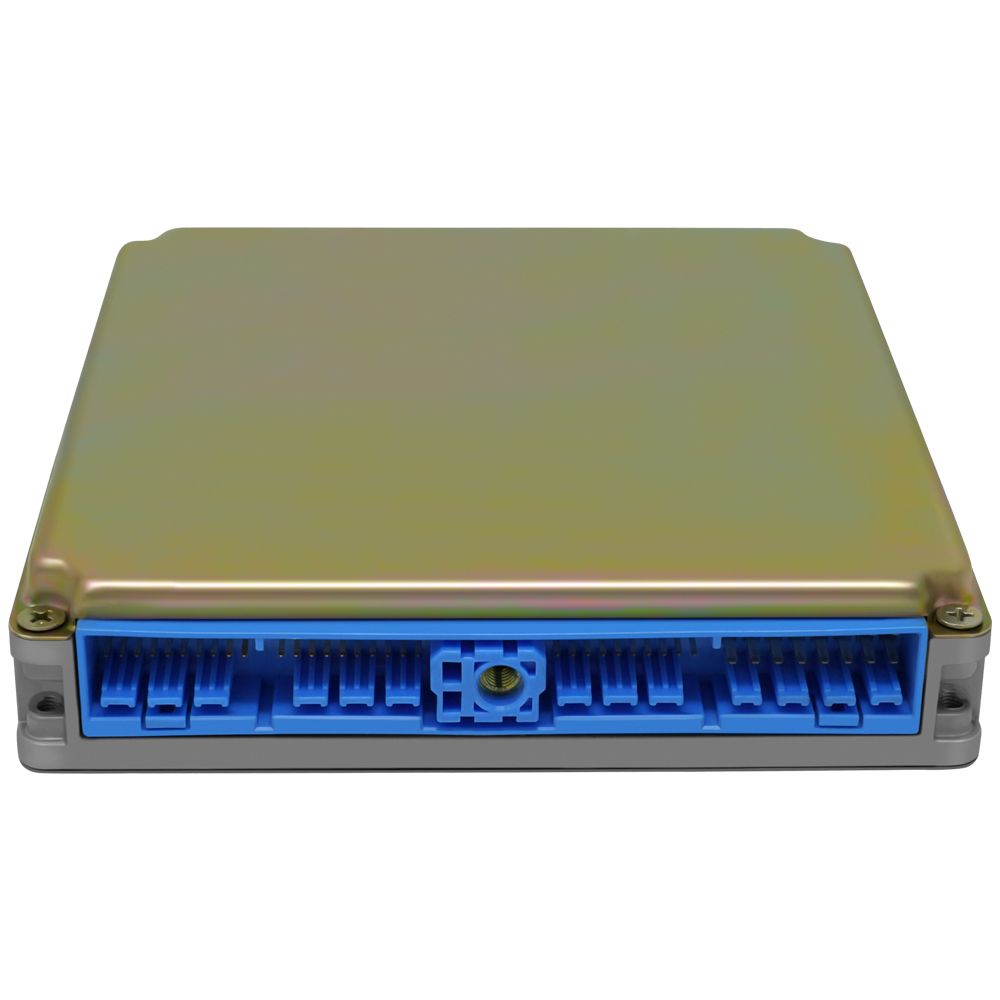
Flagship One stocks a refurbished, VIN-programmed ECM for the 1993 Infiniti Q45 with a lifetime warranty, free shipping and no core charge. The full Infiniti Q45 module lineup covers other engine configurations as well.
The ECM is a critical component in your 1993 Infiniti Q45, and recognizing the signs of failure early can save you time and frustration. Whether you choose repair or replacement, understanding the symptoms and installation process helps you make an informed decision. For a hassle-free solution, consider a pre-programmed replacement unit that eliminates the need for dealer programming.